Vegetables to Grow in December in India: A Pot-by-Pot Winter Guide
Vegetables to Grow in December in India: A Pot-by-Pot Winter Guide
December on an Indian terrace is the quietest and most rewarding month of the winter garden. Days are short, the sun sits low and throws long shadows across the balcony, and the seedlings you sowed in October are ready to eat. Getting the best from vegetables to grow in December in India means two decisions: sowing the right crops in the first half of the month, and feeding and harvesting the plants already standing in pots.
This guide covers both: what to sow in the first and second fortnight, how deep each pot and grow bag needs to be, what to feed short-day crops like peas and tomato, and how to fix the pale, leggy seedlings that short days cause. It is written for pots and grow bags on terraces, balconies and rooftops in Delhi, Lucknow, Pune, Bengaluru and the coastal south.
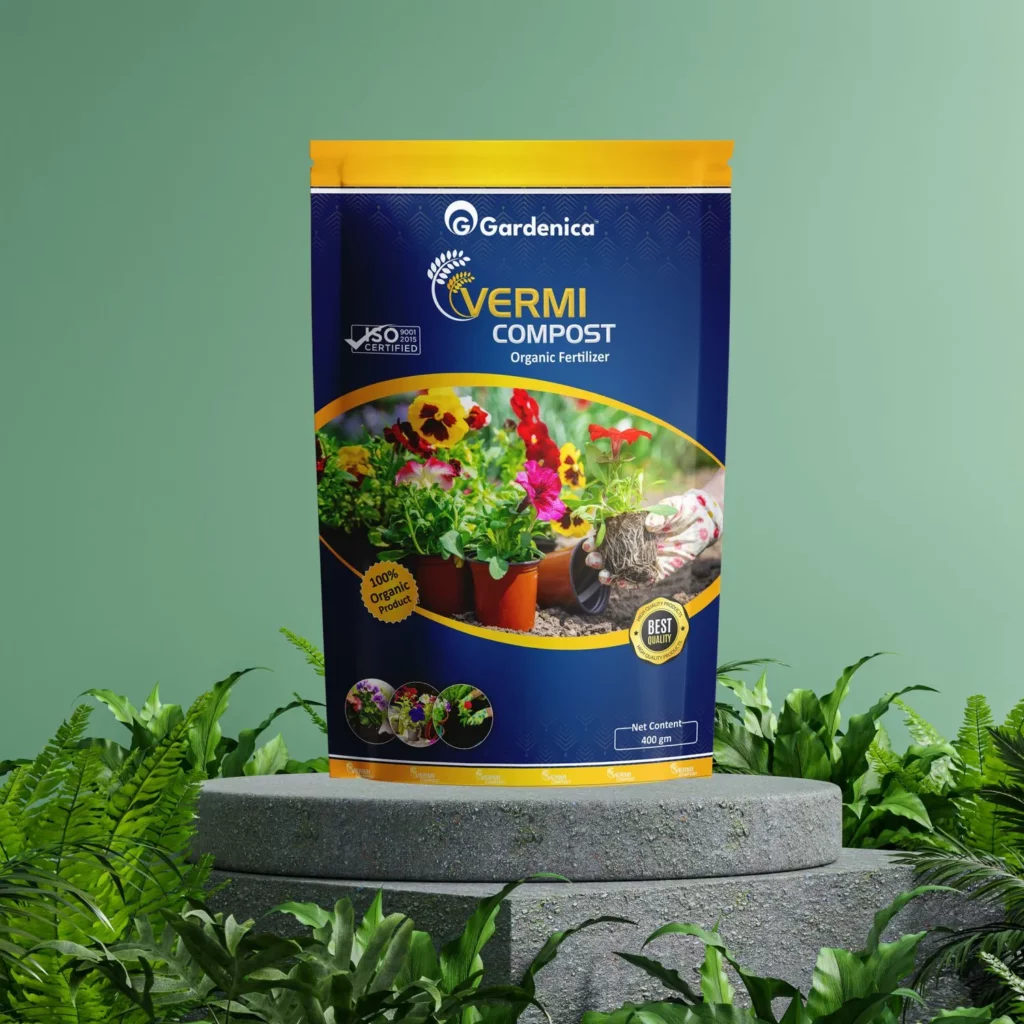
Read more: Explore Gardenica Vermi Compost
What December Does to Potted Vegetables
Two things change in December: day length and night temperature. Pots dry far slower than in summer, so the commonest failure is wet soil, not dry soil. Growth is steady rather than fast, and a plant two weeks behind in November often catches up by late January.
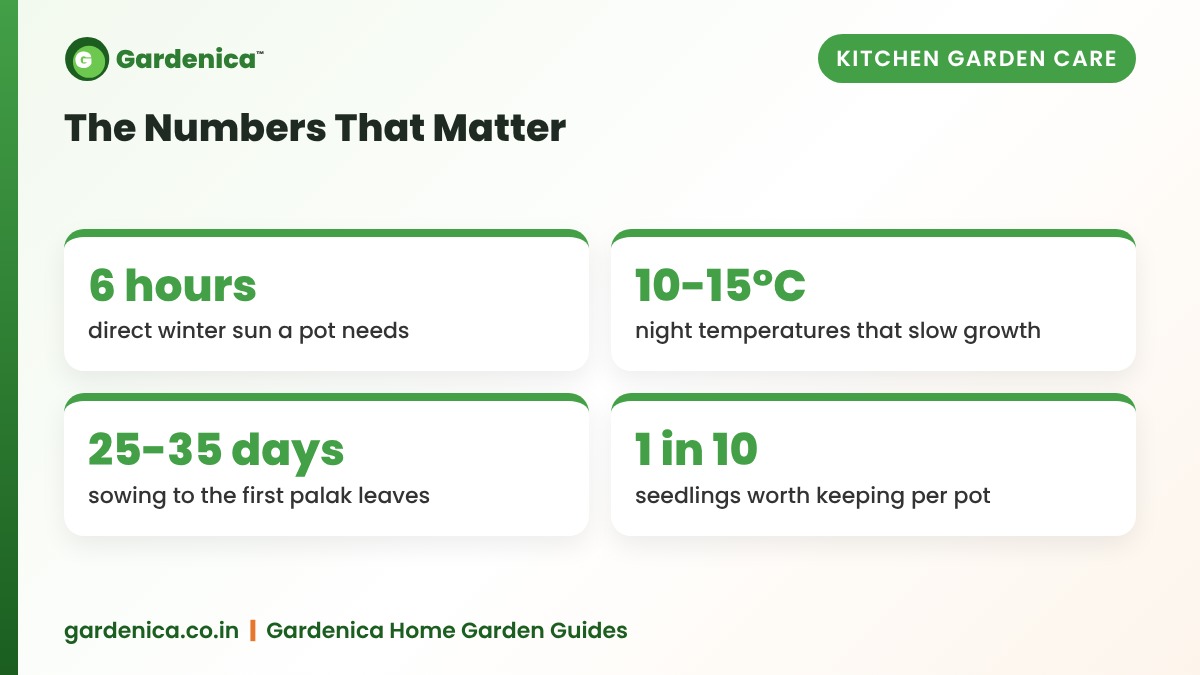
Short days also matter for flowering. Peas (matar) and many carrot varieties flower when nights are cool and days are short, which is exactly what December gives them. That is why a pea sowed in late November often out-yields one sowed a month later. For the season before this one, see our guide to vegetables to grow in November.
What to Sow in the First Half of December
The first two weeks are the real sowing window. Anything with a long season should go in now, into refreshed mix.
Leafy greens for quick cuts
Palak (spinach), methi (fenugreek) and dhaniya (coriander) are the safest bets. In a 12-inch wide, 8-inch deep pot, a handful of seed sown 1 cm deep and thinned to one plant per finger-width gives cut-and-come-again leaves in about a month. A shaded Mumbai balcony still grows them on four hours of light.
Root crops while the soil is cool
Carrot (gajar) and radish (mooli) want a pot at least 12 inches deep with loose, stone-free mix. Sow thin, because crowded carrots fork and stay stunted. Our carrot pot guide explains the mix that keeps roots straight.
Peas, garlic and onion
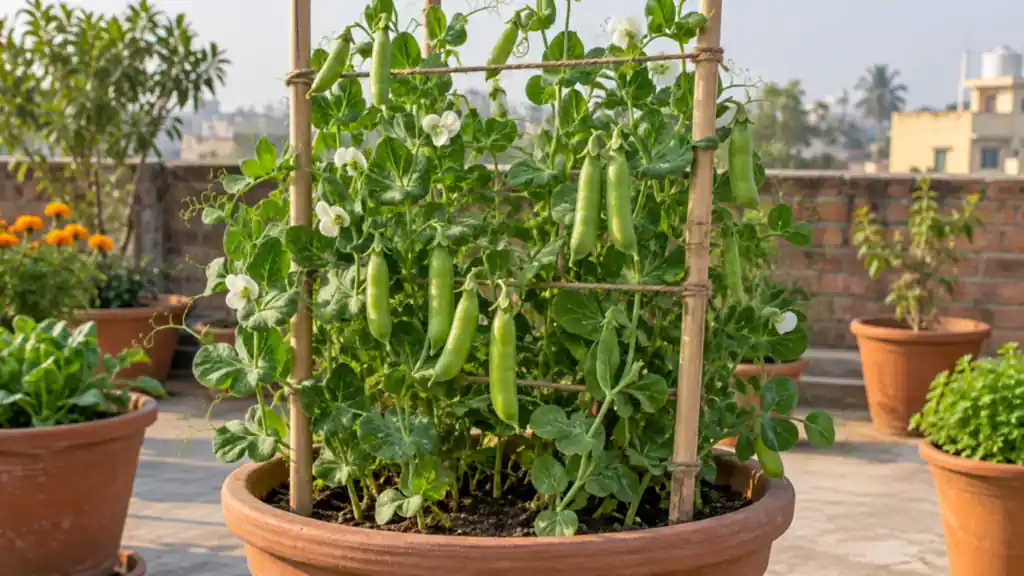
Sow peas 2 to 3 cm deep in a deep grow bag with a trellis on the sunny side. Garlic cloves (lehsun) and onion sets go in now too, pointed end up, for an April or May lift.
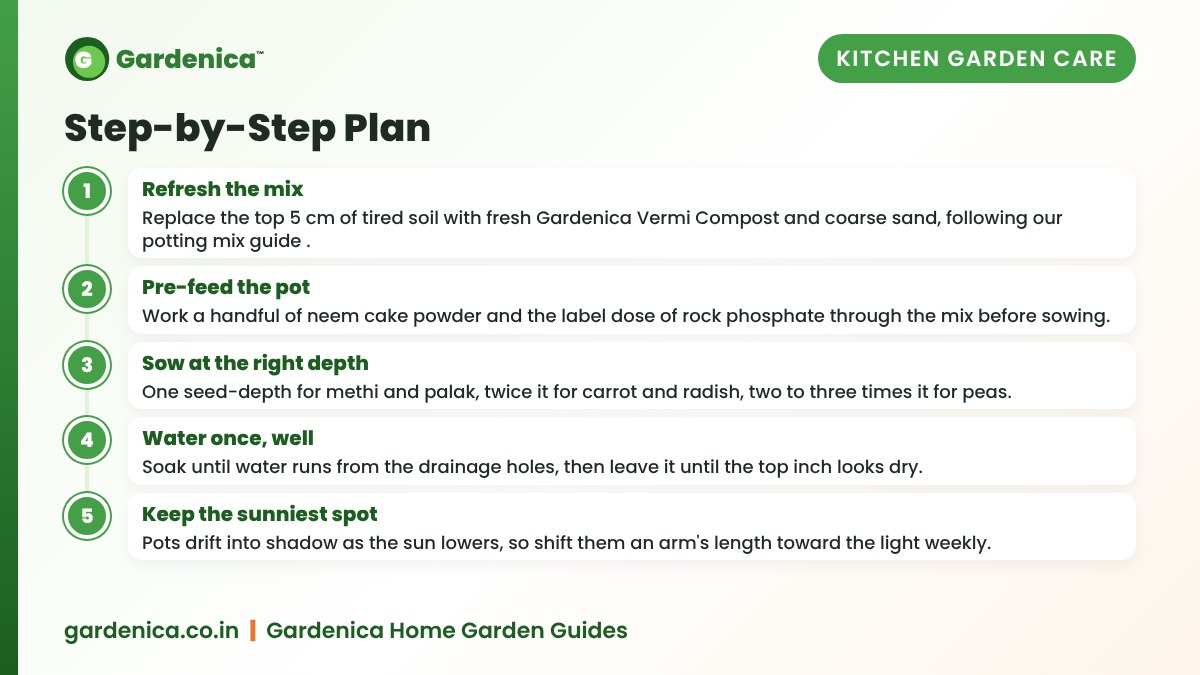
- Refresh the mix. Replace the top 5 cm of tired soil with fresh Gardenica Vermi Compost and coarse sand, following our potting mix guide.
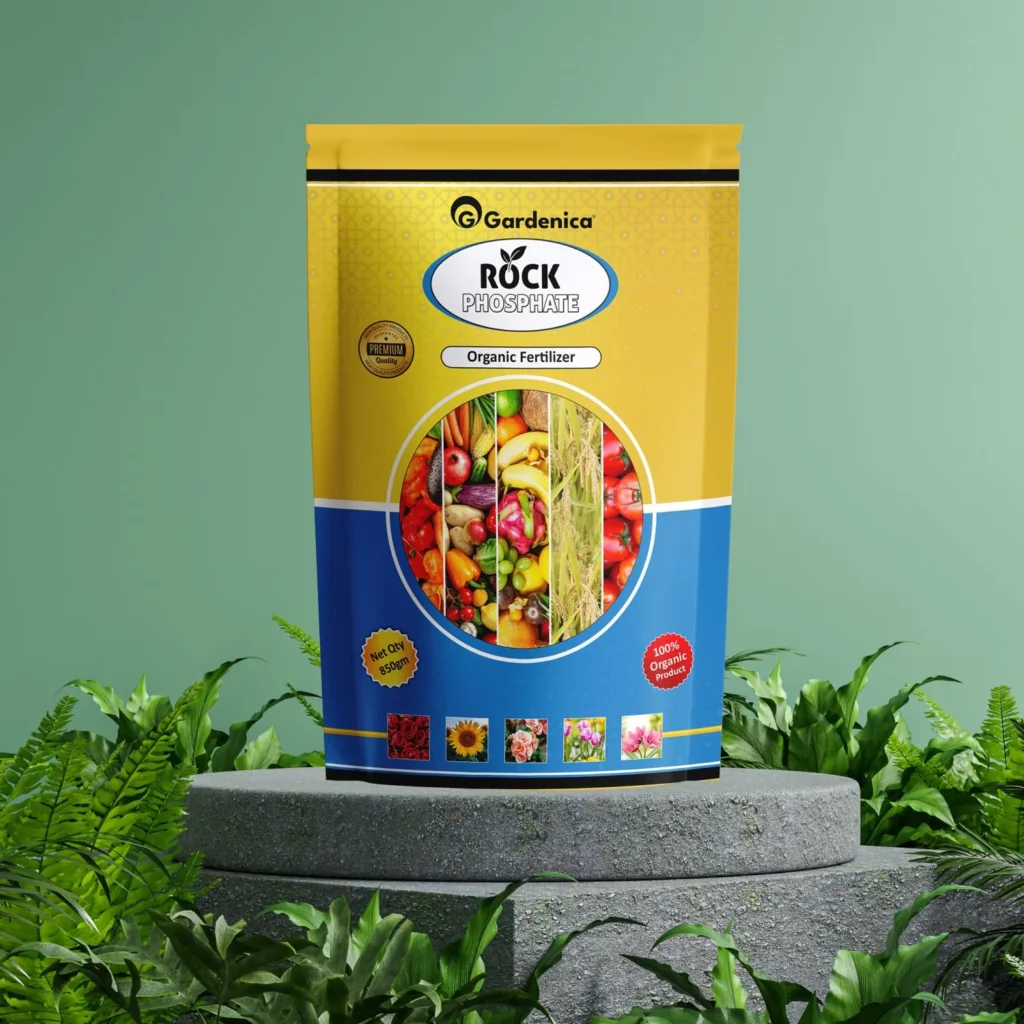
- Pre-feed the pot. Work a handful of neem cake powder and the label dose of rock phosphate through the mix before sowing.
- Sow at the right depth. One seed-depth for methi and palak, twice it for carrot and radish, two to three times it for peas.
- Water once, well. Soak until water runs from the drainage holes, then leave it until the top inch looks dry.
- Keep the sunniest spot. Pots drift into shadow as the sun lowers, so shift them an arm's length toward the light weekly.
In December, water less and water deeper; cold wet soil is what kills winter pots, not cold air.
What to Sow in the Second Half
The last two weeks are for fast, forgiving crops and for seedlings raised under protection. Sow radish, palak, methi, lettuce and spring onion in shallow pots, and raise broccoli and cabbage seed in trays kept against a warm wall. In frost-free coastal areas and Bengaluru-like climates, a late pea sowing in the third week still works.
Hold off on heat lovers. Chilli, bhindi (okra) and brinjal (baingan) sown in December germinate weakly and stall until February. If you want them early, raise seedlings in a bright, covered spot.
Have a question about this topic?
Chat on WhatsAppFeeding Plants Already in Pots
Winter feeding is lighter than summer feeding, but it should not stop. Established cabbage and cauliflower like a monthly scratch-in of vermicompost on the top layer. Flowering crops need a different balance.
Once peas or tomato start flowering, lean on phosphorus and potassium rather than heavy nitrogen, which pushes leaves at the cost of pods and fruit. The label dose of Gardenica Rich Fertilizer every three weeks, or a seaweed drench such as Gardenica All In One once a month, supports flowering without soft growth. Our vermicompost guide shows how to make a top-dressing last.
Watering, Sun and Frost
Water in the morning at the base so leaves and soil surface dry before evening. Check with a finger pushed two knuckles deep rather than by the clock; a terracotta pot in full sun may need water every second day, while a shaded grow bag may go a week. Wet soil plus cold nights invites root rot in potted plants, and tray seedlings are vulnerable to damping off.
On clear, still north Indian nights, move pots inward off cold tile, group them together, and cover with cloth or gunny rather than plastic, which traps moisture and burns leaves at dawn.
Harvesting So Plants Keep Producing
Cut, do not pull. Harvest palak, methi and dhaniya by cutting outer stems 2 to 3 cm above the base so the crown keeps pushing leaves. Pick peas every two to three days; pods left to bulge stop the plant setting more. Twist carrot and radish out rather than tugging leaves, and lift before they go woody. Harvest in the cool morning, and never let a firm brassica head sit in the pot, or it loosens and bolts.
Common Mistakes to Avoid
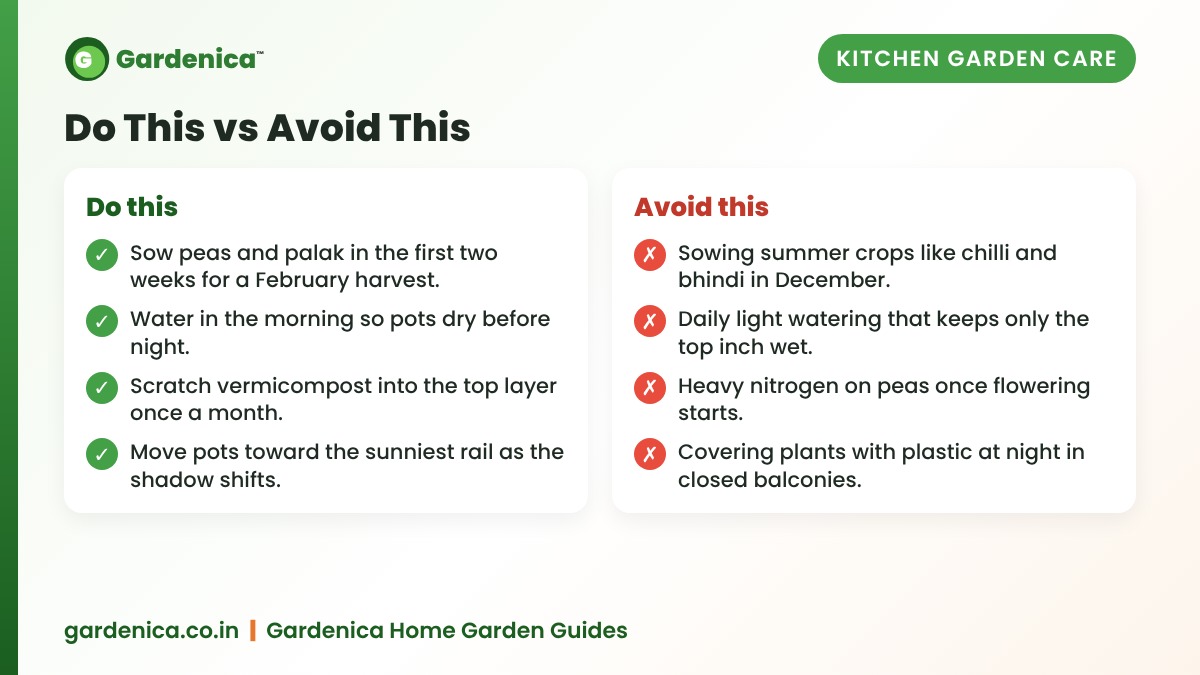
- Watering a little every day, so only the top inch stays wet and roots stay shallow.
- Sowing summer crops like chilli and bhindi in December, then wondering why they stall.
- Leaving pots in one spot all winter while the low sun moves their light away.
- Pushing heavy nitrogen on peas at flowering, which gives leaves instead of pods.
- Forgetting to thin, so six palak plants crowd one pot and none reach plate size.
- Covering plants with plastic on cold nights in a closed balcony, trapping damp.
Frequently Asked Questions
Which vegetables to grow in December in India in pots?
Peas, palak, methi, dhaniya, carrot, radish, garlic, onion, lettuce and spring onion do best, with broccoli and cabbage raised as seedlings. In frost-free coastal areas, add a late pea sowing and a cabbage transplant in week three.
Is it too late to sow peas in December?
In north and central India the plains, the last week of December is the practical cut-off and the first fortnight is better. In Bengaluru and the coastal south you can sow up to week three, with fewer pods per plant.
Why are my winter seedlings tall, thin and pale?
Short days and crowded sowing make seedlings stretch for light. Move the tray to the sunniest wall, thin to one strong plant per gap, and hold off nitrogen until they stand up. Our palak pot guide covers spacing.
How often should I water potted vegetables in December?
Most pots need a deep soak every three to seven days, not a sip daily. Water in the morning once the top inch is dry, and empty any saucer before night.
Do I still need to feed plants in winter?
Yes, but lightly. Scratch vermicompost into the top layer monthly and feed at the label dose every three to four weeks. Skip feeding only pots that have stopped growing altogether.
Make the Most of Your December Pots
Sow long-season crops in the first fortnight, keep quick greens coming all month, feed flowering crops for pods rather than leaves, and water deeply on cool mornings. Do those four things and your December pots will carry your kitchen through January and February. For the right inputs for your terrace, browse Gardenica products or Contact the Gardenica team for pot-size and feeding advice.
Looking for more?
Continue to our main page to explore products and services.