How to Grow Carrots in Pots: A Gajar Guide for Indian Homes
How to Grow Carrots in Pots: A Gajar Guide for Indian Homes
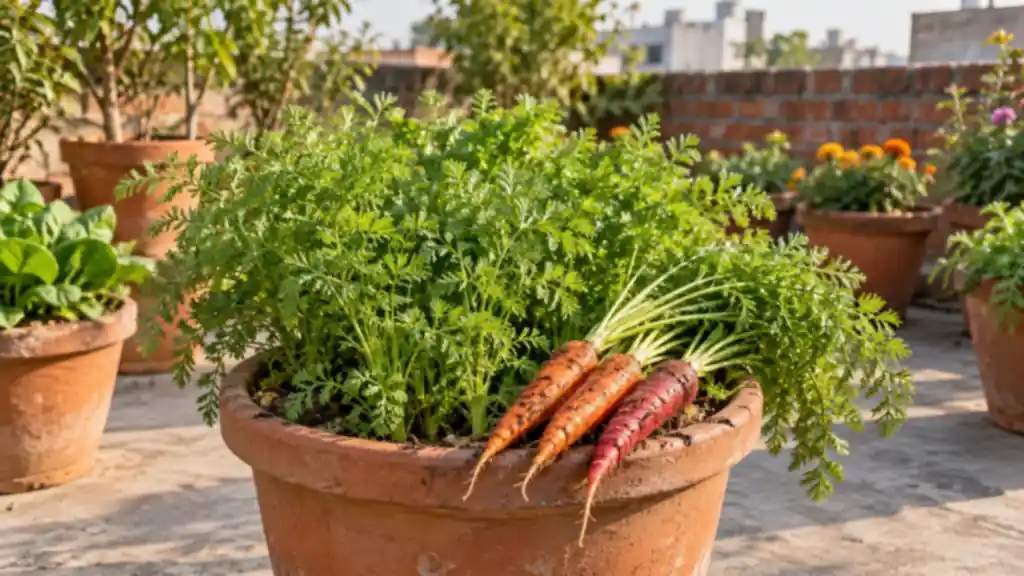
Fresh gajar pulled from your own pot tastes sweeter than most market carrots, and winter is the right time to start. If you have been wondering how to grow carrots in pots on a terrace or balcony, the good news is that carrots need very little space. What they do need is deep, loose soil, steady moisture and a bit of patience in the first two weeks. This guide walks you through the season, the pot, the soil mix, sowing, care and harvest, with the mistakes that most often spoil a carrot crop.
When to Sow Carrots in India
Carrots are a cool-season crop. Roots develop their best colour and sweetness when days are mild and nights are cool, which is why most of India sows them from the end of the monsoon into early winter.
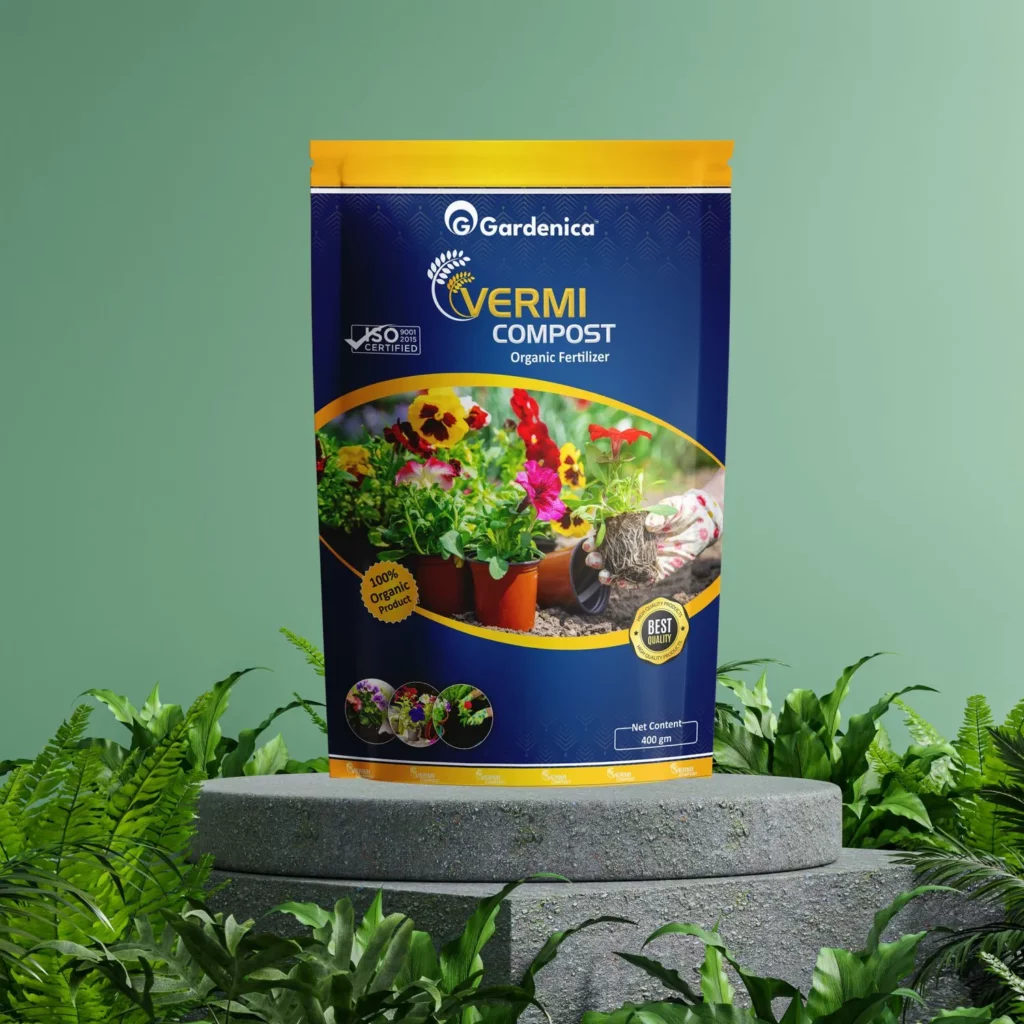
Read more: Explore Gardenica Vermi Compost
Plains of north, central and west India
For Gujarat, Maharashtra, Madhya Pradesh, Rajasthan, Delhi and Uttar Pradesh, sowing from September to November usually works well. Late October and November sowings in pots are common and give a harvest from January to February.
South India
In milder southern regions, carrots can be sown through the cooler months, roughly October to January, though very warm spells may cause thin, pale roots.
Choosing a variety
Local seed shops usually stock two broad types:
- Desi red carrots (Asiatic type) are long, red and suited to the Indian winter in the plains. They are the classic choice for gajar halwa.
- Orange carrots (European type, such as Nantes) are shorter and handle cooler weather. Short or round varieties are especially good for shallower pots.
If your pots are less than 30 cm deep, pick a short or stump-rooted orange variety.
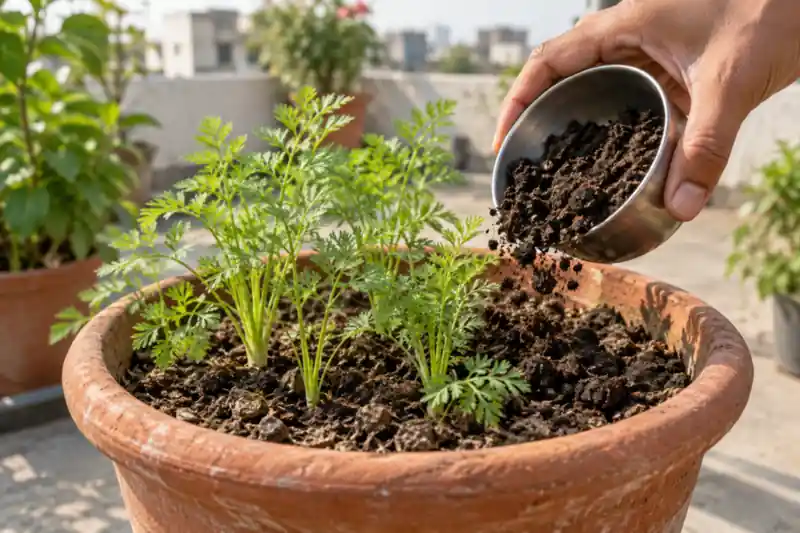
Best Pot Size for Carrots
Depth matters more than width. A carrot root keeps growing downward, and if it hits the bottom of the pot it curls, splits or stays stunted.
- Depth: at least 30 cm (12 inches) for medium varieties; 35 to 40 cm for long desi red carrots. Short varieties can manage in 20 to 25 cm.
- Width: a 30 to 35 cm wide pot or grow bag fits roughly 12 to 20 carrots after thinning.
- Drainage: make sure there are open drainage holes. Waterlogged soil leads to rot and hairy roots.
Terracotta pots, deep tubs and fabric grow bags all work.
Preparing a Loose, Stone-Free Soil Mix
Soil is the single biggest factor when growing carrots in containers. Heavy or lumpy soil gives short, forked roots. Aim for a mix that crumbles in your hand and drains freely.
A simple carrot mix
- Take about 40 percent garden soil, sieved to remove stones, clods and roots.
- Add about 30 percent well-rotted compost or vermicompost.
- Add about 30 percent cocopeat or coarse sand to keep the mix light.
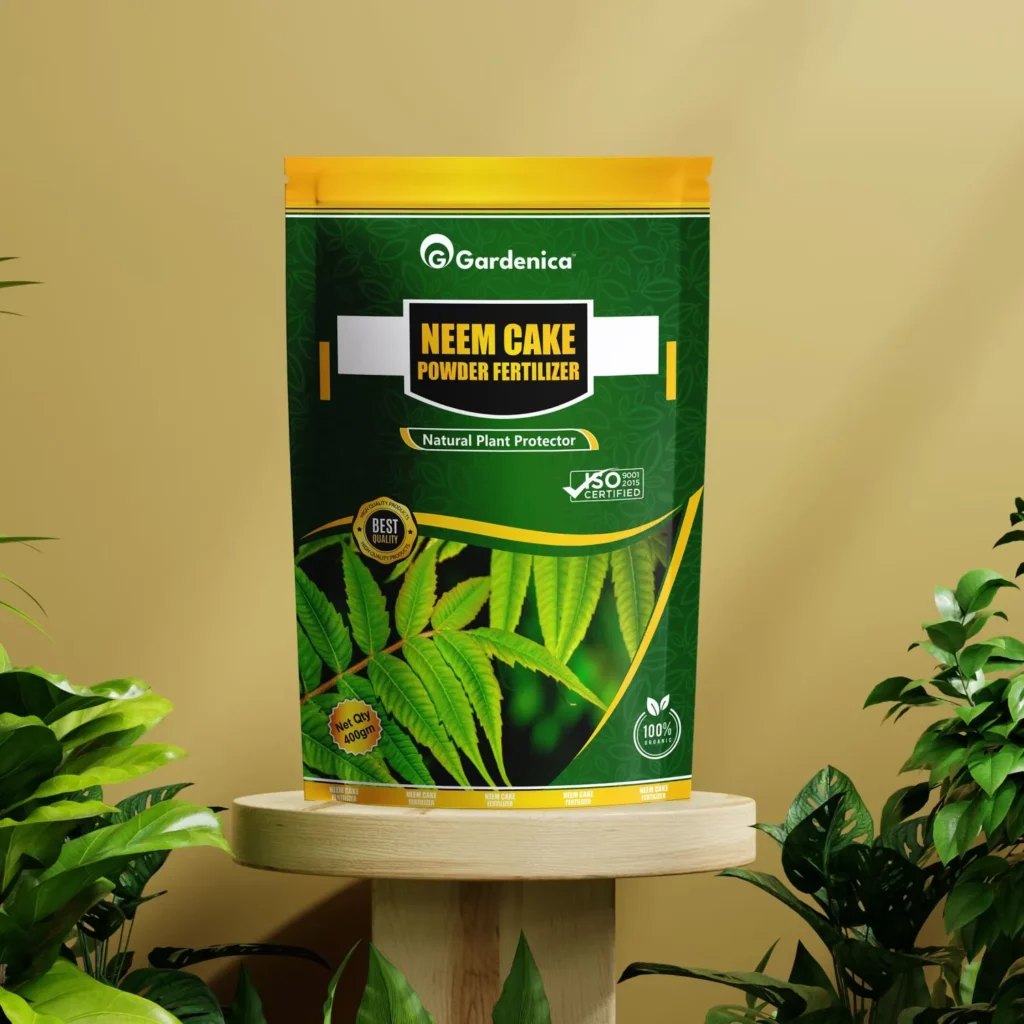
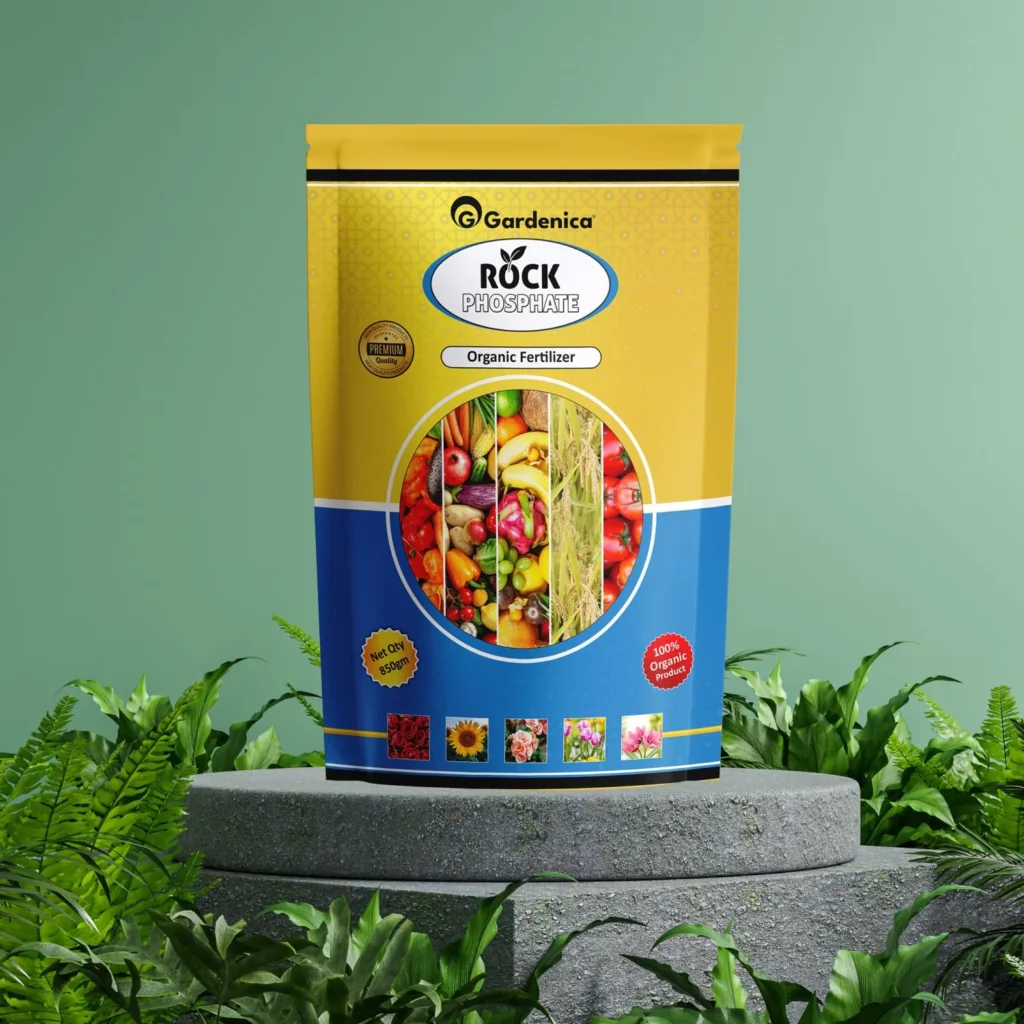
- Mix in a small amount of neem cake powder and rock phosphate as per the product label, then moisten the mix lightly before filling the pot.
Avoid fresh cow dung or half-decomposed manure. It encourages forked, hairy roots. You can read more about building a good base in our guide to potting mix for kitchen gardens.
How to Sow Carrot Seeds in Pots
Carrot seeds are tiny and slow to sprout, so sowing carefully saves a lot of thinning later.
- Fill the pot to about 2 to 3 cm below the rim and level the surface.
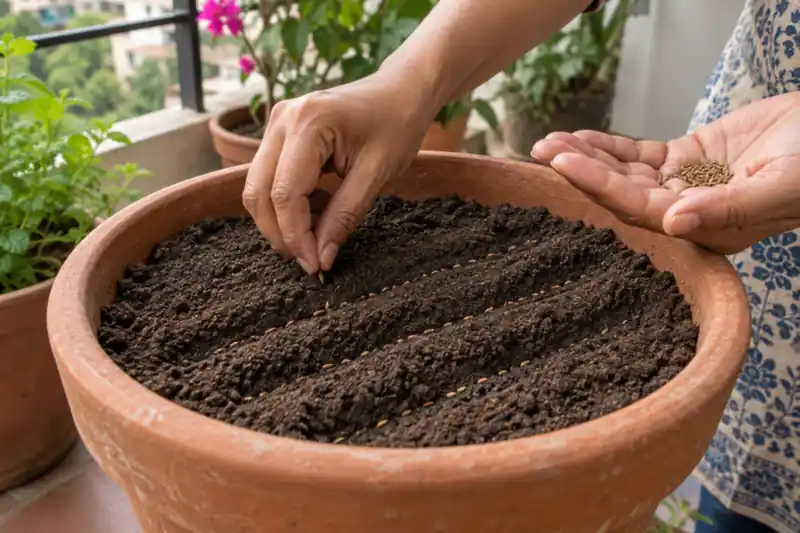
- Draw shallow lines about 1 cm deep and 7 to 10 cm apart, or scatter seed evenly over the surface.
- Mix the seeds with a pinch of dry sand so they spread thinly.
- Cover with a thin layer of fine compost or sieved soil, no more than 0.5 to 1 cm.
- Water gently with a fine rose or spray bottle so seeds do not wash away.
Germination tips
Carrot seeds can take one to three weeks to sprout, depending on temperature and seed freshness. The top layer must not dry out during this time. Covering the pot with damp newspaper or a jute sack and checking daily helps; remove the cover as soon as the first seedlings appear.
Carrot Plant Care: Water, Sun and Feeding
Once seedlings are up, care is simple but needs consistency.
Have a question about this topic?
Chat on WhatsAppSunlight
Place the pot where it gets at least five to six hours of direct sun. In shade, carrots grow lots of leaves but small roots.
Watering
Keep the soil evenly moist, not soggy. Water when the top 2 to 3 cm feels dry. Long dry spells followed by heavy watering are a common cause of cracked roots. Our guide to watering kitchen garden plants explains how to check moisture in pots.
Thinning
Thin seedlings when they are 4 to 5 cm tall, leaving one plant every 5 to 7 cm. Snip extras at soil level with scissors instead of pulling them, so you do not disturb nearby roots. Crowded carrots stay thin and tangled.
Feeding
Carrots do not need heavy feeding. Too much nitrogen gives lush tops and poor roots. A light top-dressing of vermicompost about four weeks after sowing, and once more a month later, is usually enough. If you use a balanced organic plant food, follow the label dose rather than adding extra.
Hilling soil
If the top of the root (the shoulder) pushes above the soil, cover it with a little compost. Exposed shoulders turn green and can taste bitter.
Common Mistakes When Growing Carrots in Pots
- Using a shallow pot for a long variety, which gives stunted or bent roots.
- Leaving stones and clods in the soil, a major cause of forked carrots.
- Adding fresh manure or too much nitrogen, which leads to hairy, split or leafy plants.
- Sowing too deep, so the small seeds never reach the surface.
- Letting the surface dry during germination, which causes patchy or failed sowing.
- Skipping thinning, which leaves thin, twisted roots.
- Harvesting too late, when roots can become woody or crack.
- Ignoring pests such as aphids on leaf stems in cool weather; wash them off or use a neem-based spray as per the label.
When and How to Harvest Carrots
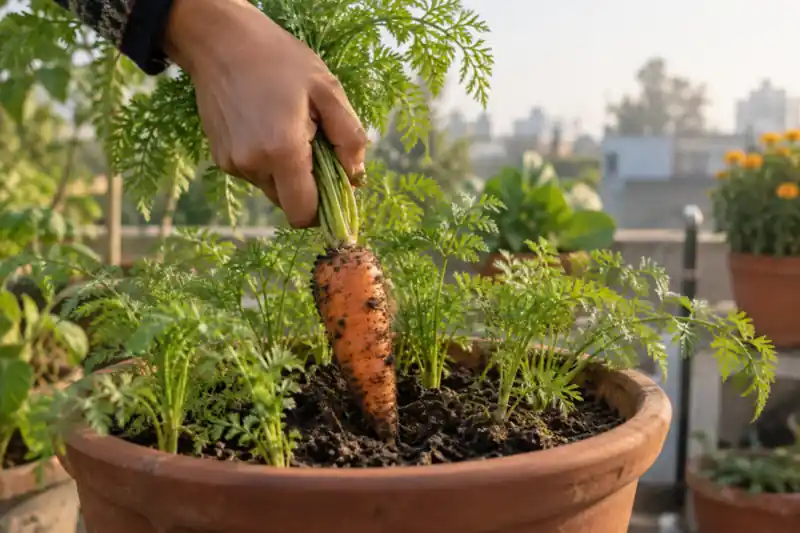
Most carrots are ready 70 to 100 days after sowing, depending on the variety and weather. Check the shoulder at the soil line: when it reaches the width typical of your variety, gently brush away soil to look at the root.
- Water the pot lightly a few hours before harvest so the soil loosens.
- Hold the leaves close to the crown and pull straight up with a slight twist.
- Twist off the leafy tops soon after harvest so the roots stay firm longer.
To keep fresh carrots coming through winter, sow a new pot every three to four weeks. You can pair carrots with other cool-season crops from our list of vegetables to grow in November.
Frequently Asked Questions
How long do carrots take to grow in pots?
Most varieties take about 70 to 100 days from sowing to harvest. Short orange types are often ready sooner than long desi red carrots.
Why are my carrot seeds not germinating?
The usual reasons are old seed, sowing too deep, or the soil surface drying out. Sow shallow, keep the top layer moist and give it up to three weeks.
Why are my carrots forked or twisted?
Stones, hard clods, fresh manure and crowding are the common causes. A fine, loose mix and proper thinning usually solve it.
Can I grow carrots in a grow bag?
Yes. A grow bag at least 30 cm deep works well and is easy to empty at harvest. Water a little more often, as fabric dries faster.
Do carrots need fertilizer?
Only a little. Compost in the mix and one or two light top-dressings are usually enough. Avoid high-nitrogen feeds, which favour leaves over roots.
Can I regrow carrots from kitchen scraps?
A carrot top in water will sprout leaves, but it will not grow a new root. For carrots to eat, you need to sow seeds.
Start Your Winter Carrot Pot
A deep pot, a fine soil mix and steady moisture are most of what you need for a good carrot harvest. Build that mix with Gardenica Vermi Compost for a loose, rich base, and if you have questions about your pots or soil, contact the Gardenica team.
Looking for more?
Continue to our main page to explore products and services.