How to Grow Mint in Pots: A Pudina Guide for Indian Balconies
How to Grow Mint in Pots: A Pudina Guide for Indian Balconies
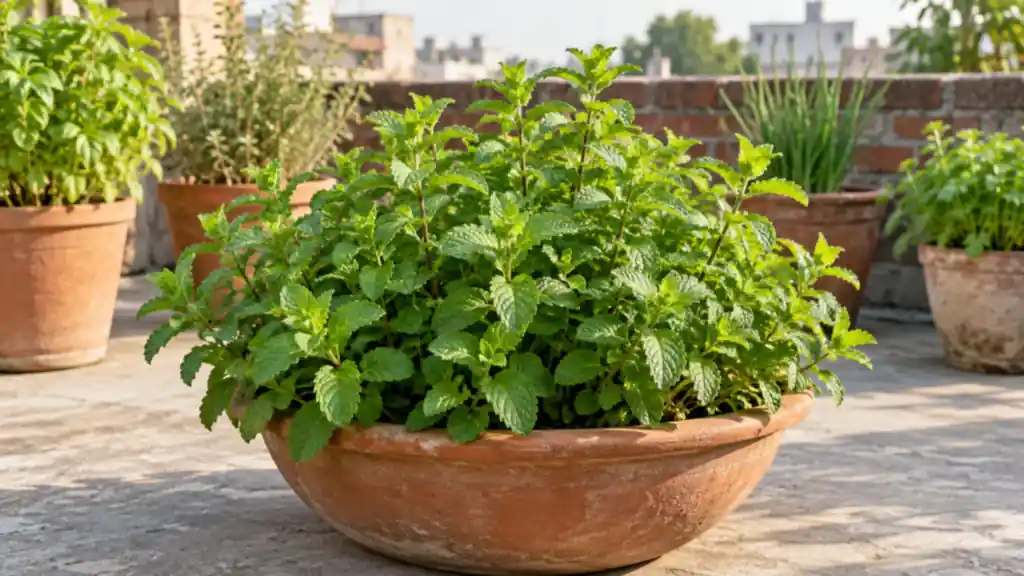
A pot of fresh pudina by the kitchen door means chutney, raita and nimbu-pani mint whenever you want it, without wilted bunches from the market. If you have wondered how to grow mint in pots, the good news is that mint is one of the easiest herbs for Indian balconies and terraces. It roots quickly, grows fast and forgives small mistakes. This guide covers choosing the right pot, starting mint from cuttings, soil, sun, watering, feeding, harvesting and fixing common problems, so your plant stays bushy through the cool months and beyond.
Mint spreads through underground runners and can take over an open bed, so a container is its natural home. November to February is a comfortable time to start it in most of the Indian plains, with mild sun and less heat stress.
Read more: Explore Gardenica Vermi Compost
Choosing the Right Pot for Mint
Mint roots stay fairly shallow but spread sideways. A wide pot gives the runners room and gives you more stems to harvest.
Size and shape
Choose a pot at least 10 to 12 inches wide and 6 to 8 inches deep. A wide, shallow terracotta bowl, a rectangular planter or a grow bag all work well. One pot of this size can keep a small family supplied with leaves for daily use.
Drainage
Make sure the pot has at least one good drainage hole. Mint likes moist soil, but water standing at the bottom leads to rotting roots and yellow leaves. Raise the pot slightly on bricks or pot feet so water can escape freely.
How to Grow Mint from Cuttings
Growing mint from cuttings is the quickest way to start. A fresh bunch from the vegetable vendor is usually enough.
- Pick firm, green stems that are not slimy or dried out.
- Cut 10 to 15 cm long pieces just below a leaf joint (node).
- Remove the lower leaves so that two or three nodes are bare.
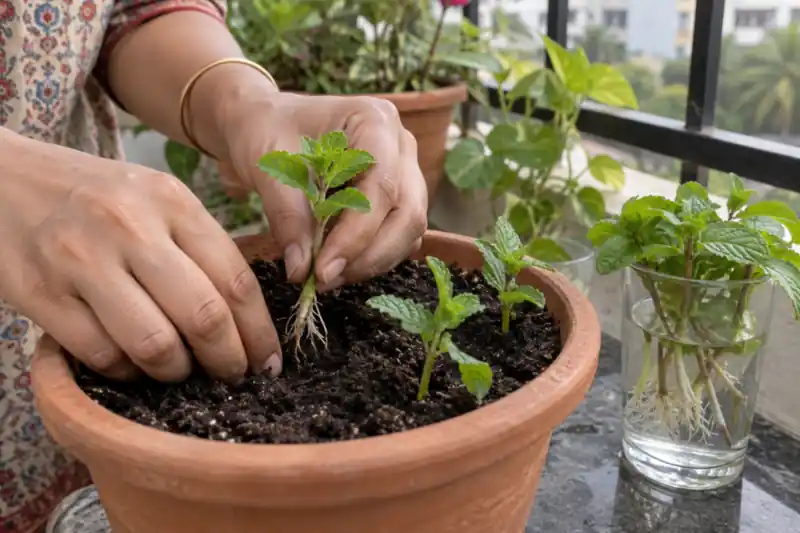
- Place the stems in a glass of clean water with the bare nodes submerged. Keep it in bright light, out of harsh direct sun.
- Change the water every two days. White roots usually appear within one to two weeks.
- Once roots are 3 to 5 cm long, plant four to six cuttings per pot, about 2 inches deep, and water gently.
You can also push cuttings straight into moist potting mix. This works well too, but keep the pot in light shade for the first week until new leaves appear.
Best Soil Mix for Mint in Containers
The best soil for mint holds moisture yet drains well and is rich in organic matter. A simple home mix works:
- About 50 percent garden soil or red soil
- About 30 percent well-rotted compost or vermicompost
- About 20 percent cocopeat or coarse sand for drainage
For more detail on balancing these parts, see our potting mix guide for kitchen gardens. Avoid heavy clay soil on its own, as it stays soggy and compacts quickly.
Mint Plant Care: Sun, Water and Feeding
Good mint plant care comes down to three things: the right light, steady moisture and light, regular feeding.
Sunlight
Mint grows best with four to six hours of sunlight. In winter, a sunny balcony or terrace spot is ideal. In April to June, move the pot to a place with morning sun and afternoon shade, because strong afternoon heat scorches the leaves.
Watering
Keep the soil evenly moist but never waterlogged. Water when the top inch feels dry. In cool weather this may mean every two or three days; in peak summer it can be daily. Water at the base rather than over the leaves. Our guide on watering kitchen garden plants explains how to check moisture with your finger.
Feeding
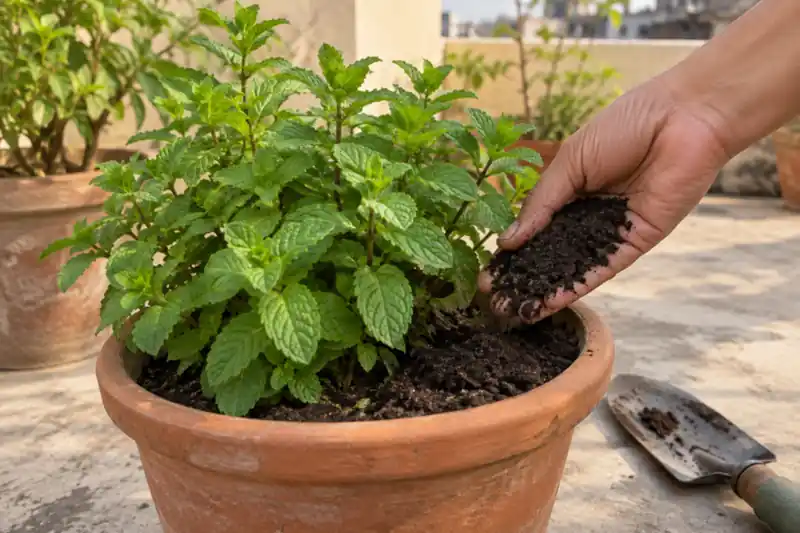
Mint is a leafy herb, so it needs a steady supply of nutrients after every few harvests. Add a thin layer of vermicompost around the plant every three to four weeks and mix it lightly into the top soil. You can read more on how to use vermicompost in pots. If growth looks slow, a gentle organic plant tonic can help; always follow the product label for quantity. Avoid heavy chemical feeding, as you will eat these leaves fresh.
Have a question about this topic?
Chat on WhatsAppHow to Harvest Mint for Bushy Growth
Harvesting is also pruning. The more correctly you pick, the fuller the pot becomes.
- Start picking once stems are about 15 cm tall.
- Cut or pinch the stem just above a pair of leaves. Two new shoots will grow from that point.
- Never remove more than one third of the plant at a time.
- Pinch off flower buds when they appear. Flowering slows new leaf growth and the leaves can lose some flavour.
Every few months, cut the whole plant back to about 5 cm above the soil, feed it and water it well. It usually returns thicker within a few weeks.
Common Mint Plant Problems and Fixes
Most mint plant problems come from too much water, too little light or crowded, tired roots.
Yellow leaves
Yellowing lower leaves often point to overwatering or poor drainage. Let the top soil dry slightly between waterings. If the pot stays wet for days, check the roots; our post on root rot in potted plants explains what to look for.
Mint rust and leaf spots
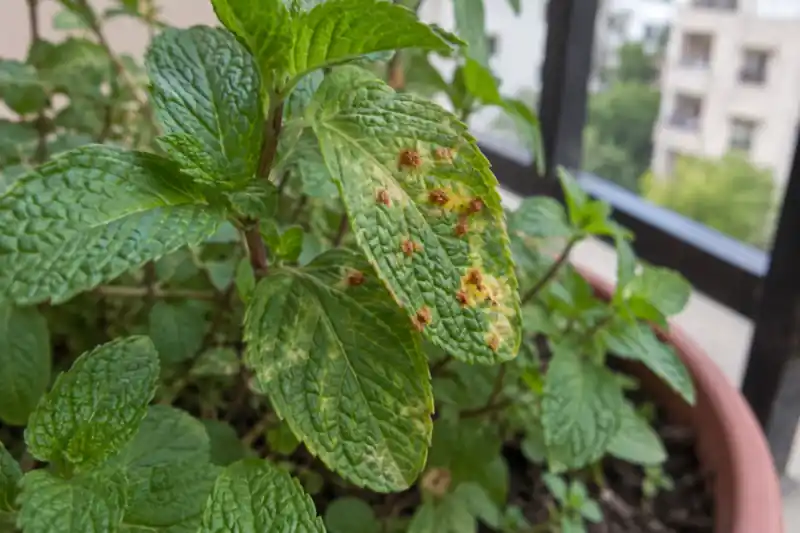
Small orange-brown pustules under the leaves are a sign of mint rust, a fungal disease. Remove and discard affected stems (do not compost them), improve airflow by thinning crowded growth and avoid wetting the leaves. A suitable organic fungicide can be used as directed on its label.
Pests
Aphids, whiteflies and spider mites sometimes appear on the soft tips. Wash them off with a strong spray of plain water first. For repeat attacks, a diluted neem oil spray in the evening helps; see our neem oil mixing guide. Rinse leaves well before eating.
Leggy, thin stems
Long stems with small leaves usually mean low light or too little pruning. Move the pot to a brighter place and cut back hard.
Common Mistakes When Growing Mint in Pots
- Using a deep, narrow pot. Mint needs width more than depth.
- Planting mint with other herbs in one pot. Its runners crowd out tulsi, coriander and others.
- Keeping the soil soggy. Moist is good; standing water is not.
- Letting it flower. Pinch buds early to keep leaves coming.
- Never repotting. After about a year, roots get crowded. Divide the clump, replant the healthiest part in fresh mix and share the rest.
- Harsh summer sun. Afternoon shade from April to June prevents scorched leaves.
Frequently Asked Questions
Can I grow pudina at home from market mint?
Yes. To grow pudina at home, choose fresh, firm stems from the market, root them in water for one to two weeks and then plant them in a wide pot.
How long does mint take to grow in a pot?
Rooted cuttings usually settle in within two weeks. You can start light picking in about four to six weeks, depending on season and sunlight.
How often should I water a potted mint plant?
Water when the top inch of soil feels dry. That may be every two or three days in winter and daily in hot summer weather.
Does mint need full sun?
Mint grows best with four to six hours of sun. In Indian summers, afternoon shade helps prevent leaf scorch.
Why is my mint plant dying after a few months?
Common reasons are waterlogged soil, crowded roots, too little light or no feeding after repeated harvests. Repotting into fresh mix and cutting back usually revives it.
Can mint grow indoors?
It can grow on a very bright windowsill, but growth is often weaker indoors. A balcony or terrace with some direct sun gives better results.
Keep Your Pudina Pot Green All Year
With a wide pot, a rich, well-drained mix, steady moisture and regular picking, one small mint plant can supply your kitchen for months. Feed it lightly with organic compost after harvests and refresh the pot once a year. To enrich your mint pots naturally, explore Gardenica Vermi Compost, and if you have questions about your plants, contact the Gardenica team.
Looking for more?
Continue to our main page to explore products and services.