How to Grow Peas in Pots: A Matar Guide for Indian Homes
How to Grow Peas in Pots: A Matar Guide for Indian Homes
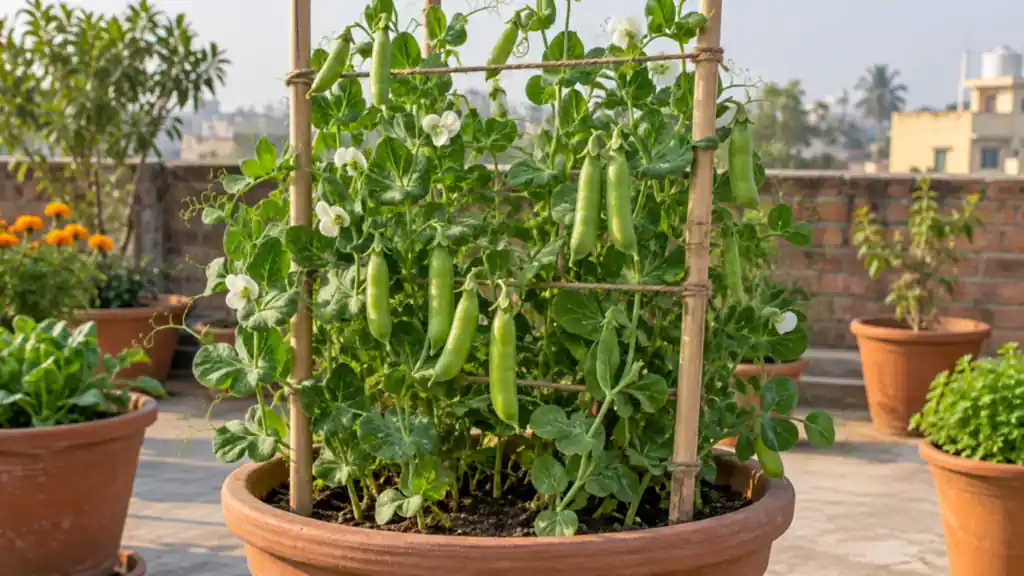
Fresh green matar straight from your own terrace tastes far sweeter than peas that have sat in a market crate for days. The good news is that you do not need a farm to enjoy them. If you know how to grow peas in pots, a few deep containers and a sunny corner are enough for a steady winter harvest. This guide walks you through the right sowing time, pot size, soil, support, feeding, pest care and harvesting, written for balcony and terrace gardeners across India.
Why Peas Are a Great Winter Crop for Pots
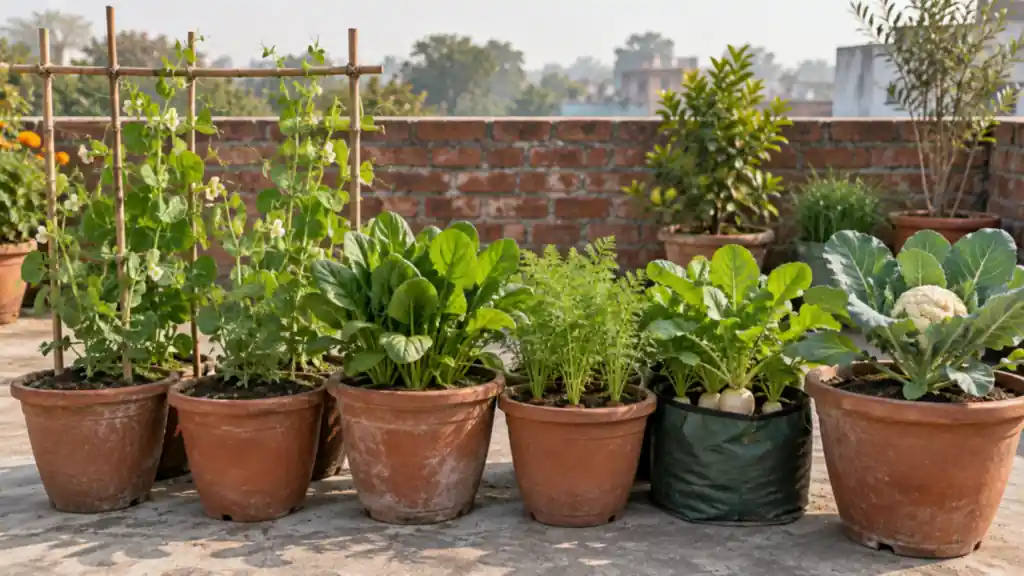
Peas are a cool-season crop. In most of the Indian plains they are sown from mid-October to late November, when days are mild and nights are cool. They grow quickly, take up little floor space when trained upwards, and many early varieties are ready to pick in about two months.
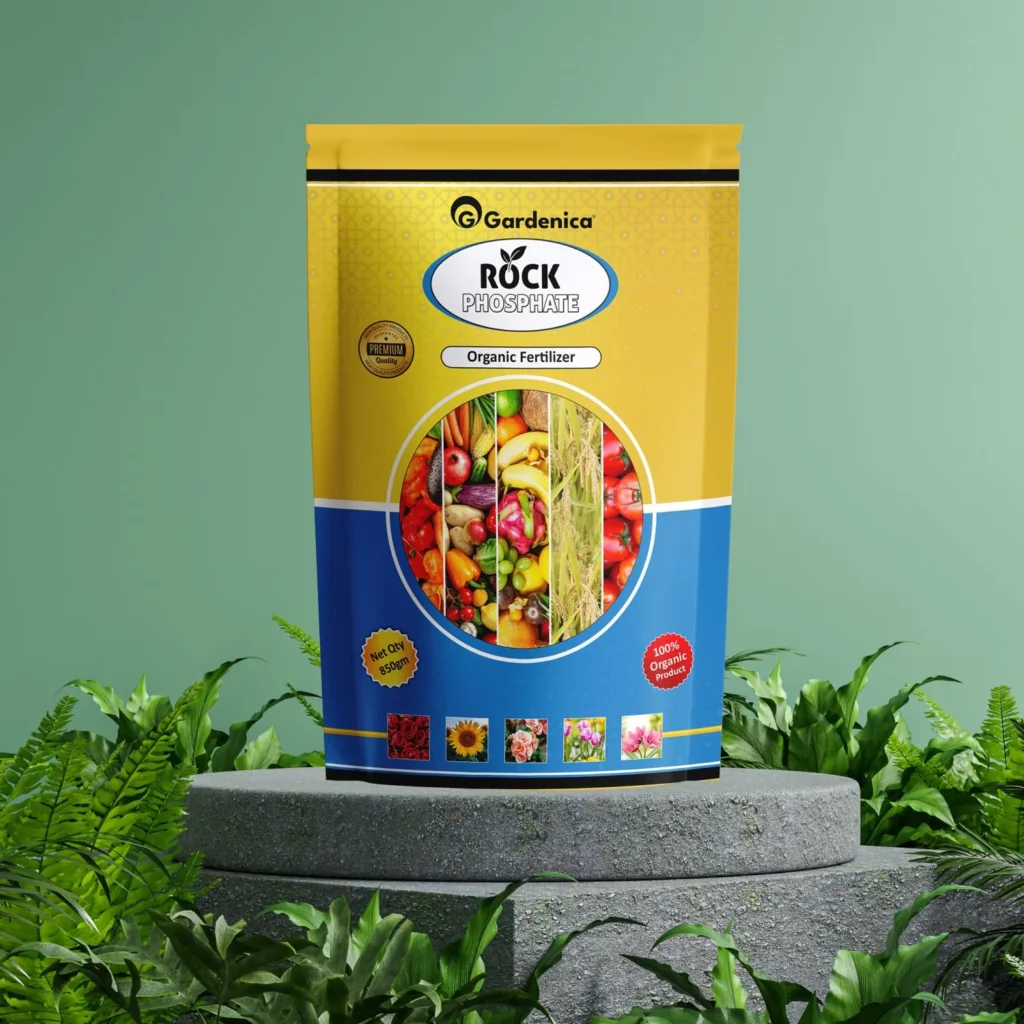
Read more: Explore Gardenica Rock Phosphate
They improve the soil as they grow
Like other legumes, pea roots host bacteria that help the plant use nitrogen from the air. This means peas need less nitrogen feeding than leafy crops, and the used potting mix is often in good shape for the next crop.
They suit small spaces
Dwarf and semi-dwarf types stay around 45 to 75 cm tall, which is ideal for balconies. Taller climbing types give more pods but need a sturdier trellis.
Best time to sow peas in India
Timing matters more than anything else with peas. Seeds germinate poorly in hot soil, and plants stop flowering once temperatures climb.
- North India plains: mid-October to mid-November is the usual window.
- Central and western India (including Gujarat): late October to November, once the post-monsoon heat eases.
- South India: November to December in cooler months; hill areas follow their own spring and autumn seasons.
Sowing a small batch every two to three weeks gives a longer picking season instead of one big flush. For other crops to sow alongside, see our guide on vegetables to grow in November in India.
Choosing Pots, Seeds and Potting Mix
Pot size
Use a container at least 25 to 30 cm (10 to 12 inches) deep with good drainage holes. A long rectangular planter or a grow bag works well because you can sow a row and fix a trellis along one side.
Seed choice
For containers, pick early dwarf varieties such as Arkel, which are widely sold in India and mature quickly. Buy fresh seed from a trusted source and check the packet for sowing season.
Potting mix for peas
Peas like a loose, well-drained mix that holds some moisture but never stays soggy. A simple blend is:
- About 50 percent garden soil or cocopeat-soil mix
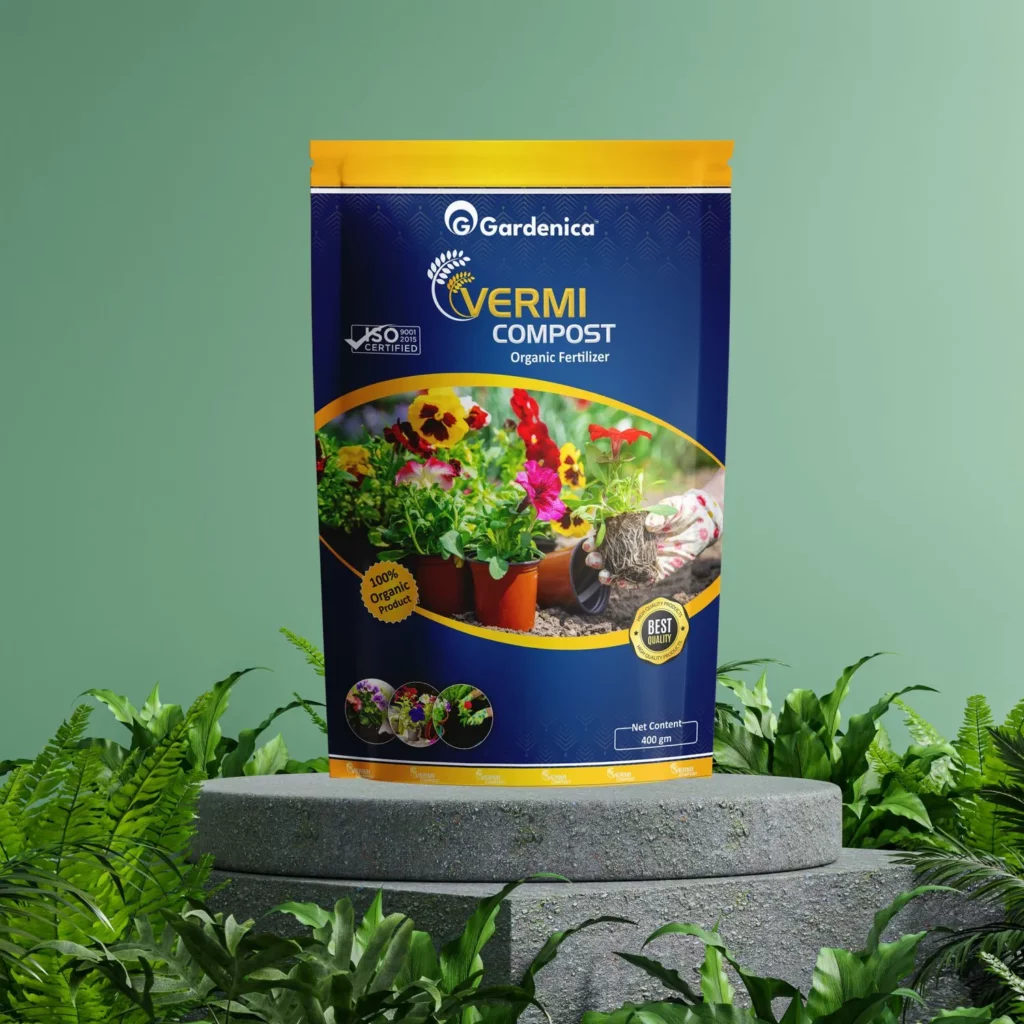
- About 30 percent well-rotted compost or vermicompost
- About 20 percent coarse sand or perlite for drainage
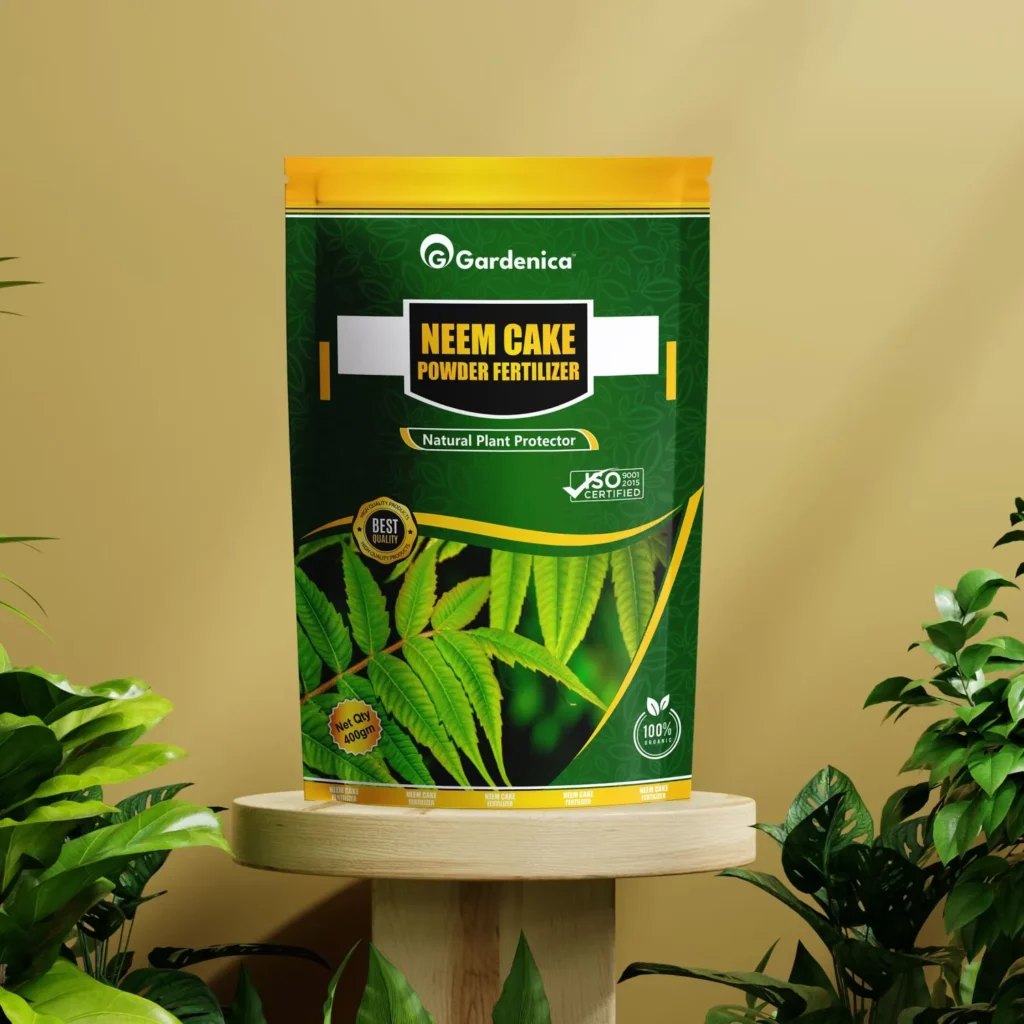
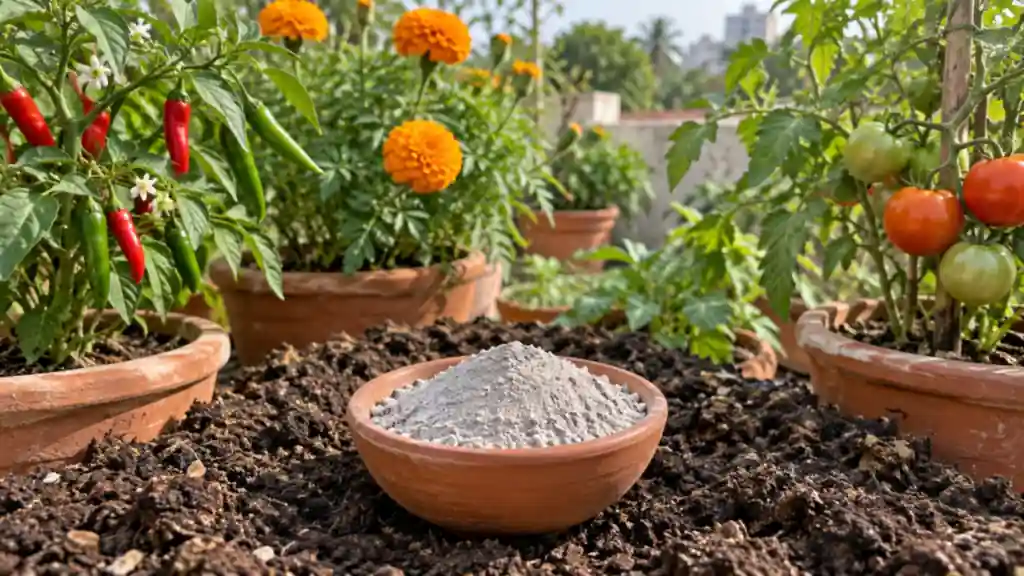
A little neem cake mixed in helps keep the mix healthy, and a phosphorus source such as rock phosphate supports root and flower growth. Our potting mix guide explains each ingredient in more detail.
How to Sow Pea Seeds in Pots: Step by Step
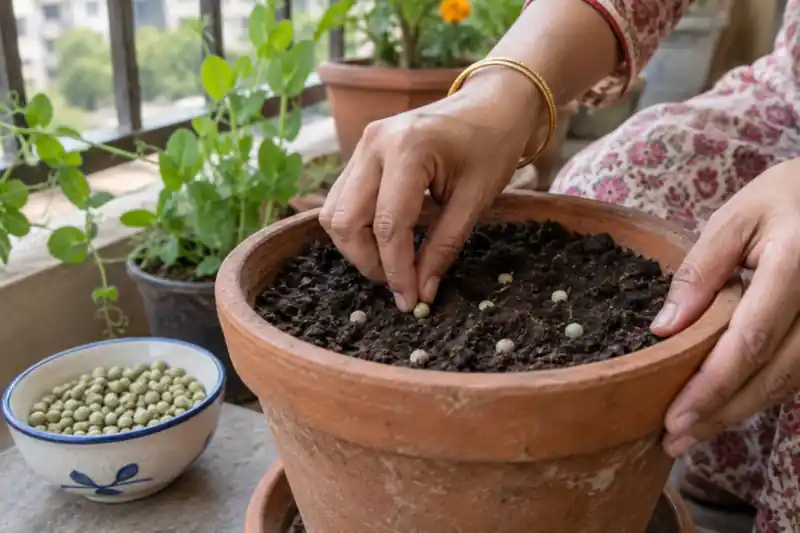
- Soak the seeds in plain water for 6 to 8 hours or overnight. Do not soak much longer, as seeds can split.
- Fill the pot to about 2 cm below the rim and water it lightly so the mix is evenly moist.
- Sow 2.5 to 3 cm deep, spacing seeds about 5 to 7 cm apart. In a 30 cm round pot, 8 to 10 seeds is plenty.
- Cover and firm the soil gently with your palm.
- Keep the mix just moist, not wet. Overwatering before sprouting is the main reason pea seeds rot.
- Expect sprouts in 7 to 12 days, depending on temperature.
Sunlight, Watering, Support and Feeding
Sunlight
Place pots where they get at least 5 to 6 hours of direct sun. Winter sun is gentle, so a south or east-facing terrace usually suits peas well.
Watering
Water when the top 2 to 3 cm of soil feels dry. Pots on windy terraces dry faster, so check daily. Steady moisture is most important during flowering and pod filling. Water at the base in the morning to keep leaves dry and reduce the risk of fungal problems.
Pea plant support and trellis
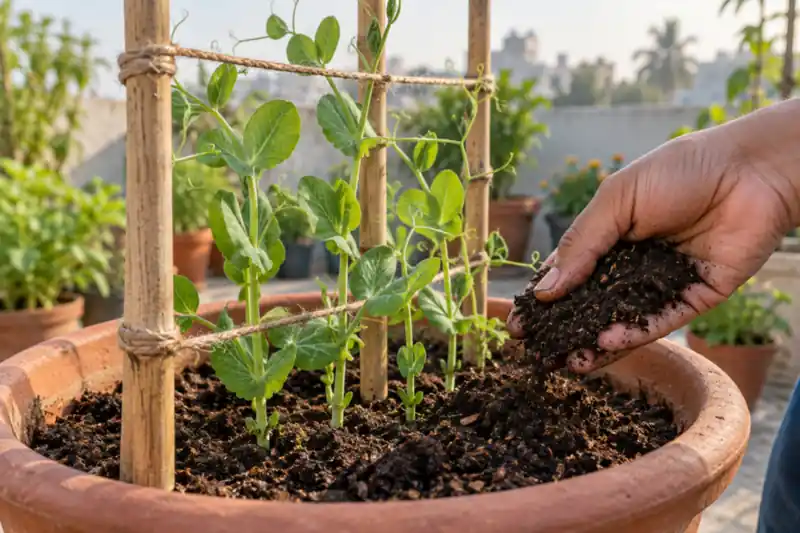
Fix the support at sowing time so you do not disturb roots later. Bamboo sticks with jute twine, a small net, or dry twiggy branches all work. Once seedlings reach about 10 cm, guide the tendrils towards the support; they will grip on their own after that.
Have a question about this topic?
Chat on WhatsAppFeeding pea plants in containers
Because peas fix some of their own nitrogen, heavy nitrogen feeding is not needed and can produce lots of leaves with few pods. Focus instead on a rich base mix and gentle top-ups.
- At sowing: compost or vermicompost in the mix, plus a phosphorus source such as rock phosphate for roots and flowering.
- About 3 to 4 weeks after sprouting: add a thin layer of vermicompost around the base and water it in.
- At flowering: a light organic feed can support pod setting.
For any product, follow the dose on the label. Read more about using rock phosphate for plants in pots.
Common Pests and Diseases of Pea Plants
Powdery mildew
This is the most common problem, showing as white powdery patches on leaves, usually later in the season. Improve air flow, avoid wetting leaves, and remove badly affected leaves. Our powdery mildew guide explains treatment options.
Aphids and leaf miners
Aphids cluster on tender tips, while leaf miners leave pale winding lines inside leaves. Pick off mined leaves, wash aphids away with a jet of water, and use a neem-based spray if needed, following label directions.
Root and stem rot
Soggy soil can cause seedlings to collapse at the base. Good drainage and careful watering prevent most cases.
Common Mistakes When Growing Peas in Pots
- Sowing too early while the weather is still hot, leading to poor germination.
- Using shallow pots that dry out quickly and cramp roots.
- Overwatering seeds before they sprout, which makes them rot.
- Too much nitrogen fertilizer, giving leafy plants with few pods.
- Adding support too late, so plants flop and roots get disturbed.
- Leaving mature pods on the plant, which signals it to slow down flowering.
When and How to Harvest Peas
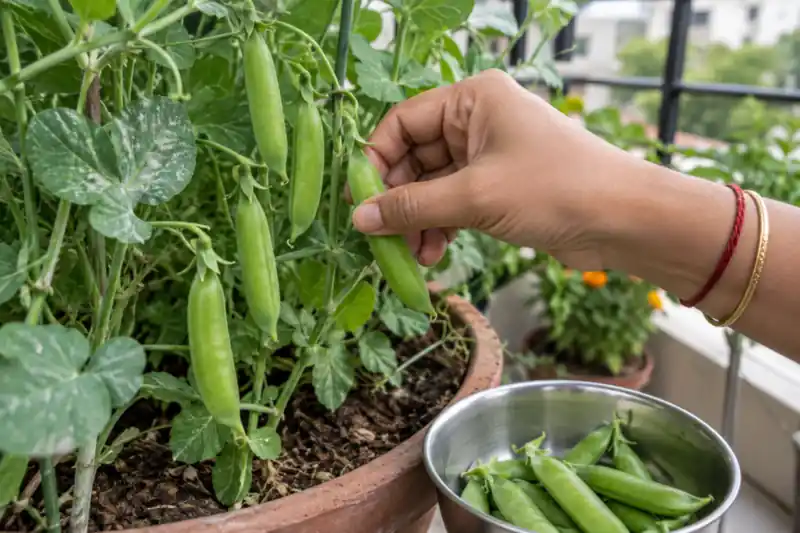
Most early varieties start flowering about 5 to 6 weeks after sowing, and pods are usually ready 2 to 3 weeks after flowers appear. Pick pods when they look plump and bright green but before they turn pale or wrinkled. Hold the stem with one hand and pull the pod with the other so you do not damage the vine. Picking every two to three days keeps the plant producing for longer. Shell and cook peas soon after harvest for the sweetest taste.
Frequently Asked Questions
How many pea plants can I grow in one pot?
A 30 cm (12 inch) round pot can hold about 8 to 10 plants spaced 5 to 7 cm apart. A long planter can take a full row.
How long do peas take to grow in pots?
Early varieties are usually ready for the first picking in about 60 to 70 days from sowing, depending on variety and weather.
Can I grow peas on a balcony without much sun?
Peas need at least 5 to 6 hours of direct sun. With less light, plants grow tall and weak and produce few pods.
Do pea plants need a trellis?
Even dwarf varieties do better with a short support. Climbing types must have a trellis or net.
Why are my pea plants flowering but not making pods?
Common reasons are rising heat, uneven watering during flowering, or too much nitrogen. Keep moisture steady and avoid nitrogen-heavy feeds.
Can I reuse the potting mix after peas?
Yes. Remove roots and debris, mix in fresh compost, and the mix is usually ready for a leafy crop such as palak or methi.
Start Your Pea Pots This Season
With a deep pot, a well-drained mix, a simple trellis and steady watering, peas are one of the most rewarding winter crops for Indian terraces. Build the mix with good organic inputs such as Gardenica Rock Phosphate and vermicompost, and you will be picking sweet pods in a couple of months. Have a question about your plants? Contact the Gardenica team for help.
Looking for more?
Continue to our main page to explore products and services.