Root Rot in Potted Plants: Signs, Causes and How to Save Your Plant
Root Rot in Potted Plants: Signs, Causes and How to Save Your Plant
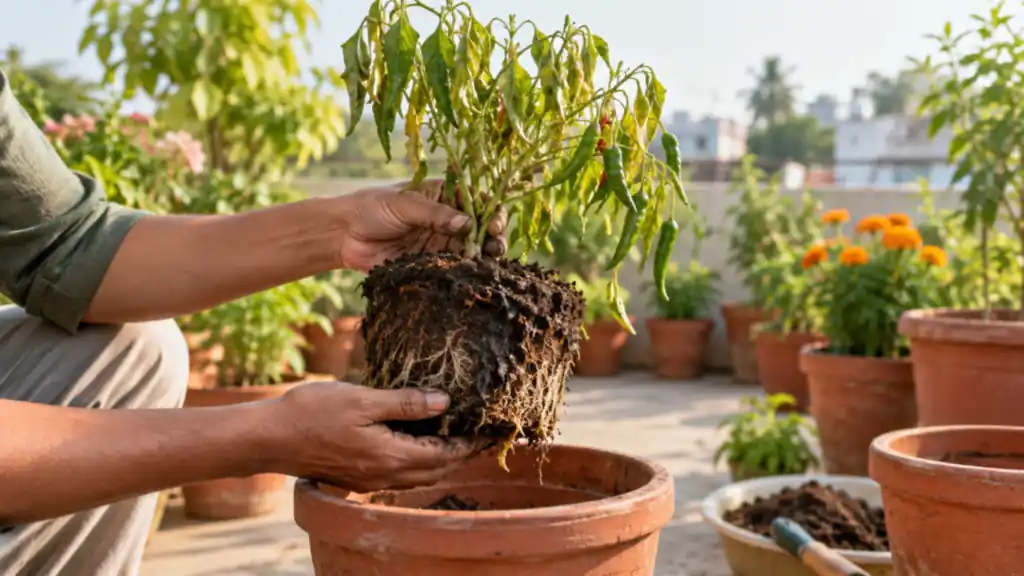
You water your chilli plant every day, the soil is always moist, yet the leaves keep drooping as if the plant is thirsty. This is one of the most common puzzles on Indian balconies and terraces, and very often the answer lies under the soil. Root rot in potted plants starts quietly in wet, airless soil and only shows up above ground once a good part of the root system is already damaged. The good news is that if you catch it early, many plants can be saved with a few simple steps.
This guide covers the signs, the causes, step-by-step treatment and prevention, especially for the cooler months when soil dries slowly.
Read more: Explore Gardenica Fungi Care
What Is Root Rot and Why Do Pots Get It?
Roots need both water and air. When soil stays soggy for days, the air spaces fill with water and roots cannot breathe. Weak roots begin to die, and soil-borne fungi and fungus-like organisms such as Pythium, Phytophthora, Rhizoctonia and Fusarium move in and speed up the decay.
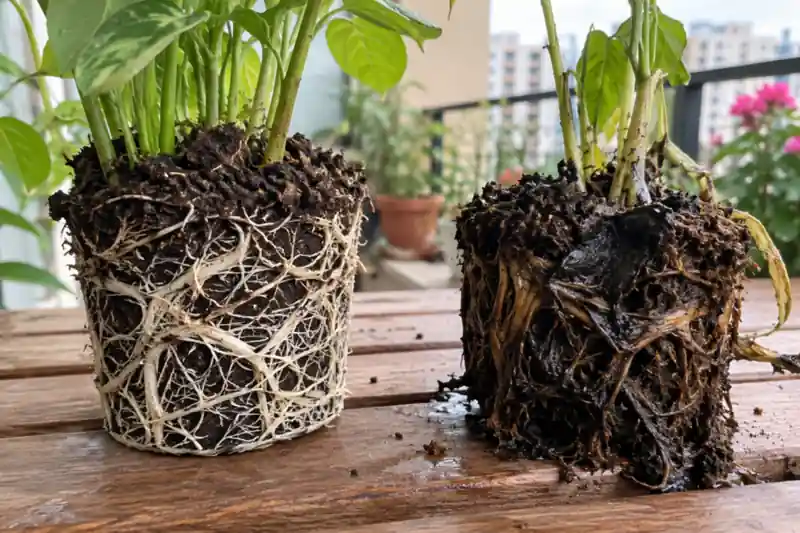
In a pot, water has only one way out: the drainage hole. If it is blocked or the mix is heavy, water sits at the bottom where most roots are.
Why it is common from November to February
In winter, plants grow slowly and drink much less, but many gardeners keep their summer watering routine. The soil stays wet far longer than roots can handle. Long monsoon spells do the same.
Signs of Root Rot You Should Not Ignore
Above-ground symptoms of root rot can look like underwatering, nutrient shortage or pest attack, which is why it is often missed. Watch for these clues together rather than one by one.
Symptoms on leaves and stems
- Wilting or drooping leaves even though the soil is wet
- Lower leaves turning yellow and falling off
- Slow or stopped growth, with new leaves coming out small
- A soft, dark or mushy stem base just above the soil
Symptoms in the soil and roots
- A sour or rotten smell from the pot
- Soil that stays wet for many days and may show green algae or white mould on top
- Roots that are brown or black, slimy and break easily; the outer skin may slip off when you pull gently
Healthy roots are usually white or light cream, firm and slightly springy. The only sure way to know is to look at them.
Main Causes of Root Rot in Pots
Root rot is almost always a water and air problem first and a fungal problem second. The common causes are:
- Overwatering: watering on a fixed schedule instead of checking the soil.
- Poor drainage: no hole, a blocked hole, or a pot sitting in a saucer full of water.
- Heavy soil: plain garden soil or clay that packs down and holds water. Our guide to potting mix for kitchen gardens explains how to build a lighter mix.
- Oversized pots: a small plant in a very large pot leaves lots of wet soil that roots cannot use.
- Low light and cold: plants in shade or winter use less water, so the soil dries slowly.
How to Save a Plant With Root Rot: Step by Step
If you suspect root rot, act soon. The more healthy roots that are left, the better the chance of recovery.
- Stop watering and move the pot to a bright spot with indirect light.
- Remove the plant by tipping the pot and easing out the root ball. Shake off loose soil.
- Rinse the roots gently in a bucket of clean water so you can see them clearly.
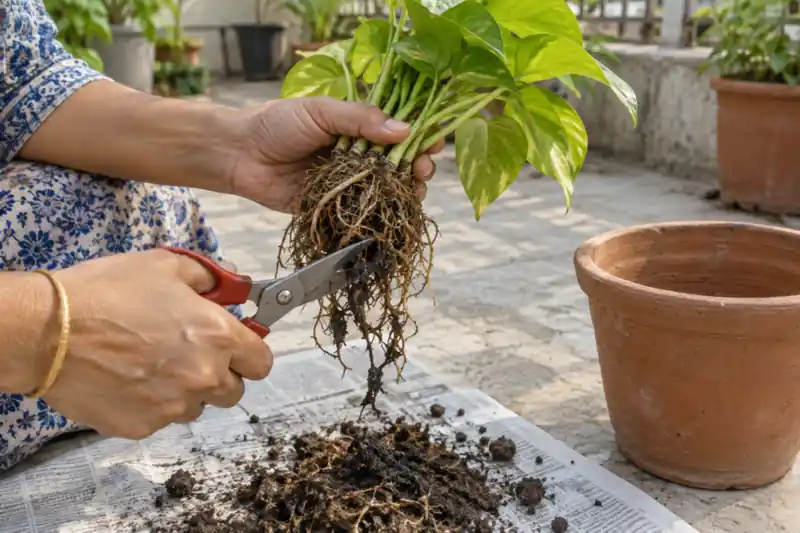
- Trim the damaged roots with clean, sharp scissors. Cut away every brown, black or mushy root back to firm, light-coloured tissue. Wipe the blades with rubbing alcohol between cuts.
- Thin the top growth a little if you removed many roots, so the smaller root system has less foliage to support.
- Let the roots air-dry in shade for 30 to 60 minutes.
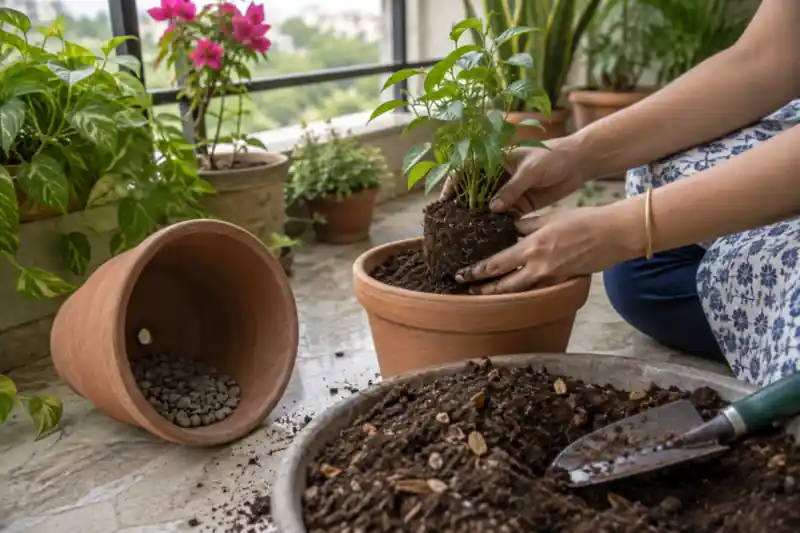
- Repot in fresh, well-draining mix in a clean pot that is only slightly bigger than the root ball. Never reuse the old soil.
- Water lightly once to settle the mix, then wait until the top 2 to 3 cm feels dry before watering again.
When a plant cannot be saved
If nearly all roots are soft and the stem base has collapsed, recovery is unlikely. For herbs like tulsi or mint, root a few healthy stem cuttings in fresh mix instead.
Root Rot Treatment: Choosing Inputs Carefully
Trimming and repotting do most of the work. Inputs can support recovery, but they cannot fix a pot that stays waterlogged.
Have a question about this topic?
Chat on WhatsAppFresh, airy potting mix
A mix of garden soil, cocopeat and well-rotted compost such as vermicompost, with some coarse sand or small pebbles, drains well while holding enough moisture. Avoid packing it down hard.
Neem cake as a soil additive
Many Indian gardeners mix a small amount of neem cake powder into potting soil as an organic soil conditioner. Our neem cake powder guide covers how to use it in pots. Follow the quantity printed on the pack.
Plant-protection products for fungal problems
If rot keeps returning, a product made for fungal problems can be used as a soil drench. Check that the label covers your plant and problem, and follow its dose and interval.
Hold back on fertiliser
Damaged roots cannot take up nutrients well. Wait until fresh new leaves appear, usually after three to four weeks, then resume light feeding.
How to Prevent Root Rot in Potted Plants
Prevention is far easier than cure. A few habits keep roots healthy all year.
- Check before you water: push a finger 2 to 3 cm into the soil; water only if it feels dry. Our guide on watering kitchen garden plants has more detail.
- Use pots with drainage holes and keep the holes clear. Empty saucers 15 to 20 minutes after watering.
- Raise pots on bricks or pot stands so water can flow out freely, especially during the monsoon.
- Pick the right pot size: move up only 2 to 5 cm in width when repotting.
- Water less in winter: most plants need water less often from November to February.
- Clean old pots by scrubbing and sun-drying them before reuse.
Seedlings need extra care
Young seedlings can collapse at the base within days in wet soil. See our guide on damping off in seedlings.
Common Mistakes When Treating Root Rot
- Watering a wilting plant more: in wet soil, wilting means the roots are not working.
- Reusing the old soil: it can carry the organisms that caused the rot.
- Leaving mushy roots in place: they keep the decay going.
- Moving to a much bigger pot: extra soil stays wet.
- Feeding to "boost" recovery: fertiliser stresses damaged roots.
- Harsh afternoon sun: a weak root system cannot keep up with water loss.
Frequently Asked Questions
Can a plant recover from root rot?
Yes, if some firm, healthy roots remain. After trimming and repotting, most plants show new growth in two to four weeks. Plants that have lost almost all their roots rarely recover.
How do I know if it is root rot or underwatering?
Feel the soil. If the plant is wilting and the soil is dry, it likely needs water. If it is wilting while the soil is wet, root rot is the more likely cause. Checking the roots confirms it.
Does root rot spread to other pots?
The organisms involved can travel through shared tools, reused soil and drain water. Keep affected pots apart and clean your tools.
Which plants get root rot most often in Indian homes?
Succulents, snake plants, tulsi, chillies, tomatoes and many indoor foliage plants are often affected, especially in winter and the monsoon when soil dries slowly.
Can I reuse a pot after root rot?
Yes. Throw away the old soil, scrub the pot with soapy water, rinse well and dry it in the sun for a day or two before using it again.
Keep Your Pot Roots Healthy
Root rot is mostly about too much water and too little air, so the best defence is light soil, open drainage holes and watering by feel rather than by habit. If fungal trouble keeps returning in your pots, take a look at Gardenica Fungi Care and read its label to see whether it suits your plants. For help choosing the right product for your garden, contact the Gardenica team.
Looking for more?
Continue to our main page to explore products and services.