Bentonite for Potted Plants: Fix Waterlogged Soil in Winter Pots
Bentonite for Potted Plants: Fix Waterlogged Soil in Winter Pots
It is a cloudy December morning on a Delhi balcony and the soil in your tomato pot still looks dark and wet, two days after you watered it. The leaves are drooping even though the mix is damp, and there is a faint sour smell when you scratch the surface. That is bentonite for potted plants territory: a soil-structure problem, not a watering problem, and one of the most common complaints from Indian pot gardeners in winter.
Here the Gardenica team explains how to tell whether your pot mix is holding too much water, what bentonite clay actually does inside a container, how much to use, and how to fix a waterlogged pot without losing the plant.
Read more: Explore Gardenica Bentonite Granules
Why Winter Pots Get Waterlogged
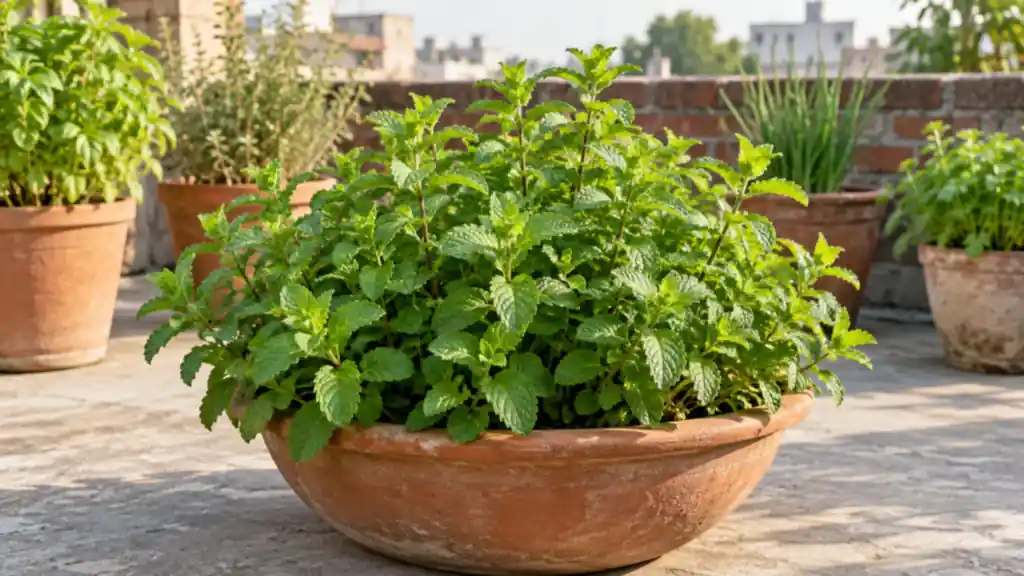
Winter slows everything down. Sunlight is weaker, evaporation drops, plants drink far less, and cloudy weeks stretch watering gaps. If your mix is mostly fine cocopeat, old compost or garden soil, the tiny pores stay filled with water instead of air, and roots begin to suffocate. Add hard tap water, which leaves salts behind, and a compacted pot from months of top watering, and you have the classic winter waterlog.
Containers make this worse than beds, because a pot has only a few drainage holes and no sideways escape for water. A mix that drains fine on a Pune terrace in September can sit soggy in the same pot in January.
How to Check Your Pot Mix in Five Minutes
Confirm the diagnosis before adding anything.
- The squeeze test. Squeeze a handful of soil from the middle of the pot and poke it. A tight ball that breaks into hard clods means the mix is too fine and compacting.
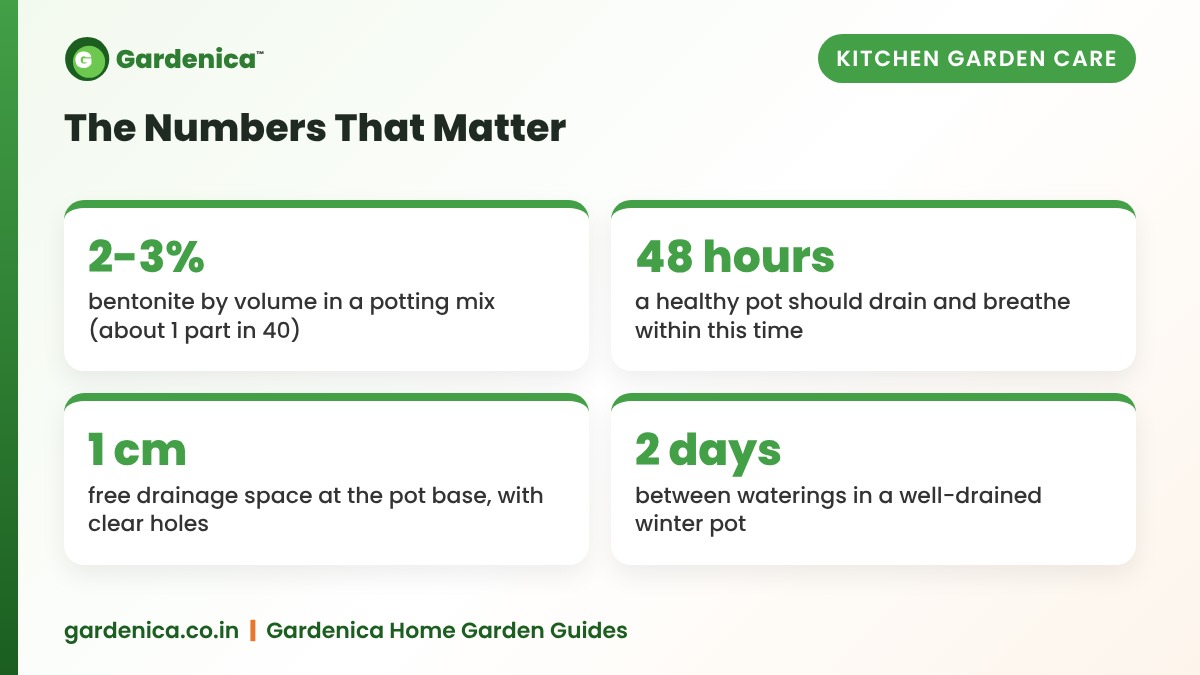
- The drain test. Water thoroughly, then check the holes after 30 minutes. If water is still trickling out after an hour, or the pot feels heavy after two days, drainage is poor.
- The smell test. Healthy mix smells earthy. A sour, swampy smell means the soil has been short of oxygen.
- The root check. Tip out a small pot. White or cream roots are fine; brown, mushy roots with a rotten smell mean root rot (see our guide on root rot in potted plants).
What Bentonite Clay Does in a Pot
Bentonite is a soft volcanic clay that swells as it absorbs water and, more usefully, helps tiny soil particles bind into small crumbs instead of one dense mass. Those crumbs create the air pockets roots need. In a container, Gardenica Bentonite Granules act as a soil conditioner: they support soil structure, hold moisture in the mix so it reaches roots slowly, and give roots a steadier place to grow.
Two points matter. Bentonite is not a fertiliser, so it does not feed the plant; it improves the home the roots live in. And it is not a drainage rock like perlite. It works inside the soil, binding fine particles, so it suits heavy, compacting mixes rather than a pot whose holes are simply blocked.
How Much Bentonite to Use in Pots
More clay holds more water, so restraint is the whole skill. A safe figure is 2-3% of the mix by volume, roughly one part granules to forty parts mix, or a large handful per 15 litre bucket of potting mix.
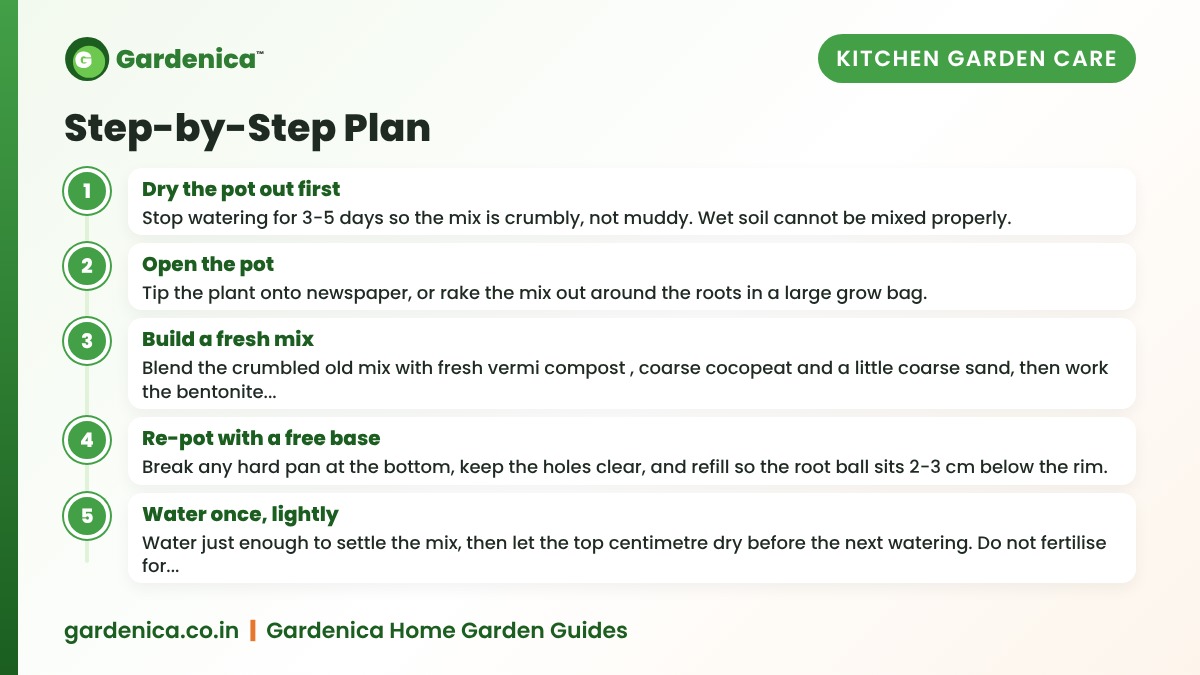
- Dry the pot out first. Stop watering for 3-5 days so the mix is crumbly, not muddy. Wet soil cannot be mixed properly.
- Open the pot. Tip the plant onto newspaper, or rake the mix out around the roots in a large grow bag.
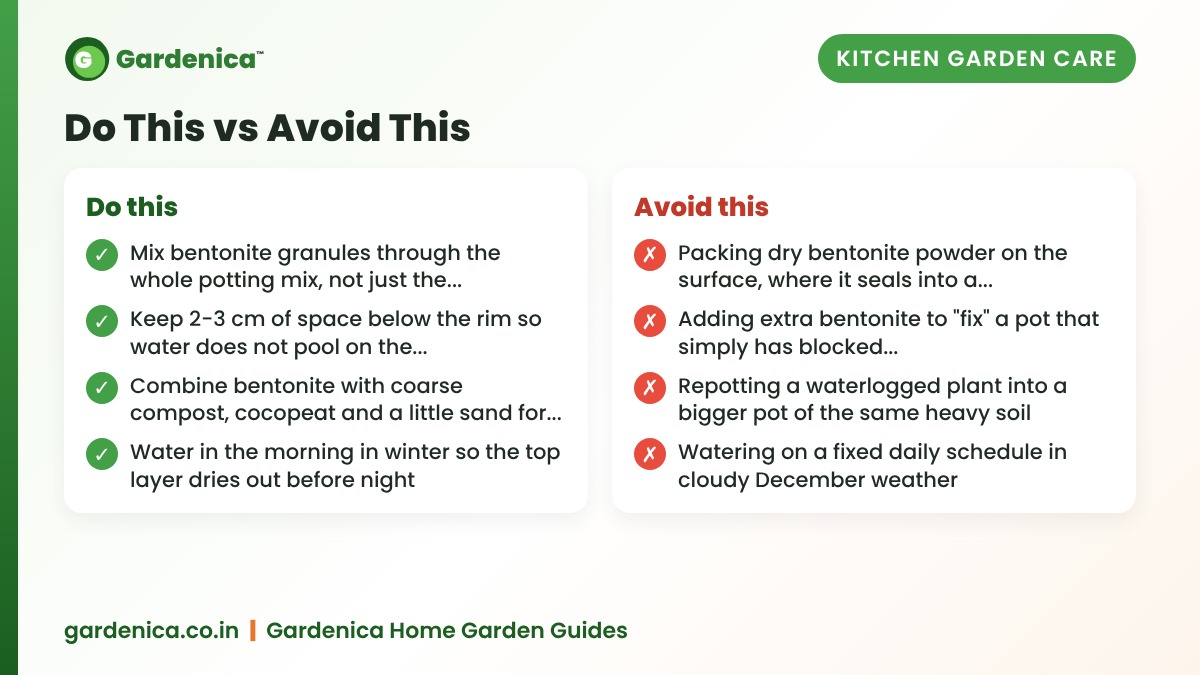
- Build a fresh mix. Blend the crumbled old mix with fresh vermi compost, coarse cocopeat and a little coarse sand, then work the bentonite granules evenly through it. Mixing only the top layer helps only the top layer.
- Re-pot with a free base. Break any hard pan at the bottom, keep the holes clear, and refill so the root ball sits 2-3 cm below the rim.
- Water once, lightly. Water just enough to settle the mix, then let the top centimetre dry before the next watering. Do not fertilise for 10-12 days while roots recover.
If the pot is still heavy two days after watering, the soil is the problem, not your watering can.
Building a Mix That Drains and Holds at Once
The goal is a mix that drains fast and still keeps moisture in the crumbs. A simple winter recipe for vegetables: 40% compost or vermi compost, 30% coarse cocopeat, 20% garden soil or old crumbled mix, 5% coarse sand, plus bentonite at 2-3%. Sand gives quick drainage, cocopeat keeps the mix light, compost feeds, and bentonite stops the whole thing collapsing into mud. For a full recipe, read our potting mix for kitchen gardens guide.
Have a question about this topic?
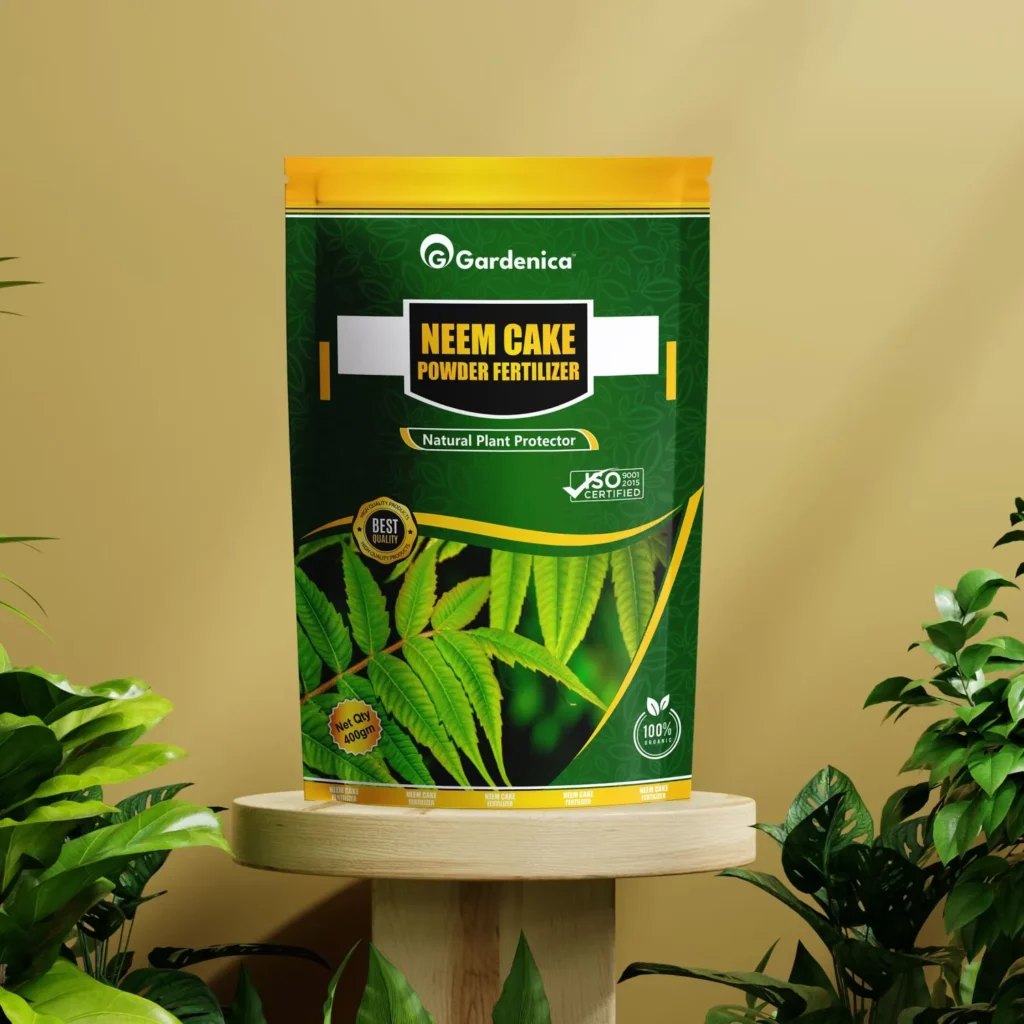
Chat on WhatsAppFeed the same mix properly, since weak roots cannot fix themselves. Gardenica Rich Fertilizer at the dose on its label, with a top dressing of neem cake powder worked into the surface, keeps soil life active while the bentonite does its structural work.
Watering and Soil Care in Waterlogged-Prone Pots
Even a good mix can be drowned. In Indian winters, water in the morning so the surface dries before night, and skip watering on dull days instead of following a calendar. Lift the pot: light means dry soil, heavy means wait. Empty saucers after every watering, since a standing saucer re-soaks the mix from below.
On terraces exposed to December fog or frost, keep pots off cold concrete on a brick or styrofoam pad and move tender ones away from the windward edge. Our watering guide for kitchen garden plants covers the winter rhythm, and vegetables to grow in December lists what is worth planting in fresh, well-drained mix.
Common Mistakes to Avoid
- Spreading bentonite powder on the surface and leaving it. It crusts over and seals the mix; mix granules in instead.
- Adding extra bentonite to a pot with blocked drainage holes. Clean the holes first; clay cannot replace an outlet.
- Moving a waterlogged plant into a bigger pot of the same heavy mix, which only enlarges the problem.
- Growing winter pots in only cocopeat. It holds water for days and needs compost, sand and structure.
- Watering on a fixed daily schedule through cloudy January weeks.
- Fertilising a stressed, soggy plant. Feed only after the mix drains and new growth appears.
Frequently Asked Questions
Is bentonite good for potted plants?
Yes, in small amounts. Bentonite helps fine soil particles form crumbs, which supports structure, moisture retention and root growth in containers. Used in excess it holds too much water, so keep to roughly 2-3% of the mix.
Can I use bentonite instead of perlite?
Not exactly. Perlite creates air spaces and quick drainage; bentonite conditions the soil itself and holds moisture in the crumbs. A mix with a little of both, plus compost and cocopeat, suits most Indian pots.
How do I fix soil that is already waterlogged?
Stop watering, check the drainage holes, and tip the plant out to inspect the roots. Trim mushy brown roots, mix the old soil with fresh vermi compost, coarse cocopeat and a little bentonite, and refill the same pot rather than a larger one.
Is bentonite safe for vegetables and edible plants?
Yes. It is a natural clay with no fertiliser salts, so it is fine in pots growing palak, tomato, chilli or coriander. Just mix it through the soil and water normally.
How often should I add bentonite to potting mix?
Once when you build or refresh a mix is usually enough for a season. If the mix settles and shrinks from the pot edge, top dress with fresh compost and a light sprinkling of granules worked into the top few centimetres.
Will bentonite help my clay garden soil on the terrace?
Clay-heavy soil usually needs the opposite: coarse organic matter, sand and compost to open it up. Bentonite works best where a mix is sandy or dusty and cannot hold moisture, or in a blended pot mix at the low rate above.
Keep Winter Pots Draining and Breathing
Heavy, sour, never-drying soil is one of the quietest killers of winter containers, and it is fixable in an afternoon. Check drainage, rebuild the mix with compost, cocopeat, a little sand and bentonite at 2-3%, and water by weight instead of by calendar. For product guidance for your pots, see the Gardenica product range or Contact the Gardenica team.
Looking for more?
Continue to our main page to explore products and services.