Potting Mix for Kitchen Gardens: A Practical Guide
Potting Mix for Kitchen Gardens: A Practical Guide
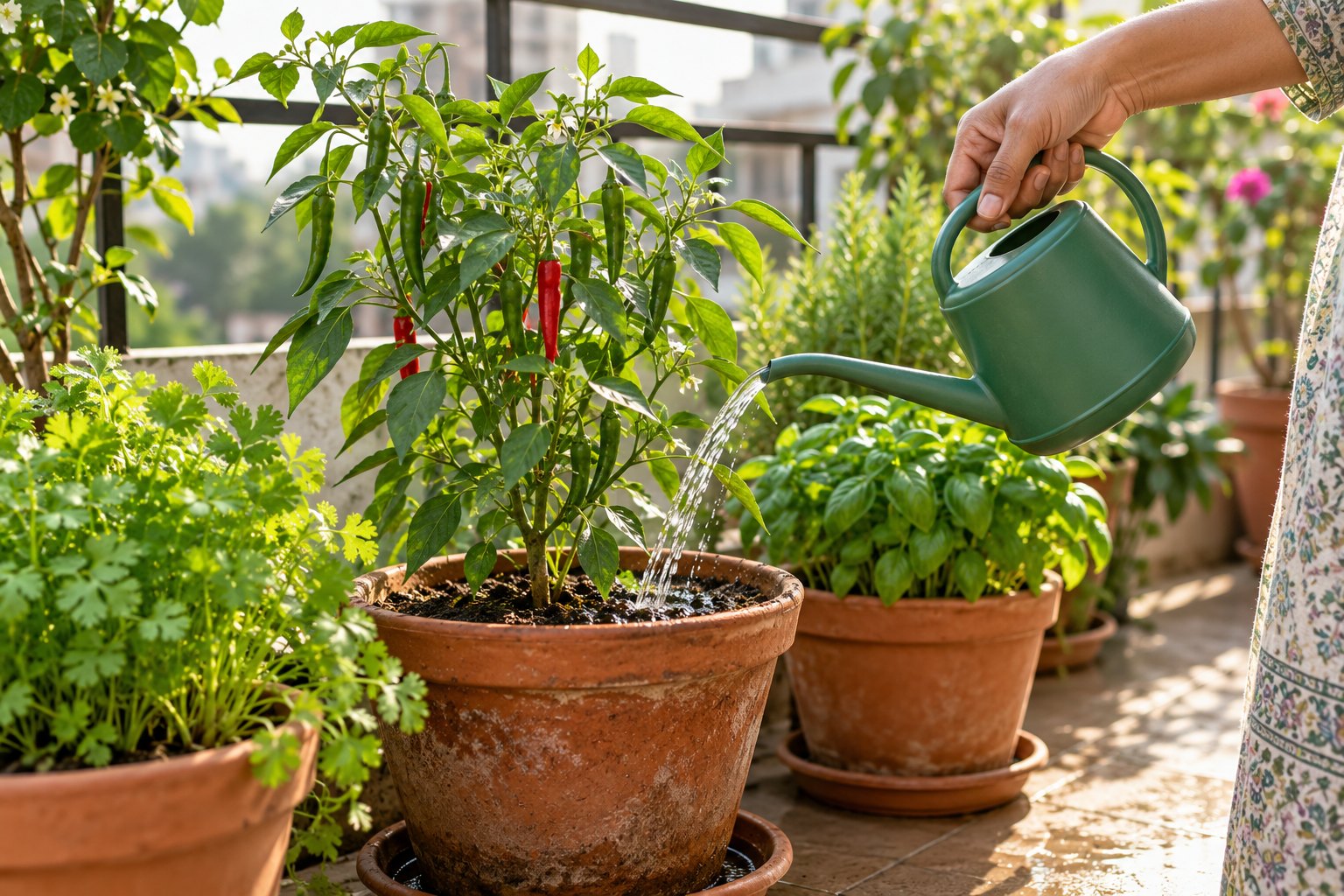
A chilli plant can struggle in a sunny balcony pot even when you water it regularly. Before adding another feed, look at what surrounds its roots. Choosing a suitable potting mix for kitchen gardens helps you manage moisture, drainage and root space from the start.
This guide is for home gardeners growing vegetables and herbs in pots. It explains what to look for when buying a mix, where compost fits, and how to avoid turning a container into a waterlogged bucket.
Read more: Explore Gardenica Vermi Compost
What makes a good potting mix for kitchen gardens?
A container growing medium needs to support the plant while providing roots with water, nutrients and air. A light, loose texture matters because roots have only the space inside the pot to explore. Dense garden soil used alone can restrict air and water movement in containers.
Read the bag rather than choosing by colour. Dark material is not automatically a complete potting mix. Check whether the product is intended for containers, what ingredients it contains, and whether fertilizer has already been added. University of Maryland Extension explains how different growing media work.
Choose for the pot and the place
Think about your own setup: an exposed terrace, a sheltered balcony and a rainy outdoor corner do not behave alike. Note how much sun the container gets and whether rain reaches it. These observations help you choose a mix and adjust watering instead of following someone else's fixed timetable.
Potting mix, compost and fertilizer: know the difference
These products serve different purposes. Understanding the label helps you avoid buying a soil amendment when you need a complete growing medium.
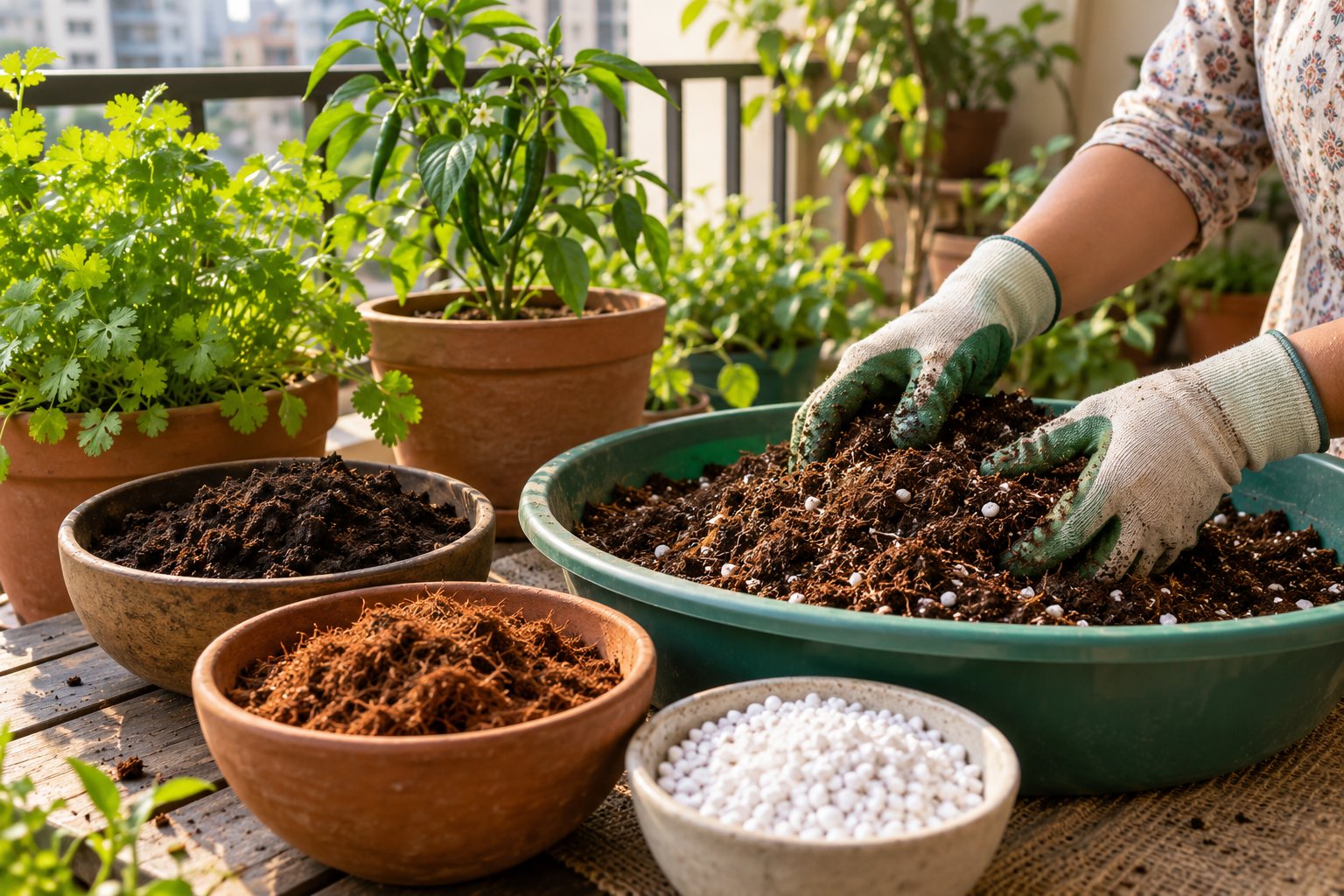
- Container potting mix: The medium in which roots grow. Check container suitability, ingredients and added feed.
- Coconut coir: A moisture-holding component. Check preparation instructions and quality.
- Perlite: Creates air space. Check whether your mix already includes it.
- Mature compost or vermicompost: An organic amendment contributing nutrients. Check maturity, texture and recommended application.
- Plant fertilizer: Supplies nutrients. Check dose, crop suitability and any existing feed.
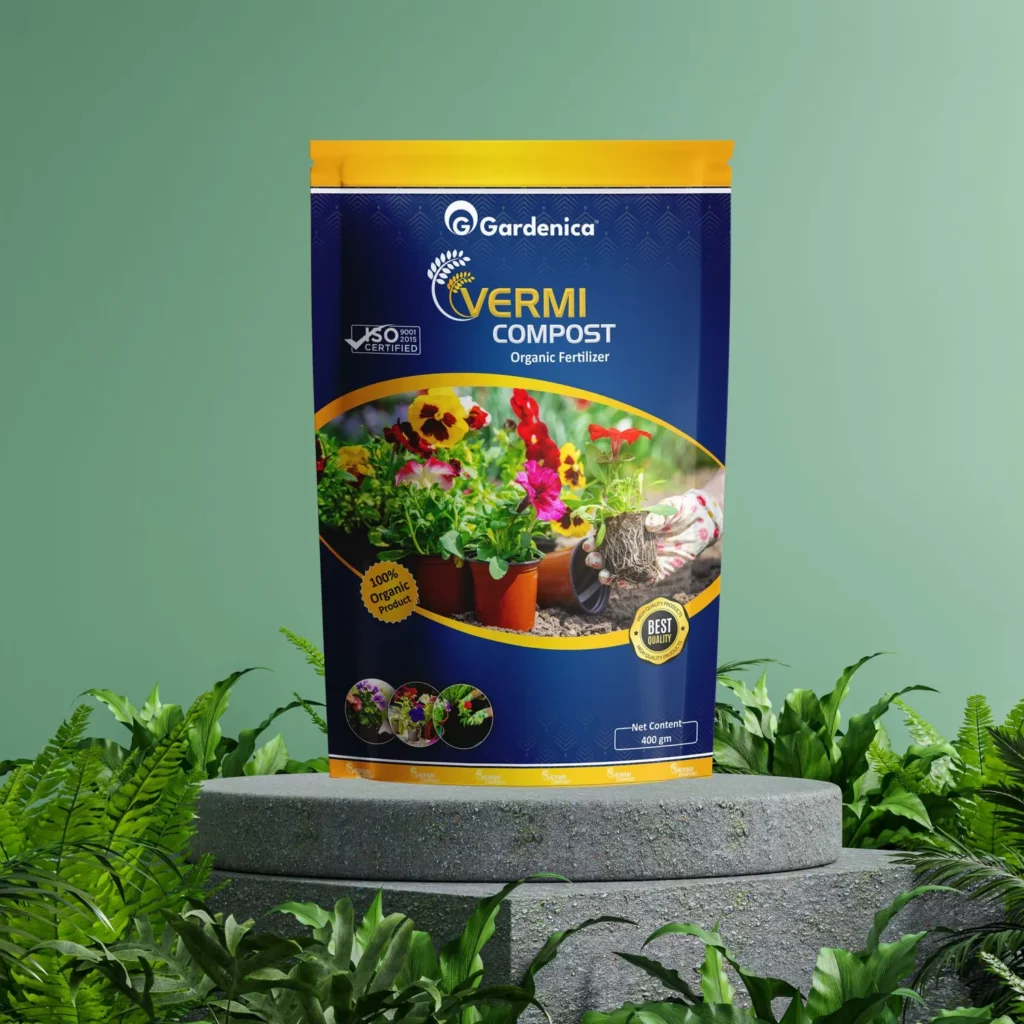
Gardenica Vermi Compost is an earthworm-processed organic product. Review its current directions before adding it to an existing pot. Its top-dressing instructions should not be treated as a recipe for filling a new container.
How much compost should you add?
There is no single ratio that suits every compost, crop and pot. NC State Extension gives a general compost range of 15–40% by volume for container mixes, partly because compost characteristics and pH vary. That range is guidance for compost generally; it is not a tested Gardenica vermicompost formula.
If you are starting with a ready-made potting mix, first see whether compost is already included. Adding more without checking can change its intended balance. For a product-specific amount, follow the supplier's instructions or ask a local horticulturist about your crop and container.
A useful shopping question is: “Is this ready to plant in, or should I mix it with something else?” Ask it before buying several bags. Keep the label so you can repeat a mix that works.
Prepare the container before planting
Even a carefully selected mix needs a suitable pot. Drainage holes should remain open, and excess water needs somewhere to go.
- Check the base. Use a container with drainage holes; remove any obstruction.
- Prepare the medium. Follow the package instructions and moisten dry mix evenly before filling.
- Fill gently. Avoid pressing the growing medium into a hard mass.
- Plant carefully. Handle the root ball gently and keep enough space at the rim for watering.
- Check the first watering. Observe whether water leaves the drainage holes and whether the pot stands in collected water.
A layer of stones at the bottom does not improve drainage. Use a suitable medium throughout the container instead. University of Maryland Extension covers this in its container vegetable gardening guide.
Have a question about this topic?
Chat on WhatsAppRead the pot before reaching for fertilizer
A drooping plant is a reason to investigate, not an automatic instruction to feed. Check moisture below the surface, examine the drainage holes and look for pests or visible damage. If the mix is already wet, adding more water can make the situation harder to assess.
- Record what happened: note watering, rain, feeding and changes in appearance.
- Change one thing at a time: avoid adding multiple amendments together when you do not know the cause.
- Compare similar pots: a nearby healthy plant can help you spot differences in exposure or watering.
Compost does not necessarily supply enough nutrients for a whole growing season. Once drainage and watering are under control, review the crop's feeding needs and any fertilizer already present in the medium. If considering Gardenica Rich Fertilizer, check its current label for suitable use and application directions.
Common mistakes to avoid
Small decisions at planting time can make later care easier. Avoid these habits when setting up your next pot.
- Using dense garden soil as the only container medium.
- Adding compost repeatedly without checking what is already in the mix.
- Leaving drainage holes blocked or allowing a pot to sit in standing water.
- Following a rigid watering calendar regardless of weather and moisture.
- Assuming a yellow leaf proves a nutrient deficiency.
Do not reuse medium from a pot that had root disease. For healthy old medium, assess its condition and seek guidance before using it for a new crop; repeated use can change both texture and nutrient supply.
Frequently asked questions
Can I use ordinary garden soil in balcony pots?
Using it alone is a poor default because it can be too dense for container roots. Choose a medium intended for pots and check its instructions.
Is vermicompost the same as potting mix?
No. Vermicompost is an earthworm-processed organic amendment. A potting mix is the complete growing medium; it may contain compost alongside other ingredients.
Should I add compost to every ready-made mix?
Check the ingredient list first. Some mixes already contain compost. Follow the manufacturer's guidance before changing the blend.
Will stones at the bottom improve drainage?
No. Open drainage holes and an appropriate growing medium matter more than a stone layer.
How often should I water kitchen garden pots?
Use the plant's needs and the moisture in the pot to decide. Sun, wind, rain, container size and the growing medium all affect the interval.
Do I still need fertilizer if I use compost?
Possibly. Compost releases nutrients gradually, and a crop may need additional feeding. Check existing nutrients and follow the relevant product label.
Build a routine around your own pots
Start with a container-suitable mix, keep drainage clear, and observe how moisture changes in your space. Keep a short record for each crop so your next planting begins with useful experience.
Explore Gardenica Vermi Compost and read the application directions before use. For help selecting products, contact Gardenica with your crop, pot size and growing conditions.
Sources and further reading
Looking for more?
Continue to our main page to explore products and services.