Vermicompost for Plants: How to Use It in Pots and Gardens
Vermicompost for Plants: How to Use It in Pots and Gardens
Your potting mix looked rich and dark when you filled the pot. A few months later it has turned pale, hard and tired, and the plant is sulking. Many balcony and terrace gardeners reach for vermicompost for plants at this point, and it is a sensible choice: it improves soil texture, adds gentle nutrition and is hard to get badly wrong when used sensibly.
This guide explains what vermicompost is, what it does in a pot, how much to use and the mistakes that waste it. Treat the quantities as starting points and always follow the directions printed on your product's label.
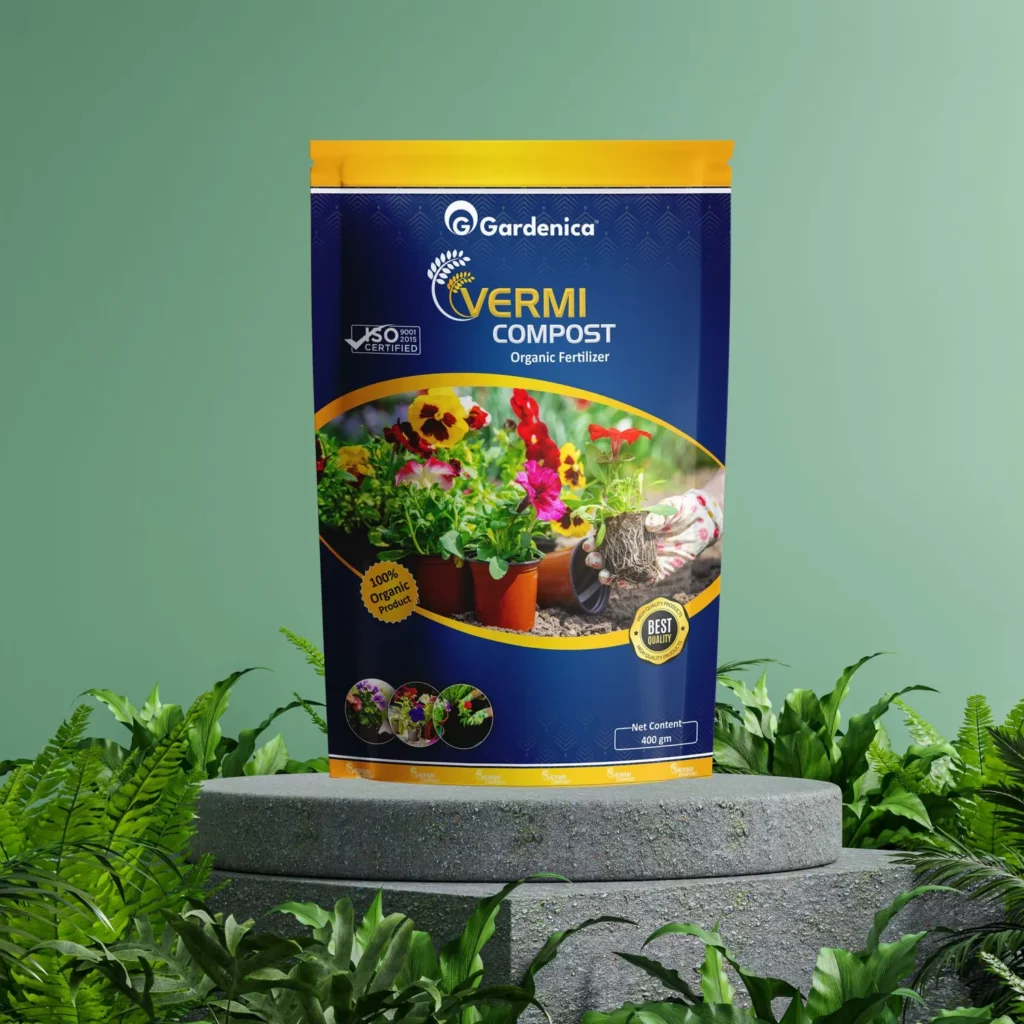
Read more: Explore Gardenica Vermi Compost
What is vermicompost?
Vermicompost is the dark, crumbly material produced when earthworms, usually red wigglers, and soil microbes break down organic waste such as vegetable scraps, dry leaves and cow dung. The worm castings and partly broken-down organic matter are collected, cured and sold as vermicompost. Good vermicompost smells earthy, never sour or rotten, and feels moist and crumbly rather than sticky or powdery.
Vermicompost vs regular compost
Ordinary compost is broken down mostly by microbes in a heap that heats up. Vermicompost is processed by worms as well, and it is usually finer and more uniform. Both are soil amendments rather than concentrated fertilizers, and the nutrient content of either depends on what went into it.
What it does and does not do
Vermicompost improves soil structure and adds a mild spread of nutrients. It will not fix a pot that drains badly, replace sunlight or cure a pest problem. Hungry crops such as tomato, chilli and roses may still need extra feeding during the fruiting or flowering season.
Benefits of vermicompost for plants
The gains show up over weeks, not days. Here is what to expect when you add it to your pots and grow bags.
Better soil structure
Organic matter keeps potting mix loose and crumbly. Air can reach the roots, and water drains without the mix setting like a brick. In sandy or coco-based mixes it also helps hold some moisture, which is useful when terrace pots dry out fast in summer.
Gentle, steady nutrition
Much of the nutrition in vermicompost is in organic form and is released gradually as soil microbes work on it. That makes it milder than many chemical fertilizers, so it is less likely to burn roots if you are a little generous. You can still overdo it, so measure instead of guessing.
A good base for kitchen garden crops
Leafy greens, herbs, chilli, brinjal, tomato and flowering plants all do well in a mix that contains some compost. If you are building a mix from scratch, start with our guide to potting mix for kitchen gardens and add vermicompost to that base.
How to use vermicompost in pots
There are two simple methods: mix it into the soil, or spread it on top. Choose the one that suits the stage your plant is at.
Mix it into the potting mix
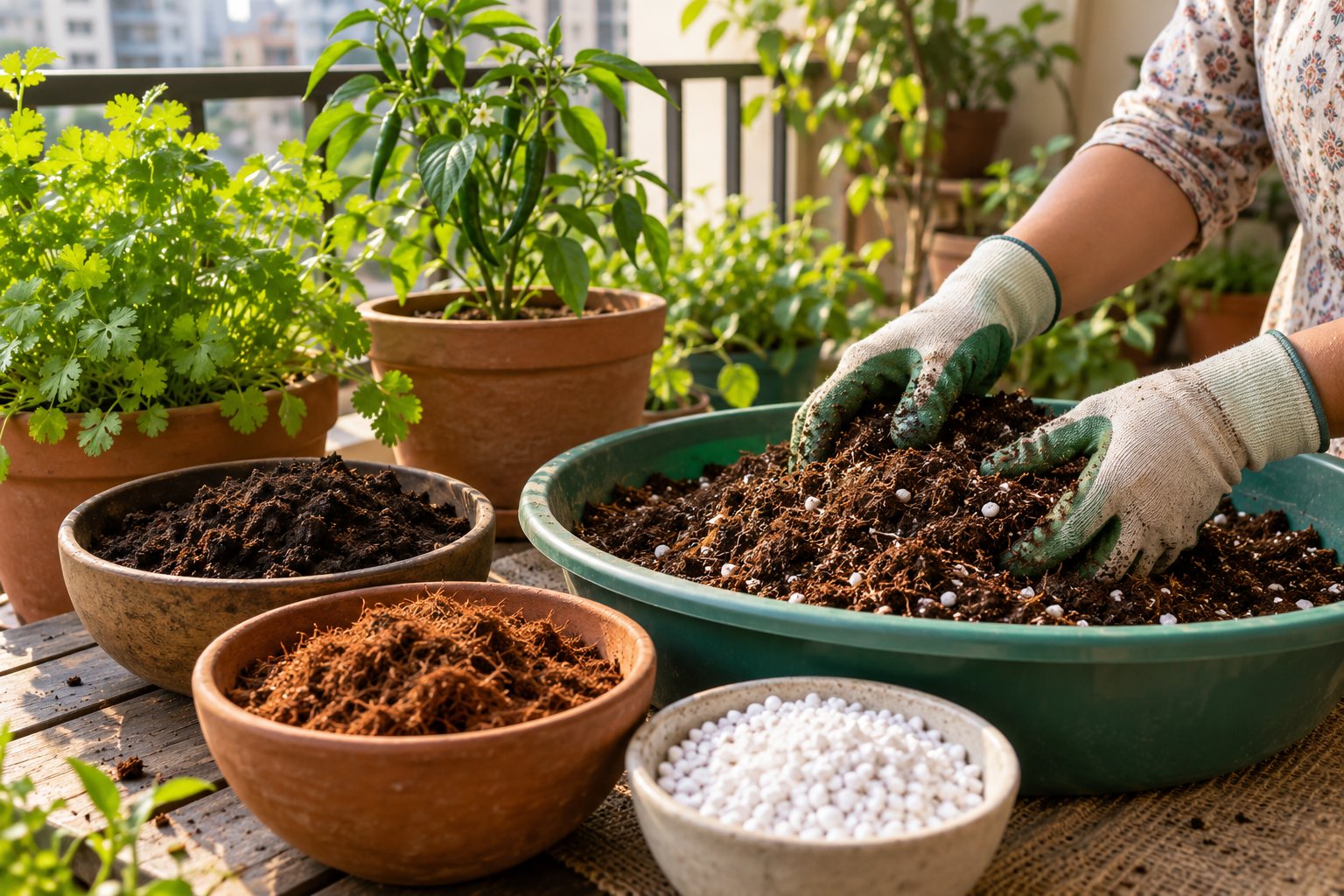
When filling a new pot or refreshing old soil, blend vermicompost through the mix evenly. A common starting point is about one part vermicompost to three or four parts potting mix, which is roughly 20 to 25 per cent by volume. If your product label gives a different ratio, follow the label.
- Loosen the old soil and remove dead roots, stones and dry lumps.
- Measure the vermicompost and potting mix into a tub or onto a sheet.
- Mix thoroughly until the colour is even, with no pockets of pure compost.
- Fill the pot, leaving a couple of centimetres below the rim for watering.
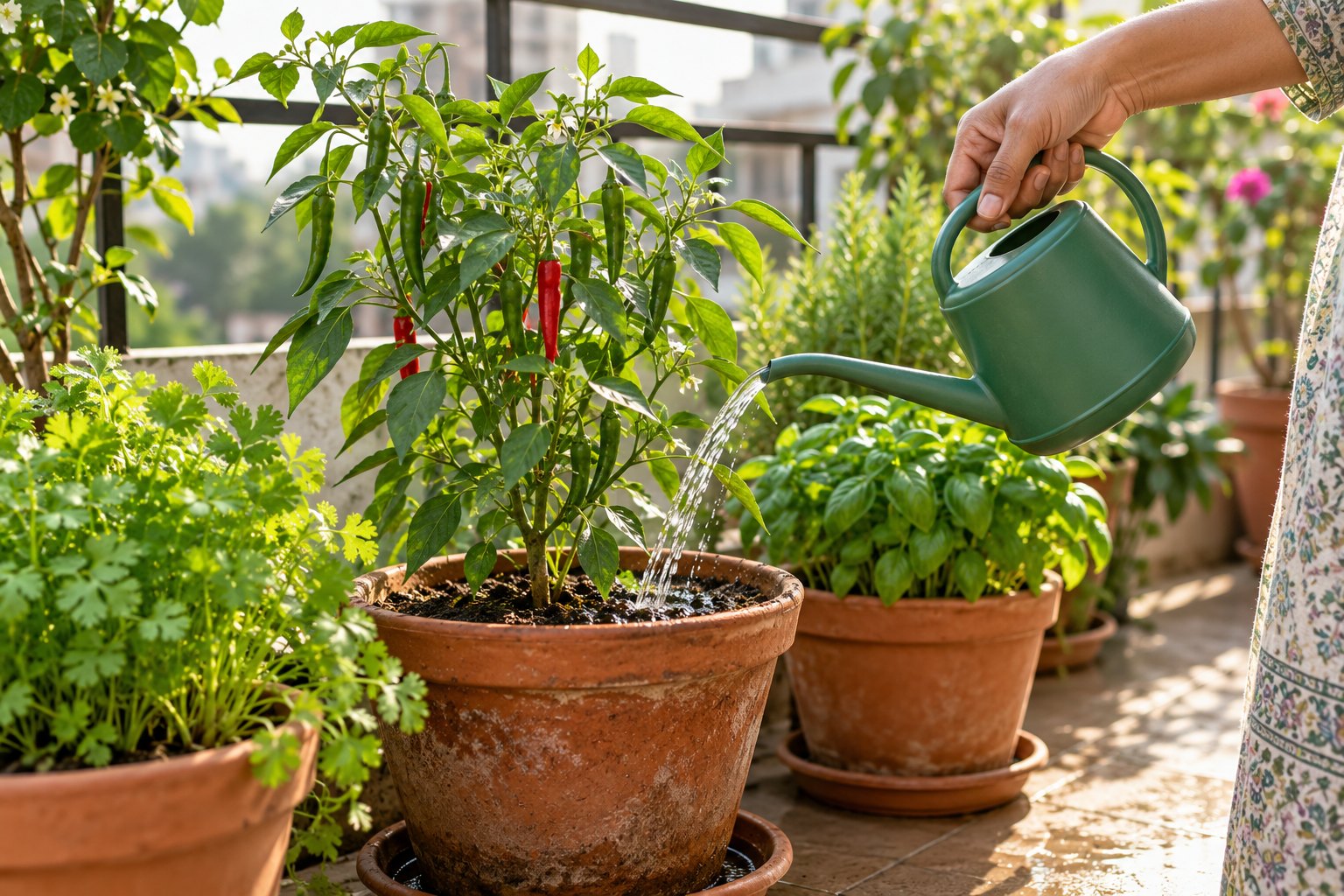
- Water slowly until water runs out of the drainage holes.
Top dress plants that are already growing
For an established plant, spread a thin layer of vermicompost over the soil, keep it away from the main stem, scratch it in lightly and water. A handful suits a medium pot; use a smaller pinch for a small one. Repeat every four to six weeks while the plant is actively growing, or as your label directs, and ease off when growth slows. Top dressing is gentler on roots than digging around the plant.
Have a question about this topic?
Chat on WhatsAppGo lighter for seedlings
Young seedlings and fresh cuttings are sensitive. Use a lighter mix with a smaller share of vermicompost, then move up to the fuller blend when you transplant into the final pot.
How to use vermicompost in grow bags and garden beds
In grow bags and raised beds, work vermicompost into the top 10 to 15 cm of soil before planting. For an open bed, spread a layer about two centimetres thick over the surface and fork it in. Water afterwards, and add a second round midway through the season for long crops such as tomato and brinjal. A mulch of dry leaves or straw helps keep the soil from drying out in strong sun.
Which plants benefit most from vermicompost?
- Leafy greens and herbs such as spinach, coriander, mint and basil
- Fruiting vegetables such as tomato, chilli, brinjal and okra
- Flowering plants such as hibiscus, marigold and jasmine
- Indoor foliage plants, in smaller amounts mixed into the potting soil
Succulents and cacti prefer a leaner, fast-draining mix, so go light with them.
Common vermicompost mistakes
- Using too much, so the mix loses the drainage material it needs.
- Piling it against the stem, which can keep the base of the plant damp.
- Spreading it on dry soil and not watering afterwards.
- Leaving an opened bag in the sun until it dries to dust.
- Expecting it to rescue a yellowing plant overnight. Check watering, light and pests first.
- Treating it as the only food for hungry crops.
How to store vermicompost
Keep the bag closed and in a cool, shaded spot, and keep the contents lightly moist. If it dries out completely, sprinkle it with a little water and mix it through before use. Do not leave it in direct sun or in a place where it can get soaked.
When vermicompost is not enough
If leaves are yellowing, growth has stalled or flowers keep dropping, vermicompost alone may not be the answer. Check watering first, because too much and too little can look alike. Our guide to watering kitchen garden plants explains how to judge moisture in pots, and our neem oil guide covers common leaf pests. For help choosing a feed to go with it, contact Gardenica with a photo of your plant.
Frequently asked questions
Is vermicompost good for all plants?
It suits most vegetables, herbs, flowers and foliage plants. Use less for succulents, cacti and seedlings.
How much vermicompost should I add to a pot?
A common starting point is about one part vermicompost to three or four parts potting mix, or a thin top dressing of a handful for a medium pot. Your product label comes first.
Can I use vermicompost every month?
Many gardeners top dress every four to six weeks while plants are actively growing, then reduce it when growth slows. Check the label for your product.
Is vermicompost the same as worm castings?
They are closely related. Castings are what the worms excrete, while vermicompost usually includes castings plus partly broken-down organic matter. People often use the two terms loosely.
Can I use vermicompost for indoor plants?
Yes, in modest amounts mixed into the potting soil. Good vermicompost should smell earthy, so it will not make a room smell unpleasant.
Does vermicompost replace fertilizer?
Not entirely. It builds soil and adds mild nutrition, but heavy feeders such as tomato, chilli and roses may still need additional feeding.
Start small and build healthier soil
Vermicompost works best as a habit rather than a one-off fix: refresh tired pots, top dress growing plants on a sensible schedule and keep watering consistent. Begin with one or two pots, watch how the plants respond and adjust from there. To get started, explore Gardenica Vermi Compost and read the directions before you use it.
Looking for more?
Continue to our main page to explore products and services.