How to Grow Capsicum in Pots: A Winter Guide for Indian Balconies
How to Grow Capsicum in Pots: A Winter Guide for Indian Balconies
A capsicum plant loaded with glossy green, red and yellow fruits looks great on a balcony and crops for months. The tricky part is that capsicum (simla mirch) is fussier about cold and about nitrogen than chilli is. This guide shows you how to grow capsicum in pots on an Indian terrace or balcony, from the month you sow to the day you cut the first fruit.
In most of the Indian plains, capsicum is a winter crop: sow between September and November, transplant in October, and harvest from December to March. In mild coastal cities like Mumbai it also does well sown a little earlier. Here is the whole plan, step by step.
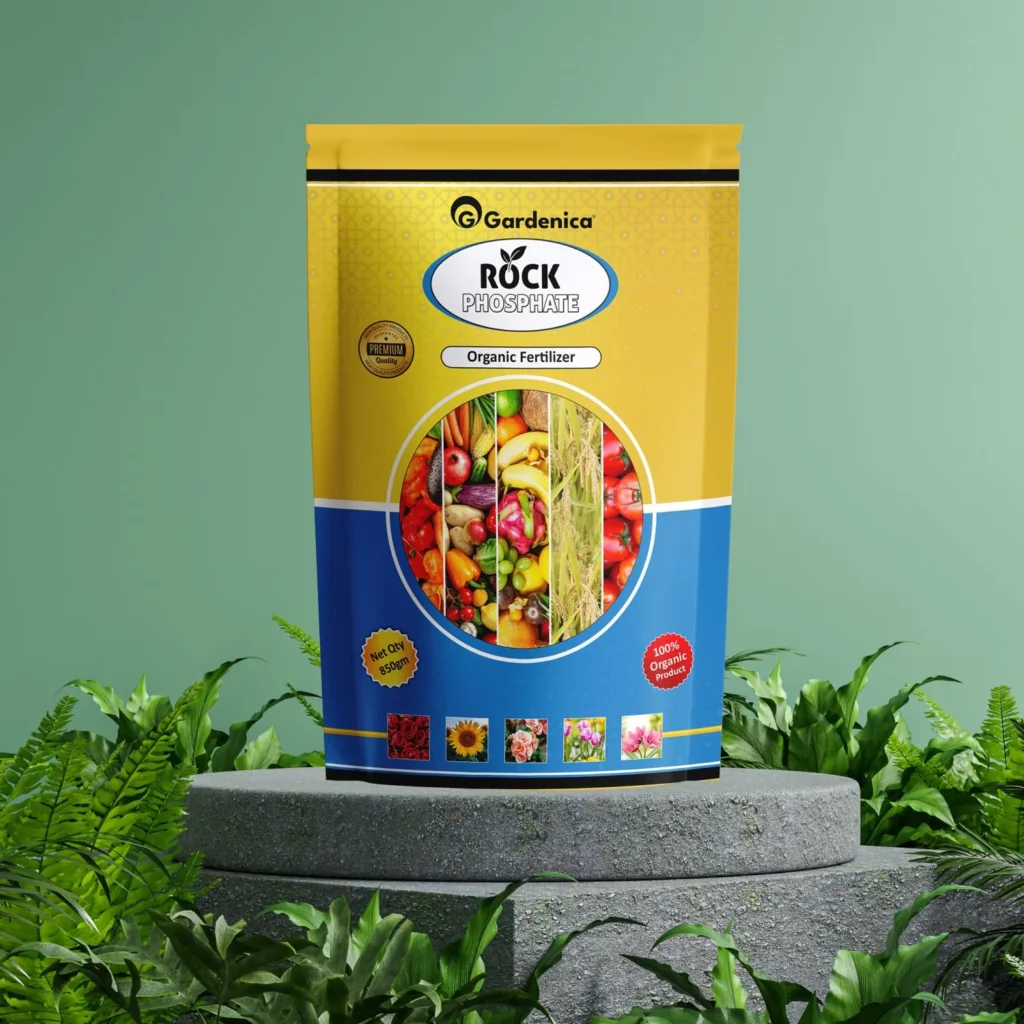
Read more: Explore Gardenica Rock Phosphate
When to Sow Capsicum in Different Parts of India
Capsicum wants warm soil to germinate and cool, bright days to colour its fruit, so the sowing window matters more than the variety.
- North India (Delhi, Punjab, UP): sow in seed trays from late September to mid October so the plant is established before December cold.
- Central India and Gujarat (Vadodara, Indore): sow September to mid October; transplants do best in October and November.
- South India and coastal cities (Bengaluru, Chennai, Mumbai): sow September to October, or again in February for a summer-to-monsoon crop in the hills.
- Hill and high-altitude areas: sow February to March in a protected spot.
If you miss the window, buy two healthy nursery seedlings with six true leaves rather than sowing in deep winter. A month-wise plan for the rest of your beds is in our guide to vegetables to grow in November.
Pot Size, Grow Bags and Sunlight
Capsicum has a shallow, spreading root system, so width helps more than depth.
Pot and bag size
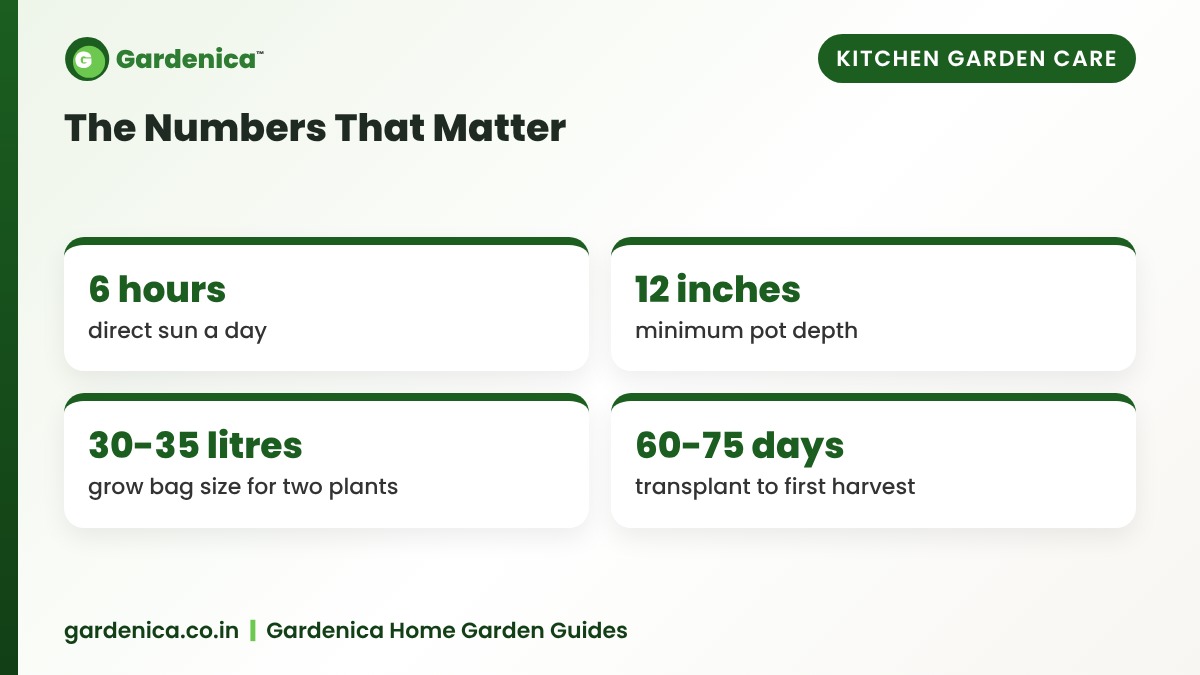
Use a pot at least 12 inches deep and 12 inches wide for one plant, or a 30 to 35 litre grow bag with two plants spaced 45 cm apart. Terracotta keeps roots cooler on a hot terrace; plastic and grow bags hold moisture better on a windy balcony. Any container needs drainage holes that actually drain.
Sunlight
Give six hours of direct sun. In North Indian winters, place pots along the south-facing wall so the soil stays warm into the evening. On a west-facing balcony in March and April, a 50 per cent shade net after 2 pm stops the fruit from scorching and stops flowers from dropping in the heat.
The Soil Mix That Keeps Fruit Setting
Capsicum hates waterlogged soil and does badly in tired, compacted potting mix. A simple working mix is two parts good potting mix, one part vermicompost and a handful each of neem cake and rock phosphate per 30 litre bag, mixed at the dose on the label. Phosphorus from rock phosphate releases slowly and supports roots, flowering and fruiting right from the start, which is exactly what a fruiting crop needs. Our full recipe is in the potting mix for kitchen gardens guide.
Have a question about this topic?
Chat on WhatsAppSow capsicum shallow, plant it deep and feed it phosphorus, not nitrogen, once the first flower opens.
Step-by-Step: Sowing to First Harvest
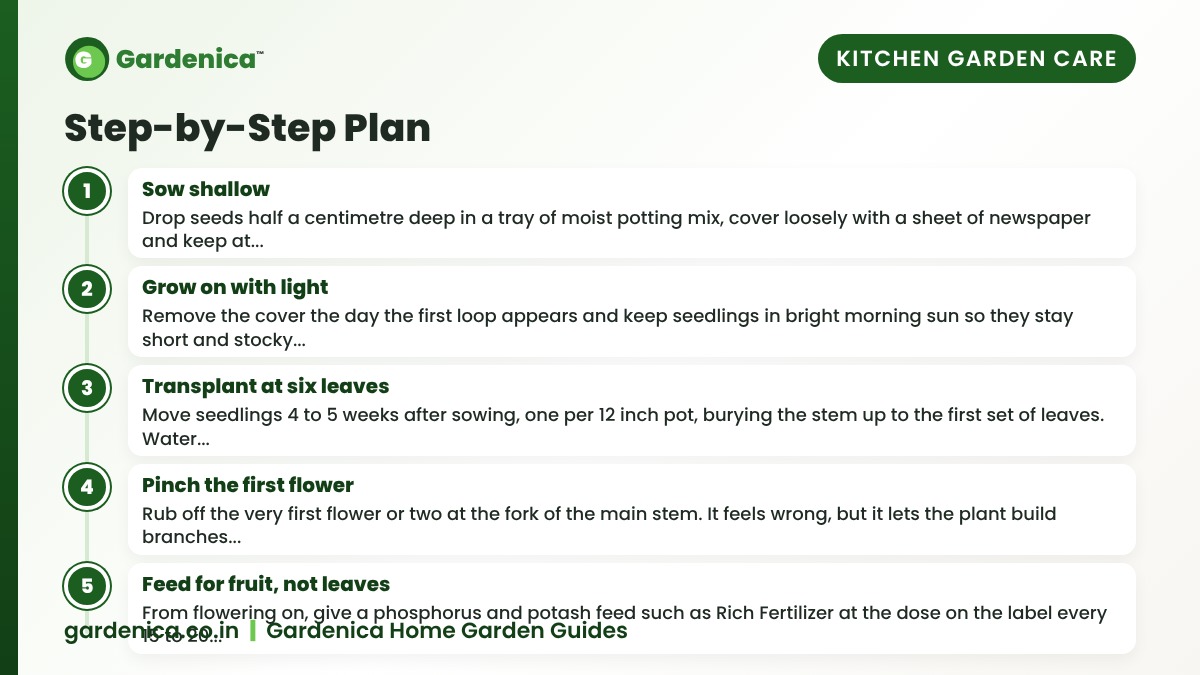
- Sow shallow. Drop seeds half a centimetre deep in a tray of moist potting mix, cover loosely with a sheet of newspaper and keep at 22 to 28 C. Germination takes 8 to 12 days.
- Grow on with light. Remove the cover the day the first loop appears and keep seedlings in bright morning sun so they stay short and stocky, not leggy.
- Transplant at six leaves. Move seedlings 4 to 5 weeks after sowing, one per 12 inch pot, burying the stem up to the first set of leaves. Water with a seaweed extract drench at the dose on the label to ease transplant shock.
- Pinch the first flower. Rub off the very first flower or two at the fork of the main stem. It feels wrong, but it lets the plant build branches first and then sets far more fruit.
- Feed for fruit, not leaves. From flowering on, give a phosphorus and potash feed such as Rich Fertilizer at the dose on the label every 15 to 20 days, and top-dress with vermicompost once a month. Go easy on nitrogen.
- Harvest with a knife. Fruits are ready 60 to 75 days after transplant. Cut with a short piece of stalk instead of twisting, and the plant keeps flowering.
Watering in Winter Pots
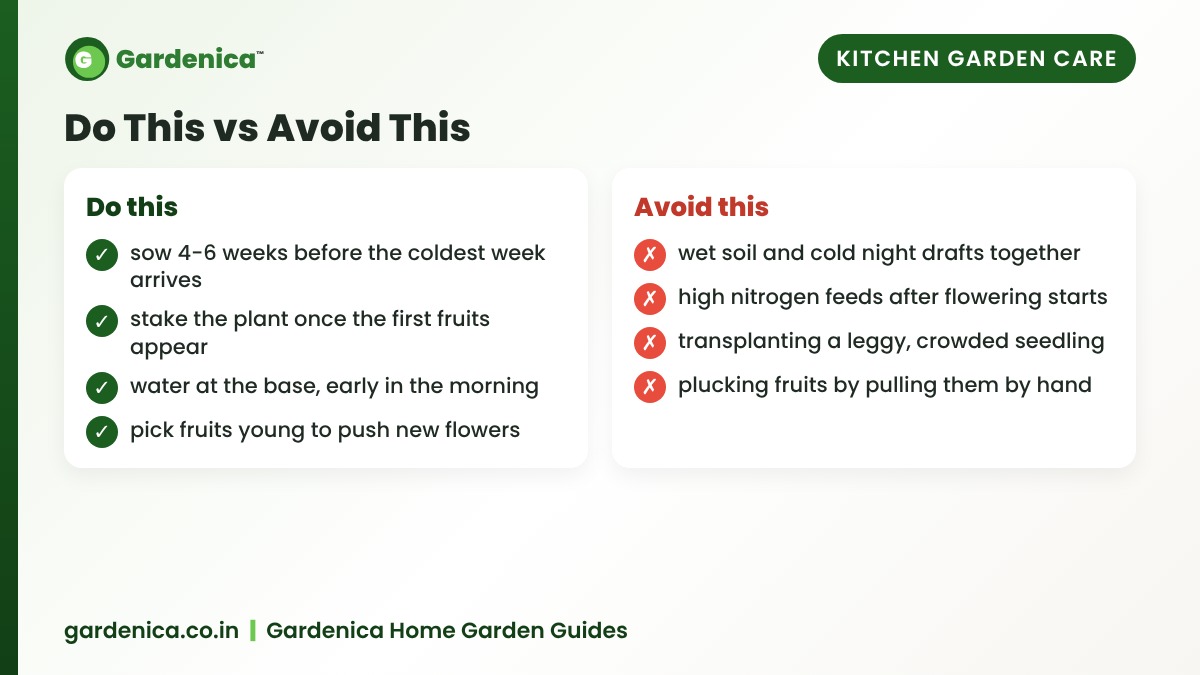
Water early in the morning, at the base, so leaves dry before evening. In December and January most terrace pots need water only on alternate days; in March and April, daily. The rule is simple: water when the top two centimetres feel dry, and never let a pot sit in a saucer of water. Cold, wet soil is the fastest way to lose a capsicum plant to root rot. More timing tips are in watering kitchen garden plants.
Why Capsicum Flowers Drop and Fruit Does Not Set
This is the most common capsicum complaint on Indian balconies, and it is usually temperature or nitrogen rather than disease.
- Too hot or too cold. Above about 32 C or below 12 C, pollen fails and flowers fall. Shade nets in summer and a warm, sheltered corner in winter help.
- Too much nitrogen. Lush dark leaves with no flowers means the feed is wrong. Switch to a phosphorus-supporting feed like rock phosphate or Garden Booster at the dose on the label.
- No movement. On a closed balcony, tap the stems gently once or twice on a dry morning so pollen shakes loose.
- Irregular water. Letting pots dry out fully between waterings makes the plant shed flowers to save itself.
- Pests. Check under leaves for aphids or mealybugs, which distort buds. A neem oil spray at the label dose helps manage them.
Common Mistakes to Avoid
- Sowing in the coldest weeks and expecting seedlings to catch up later.
- Using a 6 or 8 inch pot, so roots dry out and flowers drop.
- Feeding heavy nitrogen once flowering starts, for leaves instead of fruit.
- Watering late in the evening on cold December nights.
- Transplanting tall, pale, crowded seedlings that never recover.
- Letting fruits stay on the plant until fully red and soft, which signals the plant to stop flowering.
Frequently Asked Questions
How big a pot do I need for capsicum?
Use a pot at least 12 inches deep and 12 inches wide for one plant, or a 30 to 35 litre grow bag for two. A bigger pot holds moisture and nutrients far better on a windy terrace.
What is the best month to grow capsicum in India?
Sow from September to mid November in most plains, so the plant flowers in the cool bright weeks of December and February. In mild coastal areas you can also try a February sowing.
Why are my capsicum flowers falling off?
Most often it is heat above 32 C, cold below 12 C, too much nitrogen or erratic watering. Provide shade in hot afternoons, water on a routine, and switch to a phosphorus-supporting feed once flowering starts.
Is capsicum the same plant as chilli?
Both are Capsicum, so chilli care is very similar, but sweet capsicum is more sensitive to cold and to high nitrogen, and it takes a little longer to ripen.
Which fertiliser is best for capsicum in pots?
Start with vermicompost and rock phosphate in the mix, then feed a balanced organic fertiliser every 15 to 20 days from flowering, always at the dose on the label. Avoid pure nitrogen feeds at this stage.
How many times can I harvest from one plant?
A healthy winter plant gives pickings every 5 to 7 days for two to three months, often 8 to 12 harvests, if you cut fruits young and keep feeding.
Grow a Heavy Cropping Capsicum Pot This Winter
Capsicum rewards a gardener who gets the pot, the soil and the feeding right, and all three are easy on a sunny Indian balcony. Sow in the next few weeks, use a deep pot with free-draining mix, keep the feed tilted towards phosphorus once flowers appear, and you should be cutting fruit from your own plant by midwinter. For the inputs in this plan, start with Gardenica Rock Phosphate for roots and flowering, and write to us at Contact the Gardenica team if your plants need a second opinion.
Looking for more?
Continue to our main page to explore products and services.