Watering Kitchen Garden Plants: A Practical Guide
Watering Kitchen Garden Plants: A Practical Guide
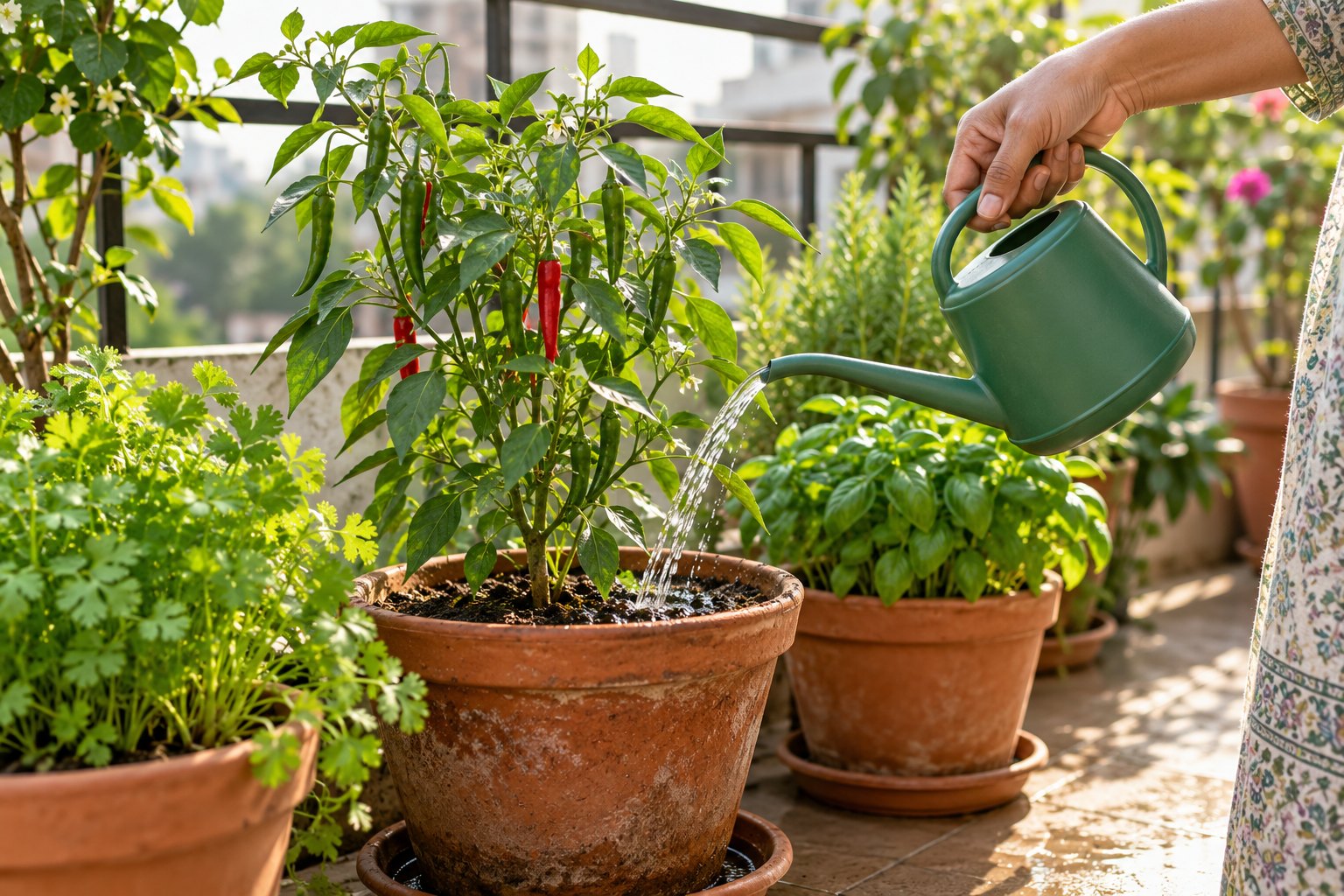
You watered yesterday, but your chilli plant is drooping again. Should you add another jug of water? Start by checking the pot. Watering kitchen garden plants works best when you respond to moisture around the roots, rather than watering every container on the same timetable.
This guide helps balcony and terrace gardeners build a practical routine for vegetables and herbs in ordinary draining pots. Use it alongside crop-specific guidance and the instructions supplied with your growing medium.
Read more: Explore Gardenica Vermi Compost
How often should you water kitchen garden plants?
There is no reliable once-a-day rule for every pot. Plant size, container volume, sun and temperature affect how quickly moisture is used. Check your containers regularly and make the decision for each one.
For example, keep separate notes for a small coriander pot near the railing and a larger chilli pot in a sheltered corner. Even if both were watered together, their next watering may be due at different times. Your observations are more useful than copying a schedule from another balcony.
Make checking a habit
Choose a convenient time to inspect the garden, such as before breakfast. A regular check is different from automatic watering: some pots will need water, while others will need nothing. If you share plant care with someone else, agree who checks which pots.
Check moisture before adding water
Feel the growing medium below the surface rather than judging only its colour. For lightweight pots that are safe to lift, learning their freshly watered and drier weights can also help. Do not lift heavy containers or reach over a balcony railing.
- Moist below the surface: pause and reassess later according to the crop's needs.
- Dry around the roots: water carefully and observe absorption.
- Wet and slow to drain: inspect drainage before adding more.
Wilting alone does not prove that a plant is thirsty. Both dry and overly wet conditions can cause it. University of Maryland Extension explains these checks in its container vegetable gardening guide.
Water the pot thoroughly and let excess drain
A useful watering session reaches the root zone. Avoid giving a quick splash simply because the top looks dry. Apply water gently at the base, wet the medium evenly and let surplus water leave through the drainage holes.
- Check the pot's moisture first.
- Direct a gentle stream onto the growing medium.
- Work around the surface rather than pouring into one spot.
- Observe drainage and stop once the medium is adequately moistened.
- Empty collected water from ordinary saucers after drainage.
Watering at the base also helps avoid unnecessary leaf wetting. See University of Maryland Extension's container maintenance guidance. Self-watering pots use a different system: follow their reservoir and overflow instructions.
Choose a useful watering time
Morning is a convenient starting point because conditions are generally cooler. Penn State Extension recommends it in The Art of Container Gardening. Treat timing as part of your routine, while still checking whether the plant actually needs water.
Set your watering can near the garden so inspection is easy. If you often leave early, allow a few minutes for checking instead of rushing through every container. Record which pots repeatedly need attention before you change the setup.
Adjust balcony plant watering to the weather
Conditions change through the year and between positions on the same terrace. Review your routine when you move a pot, change its size or notice different drying behaviour.
Hot or windy days
Check more closely during hot conditions. University of Minnesota Extension notes that some containers may require watering more than once daily depending on temperature and size. That is a possibility, not an instruction to water every pot twice a day.
Rainy periods
Check whether rain actually reaches the medium. A balcony roof or overhang may shelter a container even when the street is wet. Conversely, an exposed pot may already have enough moisture. Do not add water solely because it is your usual watering time.
Have a question about this topic?
Chat on WhatsAppWhen someone else cares for your plants
Leave simple pot-specific instructions: where to check moisture, which containers drain normally, and what to do with saucers. Ask your helper to note problems rather than compensating with extra fertilizer.
Recognise common watering mistakes
When a plant struggles, inspect the conditions before buying another product. A short record can reveal repeated habits that are easy to correct.
- Watering every pot whenever one plant looks dry.
- Leaving a container standing in collected runoff.
- Assuming rain has watered a sheltered balcony.
- Giving repeated surface splashes without checking the root zone.
- Adding fertilizer immediately when leaves droop.
If dry mix shrinks away from the pot wall, water may escape through the gap without wetting it properly. Rehydrate gradually and check absorption; do not mistake immediate runoff for a thoroughly watered root ball.
Keep soil care and feeding in perspective
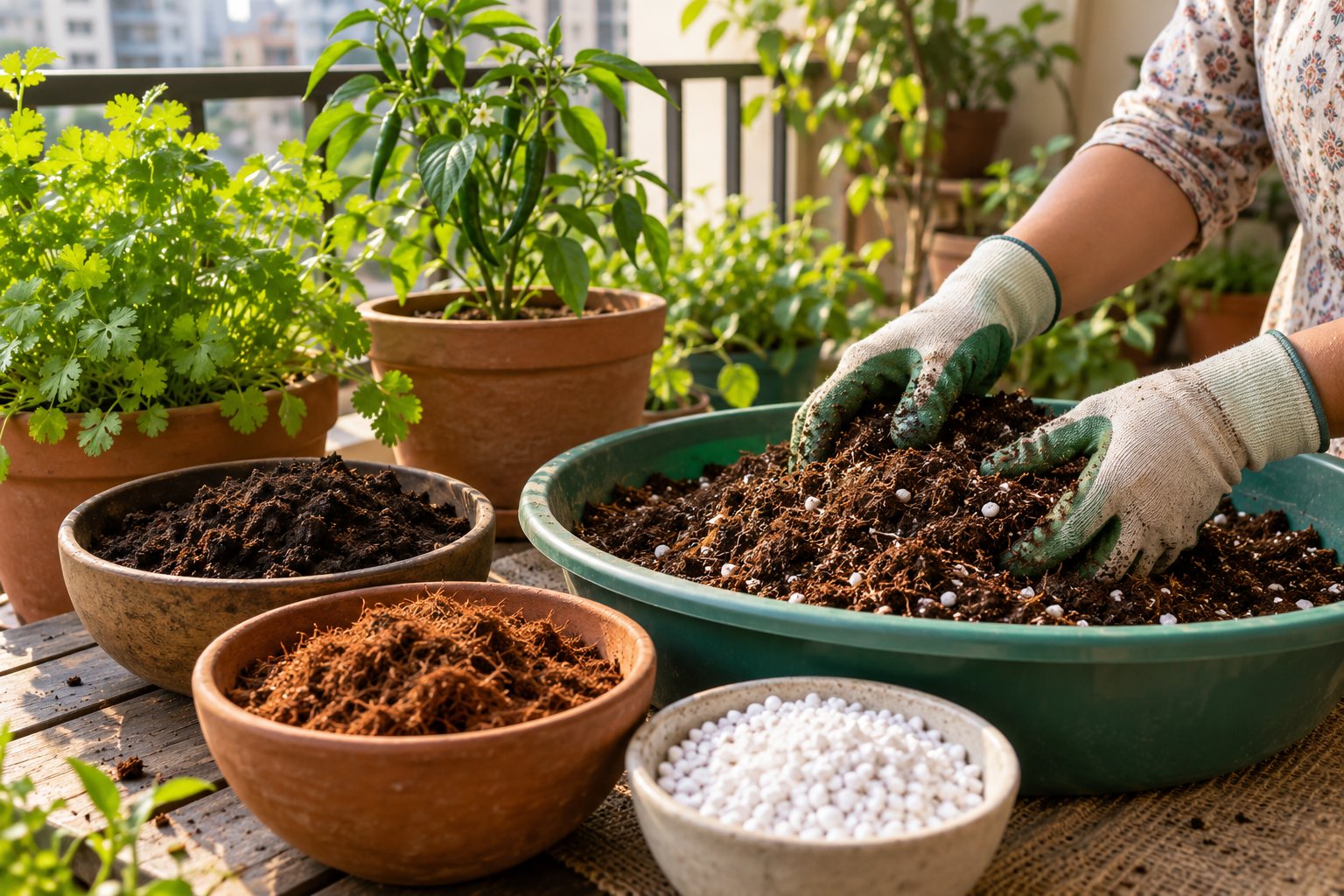
A suitable growing medium supports your watering routine. Read our potting mix guide for kitchen gardens before changing a container blend.
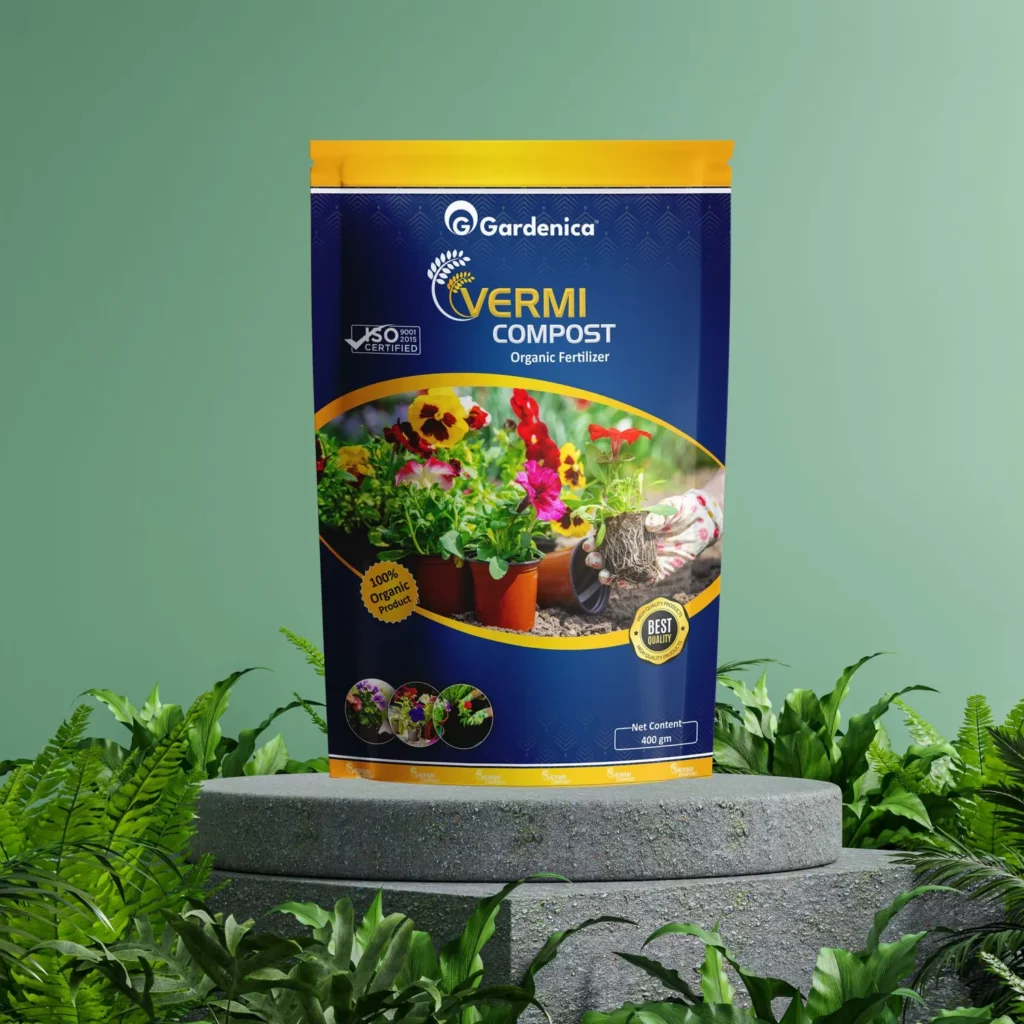
Gardenica's Vermi Compost is a soil amendment, and Rich Fertilizer is a plant feed. Check current product directions and suitability before use. Neither should be treated as a shortcut for correcting a blocked drain or an unsuitable watering habit.
University of Minnesota Extension advises following fertilizer labels to avoid overfeeding. Its watering and feeding guide provides further context.
Frequently asked questions
Should I water kitchen garden pots every day?
Check them regularly, but water according to moisture and crop needs. Weather, position and container size affect the interval.
Does a drooping plant always need water?
No. Feel the growing medium first. A wet pot and a dry pot can both contain a wilting plant.
Is morning the best time to water?
Morning is a useful default in cooler conditions. Keep the plant's actual moisture needs central to your decision.
Should I leave water in a pot's saucer?
Empty runoff from ordinary saucers after drainage. A purpose-designed self-watering reservoir should be managed according to its own instructions.
Can compost fix overwatering?
Do not add it automatically. First assess watering frequency, drainage and the growing medium, then seek advice if the plant continues to decline.
How can I manage watering when I travel?
Give a helper clear instructions for each pot and demonstrate the moisture check. Test any watering arrangement before leaving.
Build a routine you can repeat
Check, water when needed, allow drainage and record what changes. Start with a few pots so you can learn their patterns. Consistent observation makes your decisions easier as the garden grows.
For product selection, contact Gardenica with your crop, container size, growing medium and conditions. Share what you have observed so the discussion starts with your actual garden.
Looking for more?
Continue to our main page to explore products and services.