How to Grow Broccoli in Pots: A Winter Guide for Indian Terraces
How to Grow Broccoli in Pots: A Winter Guide for Indian Terraces
A pot of broccoli is one of the easiest ways to make a December terrace productive, yet many Indian growers end up with a big leafy plant and no head at all. If you have been searching for how to grow broccoli in pots, the answer is mostly timing and steadiness: sow in the cool months, give the roots room, and never let the pot dry out while the head is forming.
Broccoli (bandh gobhi in Indian shops) is a cool-season crop that does best on terraces in North and Central India from October to February. This guide covers sowing, pot size, soil, feeding and the stage problems that decide whether you get a firm green head or only leaves.
Read more: Explore Gardenica Vermi Compost
Why Broccoli Needs Cool Indian Winters
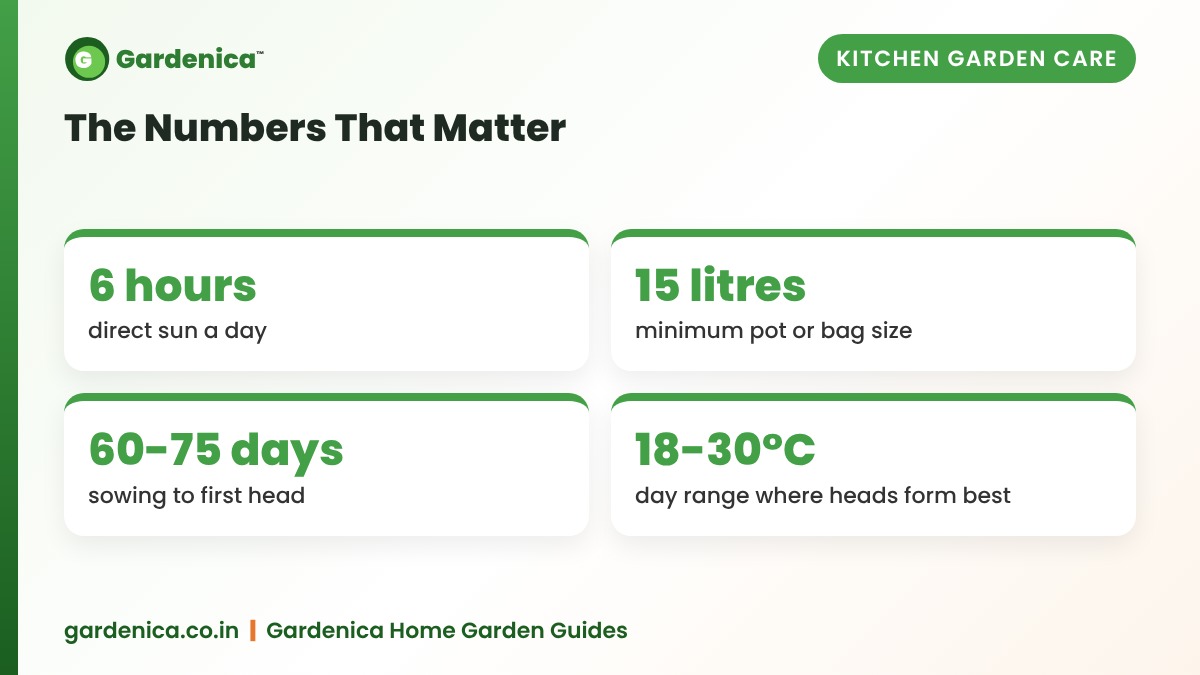
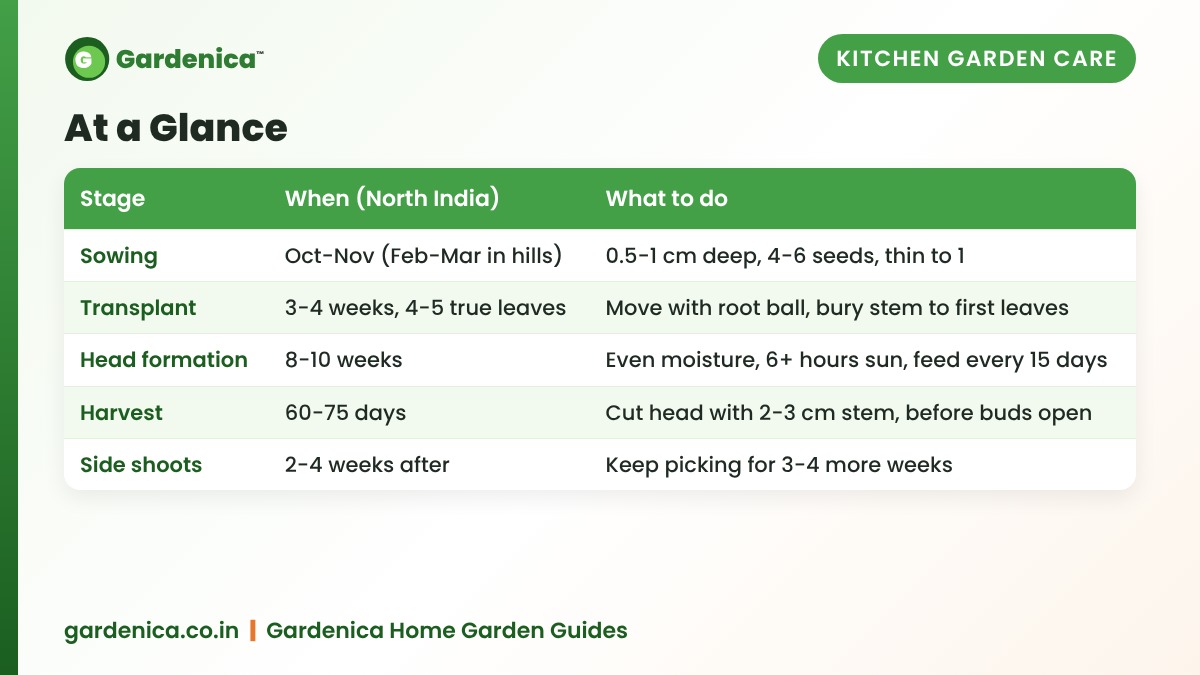
Broccoli forms its flower head when nights are cool and days are bright but not hot, roughly 18-30°C. Sow in October or November in Delhi, Punjab, Haryana, Gujarat and the Indo-Gangetic plain, and the head sizes up in December and January. In coastal Maharashtra, Kerala and Bengaluru, sow from mid-October to late December; in the hills, February to March works.
In hot, humid weather the plant stays small, sends leaves instead of a head, and any buds turn yellow within days. If your terrace crosses 35°C in the afternoon, treat broccoli as a strictly winter crop.
Choosing the Right Pot or Grow Bag
Broccoli has a wide, shallow root spread, so container size matters more here than with chilli or tomato.
Pot Size
Use a 15 to 20 litre pot or grow bag, about 35-40 cm wide and 35 cm deep, for one plant. A nursery cup is enough for the first month. One plant per pot is the rule: two plants sharing a bag both give small, loose heads.
Drainage and Position
Use pots with at least three drainage holes and raise the bag slightly off the terrace floor. Keep the pot where it gets six or more hours of direct winter sun; on a shaded balcony expect soft, leafy growth and delayed heading.
Best Soil Mix for Broccoli in Containers
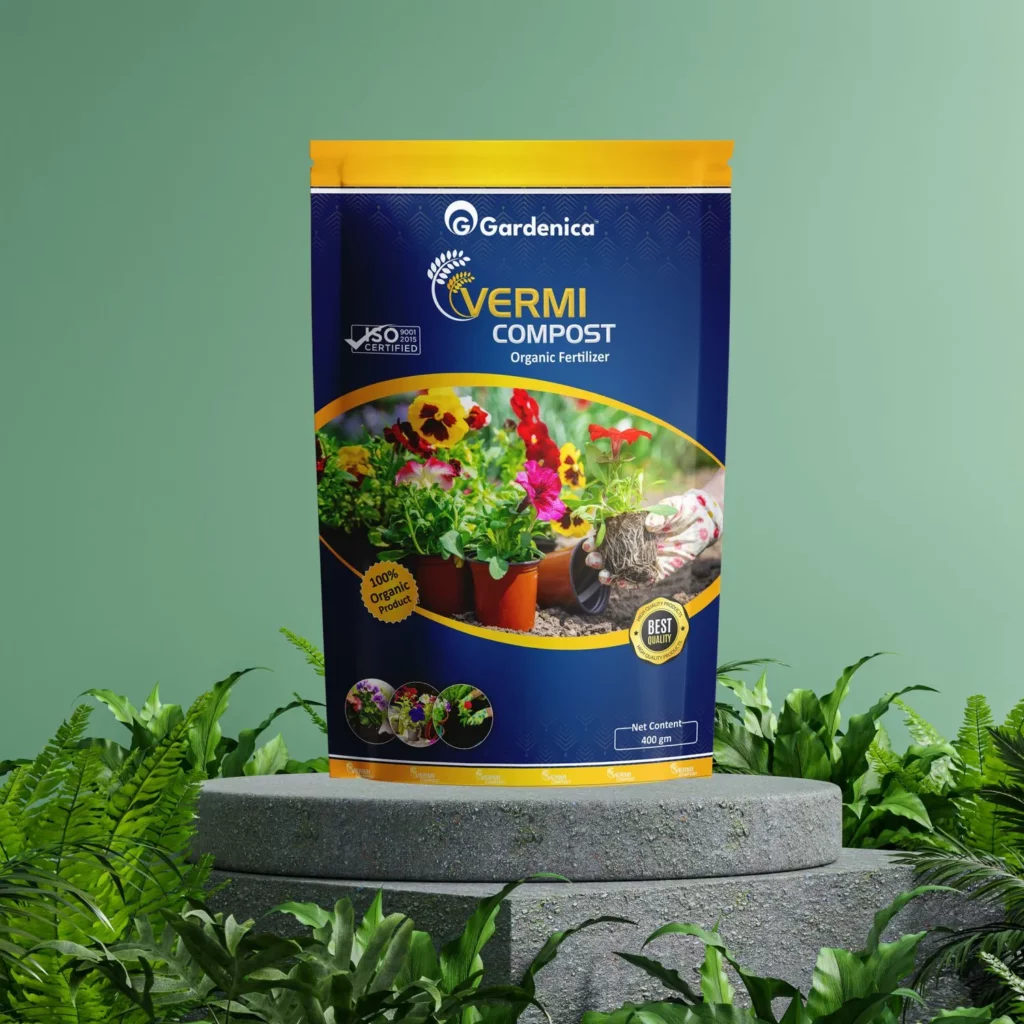
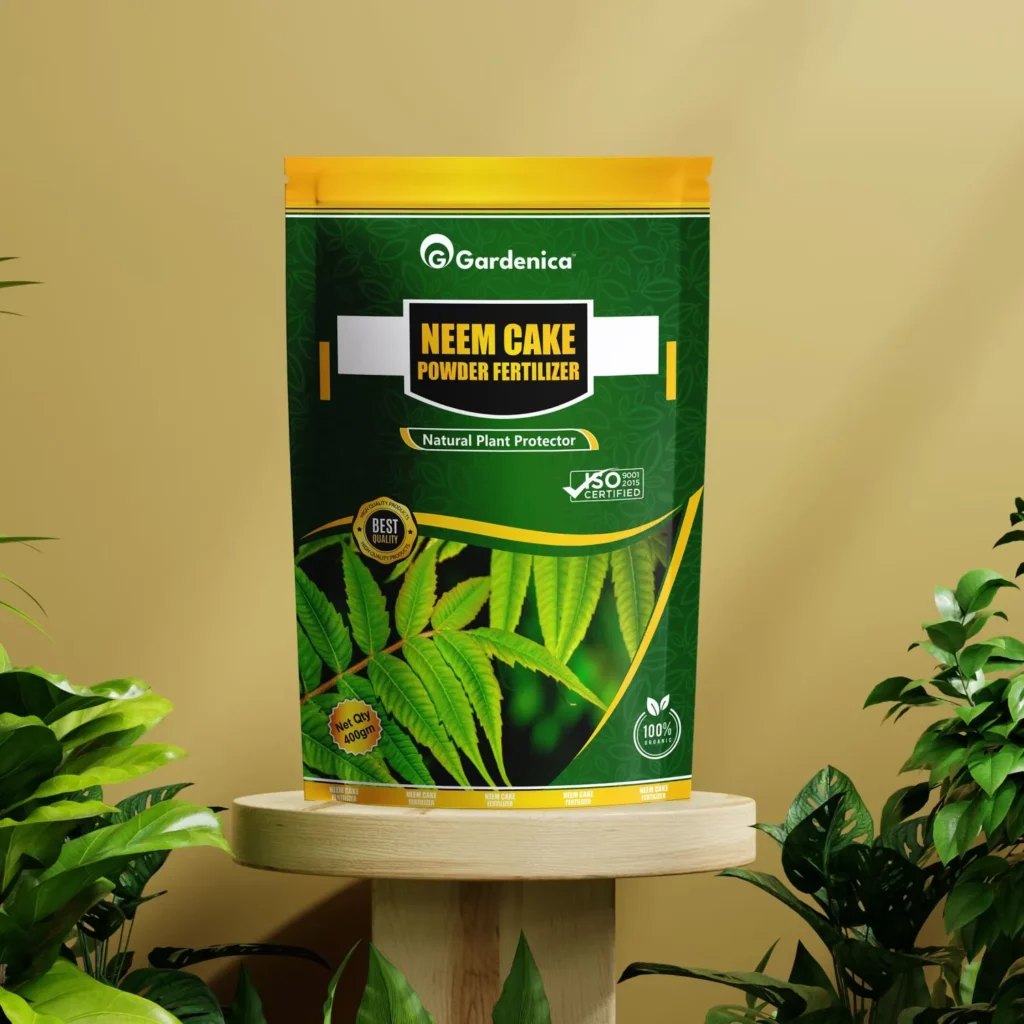
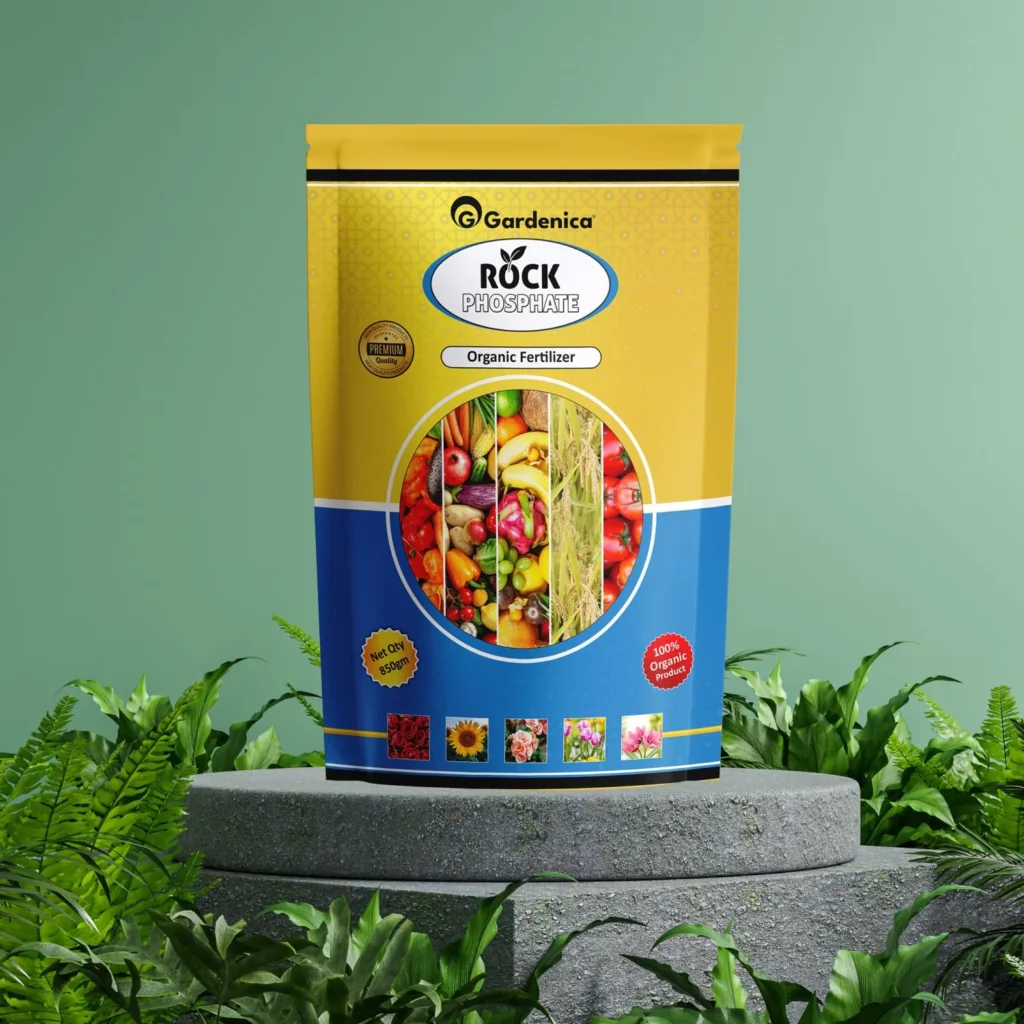
Broccoli wants moisture-holding but free-draining soil that stays slightly rich. Two parts garden soil or coco peat, one part vermicompost, one part coarse sand or perlite, and a handful of neem cake powder per 15 litre pot works well. Mix in about 50 g of rock phosphate at the soil stage, since phosphorus supports early roots and later heading. Broccoli is a brassica and dislikes sour, compacted soil, so never reuse old mix without refreshing it. A balanced potting mix for kitchen gardens gives the same balance without guesswork.
Feed broccoli for leaves for six weeks, then stop pushing nitrogen and let the plant spend its energy on the head.
Sowing and Transplanting, Step by Step
You can sow directly in the final bag, but raising seedlings in a tray and transplanting at the four-leaf stage gives a better stand.
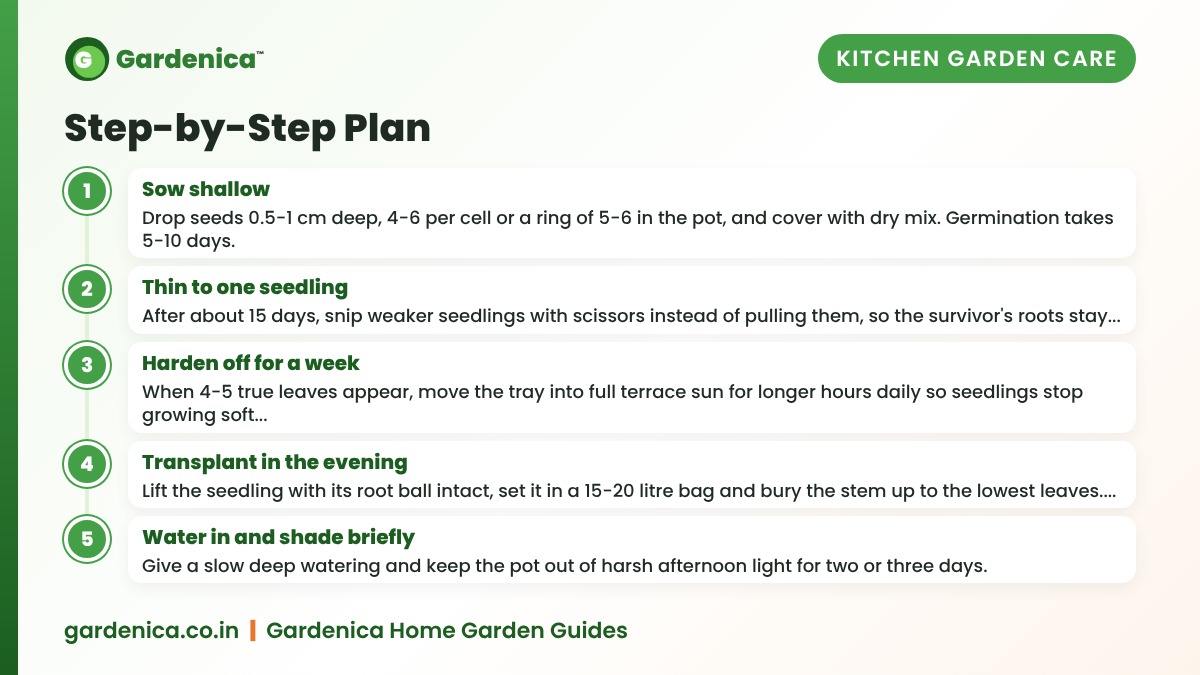
- Sow shallow. Drop seeds 0.5-1 cm deep, 4-6 per cell or a ring of 5-6 in the pot, and cover with dry mix. Germination takes 5-10 days.
- Thin to one seedling. After about 15 days, snip weaker seedlings with scissors instead of pulling them, so the survivor's roots stay undisturbed.
- Harden off for a week. When 4-5 true leaves appear, move the tray into full terrace sun for longer hours daily so seedlings stop growing soft and tall.
- Transplant in the evening. Lift the seedling with its root ball intact, set it in a 15-20 litre bag and bury the stem up to the lowest leaves. Broccoli roots from the buried stem.
- Water in and shade briefly. Give a slow deep watering and keep the pot out of harsh afternoon light for two or three days.
Watering, Sunlight and Feeding Schedule
Watering
Broccoli is the thirstiest crop on a winter terrace. Water deeply once a day in bright weather, every alternate day in cloudy spells, and check by pushing a finger 3-4 cm into the mix. Irregular watering is the biggest cause of small, loose heads. Our watering guide for kitchen garden plants has a full winter routine.
Feeding
Top-dress with a handful of vermicompost every three to four weeks. From week four, give a balanced feed such as Gardenica Rich Fertilizer at the dose on the label, every 15 days. Once the head is visible, stop heavy nitrogen and use a seaweed drench such as All In One once in ten to fifteen days. Flush the bag with fresh water monthly to stop salt build-up.
Have a question about this topic?
Chat on WhatsAppSunlight
Six or more hours of direct sun keeps the plant compact and the head tight. With only four hours, grow it as a greens plant and pick young shoots.
Why Broccoli Heads Stay Small or Leafy
When a plant gives leaves but no head, or a head no bigger than a tennis ball, one of these is usually behind it.
- Heat. Early types such as Green Comet head faster in mild weather than a late Calabrese.
- Rootbound pot. Anything under 15 litres limits the head, so sow into the right size from the start.
- Too much nitrogen. Fresh cow dung or heavy feeds keep the plant leafy; shift to phosphorus and potash support once established.
- Transplant shock. A seedling that wilts for two weeks may run to leaf. Use a root ball, bury the stem and shade it briefly.
- Old seed. Brassica seed loses vigour fast in Indian heat. Buy fresh each season, and check what else to grow in December if you missed the window.
Caterpillars and the usual aphids on plants hide under leaves. Pick caterpillars off by hand, spray with a strong jet of water, and use a botanical spray such as neem oil at the dose on the label in the evening.
Harvesting the Head and the Side Shoots
Most varieties are ready 60 to 75 days after sowing. Cut the central head with a knife and 2-3 cm of stem when it is firm, deep green and the buds are still closed. If buds turn pale yellow, the head will not keep well. Keep watering after the cut, and in three to four weeks side shoots appear that you can pick for another month.
Common Mistakes to Avoid
- Sowing on the plains in February or March, when heads never form before the heat arrives.
- Using a 10 litre pot or tired old soil for a crop that needs 15-20 litres of fresh mix.
- Letting the pot dry out for even two days while the head is sizing up.
- Feeding heavy nitrogen after the head appears, which gives loose, leafy buttons.
- Leaving two or three seedlings in one pot because thinning feels wasteful.
- Harvesting late, after yellow petals open, and concluding broccoli does not grow in India.
Frequently Asked Questions
What month do I sow broccoli in India?
October to November across North and Central India, mid-October to December in coastal and southern plains, and February to March in hill stations.
How big a pot does broccoli need?
One plant needs a 15 to 20 litre pot or grow bag, roughly 35-40 cm wide and 35 cm deep. Smaller bags give leafy plants with small heads.
Why is my broccoli only growing leaves?
Usually the weather is too warm, the pot is too small, or nitrogen is too high. Check pot size first, then stop nitrogen feeds once established.
Can broccoli grow on a balcony with 4 hours of sun?
It survives and gives edible leaves and shoots, but the central head stays loose and small. Pick the sunniest spot you have.
Is cow dung manure good for broccoli?
Well-rotted compost helps, but broccoli does better with vermicompost and neem cake, plus rock phosphate worked into the mix at planting.
How long does a broccoli plant keep giving harvest?
The central head arrives around 60-75 days after sowing, and side shoots follow for another three to four weeks.
Grow a Healthy Broccoli Pot This Winter
Broccoli rewards consistency: fresh mix, a big bag, steady morning water and feeding at the right stage. Start with two pots this October or November, cut the head early, and you will have a winter crop no market counter can match on freshness. For product guidance or bulk enquiries, Contact the Gardenica team.
Looking for more?
Continue to our main page to explore products and services.