Aphids on Plants: How to Identify, Control and Prevent Them
Aphids on Plants: How to Identify, Control and Prevent Them
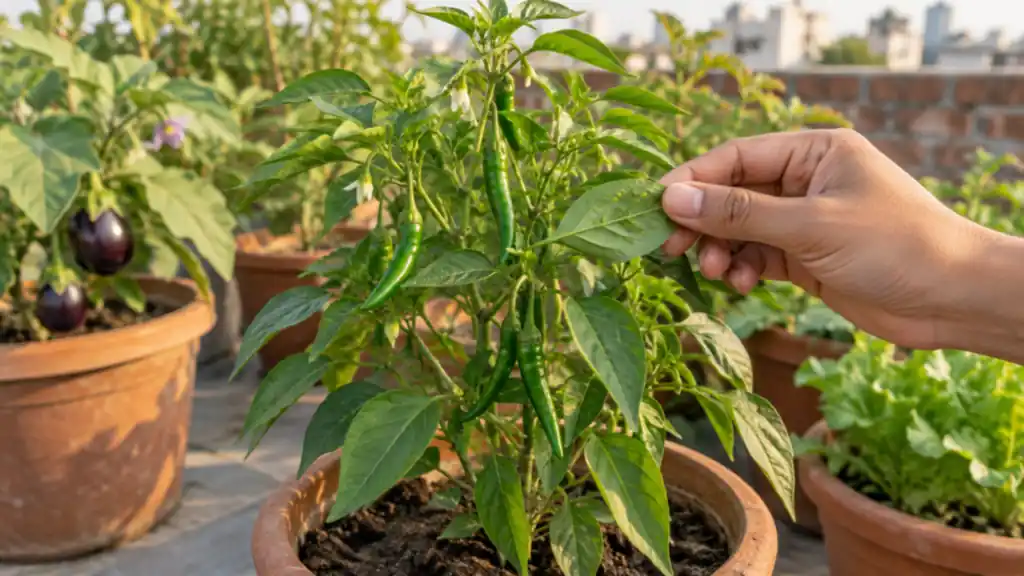
You water your chilli plant one morning and notice the newest leaves are curled, sticky and crowded with tiny green dots. Those dots are almost certainly aphids. Aphids on plants are one of the most common problems in Indian balcony and terrace gardens, and they tend to build up from October to February, when the weather turns cool and dry. The good news is that a small attack is easy to control at home if you catch it early. This guide explains how to identify aphids, why they appear, how to get rid of them step by step, and how to keep them from coming back.
What are aphids?
Aphids, often called mahu or chepa in Hindi-speaking areas, are soft-bodied insects about 1 to 3 mm long. They feed by piercing tender plant tissue and sucking the sap. One aphid does little harm, but they multiply very fast, so a few insects can become a dense colony within a week or two.
Read more: Explore Gardenica Pest-O-Care
How to identify aphids
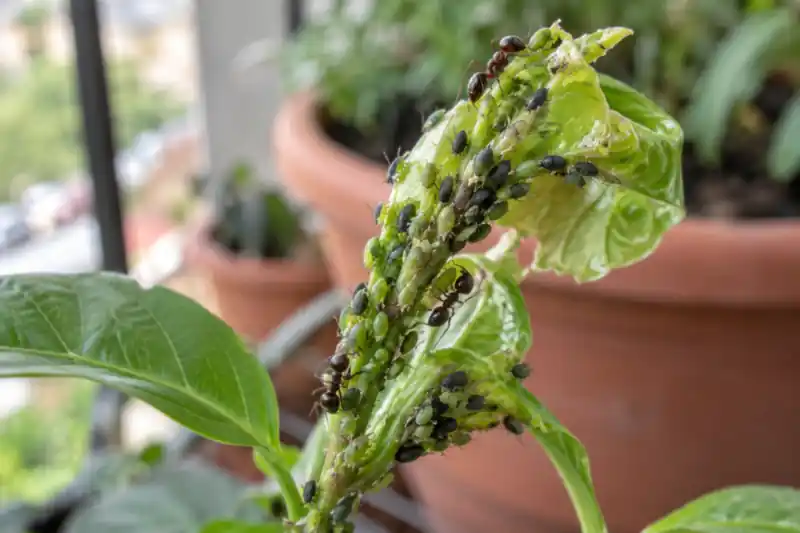
- Pear-shaped insects in green, black, yellow, grey or brown, sometimes with wings
- Clusters on new shoots, flower buds and the undersides of young leaves
- Small white flakes nearby, which are shed skins
- A sticky, shiny coating on leaves called honeydew
- Ants walking up and down the stem, because they feed on honeydew
Plants aphids commonly attack
In Indian home gardens, aphids are often seen on chilli, brinjal, tomato, okra, mustard greens, cabbage, cauliflower, coriander, beans and roses. Winter vegetables you sow now are especially at risk. If you are planning your sowing, our guide to vegetables to grow in October lists crops that suit pots this season.
Signs of aphid damage to watch for
Aphids are small, so the plant often shows the problem before you spot the insects. Check closely if you see any of these signs:
- Curled, cupped or twisted young leaves
- Yellowing leaves and slow, stunted new growth
- Buds that drop or flowers that open poorly
- A black, sooty layer on leaves, which is a mould that grows on honeydew
- A steady line of ants on one plant
Heavy feeding weakens the plant, and aphids can also carry some plant viruses from one plant to another. That is why it pays to act on a small colony rather than waiting.
Why aphids attack kitchen garden plants
Knowing the cause helps you fix the conditions, not just the insects.
Cool, dry weather
Aphid numbers usually rise in India after the monsoon, through winter and into early spring. Mild days and dry air suit them, and heavy rain tends to wash them off.
Too much nitrogen
Plants fed heavily with nitrogen produce a lot of soft, leafy growth, and that is exactly what aphids prefer. Balanced feeding with compost-based inputs keeps growth steadier.
Ants and few natural predators
Ants protect aphids from predators in return for honeydew. On high-rise balconies there are also fewer ladybirds, lacewings and hoverflies, the insects that would normally eat aphids.
How to get rid of aphids on plants: step by step
Start with the gentlest method and move up only if the colony returns. For most pot gardens, the first three steps are enough.
- Isolate the plant. If the pot can be moved, keep it a little away from other plants so winged aphids do not spread.
- Prune the worst parts. Snip off tips or leaves that are completely covered and put them in a sealed bag in the bin, not the compost.
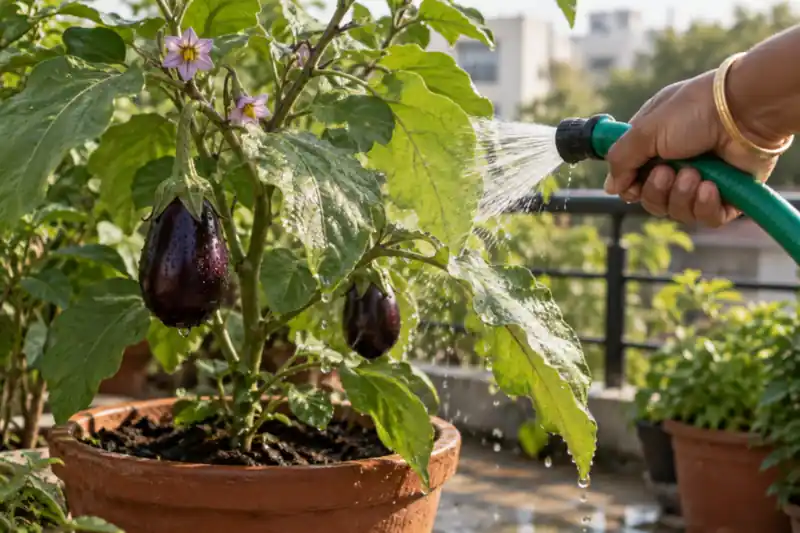
- Wash them off with water. Use a firm but gentle spray of plain water on shoots and leaf undersides. Support the stem with one hand. Repeat every two to three days for a week.
- Wipe small colonies by hand. On a few leaves, a damp cloth or gloved fingers can crush or remove aphids quickly.
- Use a neem-based spray if they return. Neem works best when it coats the insects directly, so cover the undersides of leaves well.
- Check again after five to seven days. Aphids hatch in waves, so a single treatment is rarely enough.
Natural sprays for aphid control
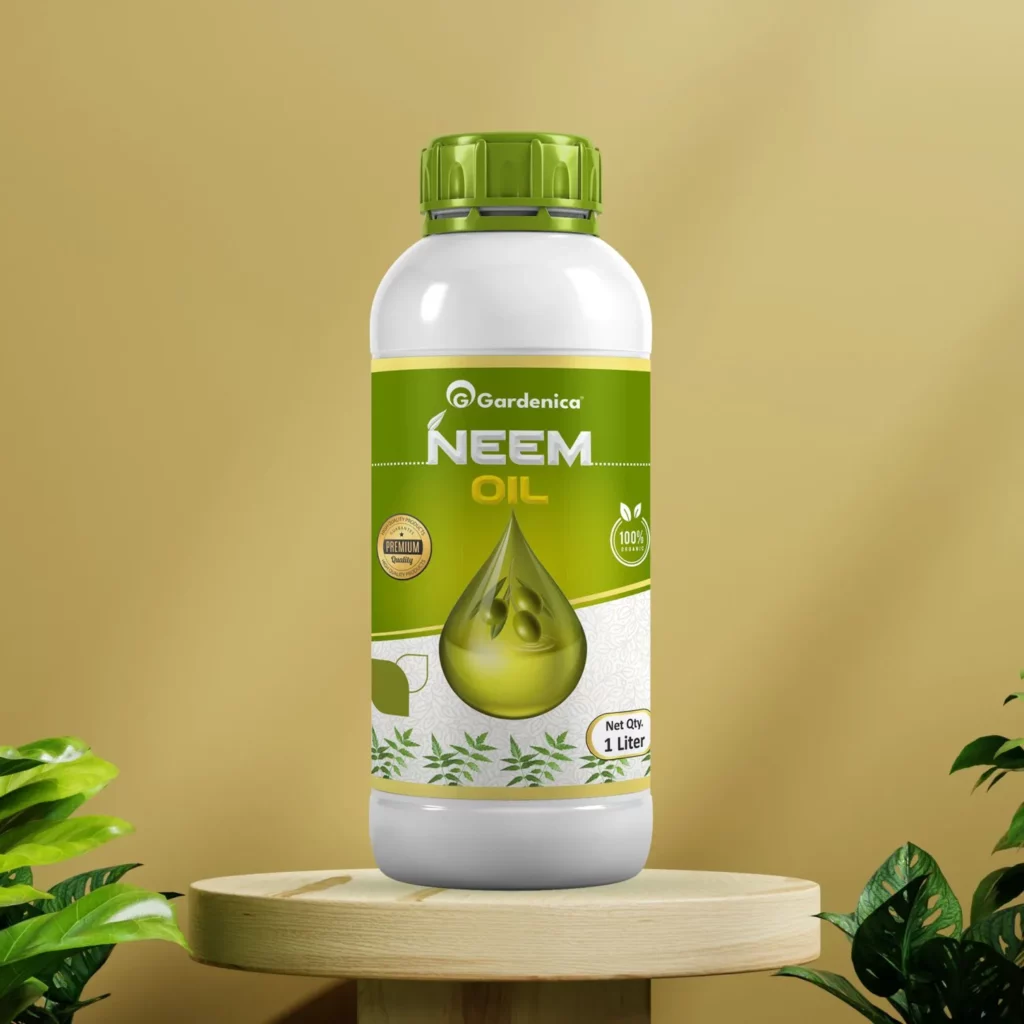
For a home kitchen garden, a neem-based spray is the most common natural option. Our detailed guide on neem oil for plants explains how to mix and emulsify it properly.
Neem oil spray
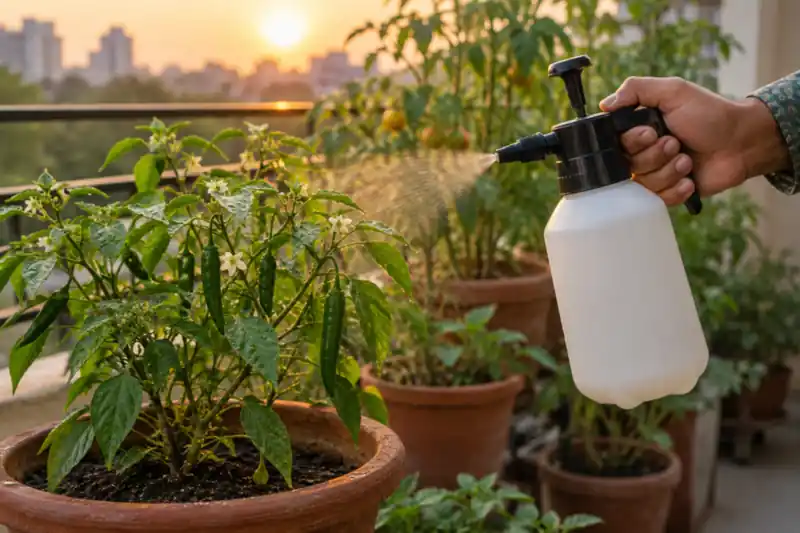
Mix neem oil with water and a mild emulsifier as directed on the product label. Spray in the early morning or evening, never in strong afternoon sun, and coat both sides of the leaves. Shake the sprayer often because oil separates from water.
Ready-to-use plant protection products
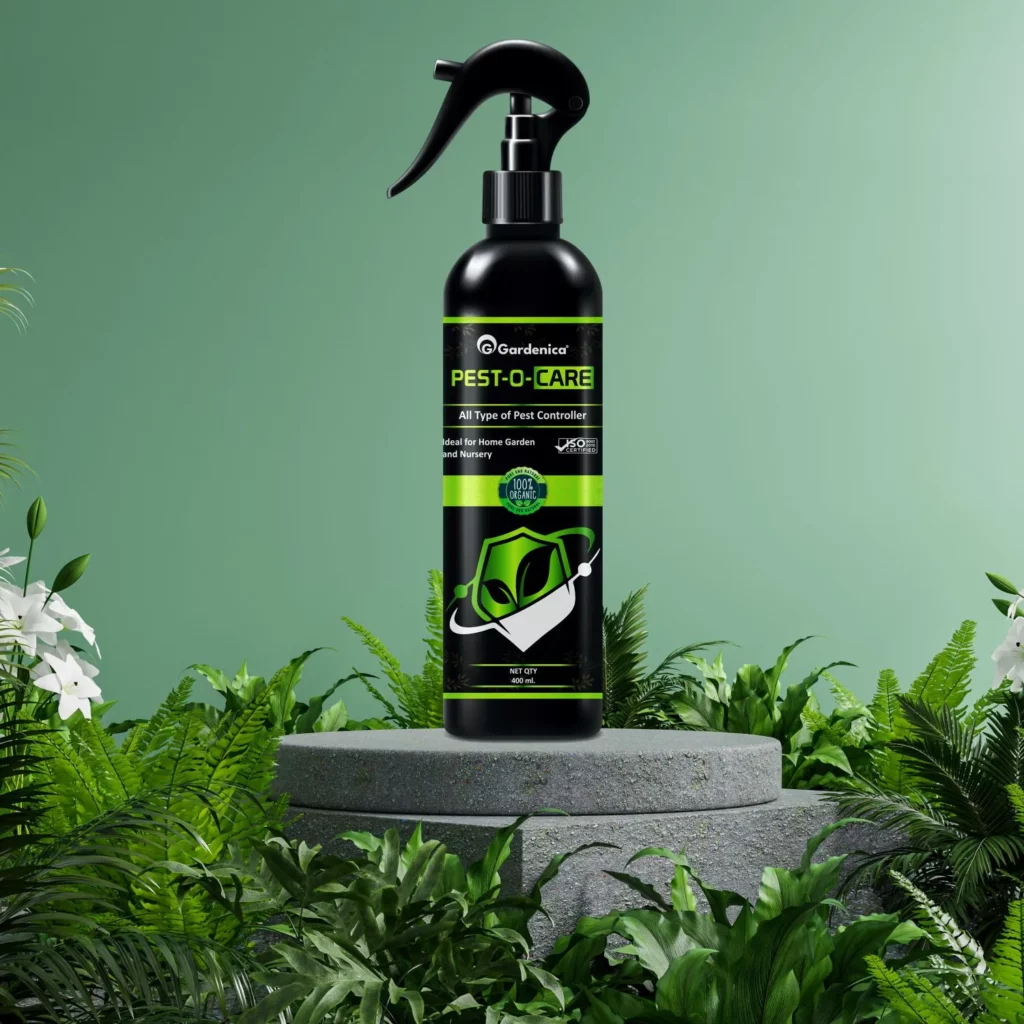
If you prefer a ready formulation, choose a product made for home gardens and follow its label exactly for dilution and spray interval. Gardenica Pest-O-Care is one such plant protection product for kitchen gardens. Always read the label before using any spray on vegetables you will harvest soon.
Have a question about this topic?
Chat on WhatsAppPatch test first
Spray a few leaves and wait 24 to 48 hours before treating the whole plant. Seedlings, tender herbs and plants under stress can be sensitive to oil sprays.
How to prevent aphids from coming back
Prevention is mostly about steady plant health and regular checks.
Inspect twice a week
Turn over a few young leaves on each plant when you water. A colony of ten is far easier to handle than a colony of a thousand.
Feed in balance
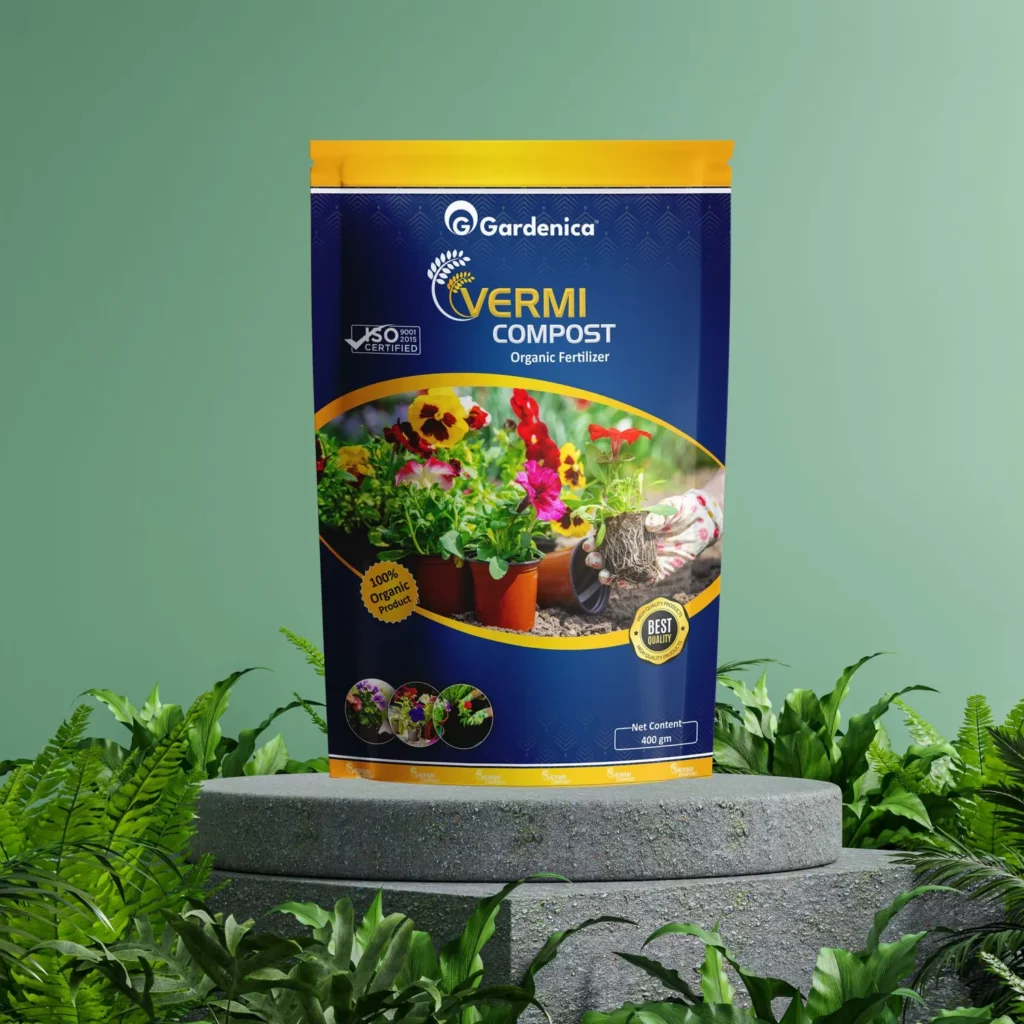
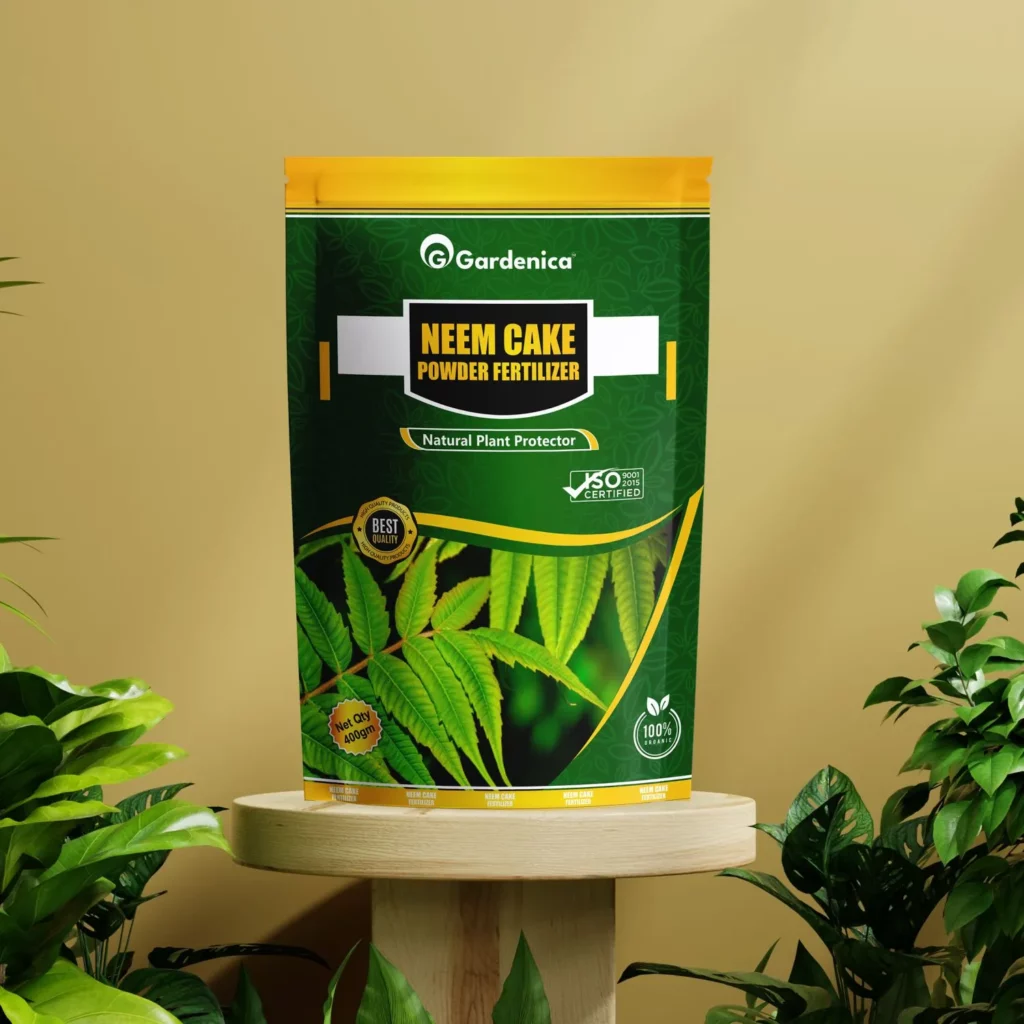
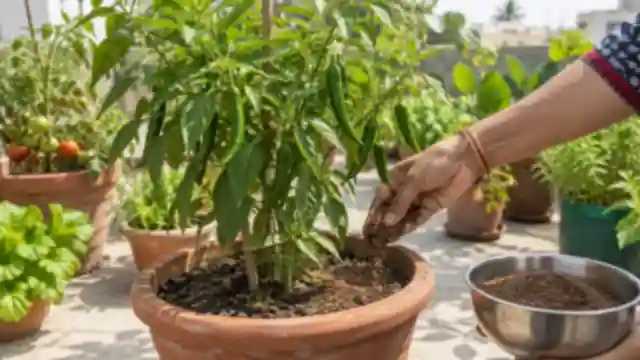
Use compost-based nutrition rather than heavy doses of nitrogen. Mixing vermicompost and neem cake powder into the potting mix supports steady growth and healthier soil.
Control ants
Keep pot surroundings clean, remove fallen fruit and wipe sticky residue from leaves. Fewer ants means aphids lose their bodyguards.
Welcome beneficial insects
Flowering plants such as marigold, coriander left to flower, and dill can attract ladybirds and hoverflies. Avoid broad sprays when you see these helpers at work.
Common mistakes when treating aphids
- Spraying in hot sun. Oil sprays in midday heat can scorch leaves.
- Treating only the top of leaves. Most aphids sit underneath and on new tips.
- Stopping after one spray. New aphids hatch, so repeat checks for two to three weeks.
- Using strong detergents. Kitchen detergents and homemade mixes at guessed doses can damage leaves.
- Overfeeding with nitrogen. Extra soft growth invites a fresh attack.
- Ignoring ants. If ants keep farming the colony, aphids return quickly.
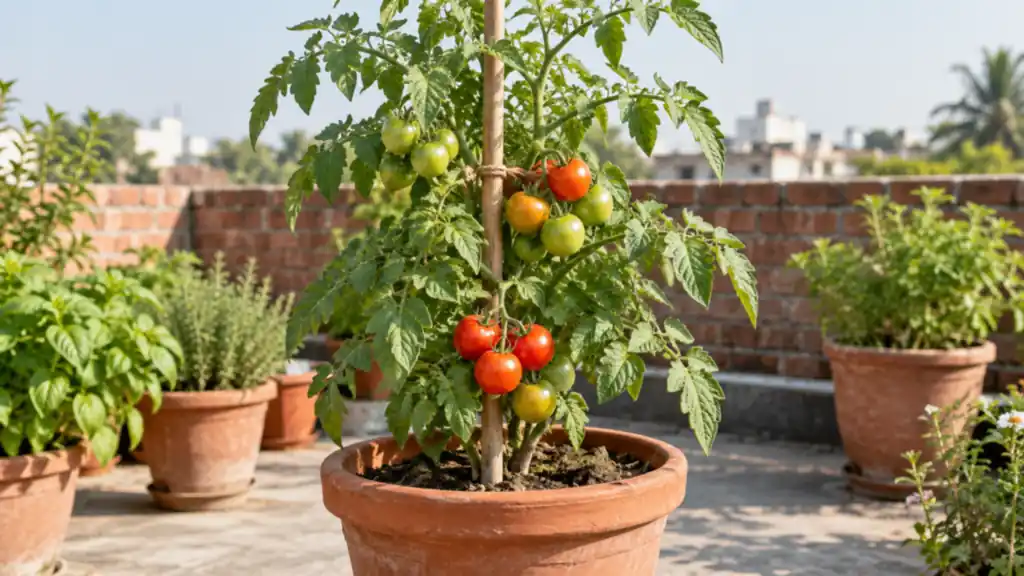
Tomatoes in pots are a common example where aphids and ants work together on new shoots. Our guide on growing tomatoes in pots covers routine care that keeps plants strong.
Frequently asked questions
Are aphids harmful to my plants?
A few aphids cause little damage, but large colonies weaken plants, curl leaves, reduce flowering and can spread some plant viruses. Early action is best.
Can water alone get rid of aphids?
For small to medium colonies, a firm water spray every two to three days often works well. For repeated attacks, combine it with a neem-based spray.
How often should I spray neem oil for aphids?
Follow the interval given on the product label. Many gardeners repeat a neem spray about once a week until the colony is gone, then switch to regular inspection.
Why do I see ants on plants with aphids?
Ants feed on the sweet honeydew aphids produce and protect them from predators. Controlling aphids and keeping the area clean usually reduces ants too.
Is it safe to eat vegetables after spraying?
Check the waiting period on the label of whatever you use, and wash harvested produce well with clean water before eating.
Do aphids come back every year?
Aphids are common every cool season in India, so expect them from October to February. Regular checks and balanced feeding keep attacks small.
Keep your kitchen garden aphid-free this season
Aphids are a routine part of winter gardening, not a reason to give up on a plant. Check new growth often, wash small colonies off early, and use a neem-based or ready plant protection spray only when needed. For a home-garden option, explore Gardenica Pest-O-Care, and if you are unsure which product suits your plants, contact the Gardenica team for guidance.
Looking for more?
Continue to our main page to explore products and services.