How to Grow Broccoli in Pots in Winter: A Terrace and Balcony Guide
How to Grow Broccoli in Pots in Winter: A Terrace and Balcony Guide
A tight green head the size of your fist, cut fresh on a Delhi terrace in January, is a realistic harvest even if you only have two pots. This guide shows you how to grow broccoli in pots step by step, so a balcony in Mumbai or a rooftop in Pune can give you heads by mid-winter instead of a tall leafy plant that never forms anything.
Broccoli is a cool-season crop in the cabbage family, and in most Indian plains it fits neatly between autumn sowing and spring. The thing that surprises first-time growers is that cold decides the head: too much cold at the wrong stage gives small "button" sprouts, too little cold gives leaves and no broccoli at all.
Read more: Explore Gardenica Vermi Compost
Why Broccoli Works on Indian Terraces in Winter
Broccoli likes cool nights of 10 to 15 degrees and bright days of 18 to 25 degrees, which is what most of north and central India gets between November and February. A pots-only grower has an advantage: you can move the pot out of a frost-prone corner. Coastal balconies in Mumbai or Chennai grow it in the same window, though heads mature faster there.
Choose a heading variety sold for winter in your region, and buy seed packed for the current season. Old seed germinates slowly and pushes you past the ideal transplant date, the most common reason a crop fails.
Sowing and Transplanting Broccoli Step by Step
Sow from late September to early November in the plains, a month earlier in the hills. Broccoli is always raised in a tray first, then moved once.
- Sow the seeds. Fill a seed tray with a light mix and sow each seed 1 cm deep, one per cell. Keep it moist and in shade until seedlings appear in 5 to 8 days.
- Give seedlings full sun early. The day the loops open, move the tray into at least 5 hours of direct sun. Seedlings stretched in shade almost always button later.
- Prepare the final pot. Use a 25 to 30 litre pot or grow bag with drainage holes. Mix one part vermicompost in four of your potting mix, plus a handful of neem cake powder.
- Transplant at the right age. At 4 to 5 weeks, with 4 true leaves and a pencil-thick stem, plant it in the evening up to the lowest leaves and firm the soil. Water straight away and shade it from harsh afternoon sun for three days.
- Space and support. One plant per pot, or two in a 60 litre grow bag. In windy spots, tie a loose stake so the plant is not rocked as it turns top-heavy.
A broccoli plant remembers how it was raised: a sturdy, sun-fed seedling gives a head, a leggy one gives regret.
Pot Size, Sunlight and Soil
Pot size
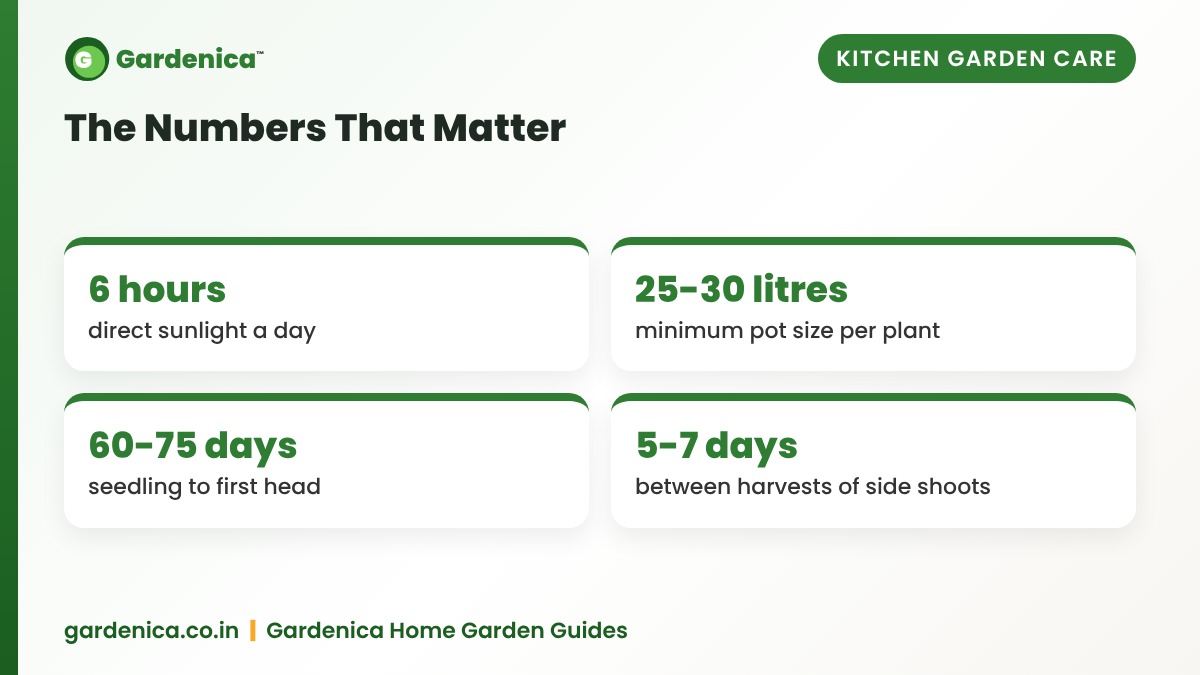
Broccoli sends a wide root mat near the surface, so a wide pot beats a tall narrow one. Anything under 20 litres dries out too fast in December sun and the head stops growing mid-way.
Sunlight
Aim for 6 hours of direct sun. A shaded balcony with 3 to 4 hours still gives leaves and small heads, so pick a fast-maturing variety and keep it fed.
Soil
Broccoli hates sour, waterlogged soil. Use a free-draining mix with plenty of compost, and if your pots stay wet after watering, work a little bentonite into the mix next season. A light top dressing of garden lime once in winter helps if heads show brown spots.
Watering and Feeding for Big, Firm Heads
Broccoli is mostly water in the part you eat, so uneven watering shows up directly in the head. Water in the morning, deeply, until it runs from the drainage holes, and let the top inch dry between waterings. In a warm spell a 25 litre pot may need water daily; in a cloudy week, every third day may do.
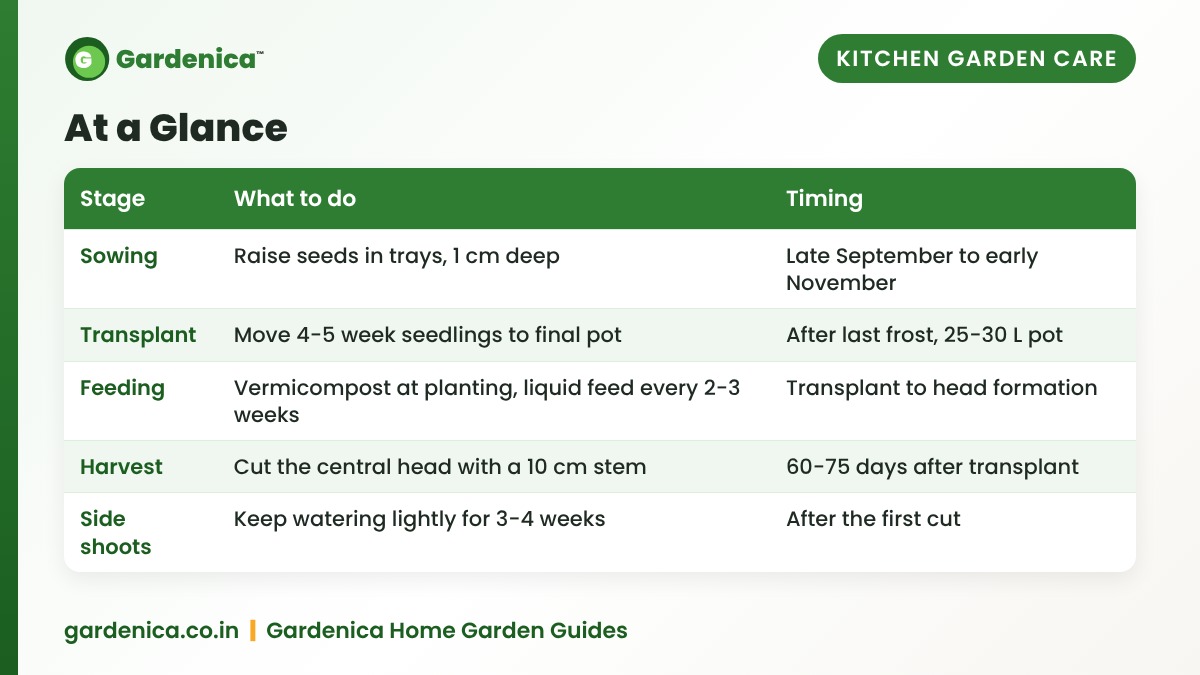
- Leafy phase. For the first 5 to 6 weeks the plant builds leaves and appreciates nitrogen. A seaweed extract feed at the dose on the label, every 2 to 3 weeks, keeps growth steady.
- Head phase. Once a button the size of a coin appears at the centre, switch to a phosphorus and potash feed such as Rich Fertilizer at the label dose. Heavy nitrogen now gives loose, leafy heads.
Working rock phosphate into the mix at planting supports roots and steady flowering, since it releases slowly through the season.
Have a question about this topic?
Chat on WhatsAppMonth-Wise Winter Care on a Terrace
October is transplant month: firm planting, shade for three days, and a daily check that the pot is not drying out. November is the growth month: feed every 2 to 3 weeks and earth up compost around the thickening stem. December is the head month: keep moisture even and stop strong feeding two weeks before you expect to cut. January and February are harvest months, when side shoots keep coming if you water lightly.
In south India and coastal cities, where nights stay mild, expect to harvest 10 to 15 days earlier and watch for aphids. For more pot-by-pot planning, see our guide to vegetables to grow in December.
Why Broccoli Heads Stay Small or Never Form
A tiny, yellowing head that stops growing is buttoning, and it traces back to four things: a seedling that was root-bound or leggy at transplant, cold stress while the plant was small, a pot that dried out as the head appeared, or too much nitrogen late in the season. Fix the cause and the side shoots that follow are still worth eating.
Brown sunken patches in the head are a calcium or water-uptake problem rather than a disease: keep moisture even and remove the affected part. Pale, yellowing lower leaves usually mean nitrogen, which a seaweed feed and fresh compost will correct in two weeks, as covered in our piece on nitrogen deficiency in pots.
Harvesting and Getting More from One Plant
- Cut the central head when firm, deep green and before yellow florets open, with a 10 cm stem.
- Cut early morning, and put the head straight into cool water if you are not cooking it.
- Water and give a light feed after cutting; thumb-sized side shoots keep arriving for 3 to 4 weeks.
- Remove yellowing lower leaves as you harvest so air moves through the plant.
Common Mistakes to Avoid
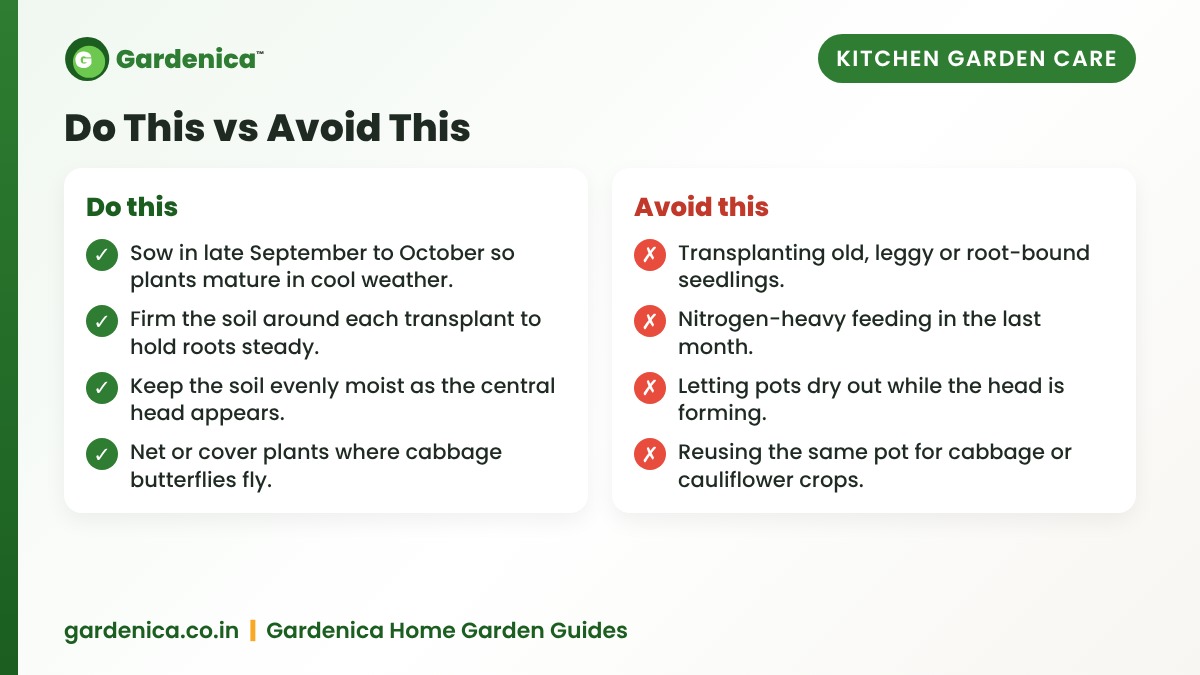
- Transplanting old, leggy or pot-bound seedlings, the main cause of buttoning.
- Growing in a pot under 20 litres, where the head stalls in one hot afternoon.
- Letting the soil dry out in the exact week the central head appears.
- Continuing nitrogen-heavy feeding after the head starts forming.
- Ignoring small green caterpillars, which eat neat holes in the curd.
- Reusing the same pot for cabbage, cauliflower or kale season after season.
Frequently Asked Questions
Can I grow broccoli in a grow bag?
Yes, grow bags drain freely and stay cool. Use a 30 litre bag with at least 30 cm of soil depth, and place it where it will not be moved after transplanting.
How many broccoli plants can I grow in one pot?
One plant per 25 to 30 litre pot. Two fit a 60 litre grow bag with 30 cm between them, but crowding is the fastest route to small heads.
Why is my broccoli not forming a head?
Usually the plant missed cool weather, or was checked by drought or tight roots while young. Sturdy transplants set in October with steady moisture almost always head properly.
Which month is best for broccoli in India?
Sow in late September or October in north and central India, and October to November in coastal and south Indian cities. Hills can sow from August.
Should I remove yellow flowers?
Yes. Yellow petals mean the head is bolting and turning bitter, so cut whatever curd exists and let the side shoots carry on.
Is broccoli easy for a beginner?
It is one of the easier winter crops, asking mainly for sun, steady water and a roomy pot. The only real skill is sowing on time so the head forms in cool weather.
Grow a Healthy Broccoli Pot This Winter
Broccoli rewards a grower who sows on time and keeps the pot evenly moist. Start with good living soil and steady feeding using Gardenica Rich Fertilizer, and the rest follows. For help choosing inputs for your winter pots, Contact the Gardenica team.
Looking for more?
Continue to our main page to explore products and services.