Compacted Soil in Pots: How to Fix Hard, Tired Potting Mix the Organic Way
Compacted Soil in Pots: How to Fix Hard, Tired Potting Mix the Organic Way
You water the pot properly, still the water sits on the surface for a minute, and a week later the plant droops as if you forgot it. Nine times out of ten the problem is not your watering can. It is compacted soil in pots that has gone hard and airless after months of watering, sun and rain. The good news is that most of it is fixable with a hand fork, a bag of organic matter and half an hour on a winter morning.
Compaction is the slow collapse of the tiny pores roots breathe through. Terrace gardeners see it most in late autumn and winter, when the same mix has been watered daily for months, when monsoon rain has hammered the surface, or when a grow bag has already given two crops. This guide shows you how to confirm compaction, loosen it without hurting roots, and decide when a plant genuinely needs fresh mix.
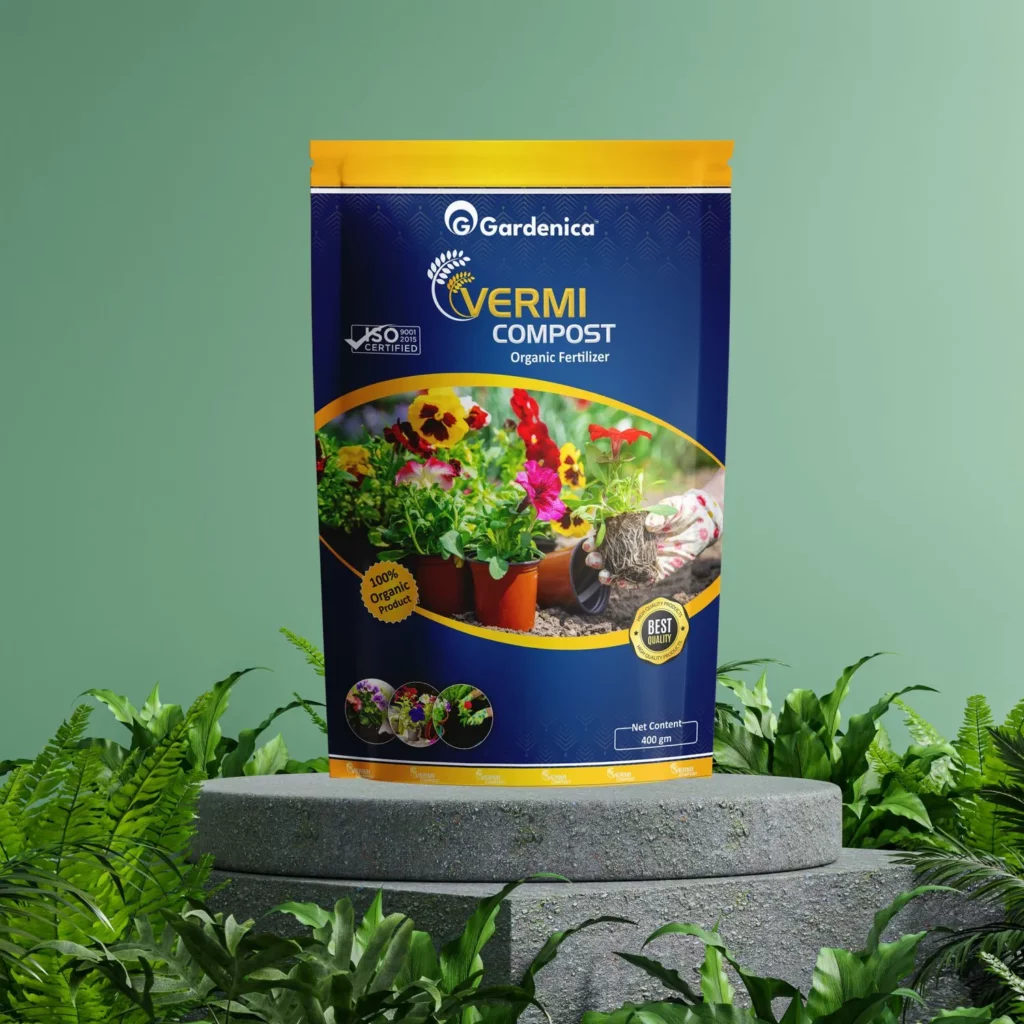
Read more: Explore Gardenica Vermi Compost
What Compaction Does to a Potted Plant
Healthy potting mix is roughly a quarter air by volume. Roots need that air to burn energy and pull in nutrients, and soil microbes need it too. When the pores collapse, water runs down the seam between soil and pot wall, salts build up on top, and helpful microbes are replaced by slow, airless ones.
The plant responds slowly, so the cause is easy to miss. Growth stalls, leaves pale, the pot dries oddly fast or stays wet for two days, and a thin crust forms on top. Compaction also sets up problems gardeners blame on feeding: yellow leaves on plants and root rot in potted plants, because soggy, airless soil is where rot fungi thrive.
How to Test Your Pot in Five Minutes
Before buying anything, run these checks on a suspect pot.
- The push test. Press your thumb into slightly moist soil. Fresh mix dents easily. Compacted soil resists, or cracks instead of denting.
- The pour test. Water slowly in one spot. If it stands for over a minute, or appears at the drainage hole in seconds while the middle stays dry, water is taking a shortcut.
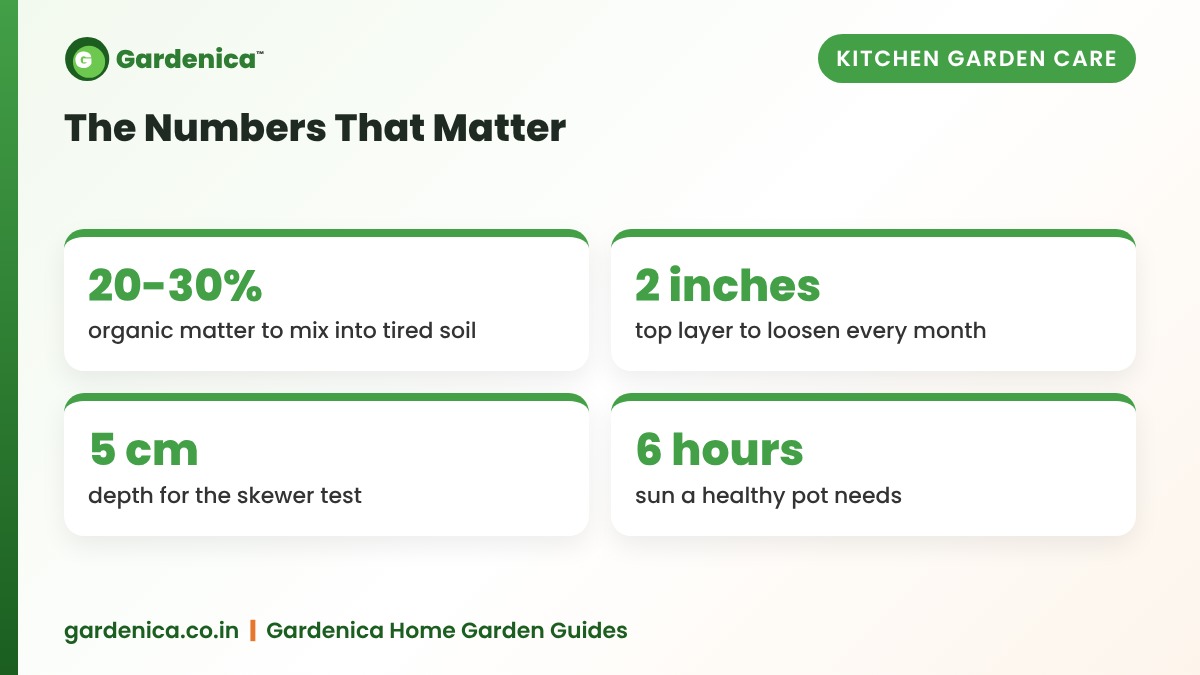
- The skewer test. Push a chopstick 5 cm in. It should slide with light friction. If you have to twist and push, the mix is set hard.
- The root look. Tip out a small plant. Compacted mix shows brown, circling roots pressed against the pot wall.
Why Indian Pot Mix Compacts So Fast
Most of it comes down to what the mix is made of and how we water it.
Too much fine soil, too little structure
A pot filled with plain garden soil (baal), fine cocopeat dust or sieved compost with nothing coarse will bind with every watering. Fine particles slide together and leave no air. Good pot mix needs a coarse fraction that never squashes flat; our potting mix for kitchen gardens guide covers that balance.
Hard water and daily watering
In Delhi, Jaipur or Bengaluru, tap water carries dissolved salts. Daily light watering deposits them on the surface as a white crust and leaves the top layer cement-like, while the root zone below stays dry.
Monsoon beating and summer baking
July rain hits a rooftop pot like a spray gun and settles the mix, then the October sun bakes it into a crust. Reused grow bag soil is the worst case, since the roots of the last crop have decayed into a dense, silt-heavy mass.
Fixing Compacted Soil Without Repotting
If the plant is healthy and in flower or fruit, do not disturb the whole root ball. Work from the top down.
Have a question about this topic?
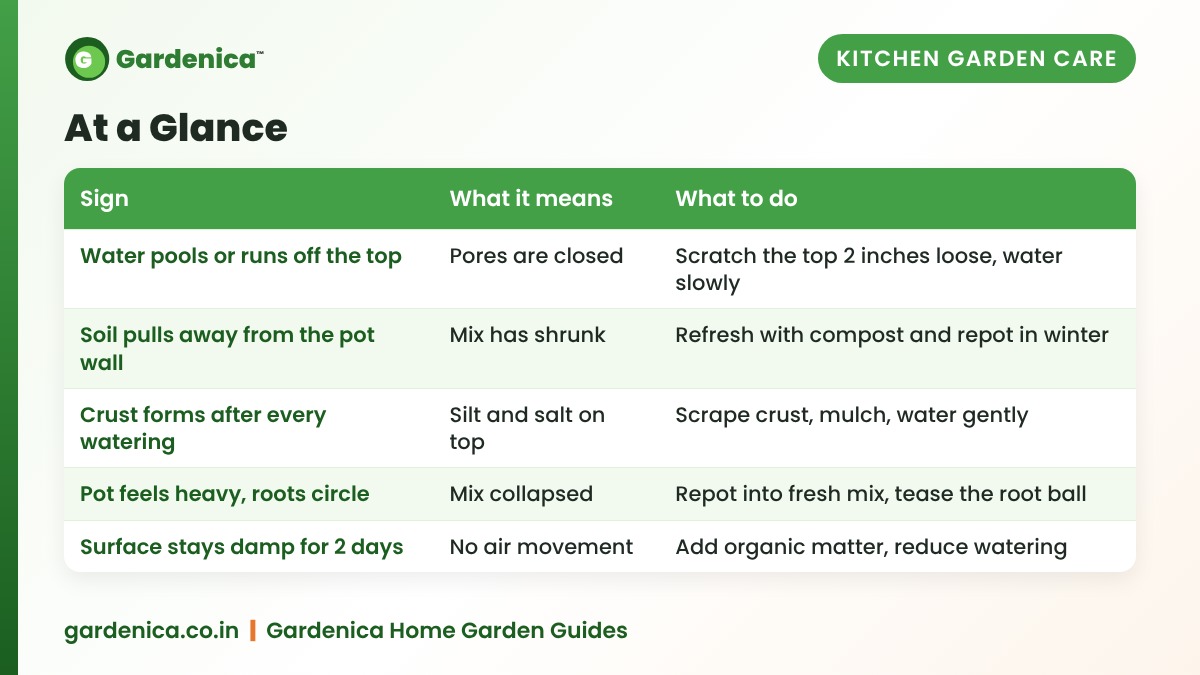
Chat on WhatsApp- Scrape the crust. Remove the top 1 cm of hardened or salt-crusted mix with a spoon and replace it with fresh compost. Never dig deep near the stem.
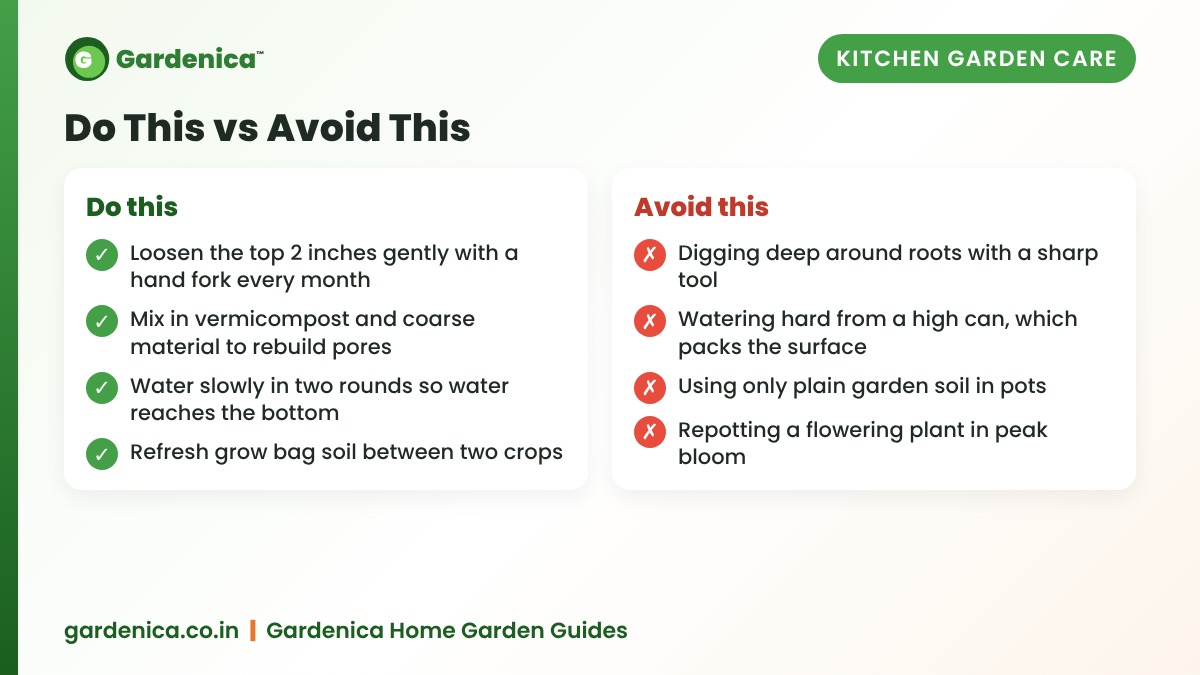
- Loosen shallow. Scratch the top 5 cm in circles with a hand fork, breaking the surface seal without cutting feeder roots. Do this monthly.
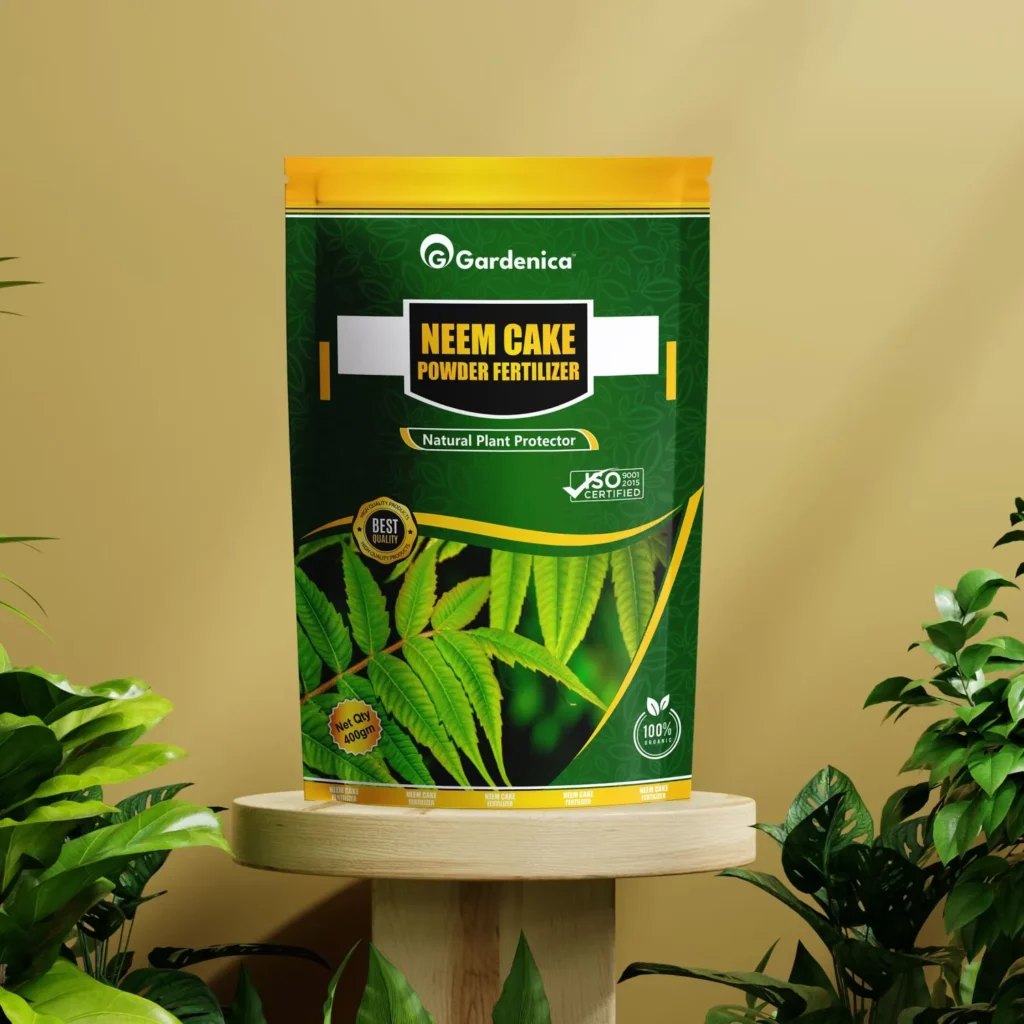
- Feed in organic matter. Work in a 3-4 cm layer of vermicompost, plus a light sprinkle of neem cake powder, both at the dose on the label. Compost re-binds particles into crumbs that hold pores, and neem cake feeds the microbes that keep them open.
- Add a moisture buffer. For pots that dry out then crack, scratch in a thin layer of bentonite granules, which support structure and water retention so irrigation spreads sideways instead of channelling down the edges.
- Water in two rounds. Apply a little, wait five minutes, then water again. The first round wets the water-repellent surface, the second carries it down to the roots.
- Mulch the surface. A 2 cm layer of dry leaves or coconut husk stops rain and sun sealing the top again.
Loosen the top two inches every month and feed the soil, not just the plant, and compaction never gets a chance to set in.
When to Repot or Refresh the Whole Mix
Some pots cannot be saved from the surface. Repot when roots circle the pot wall, when the mix has sunk several centimetres below the rim, or when a grow bag has finished two crops. Winter, from late October to early February, is a comfortable time in most of India: growth is steady and heat stress is low.
Tease away about a third of the old mix from the root ball, trim only brown or circling roots, and refill with fresh mix. A handful of rock phosphate worked into the new mix supports roots and later flowering, long after the quick nitrogen settles.
Building a Mix That Stays Open
The permanent fix is a mix with something in it that never flattens. A simple terrace recipe for vegetables is two parts garden soil, one part vermicompost, one part coarse compost or washed cocopeat, and half part coarse sand or perlite, with a handful of Rich Fertilizer per pot. Keep the mix moist while you fill, and tap the pot only twice so it settles naturally rather than being packed.
For grow bags, dump the soil out after each crop, sun-dry it for a week, screen out old roots, then blend in a third fresh compost and a little neem cake before refilling. Soil refreshed this way stays workable for many seasons.
Common Mistakes to Avoid
- Watering a compacted pot heavily to "push water down", which packs the surface harder and drowns roots.
- Stabbing a trowel deep around the root ball, which cuts the feeder roots the plant needs most.
- Refilling pots with only sieved compost or cocopeat dust, which compacts faster than garden soil.
- Ignoring the white crust on top, a warning of salt build-up and poor drainage.
- Repotting a plant in full flower or fruit, when the shock drops most of the blooms.
- Pressing the mix down hard while filling a new pot, squeezing out the air you just mixed in.
Frequently Asked Questions
How do I know if my potting mix is compacted or just dry?
Dig out a spoonful from 5 cm deep. If that soil is moist but the plant still wilts and water sits on top, it is compaction, not drought.
Can I just add water and let the soil loosen itself?
No. Wet compaction sets harder as it dries. Loosen the top layer mechanically and add organic matter, or every watering makes it denser.
How much vermicompost should I mix into tired soil?
Work in roughly 20-30% vermicompost by volume when refreshing a pot, and top-dress at the surface dose on the label. Pair it with a coarse material so a small pot does not hold excess water.
Is cocopeat good or bad for compaction?
Coarse, well-washed cocopeat keeps a mix open and suits Indian pots. Fine cocopeat dust, and unwashed cocopeat carrying salt, both make compaction worse.
My grow bag soil is two years old. Should I throw it away?
Rarely. Sun-dry it, screen out old roots, and blend in about a third fresh compost plus a little neem cake. Discard only soil that smelled foul or carried disease.
Keep Your Pot Mix Open All Winter
Compacted soil is not a disease, it is a maintenance gap, and it is entirely fixable. Loosen the surface monthly, feed the soil with vermicompost and neem cake, water in two slow rounds, and refresh the mix between crops. For product guidance, see Gardenica Vermicompost or Contact the Gardenica team for advice for your terrace.
Looking for more?
Continue to our main page to explore products and services.