Nitrogen Deficiency in Plants: How to Spot and Fix It in Pots the Organic Way
Nitrogen Deficiency in Plants: How to Spot and Fix It in Pots the Organic Way
It is November in Vadodara and your chilli plant that was deep green in the monsoon is now a washed-out, pale green, with the lower leaves turning the colour of old paper. Nothing is being eaten, no web is under the leaves, and the plant is still growing, just slowly. In pots, this is very often nitrogen deficiency in plants, simply because a 15-litre pot holds a limited supply of food and your plant has used most of it up.
This guide shows you how to read the signs correctly, how to separate nitrogen shortage from iron, magnesium and water problems that look similar, and how to bring the green back with organic inputs you can actually get, without burning the roots with a heavy chemical push.
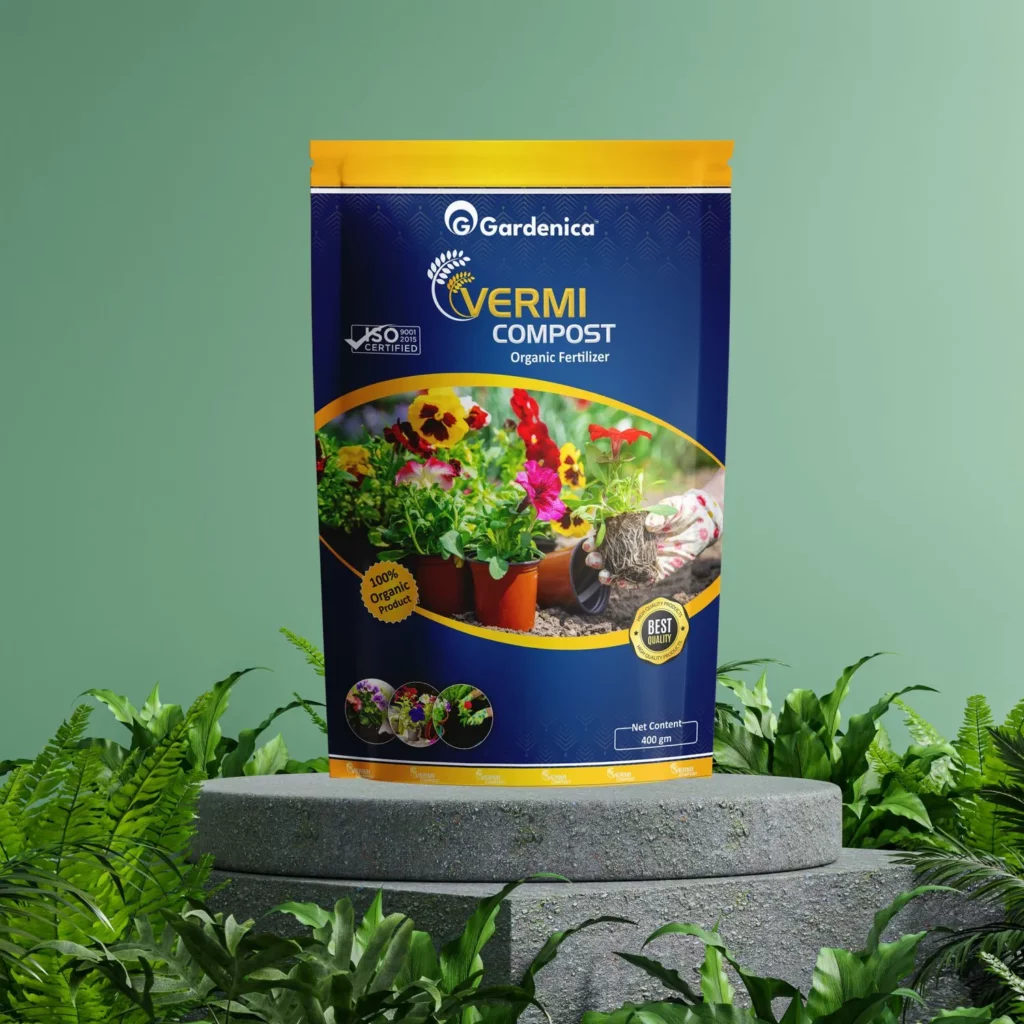
Read more: Explore Gardenica Vermi Compost
Why Potted Plants Run Out of Nitrogen First
Nitrogen is the nutrient plants move around inside themselves. When the supply drops, the plant pulls nitrogen out of its older leaves and sends it to the young growing tips, so the oldest leaves fade first and the top keeps looking almost normal for a while.
A pot makes this happen much sooner than a garden bed. Roots fill the container within a few months, watering pushes nutrients out through the drainage holes, and the small amount of compost in the original potting mix is finished. Warm soil, active roots and a fast-growing crop like tomato, palak or coriander can empty a pot in one season.
Spotting the Signs, Leaf by Leaf
Look at the plant in shade, not harsh sun, and start from the bottom.
Colour and pattern
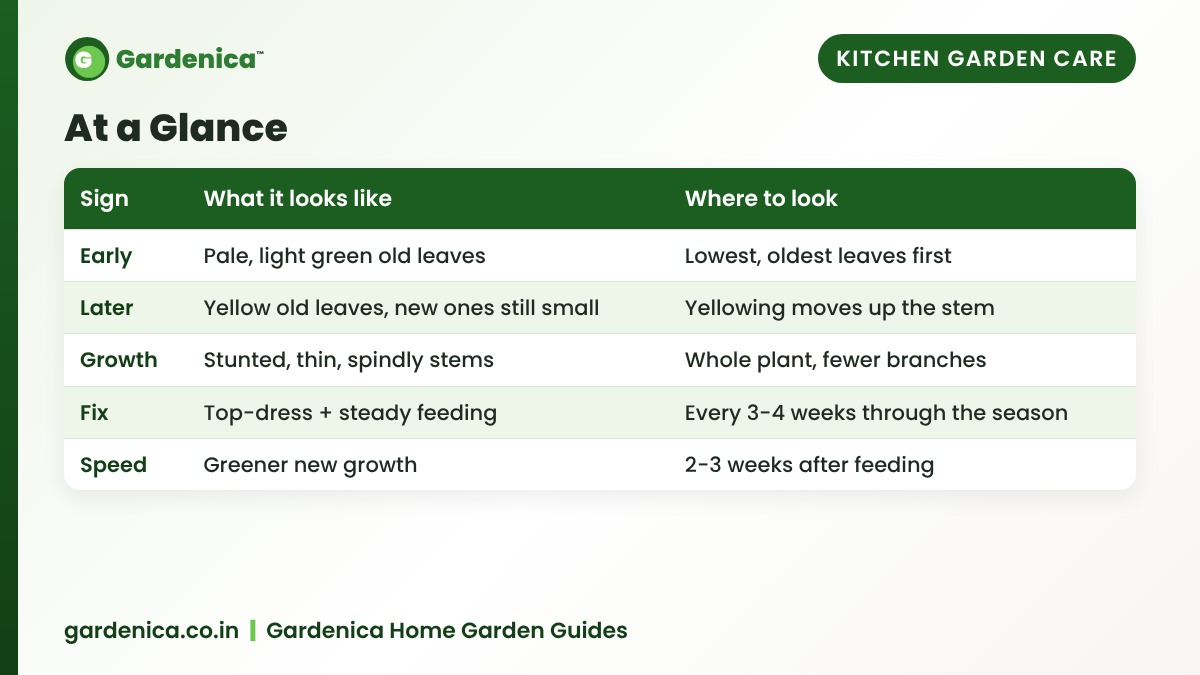
- Older, lower leaves go pale green, then pale yellow, evenly across the whole leaf.
- The veins and veins stay green only briefly; in true nitrogen shortage the whole old leaf fades together.
- New leaves at the tip stay green but are smaller than they should be.
- Stems are thin, hard and woody, with fewer branches and fewer flowers.
How fast it moves
In a hungry pot the yellowing climbs upward week by week. If the whole plant looks uniformly pale and stunted, the shortage started a long time ago. If the yellowing stops at the leaf margin or sits between the veins, it is a different problem and feeding more nitrogen will not help.
Nitrogen, Iron, Magnesium or Just Old Age?
This is where most gardeners lose weeks. Check three things: which leaves, which colour and how the plant feels in the pot.
- Nitrogen: oldest leaves fade first, whole leaf pale yellow-green, plant stunted and thin.
- Iron: youngest leaves at the tip go yellow between the veins while veins stay bright green, common in hard tap water and high-pH mixes.
- Magnesium: yellowing between the veins of older leaves with green veins left like a fishbone.
- Root trouble: yellowing plus wilting, soft stems and no new growth, usually from waterlogging. See our guide on root rot in potted plants.
- Natural ageing: a plant that keeps making healthy new growth and simply drops a few old yellow leaves at the base is fine.
Our own piece on yellow leaves on plants covers the full list of reasons leaves turn yellow, if you want to compare all of them side by side.
Organic Inputs That Actually Move the Needle
Choose two or three of these rather than everything at once, and always use them at the dose on the label.
Have a question about this topic?
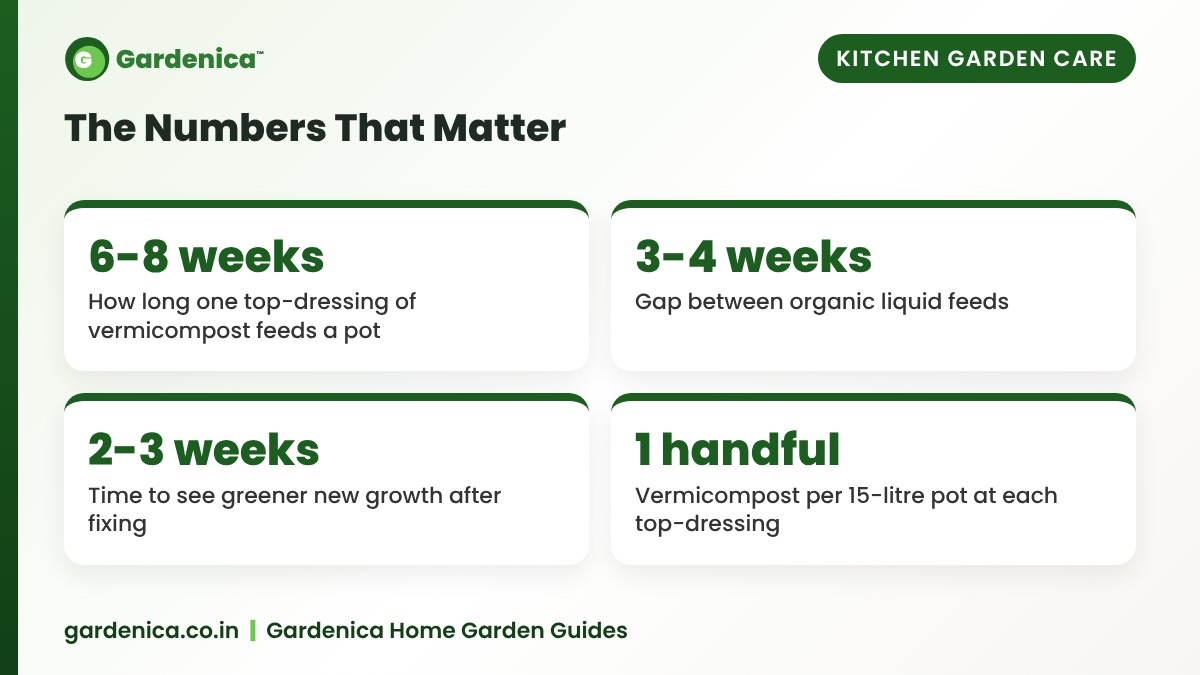
Chat on WhatsApp- Vermicompost: the steady workhorse. Top-dress roughly a handful over the surface of a 15-litre pot, scratch it into the top inch and water in. It feeds soil life as well as the roots. Read more in vermicompost for plants.
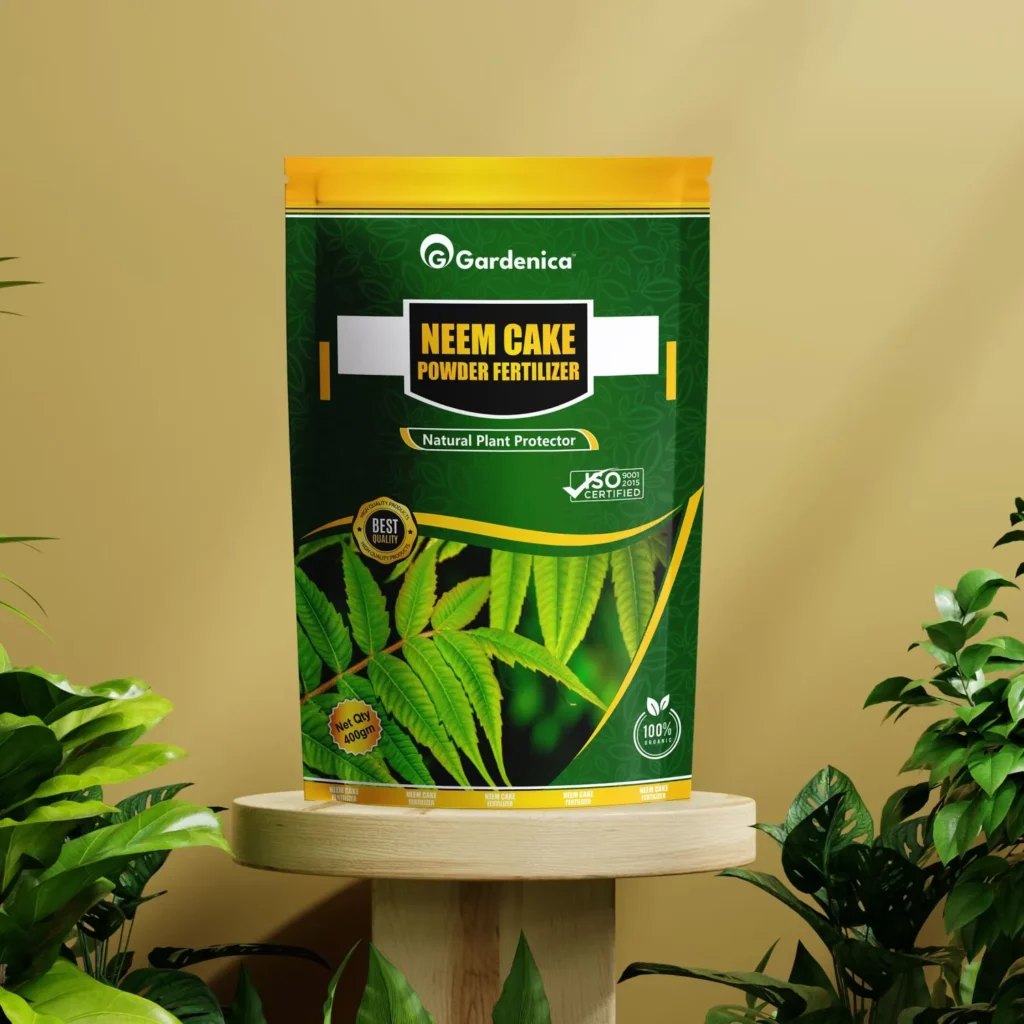
- Neem cake powder: slow release with a mild nitrogen contribution, and it helps keep soil-dwelling pests down. Details in neem cake powder for plants.
- Garden Booster: humic acid with micronutrients to support root growth and nutrient uptake, useful when the mix is tired.
- All In One seaweed extract: a foliar or drench boost during active growth; it supplies growth support and micronutrients rather than bulk nitrogen.
- Rich Fertilizer: an all-purpose organic feed for the main growing season.
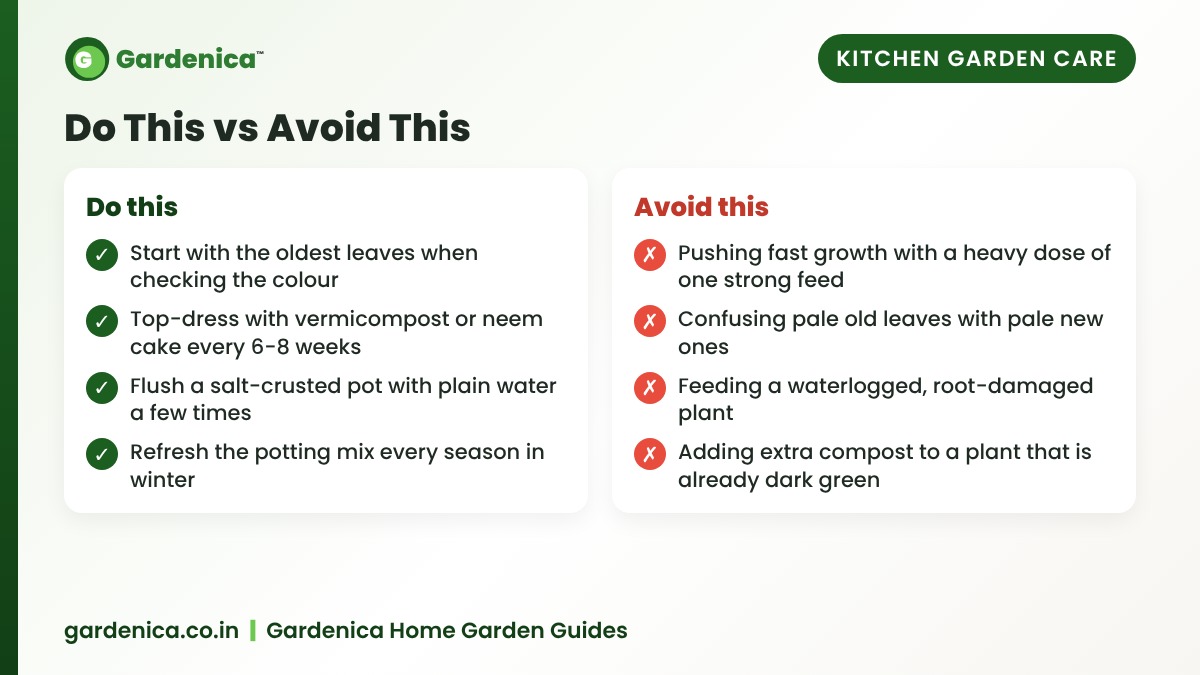
Pale old leaves mean the pot is empty. Feed the soil a little and often, not a lot at once.
Step-by-Step Recovery Plan for a Hungry Pot
- Confirm the diagnosis. Check that the pale leaves are the oldest ones, that the yellowing is even, and that the new growth is small but green. Rule out overwatering first.
- Loosen the surface. Scratch the top 2-3 cm of the mix gently with a hand fork, keeping clear of surface roots, so water and food can enter instead of running off a hardened crust.
- Top-dress with compost. Spread a handful of vermicompost over the pot and a thinner dusting of neem cake, scratch it in, and water well so the moisture reaches the whole root ball.
- Add a quick green signal. If the plant is in active growth, give a seaweed or humic-acid feed at the label dose to support the roots while the compost starts working.
- Hold a steady rhythm. Repeat a light liquid feed every 3-4 weeks and a top-dressing every 6-8 weeks through the growing season, instead of one heavy feeding.
- Read the new leaves. In 2-3 weeks the newest leaves should come out darker and larger. Already-yellow old leaves will not turn green again; judge recovery only on new growth.
Season Planning so Pots Never Run Dry
Winter, October to February
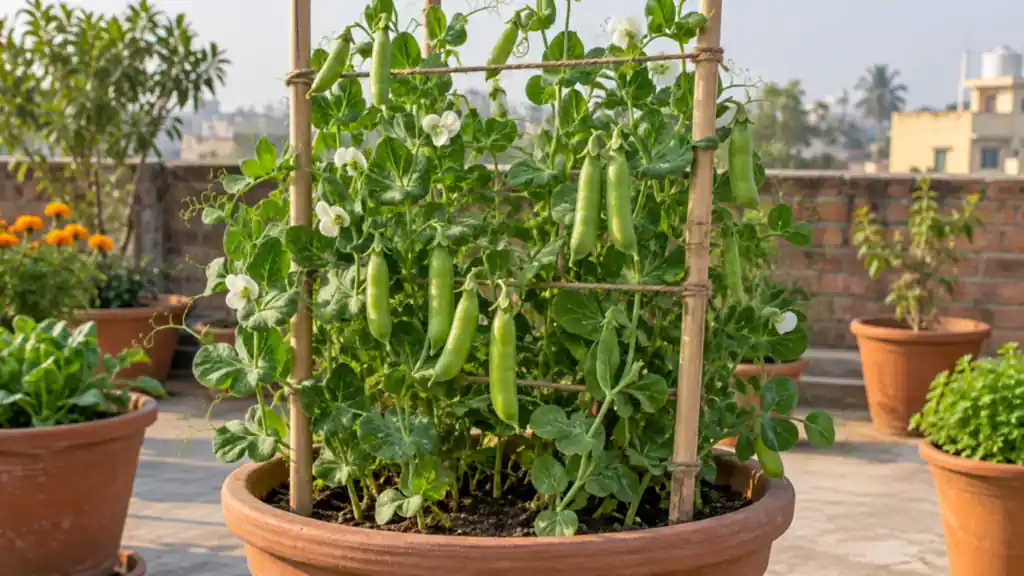
Cool, dry weather slows roots, so plants take food slowly. Rabi pots of palak, methi, cauliflower and peas still need a top-dressing every 6-8 weeks, but keep liquid feeds light. This is also the right time to empty each pot, remove half the old mix and refill with fresh compost, as covered in our potting mix for kitchen gardens guide.
Summer, March to June
Watering twice a day washes nutrients out faster than anything else. Shorter, more frequent feeding beats a big dose, and mulching the pot surface with dry leaves or a thin layer of compost keeps moisture and temperature steady.
Monsoon, July to September
Heavy rain leaches nitrogen and tired mix turns sour. Improve drainage, tip out saucers after every downpour, and feed lightly every three weeks so plants do not fade to pale green.
Common Mistakes to Avoid
- Chasing yellow old leaves with a strong dose of one feed. The leaves will not recover, and the roots can burn.
- Feeding a waterlogged pot. Fix drainage first, or the yellowing gets worse.
- Confusing iron deficiency, which shows on young leaves, with nitrogen shortage on old leaves, and adding more of the wrong thing.
- Never refreshing the potting mix, so every pot starts each season already exhausted.
- Watering hard tap water only, which over time makes nutrients less available. Collect rainwater when you can.
- Overfeeding a dark green, busy plant and getting leafy growth with no flowers or fruit.
Frequently Asked Questions
Which part of the plant shows nitrogen deficiency first?
The oldest, lowest leaves, because the plant moves nitrogen upward to its growing tips. Pale old leaves with small but green new growth is the classic pattern.
How quickly does vermicompost fix nitrogen deficiency in pots?
Expect the first greener new growth in about 2-3 weeks, since organic inputs need soil life to release nutrients. Already-yellow leaves will not turn green again.
Can I use used tea leaves or banana peel for nitrogen?
Banana peel is mostly potassium, not nitrogen. Chopped, well-composted plant material and kitchen compost help the soil, but a top-dressing of finished compost or vermicompost is more dependable in a pot.
Is yellow between the veins the same as nitrogen deficiency?
No. Yellow between green veins on older leaves points to magnesium, and on young leaves to iron. Nitrogen shortage fades the whole old leaf evenly.
How often should I top-dress potted vegetables?
Roughly every 6-8 weeks with compost or neem cake, plus a light liquid feed every 3-4 weeks during active growth, always at the label dose.
Do I need to repot if the mix is exhausted?
If a pot has grown the same crop for two seasons, refresh it. Replace about half the old mix with fresh compost and coir or soil, and water the plant in well for a week.
Keep Your Pots Green All Season
A pale plant is usually just a hungry pot, and a handful of compost works faster than any guess. Watch the oldest leaves, feed little and often, and refresh your mix each winter. For the right inputs for your pots, see the full Gardenica range, and Contact the Gardenica team with your city and crop for advice.
Looking for more?
Continue to our main page to explore products and services.