How to Grow Strawberries in Pots: A Winter Guide for Indian Homes
How to Grow Strawberries in Pots: A Winter Guide for Indian Homes
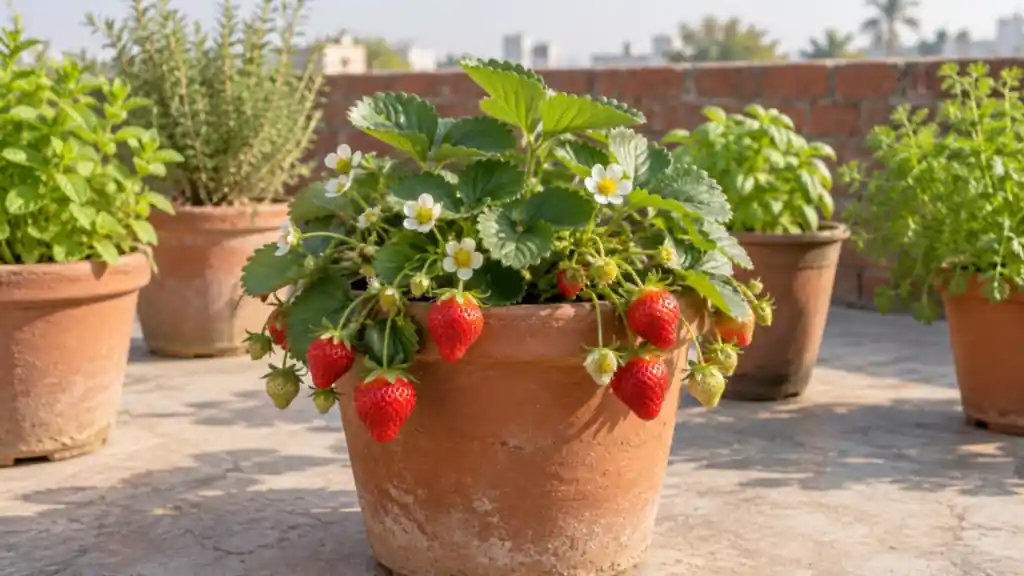
Few things on a terrace feel as rewarding as picking a ripe, red strawberry you grew yourself. The good news is that you do not need a hill station or a farm. If you grow strawberries in pots during the cool months, most Indian cities can give you a small but sweet harvest from January to March. This guide walks you through the right planting time, pot size, soil, feeding and the common problems, so your plants flower well and the fruit stays clean.
Why winter is the right time to grow strawberries in pots
Strawberry is a cool-season plant. It likes mild days, cool nights and plenty of sun. In most of India, that combination arrives only after the monsoon ends, which is why October and November are the main planting months on the plains.
Read more: Explore Gardenica Vermi Compost
Best planting time by region
- North and central plains (Delhi, Punjab, UP, Gujarat, MP): mid-October to mid-November.
- Maharashtra and the Deccan (Pune, Nashik, Bengaluru): October to November, when nights start cooling.
- Hills: often planted in autumn or early spring, depending on local frost.
Plants set out now usually flower in six to eight weeks and fruit through late winter. Once heat climbs in March and April, berries turn small and sour.
Pick a variety that suits warm winters
Nurseries in India commonly sell varieties such as Chandler, Sweet Charlie, Camarosa and Winter Dawn. Ask your local nursery which one does well in your area, and buy healthy runners or young plants with three to four fresh leaves and a firm crown.
Pot, sunlight and the best soil mix for strawberry plants
Strawberries have shallow roots, so width and drainage matter more than depth.
Pot size and position
- Pot size: one plant per 8 to 10 inch pot, or three plants in a 14 to 16 inch wide trough or grow bag.
- Drainage: at least one large hole at the bottom. Strawberry roots rot quickly in waterlogged soil.
- Material: terracotta, plastic, grow bags or hanging baskets all work.
- Sunlight: six to eight hours of direct sun. A south- or east-facing balcony or an open terrace is ideal.
Soil mix
Strawberries prefer a light, slightly acidic mix (roughly pH 5.5 to 6.5) that drains fast but holds some moisture. Heavy garden soil alone compacts in pots. A simple home mix:
- 40 percent garden soil or red soil, sieved to remove stones.
- 30 percent well-rotted compost or vermicompost.
- 30 percent cocopeat for lightness and moisture balance.
A handful of neem cake mixed in can help keep soil pests in check. For more detail on ratios, see our guide to potting mix for kitchen gardens.
How to plant strawberry runners step by step
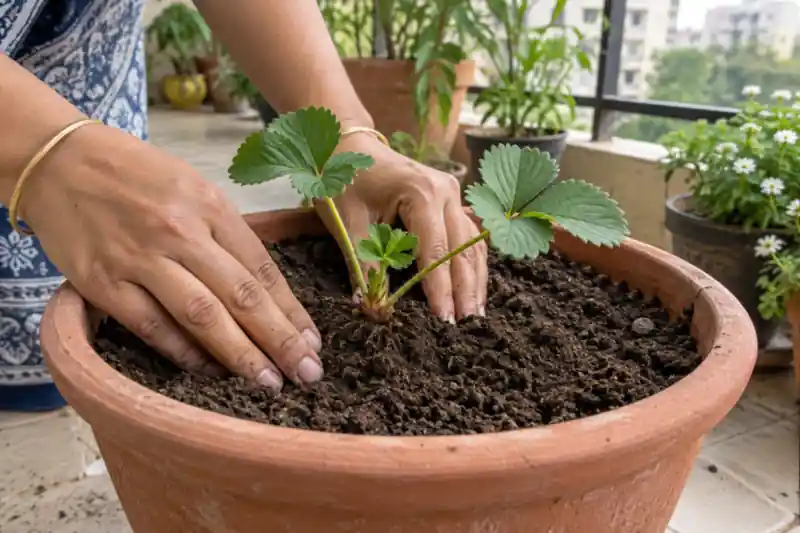
The most important rule is crown depth. The crown is the short, thick base from which leaves grow. Bury it and it rots; leave it too high and the roots dry out.
- Fill the pot with moist potting mix up to about an inch below the rim.
- Make a hole wide enough to spread the roots without bending them.
- Place the plant so the middle of the crown sits exactly at soil level.
- Firm the mix gently around the roots and water slowly until it drains from the bottom.
- Keep the pot in bright shade for two to three days, then move it into full sun.
If the plant came with flowers, many gardeners pinch off the first few blooms so the plant can settle its roots before carrying fruit.
Watering and mulching strawberry plants
Strawberries want steady moisture, not soggy soil. In winter, most pots need water every two to three days, but always check first: push a finger an inch into the mix and water only when it feels dry. Water at the base in the morning and keep the leaves and fruit dry, since wet foliage invites fungal disease. Our guide on watering kitchen garden plants explains the finger test and drainage checks in more detail.
Why mulch matters
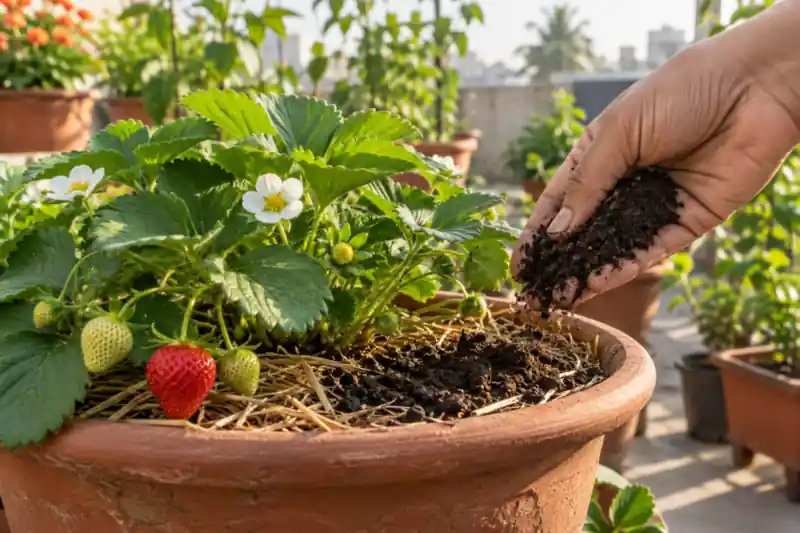
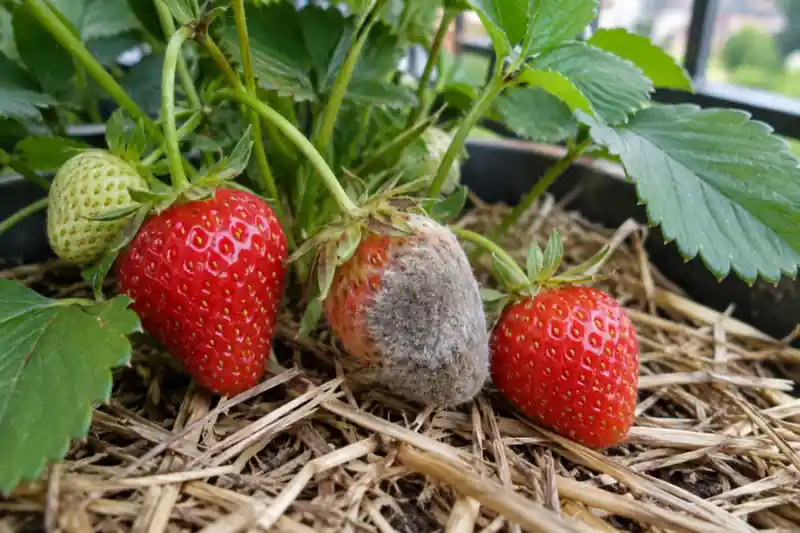
Once flowers appear, spread a thin layer of dry straw, dry leaves or cocopeat husk over the soil. Mulch keeps berries off damp soil, reduces rot, slows evaporation and keeps the roots cool on sunny afternoons.
Feeding strawberries for more flowers and fruit
Pot plants use up nutrients quickly, so feed gently and regularly. Too much nitrogen gives lush leaves but few berries.
Have a question about this topic?
Chat on WhatsApp- Every three to four weeks: add a small handful of vermicompost around the base and scratch it lightly into the top layer. Read more in our guide to vermicompost for plants.
- At flowering: a balanced organic fertilizer supports bloom and fruit set. Follow the dose on the product label.
- Phosphorus for roots and blooms: a little rock phosphate mixed into the soil at planting time releases slowly over the season.
Handling runners
Strawberry plants send out long stems called runners that root into new baby plants. During the fruiting season, snip them off so the mother plant puts its energy into flowers and berries. Near the end of the season, you can let one or two root into small pots to keep for next year.
Pests and diseases to watch for
Grey mould and fruit rot
A grey, fuzzy coating on berries usually means grey mould (botrytis). It spreads in cool, damp, crowded conditions. Remove affected fruit at once, improve air flow between pots, water at the base and keep mulch under the berries. A suitable fungicide can be used as per label directions if it keeps returning.
Powdery mildew and leaf spots
White powder or purple-edged spots on leaves are also fungal. Pick off badly affected leaves and avoid overhead watering. See our guide to powdery mildew on plants for prevention steps.
Aphids, mites and birds
Aphids and spider mites gather under leaves and on new growth. A neem oil spray in the evening, repeated weekly while needed, helps manage them. Birds and squirrels love ripe berries, so a light net over the pots near harvest time protects the fruit.
Common mistakes when growing strawberries in pots
- Burying the crown: the most frequent cause of plants rotting in the first few weeks.
- Planting too late: runners planted in December often have little time to flower before the heat arrives.
- Too little sun: shaded balconies give leaves but very few berries.
- Overwatering: soggy mix causes root rot and grey mould.
- Letting fruit touch wet soil: skipping mulch leads to dirty, rotting berries.
- Overfeeding with nitrogen: plenty of leaves, few flowers.
- Keeping every runner: it drains the mother plant during fruiting.
Frequently asked questions
Can strawberries grow in hot Indian cities?
Yes, as a winter crop. Plant in October or November so flowering and fruiting happen in the cool months. Summer heat usually stops fruiting.
How many strawberries does one plant give in a pot?
It varies with variety, sun and care. Expect a modest handful of berries spread over several weeks rather than one big harvest.
Can I grow strawberries from seeds?
You can, but seeds are slow and often uneven. Runners or nursery plants are faster and more reliable for home gardeners.
Why are my strawberry plants not flowering?
Common reasons are too little sun, late planting, excess nitrogen fertilizer or a plant still settling its roots. Move the pot to full sun and balance the feeding.
Why are my strawberries small or sour?
Rising heat, uneven watering and low sunlight all affect size and sweetness. Fruit that ripens in the cooler weeks with good sun usually tastes best.
Can I keep strawberry plants for next year?
In the plains, the mother plant often struggles through summer heat. Many gardeners root a few healthy runners in small pots, keep them in light shade through summer and replant in autumn.
Harvesting your strawberries and next steps
Berries are ready about four to six weeks after flowering, when they are fully red right up to the stem. Pick them in the cool morning by snipping or pinching the stalk, leaving the green cap on. Check plants every day or two during peak season, since ripe fruit spoils quickly and attracts birds. Regular picking also encourages the plant to keep flowering.
With a sunny spot, a light soil mix, careful crown planting and steady feeding, a few pots can give you fresh strawberries this winter. For gentle, regular nutrition, explore Gardenica Vermi Compost, and if you have questions about your plants, contact the Gardenica team.
Looking for more?
Continue to our main page to explore products and services.