How to Grow Drumstick in Pots: A Moringa (Sahjan) Guide for Indian Terraces
How to Grow Drumstick in Pots: A Moringa (Sahjan) Guide for Indian Terraces
A drumstick tree is the quiet workhorse of an Indian kitchen garden. One small tree gives you sambar-ready pods, moringa leaves for a dal and a little shade for pots underneath. Most of us picture it in a village yard, so how to grow drumstick in pots on a terrace or balcony sounds ambitious. It works, provided you keep the tree pruned short and feed it on time.
This guide covers the whole cycle for a terrace pot: which dwarf variety to ask for, the grow bag size that actually holds a tree, the month-wise plan for planting from October to February, and what to do when the plant flowers beautifully but sets no pod. If you already grow tomatoes in pots, you have the sun and the routine a drumstick needs.
Read more: Explore Gardenica Vermi Compost
Why a Drumstick Tree Works in a Terrace Pot
Moringa (sahjan, mulakkattai) is fast, tough and forgiving of poor soil, which is exactly what a pot gives it. Grafted dwarf types such as PKM 1, PKM 2 and ODC 3 flower in 6 to 8 months and stay under 6 to 8 feet because you head them back, so a 5th-floor balcony can carry one tree.
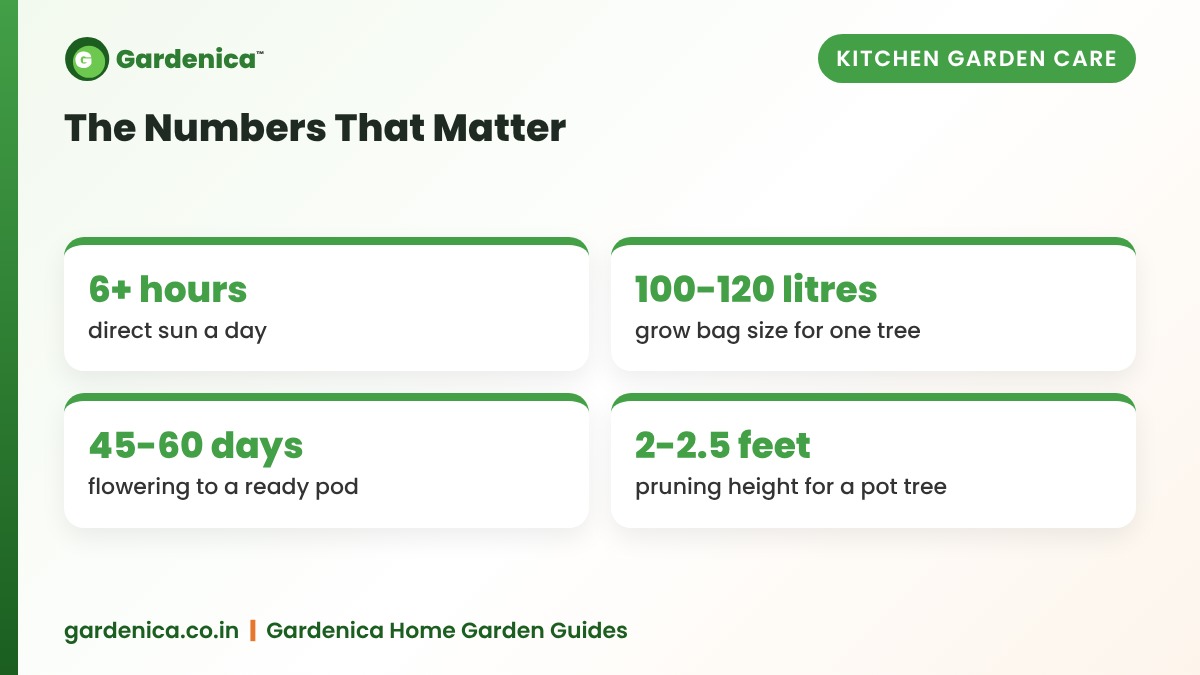
Two things decide success: root room and sun. A drumstick sends down a long taproot, so a deep bag beats a wide shallow pot, and it needs 6 or more hours of direct sun. In a shaded Mumbai balcony the tree will grow leaves and very few flowers.
Choose Your Form
Seeds give a strong taproot and a taller tree; a grafted PKM sapling flowers earlier and pods more reliably in a pot. Want pods this winter? Buy a grafted sapling. Sowing seed in October or November means flowers by roughly February.
Pot Size, Grow Bag and Potting Mix
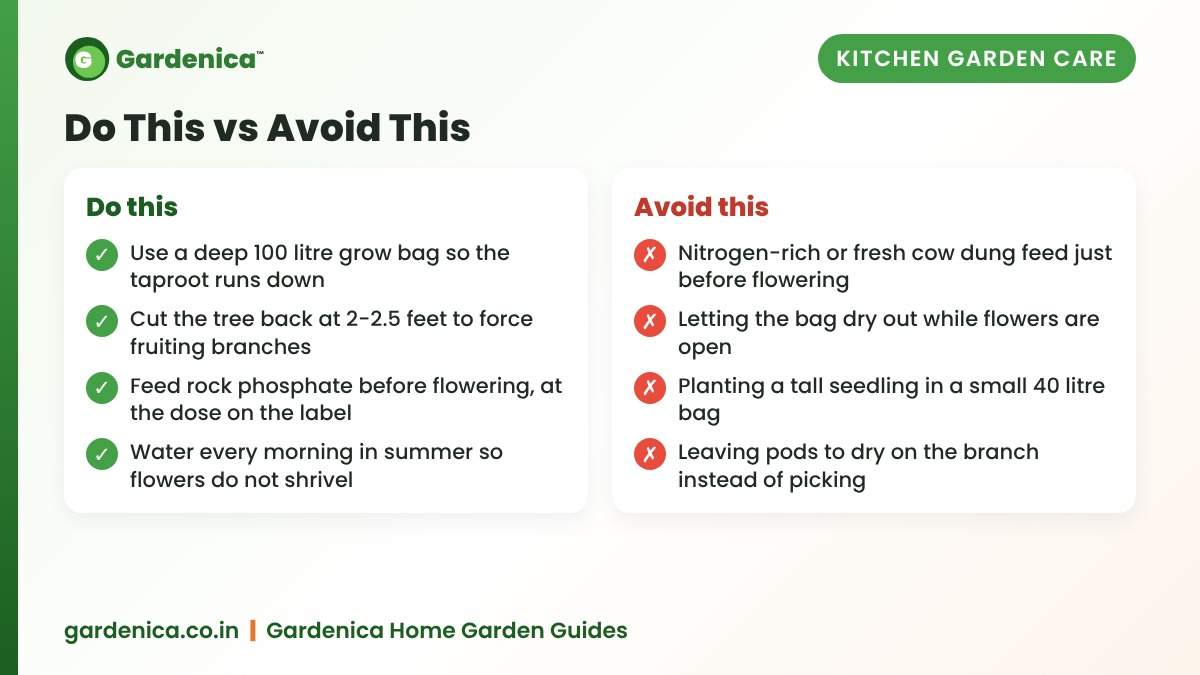
Use a 100 to 120 litre grow bag, at least 24 inches deep and 20 to 24 inches wide, with drainage holes raised off the floor on bricks. A 40 litre bag stunts the tree within a year, showing up as yellow older leaves.
- Fill with 40 % garden soil, 30 % coarse sand and 30 % vermicompost. Drainage matters more than richness; waterlogged soil is how drumstick pots fail.
- Mix 200 g of neem cake powder and about 100 g of rock phosphate into the bag before planting. Phosphate supports early roots and, later, flowers and pods.
- Set the sapling with the root collar level with the mix, water once to settle it, then skip fertiliser for a week.
Repotting is impractical at this size, so build the mix right once. The full recipe is in our potting mix for kitchen gardens guide.
Month-wise Plan for an Indian Terrace
In most plains areas you plant between October and February. Flowering follows in 2 to 3 months, and the first pods are ready about 45 to 60 days after that.
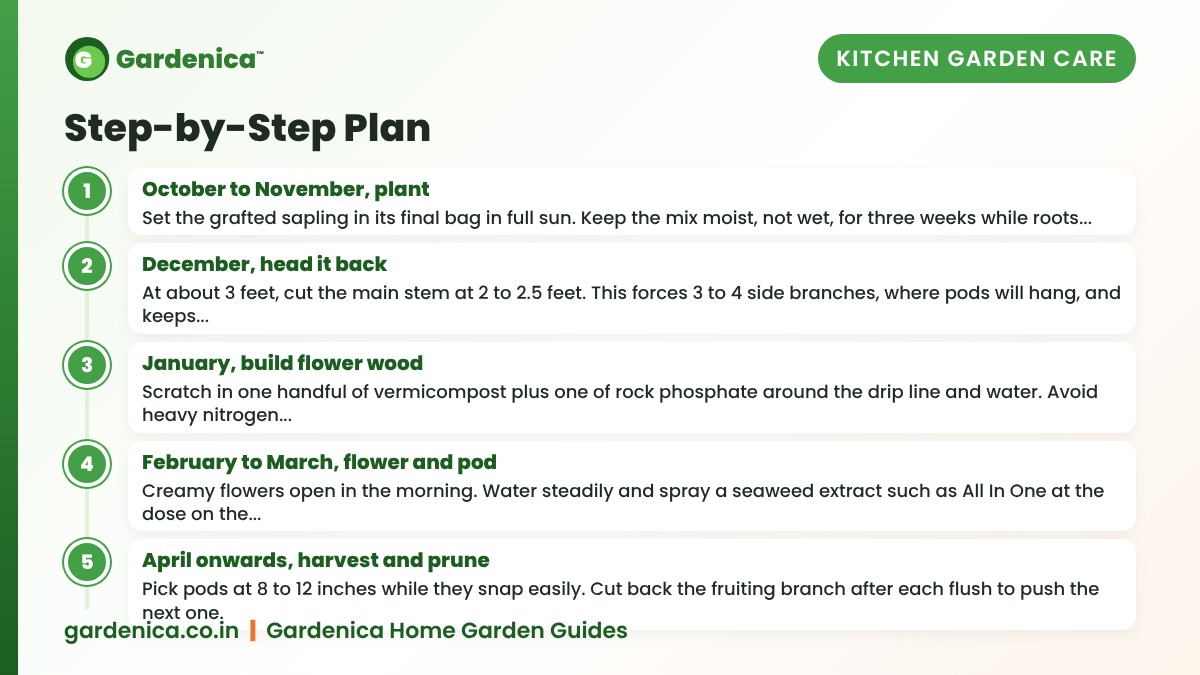
- October to November, plant. Set the grafted sapling in its final bag in full sun. Keep the mix moist, not wet, for three weeks while roots establish.
- December, head it back. At about 3 feet, cut the main stem at 2 to 2.5 feet. This forces 3 to 4 side branches, where pods will hang, and keeps the tree pot-sized.
- January, build flower wood. Scratch in one handful of vermicompost plus one of rock phosphate around the drip line and water. Avoid heavy nitrogen now or you get leaves, not flowers.
- February to March, flower and pod. Creamy flowers open in the morning. Water steadily and spray a seaweed extract such as All In One at the dose on the label to support nutrient uptake.
- April onwards, harvest and prune. Pick pods at 8 to 12 inches while they snap easily. Cut back the fruiting branch after each flush to push the next one.
A short drumstick is a cropping drumstick. Cut it back every time it fruits, and one bag keeps giving pods for years.
Watering, Sunlight and Feeding
Water deeply 3 to 4 times a week in summer and twice a week in winter, letting the top two inches dry between rounds. A drumstick tolerates drought, but a dry pot during flowering makes flowers shrivel and fall. In monsoon, empty saucers and keep the bag open so rain drains; wet feet plus humidity invites root rot, covered in root rot in potted plants. Do not move the bag during flowering, since the tree shifts its flowering when disturbed.
A leafy tree that will not flower is usually a nitrogen-heavy tree. Change the balance: one handful of vermicompost or Rich Fertilizer every 6 to 8 weeks at the label dose; a handful of rock phosphate once a quarter for slow, long-term phosphorus; and a fortnightly seaweed or humic feed such as Garden Booster during flowering. Stop feeding if leaves pale and stems soften, which points to a root problem, not hunger.
Have a question about this topic?
Chat on WhatsAppWhy Drumstick Flowers Drop and Set No Pods
Flower drop is the most searched drumstick problem, and on a terrace it is nearly always heat, water, pollination or pests.
Heat, Water and Pollination
Above roughly 38 to 40 degrees Celsius, flowers dry and fall, and a hot afternoon on concrete does that even when the forecast is milder. Shade the bag wall with a gunny sleeve, mulch with dry leaves and water early morning. Moringa flowers are insect-pollinated, so on a high balcony shake a branch gently mid-morning or keep a few flowering pots nearby to draw bees.
Pests and Nutrients
Cluster flies, aphids and bud borers blacken buds and drop them. Check new growth in the morning and treat early with neem oil for plants at the label dose, sprayed in the evening. Excess nitrogen and a phosphate-poor mix also cause poor pod set, which is why the January feed matters most.
Common Mistakes to Avoid
- Planting a tall seedling-raised tree in a 40 litre bag, then wondering why it stalls in year two.
- Letting the tree reach 8 feet without heading it back, so pods hang out of reach and the bag tips in wind.
- Feeding nitrogen-rich compost or fresh cow dung just before flowering, giving leaves and no pods.
- Letting the bag dry out for days while flowers are open.
- Watering late at night in winter, keeping foliage wet overnight.
- Leaving pods to dry on the branch instead of picking them, which tells the tree to stop flowering.
Frequently Asked Questions
Which drumstick variety is best for pots?
Choose a dwarf, early-flowering type such as PKM 1, PKM 2 or ODC 3, ideally as a grafted sapling. These flower in 6 to 8 months and stay manageable in a 100 litre bag with pruning.
What size grow bag does a drumstick need?
A 100 to 120 litre bag, at least 24 inches deep, because moringa sends a long taproot. A smaller bag works for a season or two but the tree needs replanting sooner.
How many years does a drumstick tree crop in a pot?
With annual pruning and top-dressing, expect 3 to 4 productive years from one bag, after which the mix compacts and the tree outgrows the root space.
Why are my drumstick flowers falling off?
Usually heat on a hot terrace surface, irregular watering during flowering, poor insect pollination on a high balcony, or too much nitrogen. Shade the bag, water every morning, prune after each harvest and feed phosphate rather than nitrogen.
Can I grow drumstick in a partly shaded balcony?
You will get a healthy leafy tree but few flowers. Under about 5 hours of direct sun, grow it for leaves rather than expecting pods.
When do I pick drumstick pods?
At 8 to 12 inches, roughly 45 to 60 days after flowering, while they are tender and snap cleanly. Pick in the morning and cut the stalk rather than pulling.
Grow a Cropping Drumstick Pot This Winter
Plant a grafted dwarf sapling in a deep bag now, head it back in December and feed phosphorus rather than nitrogen from January, and you should be picking your own sambar pods by early summer. For advice on your own pot mix, Contact the Gardenica team or see our Rock Phosphate for flowering and fruiting support.
Looking for more?
Continue to our main page to explore products and services.