Leaf Spot on Plants: How to Identify, Treat and Prevent It in Pots
Leaf Spot on Plants: How to Identify, Treat and Prevent It in Pots
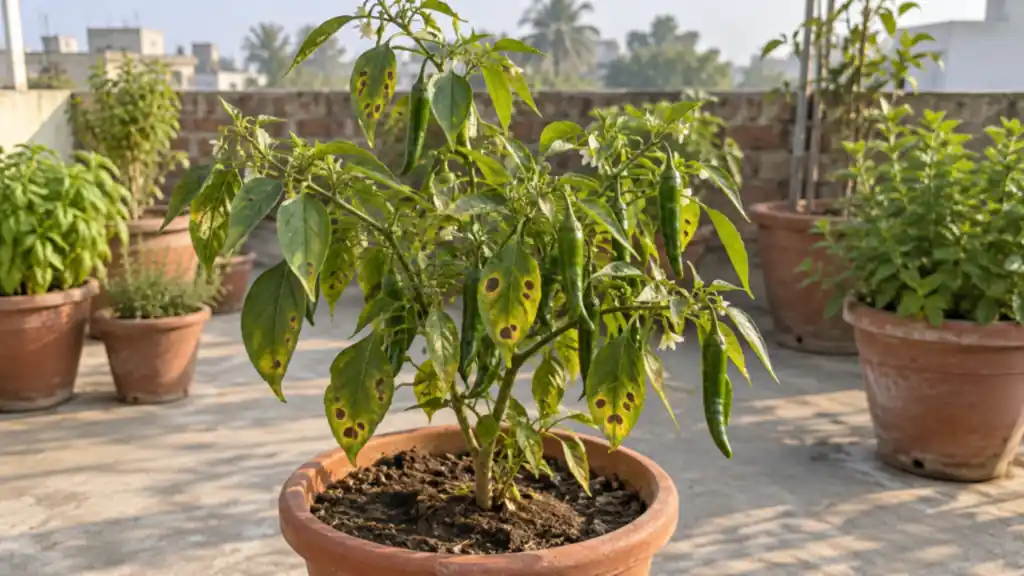
You water on time, feed every few weeks and still notice small brown or black dots spreading across the leaves of your chilli, tomato or rose plant. That is usually leaf spot on plants, one of the most common problems in Indian balcony and terrace gardens, especially in the cool, dewy months from November to February. Most cases can be kept in check with simple habits. This guide explains how to identify leaf spot, what causes it, how to treat it in pots and how to stop it from coming back.
What Is Leaf Spot on Plants?
Leaf spot is a general name for a group of plant diseases that create spots or patches on leaves. Most cases are caused by fungi, and some are caused by bacteria. The spots may be brown, black, grey or tan, and they often grow larger and join together if nothing is done.
Read more: Explore Gardenica Fungi Care
A few spots rarely kill a healthy plant, but heavy spotting means less green leaf area, early leaf drop and a smaller harvest or fewer flowers.
Plants most often affected in Indian home gardens
- Tomato, brinjal and chilli
- Palak, beetroot and other leafy greens
- Rose, hibiscus and chrysanthemum
- Money plant, pothos and other indoor foliage plants
How to Identify Leaf Spot Disease
Look closely at the lower and older leaves first, because spots usually start there, where leaves stay wet longer and are closer to soil splash.
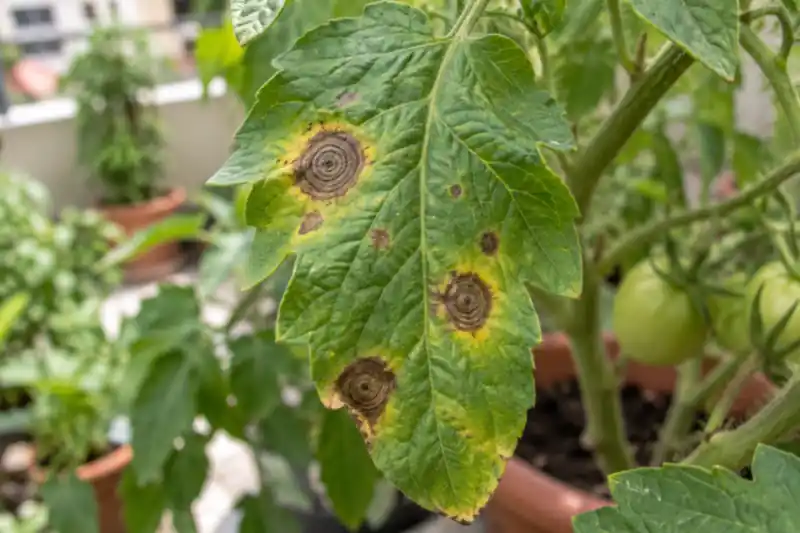
Signs of fungal leaf spot
- Round or oval brown spots, often with a darker border
- A yellow ring (halo) around each spot
- Rings inside the spot that look like a target, common on tomato
- Tiny dark dots in the centre of older spots
Signs of bacterial leaf spot
- Small, dark, water-soaked spots that look greasy
- Spots with straight edges, limited by leaf veins
- Spots that dry out and leave small holes in the leaf
When the spots are not a disease
Not every spot is an infection. Brown spots on leaves can also come from strong afternoon sun after watering, fertiliser burn, cold wind, or hard water drying on leaves. These spots usually appear suddenly on many leaves at once and do not keep spreading. Disease spots, on the other hand, grow in number and size over days.
What Causes Leaf Spot in Potted Plants?
Spores are almost always around a garden; they cause trouble only when conditions suit them. Common triggers in pots:
- Wet leaves for long hours from overhead watering, especially in the evening
- Winter dew and fog, which keep leaves damp until late morning
- Crowded pots with poor air movement between plants
- Water splash from soil onto lower leaves
- Old infected leaves left on the plant or lying in the pot
- Weak plants from poor potting mix or irregular feeding
If you are unsure how often your plants need water in winter, our guide on watering kitchen garden plants explains how to check soil moisture before you water.
Leaf Spot Disease Treatment: Step-by-Step
Act as soon as you see the first few spots.
- Isolate the pot. Move the affected plant a little away from others so spores do not splash across.
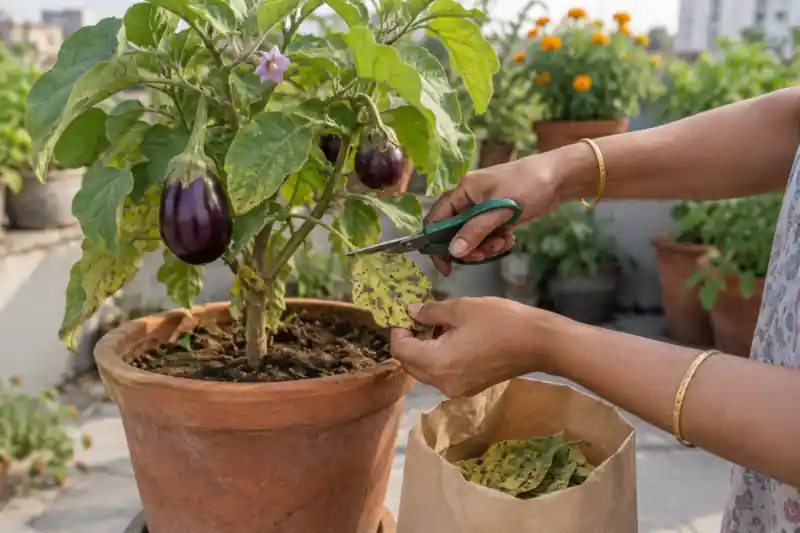
- Remove spotted leaves. Cut off leaves with spots using clean scissors. Put them in a bag and throw them away. Do not add them to your compost.
- Clean up. Wipe scissors after each plant and pick up fallen leaves from the pot.
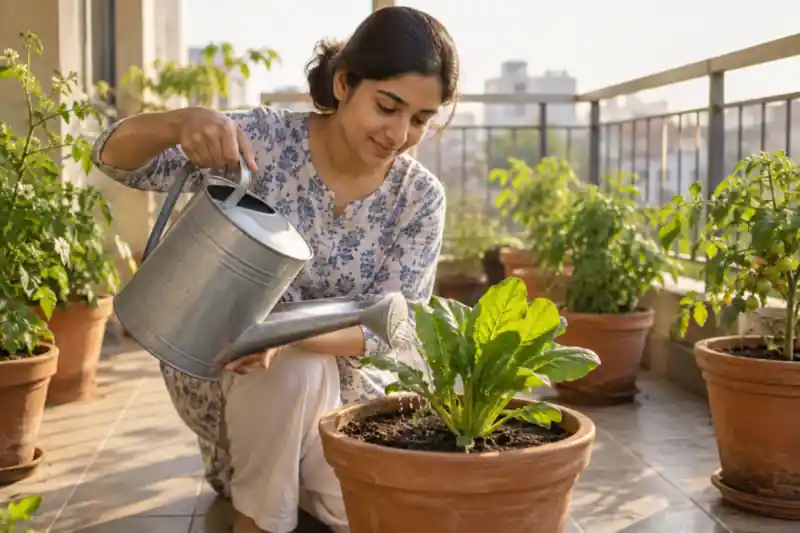
- Change the watering style. Water only at the base of the plant, in the morning, so leaves stay dry.
- Use a suitable spray. For fungal leaf spot, a plant-protection spray such as neem oil or a ready fungal-care product can help protect new leaves. Always follow the product label for dose and spray interval.
- Watch new growth. Check the plant every two to three days. Old spots will not disappear, but new leaves should stay clean.
Using neem oil for leaf spot
Neem oil is popular with home gardeners for its protective action on leaves. Spray it in the evening or early morning, never in strong sun, and cover both sides of the leaves. Our guide on neem oil for plants explains how to mix and spray it safely.
When to use a fungicide
If spots keep spreading even after you remove leaves and fix watering, a garden fungicide may be needed. Choose a product meant for home gardens, read the label carefully, wear gloves, and keep the recommended gap before harvesting vegetables. Bacterial leaf spot does not respond well to most fungicides, so removing infected leaves and keeping foliage dry matter even more.
Have a question about this topic?
Chat on WhatsAppHow to Prevent Leaf Spot in Pots
Prevention is the most reliable way to deal with fungal leaf spot in pots. These habits make a big difference, especially in winter.
Water smartly
- Water in the morning so the plant dries before evening.
- Pour water at soil level, not over the leaves.
- Let the top inch of soil dry before watering again.
Give plants space and light
- Keep pots slightly apart so air can move between them.
- Prune extra branches from bushy tomato, brinjal and rose plants.
- Place sun-loving plants where they get at least four to six hours of sunlight.
Keep the soil healthy
A plant growing in a loose, well-drained mix with steady nutrition is better able to handle disease. Adding organic matter such as vermicompost and neem cake powder to the potting mix supports soil health. A thin layer of mulch on top also reduces soil splash onto lower leaves.
Leaf Spot vs Other Common Leaf Problems
Leaf spot is often confused with other issues. Powdery mildew shows as a white powder on the leaf surface, not brown spots; read our guide on powdery mildew on plants to tell them apart. If leaves are spotting and the whole plant is wilting even in wet soil, the roots may be the real problem; see our guide on root rot in potted plants.
Common Mistakes to Avoid
- Watering leaves in the evening. Wet leaves through a cold night give fungi the perfect start.
- Leaving infected leaves on the plant. Each spot can release spores that spread to new leaves.
- Composting diseased leaves. Home compost piles rarely get hot enough to destroy spores.
- Spraying in hot sun. Oil-based sprays can burn leaves in strong light.
- Using more product than the label says. A stronger mix does not work faster and may harm the plant.
- Overfeeding with nitrogen. Too much soft, leafy growth is more easily infected.
Frequently Asked Questions
Can leaves with leaf spot turn green again?
No. Spots are dead tissue and will stay on the leaf. The aim of treatment is to protect new leaves and stop the spots from spreading.
Is leaf spot on plants dangerous for vegetables I eat?
Leaf spot affects the plant, not the person eating the produce. Healthy-looking fruits and vegetables from a plant with some leaf spot are fine to wash and eat. If you have sprayed any product, follow the waiting period on its label before harvesting.
Why does leaf spot increase in winter?
Cool nights, dew, fog and slow drying keep leaves wet for many hours. Many leaf spot fungi spread best in these damp conditions.
Should I remove all spotted leaves at once?
Remove the worst leaves first. If more than a third of the plant is spotted, remove leaves in stages over a week so the plant still has enough green leaves to make food.
Can I use homemade sprays for leaf spot?
Results from home remedies vary and some mixes burn leaves. A tested product used as per its label is safer. Try any new spray on a few leaves first.
Do black spots on leaves always mean leaf spot disease?
Black spots on leaves are often fungal leaf spot, especially on roses. They can also be sooty mould growing on honeydew left by pests such as aphids or mealybugs. Sooty mould wipes off with a damp cloth; leaf spot does not.
Keep Your Plants Healthy This Winter
Leaf spot is common, but it does not have to ruin your kitchen garden. Remove infected leaves early, water at the base in the morning, give pots space and keep the soil healthy. For extra protection, explore Gardenica Fungi Care and use it as directed on the label. Have a question about spots on your plants? Contact the Gardenica team and we will be happy to help.
Looking for more?
Continue to our main page to explore products and services.