Powdery Mildew on Plants: How to Spot, Treat and Prevent It
Powdery Mildew on Plants: How to Spot, Treat and Prevent It
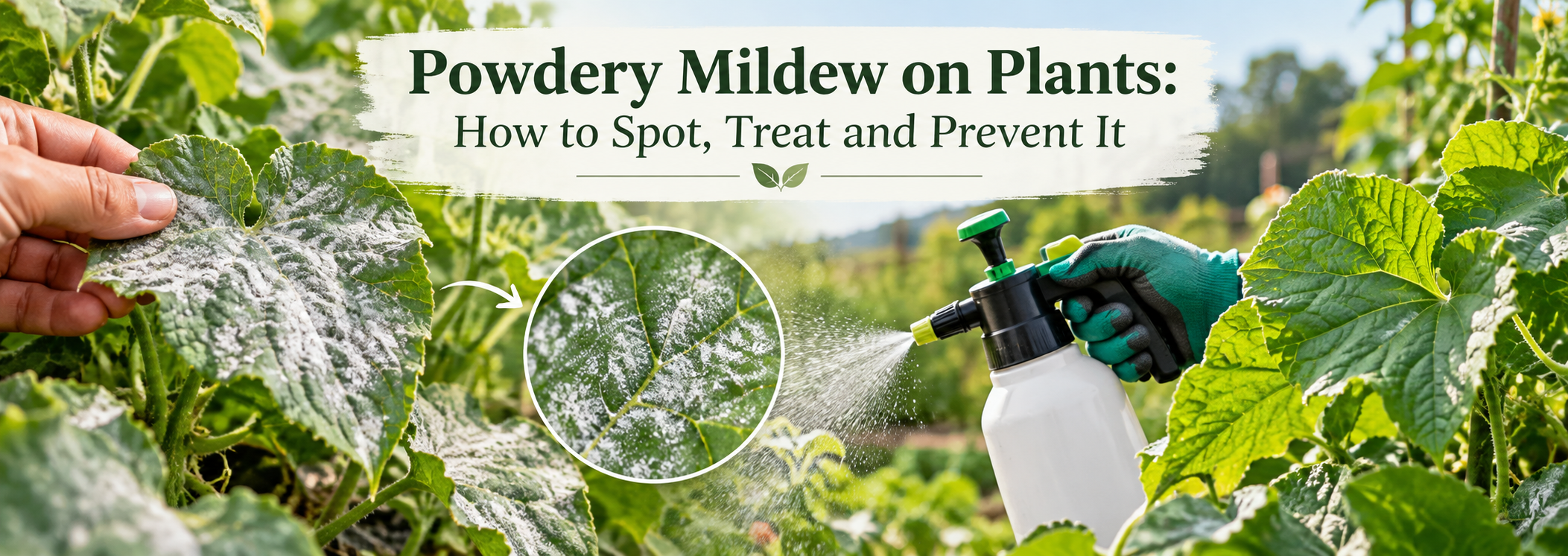
You water on time, the pots get morning sun, and then one day the leaves of your bhindi or lauki look as if someone dusted them with flour. That white coating is powdery mildew on plants, one of the most common fungal problems in Indian kitchen gardens from October to February. Caught early, it can usually be controlled. This guide explains how to spot it, why it shows up after the monsoon, and what to do step by step on a terrace or balcony.
What powdery mildew looks like
Powdery mildew is caused by a group of fungi that grow on the surface of leaves rather than deep inside them. It is easy to confuse with dust, spray residue or hard-water marks, so look closely before you treat anything.
Read more: Explore Gardenica Fungi Care
Early signs
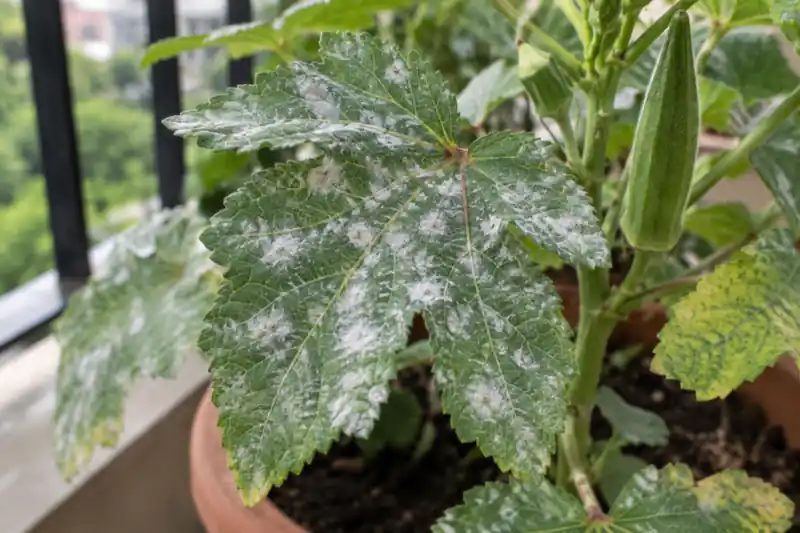
- Small, round white or grey spots on the upper side of older leaves
- Spots that look slightly raised and can be rubbed off with a finger, leaving a pale patch
- Patches appearing first on leaves in shade or in the middle of a crowded plant
Later signs
- Spots joining into a felt-like white layer over the whole leaf
- Leaves turning yellow, then brown and papery, and dropping early
- White coating on stems, flower buds and young fruit
- Smaller harvests, because damaged leaves cannot make enough food for the plant
Powdery mildew or something else?
Downy mildew, a different disease, usually shows yellow angular patches on top of the leaf with greyish growth underneath, and it prefers wet weather. Mealybugs are white too, but they are cottony clumps that move and sit in leaf joints. If the white layer wipes off as a fine powder, powdery mildew is the likely cause.
Why it appears after the monsoon in India
Most fungal diseases need water sitting on the leaf. Powdery mildew is unusual: its spores can germinate without free water, as long as the air around the leaves is humid. The weather in much of India from October onwards suits it well.
- Warm days and cool, humid nights. The gap between day and night temperature raises humidity around the leaves.
- Less direct sun. Shaded corners of balconies and the inner leaves of dense plants stay damp longer.
- Crowded pots. Plants packed close together trap still, humid air.
- Soft new growth. Heavy nitrogen feeding produces tender leaves that are easier to infect.
Spores travel on air, so a neighbour's infected vine can start it on your terrace.
Plants most at risk in pots
Powdery mildew fungi tend to be host-specific, which means the type on your roses is usually not the same one on your cucumbers. Still, several common home-garden plants get it often.
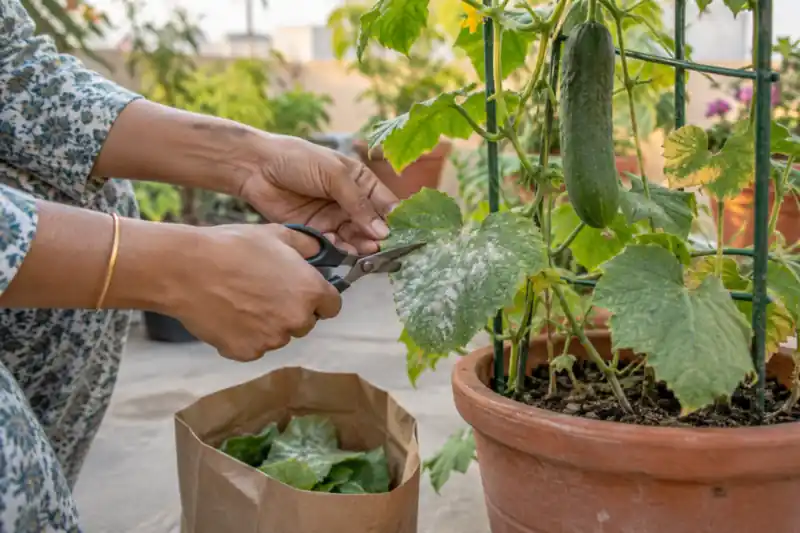
- Gourds and cucurbits: lauki, tori, karela, cucumber, pumpkin and tinda are the most affected.
- Bhindi (okra) and peas, especially winter-sown peas.
- Chilli and capsicum in crowded pots.
- Roses, zinnia and marigold in flower gardens. Our guide on rose plant care in pots covers spacing and pruning that help here.
If you are planning winter sowing, our list of vegetables to grow in October will help you choose crops and plan space so the pots are not overcrowded.
How to treat powdery mildew on plants: step by step
Treatment works best when you combine cleaning up the plant with a protective spray. Spraying alone on a heavily infected plant rarely gives good results.
- Check every plant. Look at both sides of the leaves and note which pots are affected.
- Remove badly infected leaves. Cut off leaves that are more than half covered or turning yellow. Use clean scissors and wipe them between plants.
- Bag the waste. Put removed leaves in a paper or plastic bag and throw them out. Do not drop them on the soil or add them to your compost.
- Open up the plant. Thin crowded growth, tie vines to a trellis and move pots a little apart so air can move between them.
- Spray the remaining leaves. Use a suitable organic or fungicide product (see the next section), covering upper and lower leaf surfaces and stems.
- Repeat as the label says. Most products need repeat applications at a set interval. Keep watching new leaves for fresh spots.
Best time to spray
Spray in the early morning or late evening, never in strong midday sun, which can scorch wet leaves. Avoid spraying just before rain or when plants are wilting from lack of water.
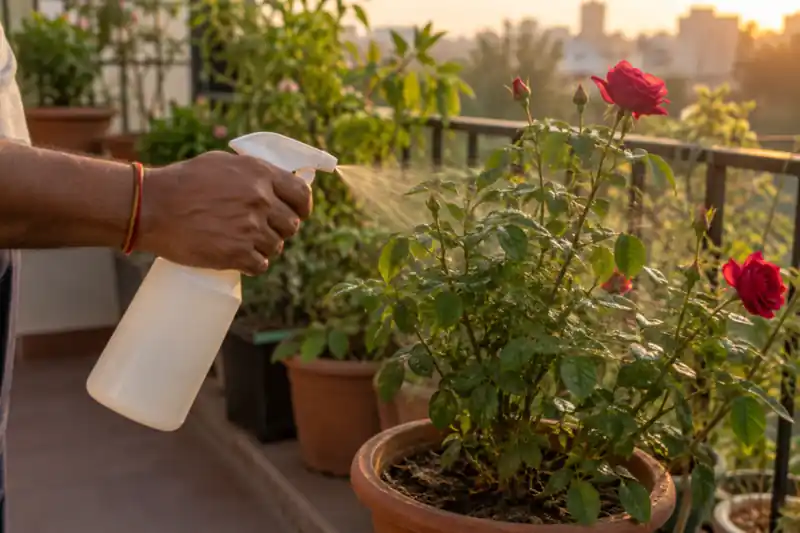
Organic and fungicide options for home gardens
Home gardeners in India usually choose between a few types of product. Whatever you pick, read the label and follow its dose, interval and safety advice exactly.
Have a question about this topic?
Chat on WhatsAppNeem oil
Neem oil, mixed with water and a little mild soap as an emulsifier, is widely used as a protective spray in kitchen gardens. It works best when started early, before the white layer covers whole leaves. Our article on neem oil for plants explains how to mix and spray it safely.
Plant-care fungal sprays
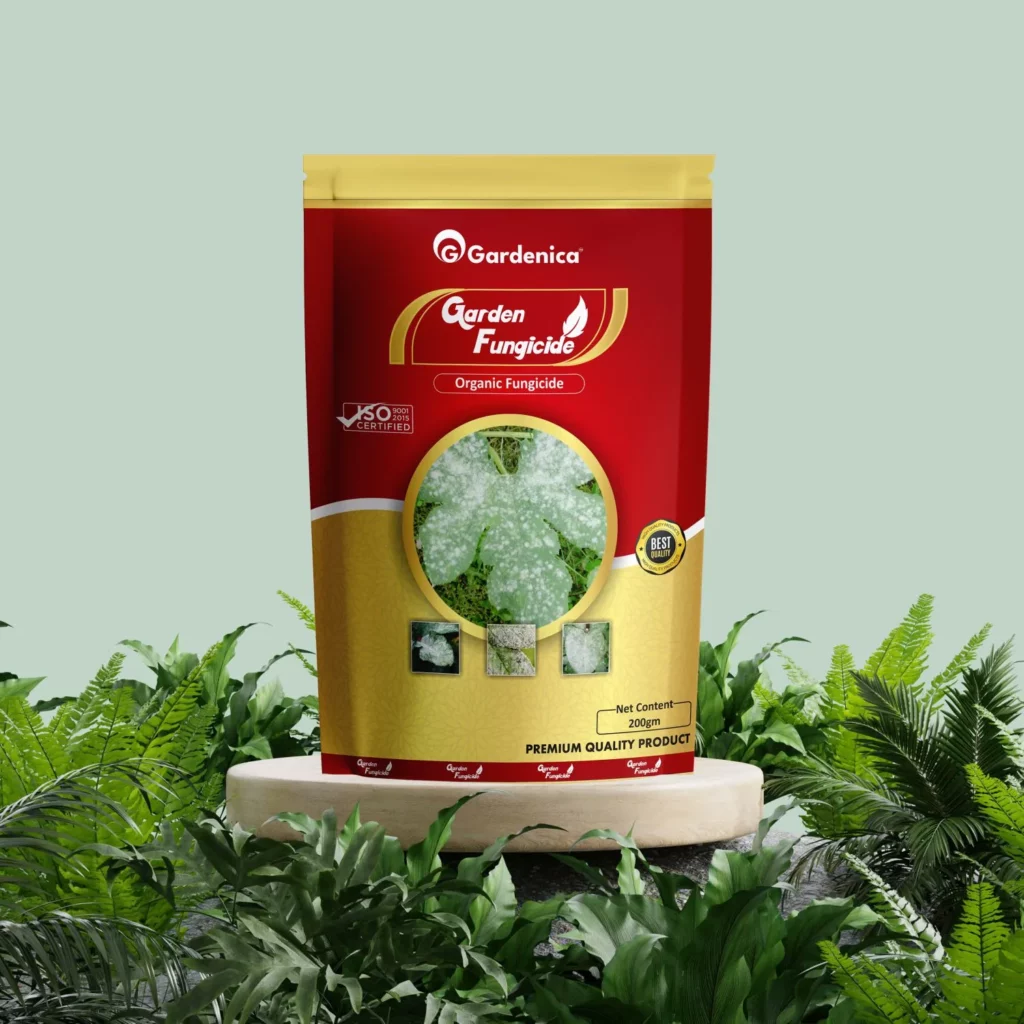
Ready-to-use or concentrate products made for fungal problems in home gardens are convenient when mildew keeps coming back. Use only products meant for the plants you grow, and for edible crops check the label for the waiting period before harvest.
Home remedies
Diluted milk and baking soda sprays are popular, but results vary and wrong strengths can burn leaves. If you try one, test it on a few leaves first and watch for damage over two or three days.
How to prevent powdery mildew
Prevention is easier than treatment, especially in a small space where spores move quickly from pot to pot.
- Give fruiting vegetables at least five to six hours of sun.
- Space pots so leaves of neighbouring plants do not touch.
- Train gourds and cucumbers up a trellis instead of letting them sprawl.
- Water the soil, not the leaves, and water in the morning. See our guide on watering kitchen garden plants for timing tips.
- Feed in a balanced way. Too much nitrogen gives soft, disease-prone growth.
- Remove old, yellowing lower leaves regularly.
- Start a protective spray early in the season on crops that got mildew last year.
Common mistakes to avoid
- Waiting too long. Once most leaves are white, the plant has lost much of its ability to make food and recovery is slow.
- Spraying only the top of the leaf. Spores also sit on the underside and on stems.
- Composting infected leaves. A home compost pile may not get hot enough to kill spores.
- Mixing stronger than the label. Extra strength does not work faster and can burn leaves.
- Spraying in hot sun. This raises the risk of leaf scorch.
- Feeding heavily to "help" a sick plant. A burst of soft new growth often gets infected quickly.
Frequently asked questions
Is powdery mildew harmful to people?
Powdery mildew fungi attack plants, not people. You can eat vegetables from an affected plant after washing them well, but always respect the harvest waiting period on any product you sprayed.
Can a plant recover from powdery mildew?
Leaves that are fully covered will not turn green again, but the plant can keep growing healthy new leaves if you remove the worst ones, improve air flow and protect new growth.
Does powdery mildew spread through soil?
It mainly spreads through spores carried in the air and on fallen infected leaves. Clearing leaf litter from pots and the terrace floor reduces the chances of it coming back.
How often should I spray for powdery mildew?
Follow the interval on the product label. Most protective sprays need to be repeated, especially while the cool, humid weather lasts.
Why does my lauki get powdery mildew every winter?
Gourds are very prone to it, and the October to February weather suits the fungus. Grow them in a sunny spot, on a trellis, and start preventive care before the first spots appear.
Keep your winter garden healthy
Powdery mildew is a seasonal problem, not a sign that you have failed as a gardener. Check leaves every few days, keep air moving and act at the first white spots. For a product made for fungal problems in home gardens, explore Gardenica Fungi Care and use it as the label directs. Not sure what is wrong with your plant? Contact the Gardenica team and we will help you work it out.
Looking for more?
Continue to our main page to explore products and services.