Hibiscus Plant Care in Pots: A Gudhal Guide for Indian Homes
Hibiscus Plant Care in Pots: A Gudhal Guide for Indian Homes
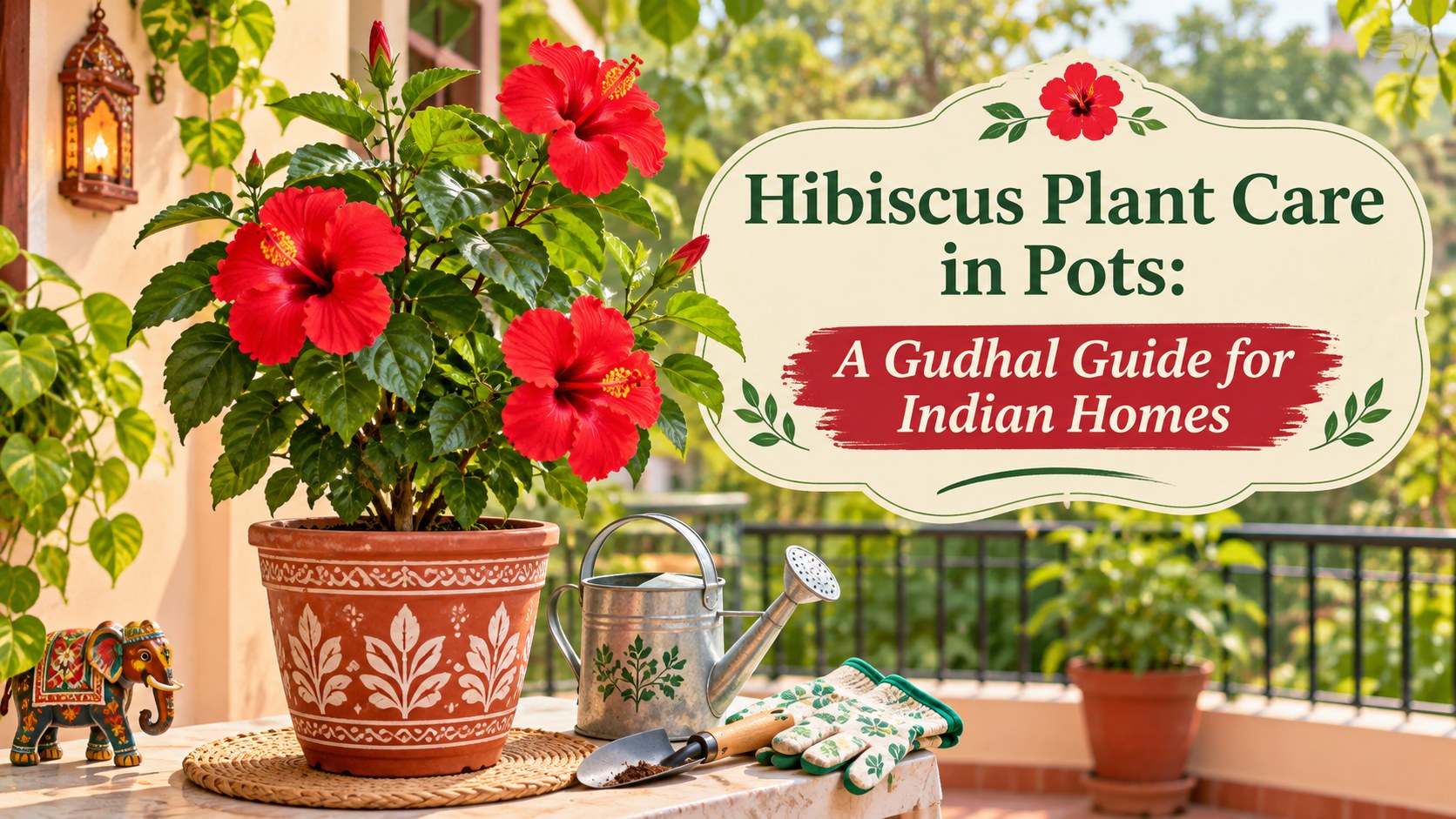
A potted gudhal covered in red, pink or yellow flowers is one of the most cheerful sights on an Indian terrace. Yet many home gardeners find their plant drops buds, turns yellow or stops flowering for months. Good hibiscus plant care in pots comes down to a few habits: plenty of sun, a free-draining mix, steady watering, regular feeding and a quick weekly check for pests. This guide walks through each one, with extra notes for the cooler November to February months.
Why Hibiscus Grows Well in Pots
The common garden hibiscus (Hibiscus rosa-sinensis) is a tropical shrub that suits most of India. In a pot it stays compact, you can move it into better light, and you control the soil and water. It flowers on new growth, so a plant that keeps producing fresh shoots keeps producing buds.
Read more: Explore Gardenica Rich Fertilizer
Choosing a healthy plant
At the nursery, look for a plant with dark green leaves, several branches and no white cotton-like patches under the leaves or on buds. Avoid plants with sticky leaves or ants running over the stems, as both often point to sap-sucking pests.
Single or double flowers
Desi single-petal varieties are hardy and bloom freely. Hybrid and double-flowered types give larger flowers but usually need more care, steadier feeding and closer watch for pests.
Pot Size, Potting Mix and Sunlight for Gudhal
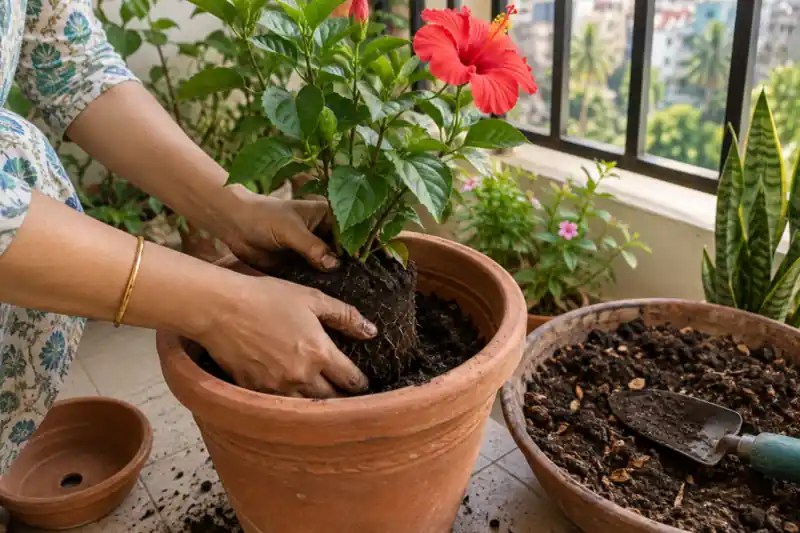
Start with a pot of about 12 to 14 inches for a young plant and move up one size every year or two. Terracotta breathes well, while plastic holds moisture longer; either works as long as there is a large drainage hole.
A simple mix that drains
Hibiscus dislikes waterlogged roots. A practical mix is:
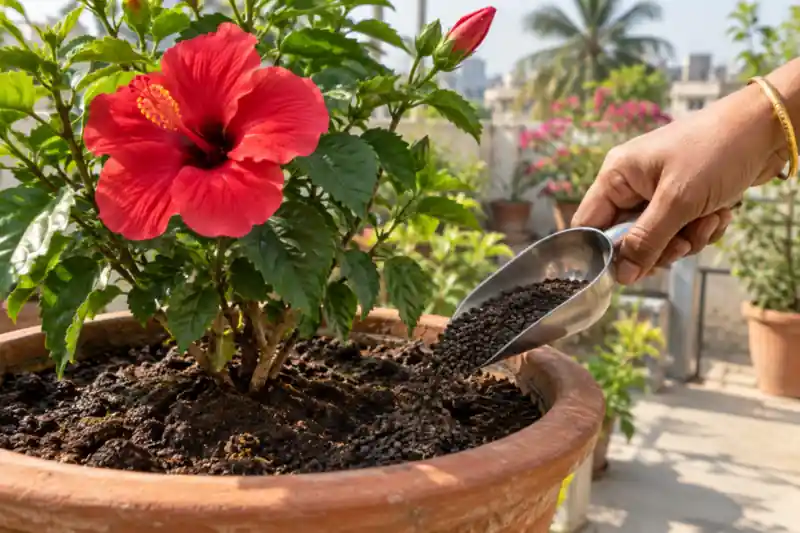
- 40% garden soil
- 30% well-rotted compost or vermicompost
- 20% cocopeat
- 10% coarse sand or perlite
A handful of neem cake mixed in at potting time adds organic matter. For more detail on blending ingredients, see our guide to potting mix for kitchen gardens.
When to repot
Repot when roots circle the bottom or water runs straight through. Late February to March is a good time in most regions, as the plant is about to push new growth. Avoid heavy repotting in the coldest weeks.
Sunlight and placement
Sunlight is the biggest factor behind flowering. Give your plant at least five to six hours of direct sun. An east or south-facing terrace or balcony is ideal.
- In winter, move the pot to the sunniest spot you have.
- In peak summer in hot regions, light afternoon shade helps prevent leaf scorch.
- Keep it away from strong cold winds, which can cause leaf and bud drop.
How to Water Hibiscus in Pots
Uneven watering is a common reason for bud drop. The aim is moist but never soggy soil.
- Push a finger about an inch into the soil.
- If it feels dry, water slowly until it drains from the bottom.
- Empty the saucer after 15 to 20 minutes.
- Water in the morning so the leaves and soil surface dry by evening.
In summer you may need to water daily; in winter, every two to four days is often enough. Our article on watering kitchen garden plants explains how to judge moisture in different pots.
Feeding Hibiscus for More Flowers
Hibiscus is a hungry plant. Regular, moderate feeding during the growing months supports new shoots and steady buds.
What to give
- Organic base: top-dress with a thin layer of vermicompost once a month.
- Balanced feed: use a complete organic fertilizer every two to three weeks from March to October.
- Bloom support: a phosphorus source such as rock phosphate, mixed into the topsoil a few times a year, can support roots and flowering.
Always follow the dose on the product label and water the pot before and after feeding so roots are not stressed.
Feeding in winter
Growth slows when nights turn cool. From late November to January, reduce feeding to once a month or pause it in colder north Indian regions, then resume as days warm in February.
Have a question about this topic?
Chat on WhatsAppPruning and Winter Care
Pruning keeps the plant bushy, and more branches mean more flowers.
When and how to prune
- Do the main pruning in late February or March, after the cold has passed.
- Cut each branch back by about one third, just above a leaf node.
- Remove dead, crossing and weak inner stems.
- Use clean, sharp secateurs and feed lightly once new shoots appear.
Light pinching of tips is fine through the year, but avoid hard pruning in December and January.
Protecting hibiscus in cold weather
Hibiscus does not like temperatures near 10°C. In north India, move pots against a warm wall, under a shed or indoors near a bright window on very cold nights. Some leaf yellowing and fewer flowers in winter are normal and recover in spring.
Pests and Problems to Watch For
Hibiscus attracts sap-sucking insects, especially in warm, dry spells. Check the undersides of leaves and the buds every week.
Mealybugs, aphids and whiteflies
White cottony clusters on buds and stems are usually mealybugs, a very common hibiscus pest. Read our detailed guide on mealybugs on plants for step-by-step control. Wipe small infestations off with a cotton bud, then spray a neem-based solution every five to seven days. Our page on neem oil for plants covers safe mixing and spraying.
Bud drop and yellow leaves
Buds falling before opening is usually a stress signal. Common causes include:
- Soil drying out completely, then being flooded
- Sudden moves from sun to shade, or cold drafts
- Pests feeding inside or on the buds
- Too little sunlight or nutrition
A few yellow leaves at the bottom are normal. Many yellow leaves together often point to overwatering or a hungry plant.
Common Mistakes to Avoid
- Keeping the plant in a shady corner and expecting flowers
- Using a pot without drainage, or leaving water in the saucer
- Giving strong fertilizer to dry soil
- Hard pruning in the middle of winter
- Ignoring the first few mealybugs until the whole plant is covered
- Moving the pot around often once buds have formed
Frequently Asked Questions
How often does a potted hibiscus flower?
In good sun and with regular feeding, hibiscus can flower for much of the year in warmer parts of India. Each flower usually lasts a day or two, but new buds keep coming on fresh growth.
Why are my hibiscus buds falling off?
Bud drop is usually caused by irregular watering, low light, sudden temperature change or pests. Keep watering steady, give full sun and check buds for insects.
Can I grow hibiscus indoors?
Only near a very bright, sunny window, and even then flowering is usually lower. It is happiest on a balcony or terrace.
When is the best time to prune hibiscus in India?
Late February to March in most regions, once the cold has passed and new growth is about to start.
Is tea or kitchen waste good for hibiscus?
Composted kitchen waste is useful. Raw waste placed directly in the pot can attract pests and fungus, so compost it first.
How do I make my hibiscus bushy?
Prune in spring and pinch the tips of new shoots. Each cut encourages two or more new branches, which means more flowering points.
Grow a Gudhal That Flowers Season After Season
With full sun, a free-draining mix, steady watering, regular feeding and weekly pest checks, your potted hibiscus can reward you with flowers for much of the year. For a balanced organic feed, try Gardenica Rich Fertilizer. Have a question about your plant? Contact the Gardenica team.
Looking for more?
Continue to our main page to explore products and services.