Chrysanthemum Plant Care in Pots: A Guldaudi Guide for Indian Homes
Chrysanthemum Plant Care in Pots: A Guldaudi Guide for Indian Homes
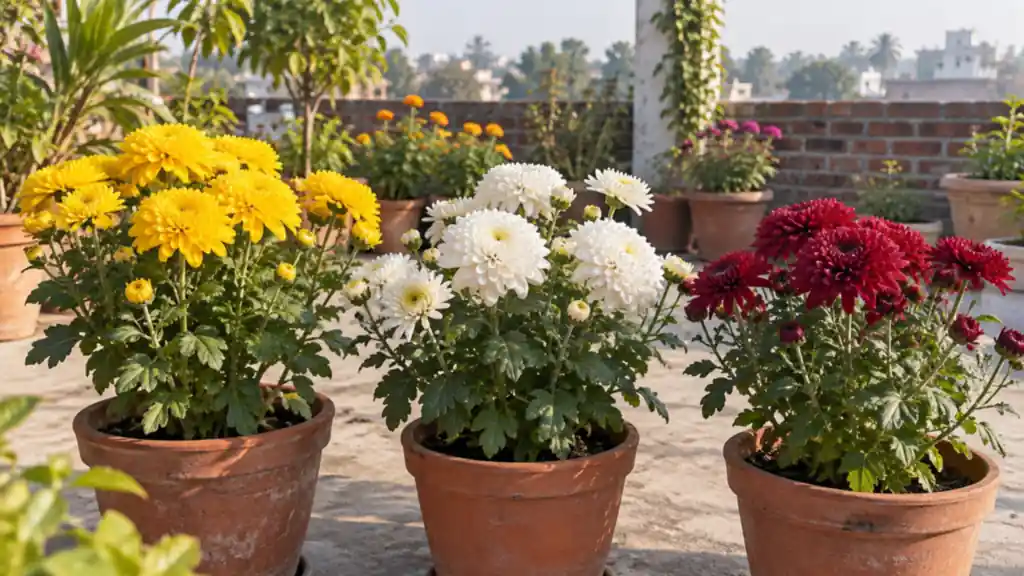
November is when chrysanthemums take over Indian terraces. Nursery stalls fill up with pots of yellow, white, maroon and bronze guldaudi, and many of us bring one or two home. Good chrysanthemum plant care decides whether those flowers last for six weeks or fade in two, and whether the plant comes back next winter. This guide covers potting, sunlight, watering, feeding, pinching, pests and what to do after the last flower drops, with every step sized for pots on a balcony or terrace.
Know Your Guldaudi Before You Start
Chrysanthemum (Chrysanthemum morifolium), called guldaudi or guldavari in much of India, is a perennial that behaves like a seasonal flower in pots. It grows leaves through the monsoon and starts forming buds when nights get longer, which is why most varieties bloom from November to January in north and west India.
Read more: Explore Gardenica Rich Fertilizer
Why it blooms in winter
Chrysanthemum is a short-day plant. Buds form when the dark period each night becomes long enough. A pot kept under a bright balcony bulb or a streetlight every night may keep growing leaves and delay or skip flowering.
Common types you will see
- Pompom and button types: many small round flowers, easy for beginners.
- Spray types: several medium flowers on each stem, good for small pots.
- Large-flowered (standard) types: one big bloom per stem, need disbudding and staking.
Pot, Soil and Sunlight
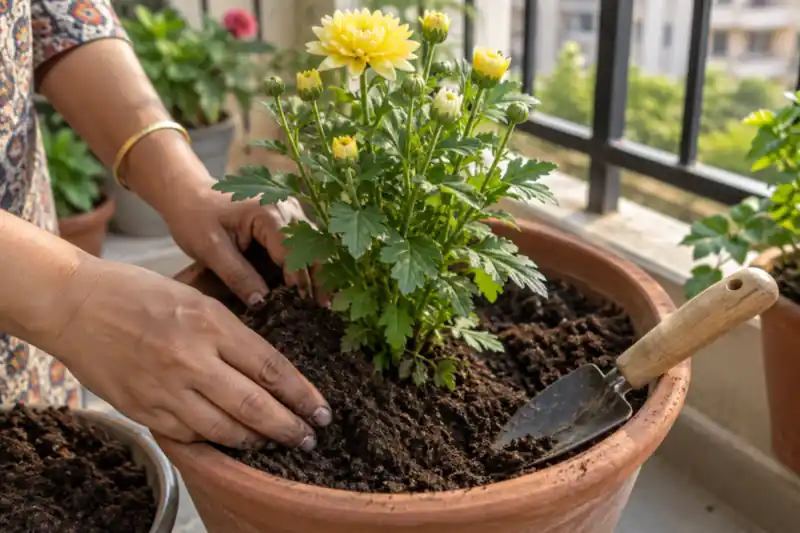
If your plant is already in bud or bloom, leave it alone until flowering ends, because repotting now can make buds drop. For new plants or suckers, set up the pot properly from the start.
Choosing the pot
A 10 to 12 inch pot with at least one large drainage hole suits one plant. Terracotta breathes well and keeps roots cooler; plastic holds water longer, so water it less often.
The right potting mix
Chrysanthemum roots dislike sitting in wet soil. A loose mix of garden soil, well-rotted compost or vermicompost, and coarse sand or cocopeat works well. Our guide to potting mix for kitchen gardens explains the ratios in detail, and the same base suits flowering pots.
How much sun
Give the plant at least five to six hours of direct sun a day. Too little sun gives tall, weak stems and fewer flowers.
Watering and Feeding Chrysanthemums in Pots
Steady moisture and balanced feeding keep leaves green and flowers coming, while too much of either causes more harm than too little.
Watering routine
- Push a finger 2 to 3 cm into the soil.
- Water only when that layer feels dry.
- Water slowly at the base until it drains from the hole.
- Empty the saucer after 15 minutes so roots do not stand in water.
In cool winter weather this may mean every two or three days; in hot spells, daily. Avoid wetting leaves and flowers in the evening, as damp foliage overnight invites fungal spots.
Chrysanthemum fertilizer: what and when
During the growing months (roughly March to September), a top dressing of vermicompost every three to four weeks plus a balanced organic plant food supports leafy growth. Once buds show colour, keep feeding light and regular rather than heavy. Excess nitrogen at this stage gives lush leaves and soft stems instead of flowers. For any packaged feed, follow the dose on the product label.
Pinching, Disbudding and Staking
These three jobs shape the plant. Skipping them is the main reason home-grown guldaudi look thin and leggy next to nursery plants.
Pinching for a bushy plant
When a young plant reaches about 15 cm, nip off the top 1 to 2 cm of the main shoot. Each pinched tip branches into two or more shoots. Repeat on new shoots every few weeks. Most growers stop pinching around August so the plant has time to form flower buds.
Disbudding for bigger flowers
Each stem usually forms one central bud with several small side buds around it. For large blooms, gently rub off the side buds while they are pea-sized and keep only the central one. For pompom and spray types, you can skip disbudding and enjoy more, smaller flowers.
Have a question about this topic?
Chat on WhatsAppStaking heavy stems
Push a thin bamboo stick into the pot near the stem, avoiding the root ball, and tie loosely with soft string. Do this before buds open, because heavy flowers bend and snap stems in wind.
Chrysanthemum Pests and Diseases
Most problems start in the tender new growth and under the leaves. A quick look every few days catches them early.
Aphids and other sap-suckers
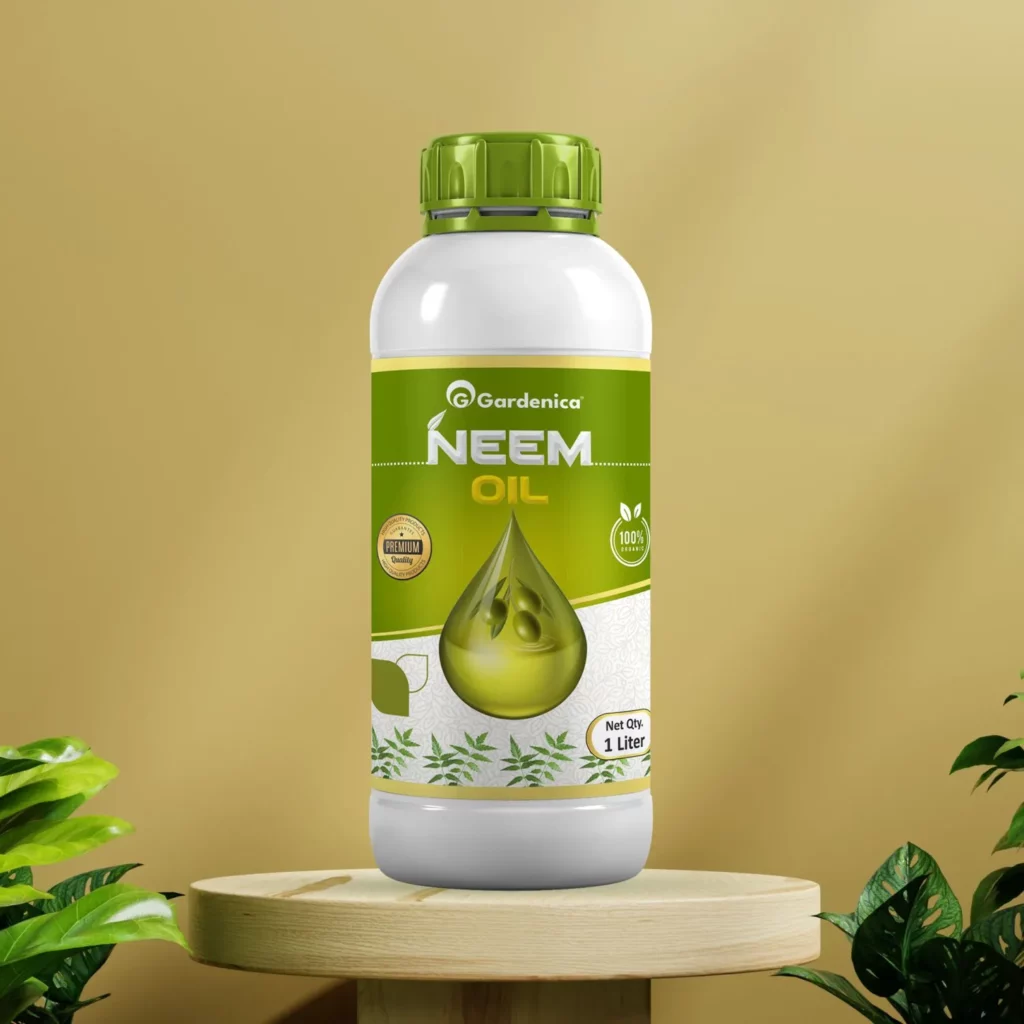
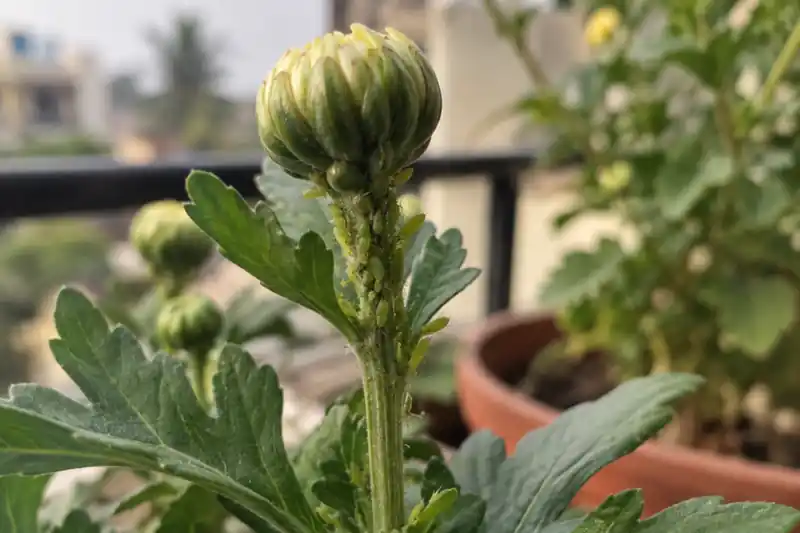
Aphids gather in clusters on stems just below buds and on new leaves. Buds may become distorted or fail to open. Spray them off with a stream of water, then follow up with a neem-based spray if they return. Our guide on aphids on plants covers identification and control step by step. Watch also for mealybugs (white cottony patches) and leaf miners (pale winding lines inside leaves); pick off badly affected leaves.
Powdery mildew and leaf spots
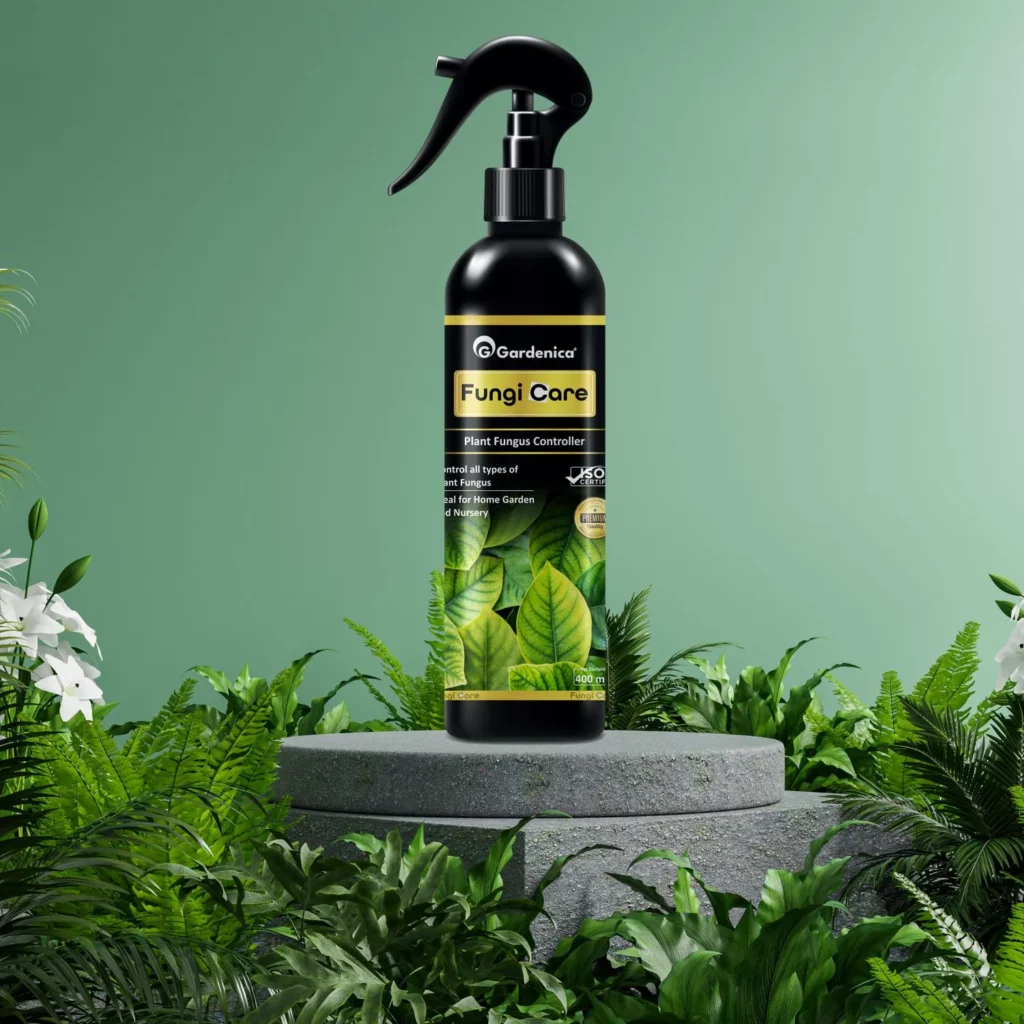
A white dusty coating on leaves is powdery mildew, common in dry days and cool nights. Brown or black spots on lower leaves often follow wet foliage and crowding. Improve airflow, water at the base and remove spotted leaves. See our article on powdery mildew on plants for treatment options.
Wilting and root rot
A plant that droops even when the soil is wet may have root rot from poor drainage. Check the drainage hole, reduce watering and read about root rot in potted plants to save it.
Chrysanthemum Care After Flowering
Many people throw the pot away once the flowers fade, but guldaudi is a perennial and can bloom again next winter.
- Deadhead: snip off faded flowers through the season to keep the plant tidy.
- Cut back: once flowering ends (usually January to February), cut stems down to about 10 to 15 cm.
- Watch for suckers: new shoots with their own roots appear around the base in late winter.
- Separate and pot up: in February or March, lift healthy suckers and plant each in its own small pot with fresh mix.
- Grow on: keep them in sun, start pinching once they reach 15 cm, and the cycle begins again.
Common Mistakes With Potted Chrysanthemums
- Repotting a plant in full bud: root disturbance often makes buds drop.
- Keeping it indoors for decoration: a few days is fine, but weeks without sun shorten the bloom period.
- Night light on the pot: constant light at night can delay flowering.
- Overwatering in winter: cool, wet soil is the fastest route to root rot.
- Heavy feeding at bud stage: it pushes leaves, not flowers.
- Pinching too late: pinching after August can remove the shoots that would have carried buds.
Frequently Asked Questions
Why are my chrysanthemum buds not opening?
Common reasons are low sunlight, aphids feeding on the buds, irregular watering or a sudden move to a new spot. Check under the buds for pests and make sure the pot gets five to six hours of direct sun.
How long do chrysanthemum flowers last in a pot?
A healthy plant usually stays in flower for about four to six weeks, depending on the variety, temperature and how regularly you remove faded blooms.
Can I grow chrysanthemum from seed?
Yes, but most named varieties do not come true from seed. Cuttings and suckers are faster and give the same flower as the parent plant.
When should I take chrysanthemum cuttings?
Late winter to early spring, roughly February to April, is a good time. Use 7 to 10 cm soft tip cuttings, remove the lower leaves and root them in moist, well-drained mix in bright shade.
Why are the lower leaves turning yellow and dry?
Older lower leaves naturally age, but heavy yellowing often points to overwatering, poor drainage or a fungal leaf spot. Remove affected leaves and let the top soil dry slightly between waterings.
Is chrysanthemum safe to keep near pets?
Chrysanthemums are listed as toxic to cats and dogs if chewed, so keep pots out of reach of pets that nibble plants.
Grow a Fuller Guldaudi This Season
Sun, careful watering, regular pinching and steady feeding are what make chrysanthemums flower well in pots. For balanced organic nutrition through the growing months, explore Gardenica Rich Fertilizer and use it as the label directs. Have a question about your plant? Contact the Gardenica team and we will help.
Looking for more?
Continue to our main page to explore products and services.