Rose Plant Care in Pots: A Practical Guide for Indian Homes
Rose Plant Care in Pots: A Practical Guide for Indian Homes
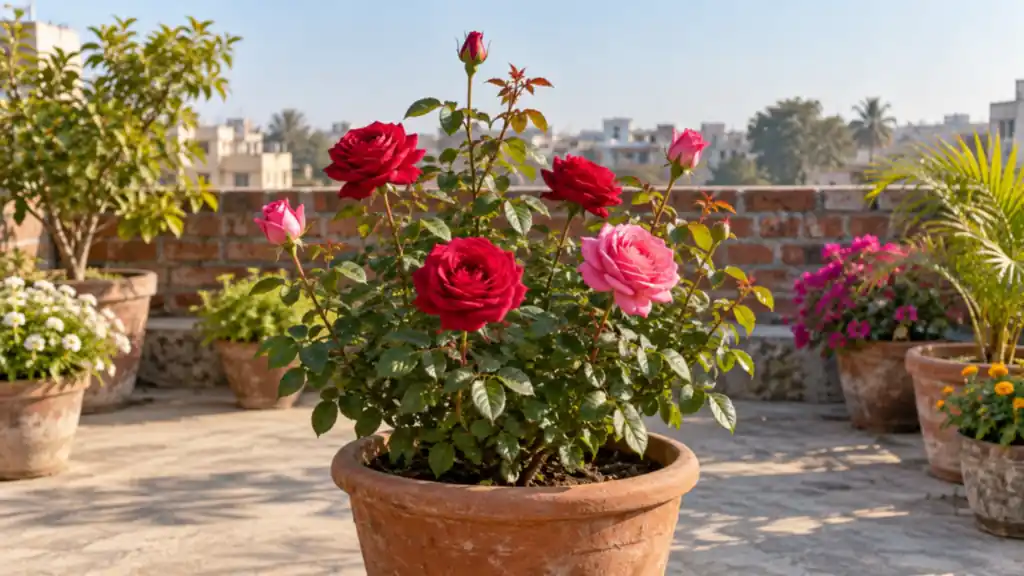
A potted rose can reward you with fresh blooms for months, or it can sit on the terrace as a thorny stick with three yellow leaves. The difference is rarely luck. Good rose plant care in pots comes down to a handful of habits: enough sun, a pot that drains, steady watering, timely pruning and regular feeding.
This guide walks through each of those habits for balcony and terrace gardeners in India. October is a good month to start, because the monsoon has passed and many roses are getting ready for their best flush of the year. Treat the numbers here as starting points and always follow the directions printed on any product label.
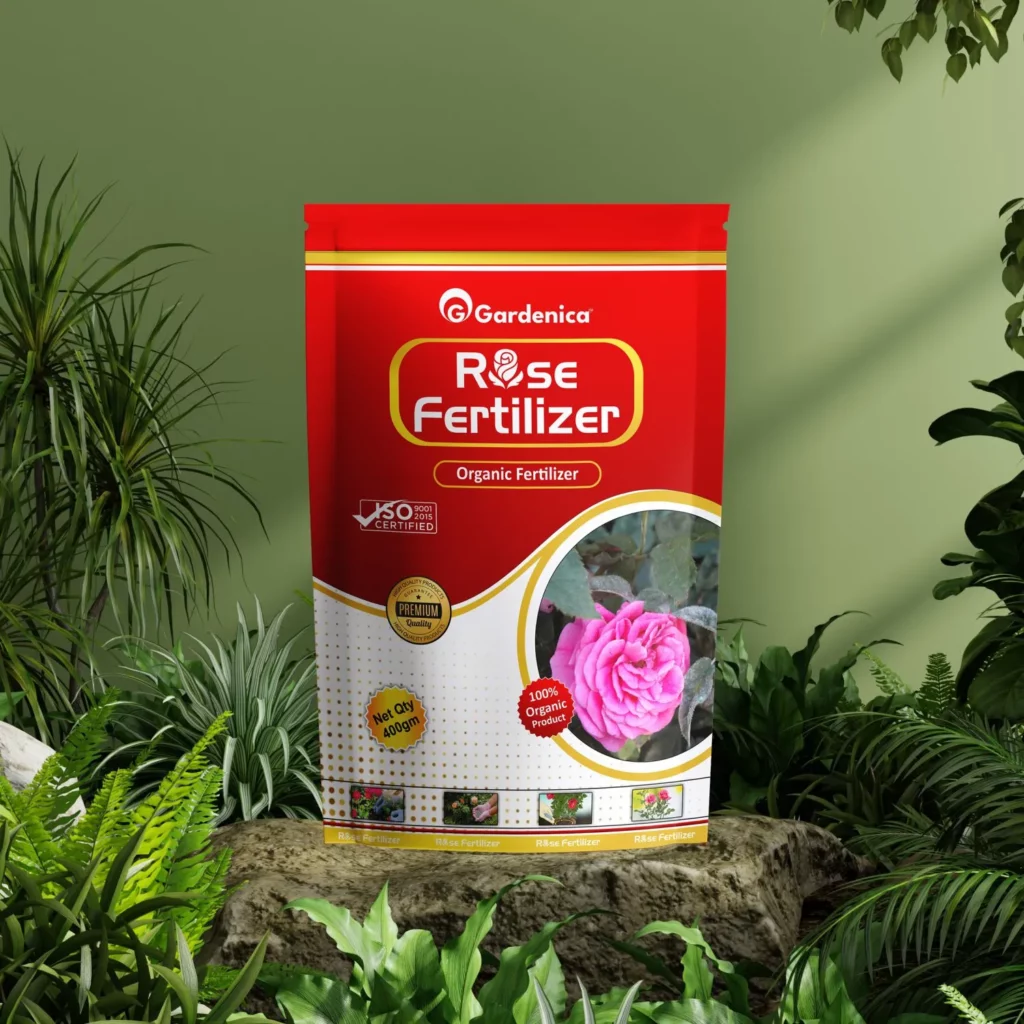
Read more: Explore Gardenica Rose Fertilizer
Choose the right pot and soil for roses
Roses have deep, busy roots, and a cramped or waterlogged pot is the most common reason a new plant struggles. Get the container and the mix right and everything else becomes easier.
Pot size and drainage
For a full-sized rose, a pot about 12 to 16 inches (30 to 40 cm) wide is a sensible size. Miniature roses manage in smaller pots. Whatever you choose, it must have drainage holes. Terracotta breathes and stays cooler in summer, while plastic is lighter and holds moisture longer, so water each type differently. Never leave the pot standing in a saucer of water.
A loose, rich potting mix
Roses like soil that drains freely but still holds some moisture. A simple home blend is garden soil, well-rotted compost or vermicompost, and coarse sand or cocopeat in roughly equal parts. Our guide to potting mix for kitchen gardens explains how to balance these ingredients.
When to repot
Move a rose to fresh mix or a slightly larger pot every two or three years, or sooner if roots are circling the base. Repot in mild weather and water well afterwards.
Sunlight and placement
Sun is the fuel for flowers. Aim for at least six hours of direct sunlight a day; morning sun is ideal because it also dries dew from the leaves, which helps keep fungal spots away. A rose kept in shade will grow leggy and flower poorly however well you feed it.
Leave space between pots so air can move around the leaves. In the hottest weeks of summer, light afternoon shade or moving pots away from a scorching wall can stop buds from drying out.
How to water rose plants in pots
Potted roses dry out faster than roses in the ground, but they also rot quickly if the soil stays soggy. Instead of watering on a fixed timetable, check the soil.
- Finger test: water when the top 2 to 3 cm of soil feels dry.
- Water deeply: pour slowly until water runs from the drainage holes, then stop.
- Water the base: keep water off the leaves, especially in the evening.
- Adjust by season: summer may need daily watering, while winter and humid monsoon weeks need far less.
For more on reading soil moisture, see our guide to watering kitchen garden plants.
Pruning and deadheading for more blooms
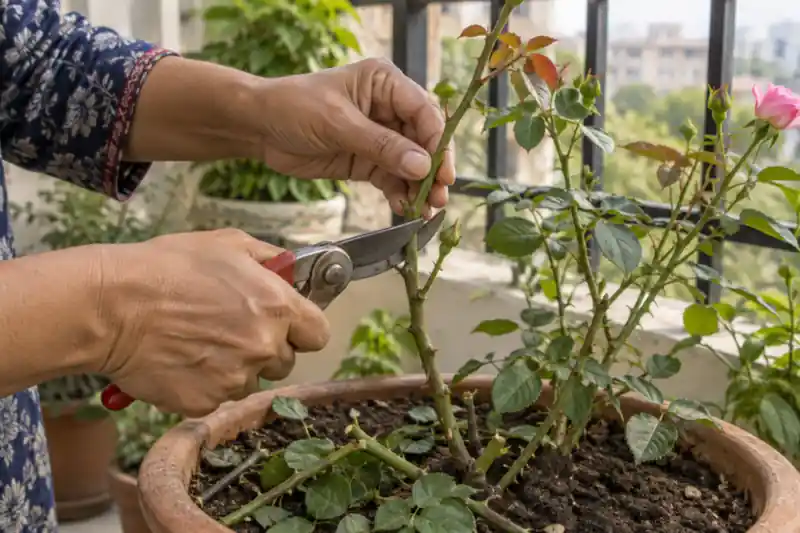
Roses flower on new growth, so cutting at the right time encourages fresh shoots and more buds. Use clean, sharp secateurs and wipe the blades between plants.
When to prune
In much of India, gardeners give roses a pruning after the monsoon, around October and November, to prepare for the winter flowering season. The best timing varies with your region and the type of rose, so watch how local rose growers time their cuts. Avoid heavy pruning during extreme heat.
How to prune
- Remove dead, diseased and very thin, weak canes first.
- Cut out branches that cross through the middle of the bush.
- Shorten healthy canes, cutting at a slight angle just above an outward-facing bud.
- Clear fallen leaves and twigs from the pot surface.
- Water, then feed lightly once new shoots appear.
Deadhead regularly
Snip off faded flowers down to the first healthy leaf below the bloom. This stops the plant spending energy on seeds and pushes it to make new buds.
Have a question about this topic?
Chat on WhatsAppFeeding roses in pots
Roses are hungry plants, and a potted rose has only the nutrients in its small volume of soil. Regular, gentle feeding keeps leaves green and flowers coming.
Build the soil with organic matter
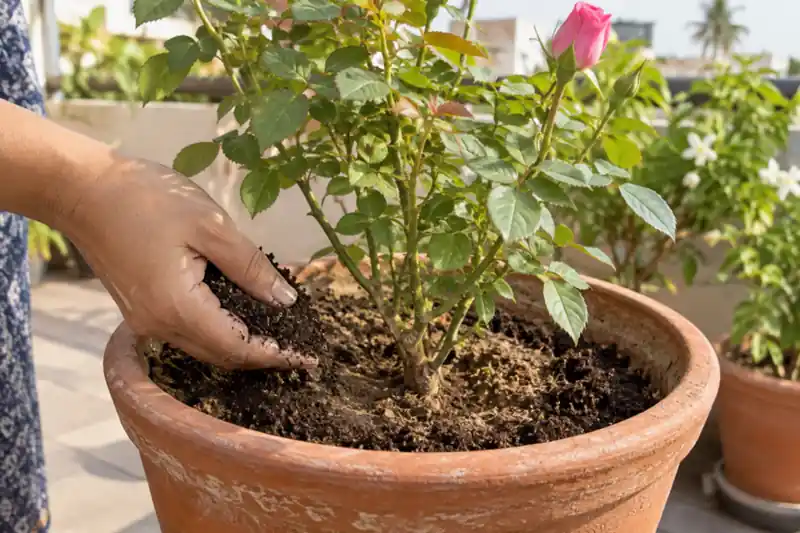
Top dress with a thin layer of vermicompost every few weeks during active growth, keeping it a little away from the main stem, then scratch it in and water. Our vermicompost guide covers how much to use.
Use a rose-specific feed
During the flowering season, a fertilizer made for roses supplies the extra nutrition that buds and blooms demand. Apply it on moist soil, never on dry roots, and follow the dose and interval on the pack. More is not better: overfeeding can burn roots and produce soft, pest-prone growth.
Feed after pruning
The weeks after pruning are when a rose pushes the most new growth. A top dressing of compost plus a measured dose of rose feed at this stage sets up the next flush.
Common pests and diseases
Check your roses every few days, looking at new shoots, buds and the undersides of leaves. Problems caught early are far easier to handle.
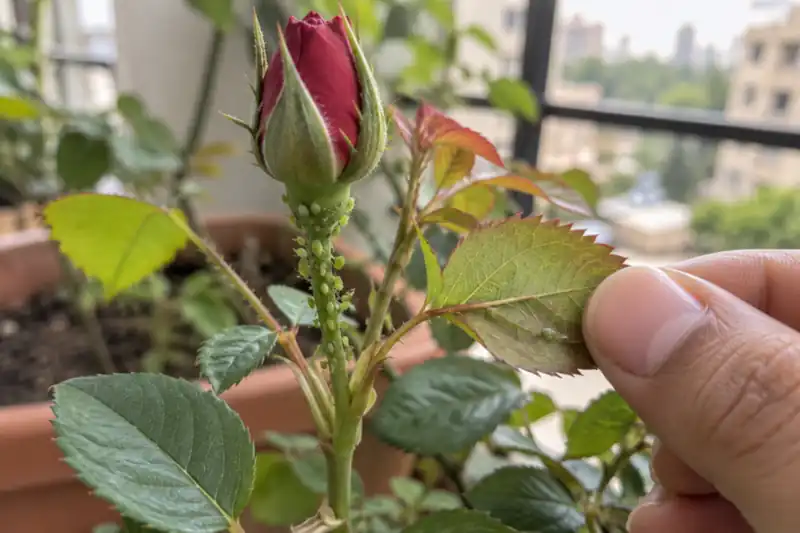
- Aphids: tiny green or black insects clustered on buds and tender tips.
- Mealybugs and mites: white cottony patches, or speckled, dull leaves with fine webbing.
- Black spot: dark spots with yellowing leaves, common in humid weather.
- Powdery mildew: white powdery coating on leaves and buds.
- Dieback: canes turning black from a pruning cut downwards.
Pick off badly affected leaves, improve air flow and avoid wetting the foliage. For leaf pests, a neem-based spray used as directed is a popular first step; our neem oil guide explains how to mix and spray it safely. For fungal spots, use a product labelled for that problem and follow its instructions.
Common rose care mistakes
- Keeping the pot in a spot with less than six hours of sun.
- Watering on a schedule instead of checking the soil.
- Using a pot without drainage holes.
- Skipping pruning, so the bush becomes woody and crowded.
- Feeding a dry plant or doubling the fertilizer dose.
- Ignoring the first few aphids until the buds are covered.
Frequently asked questions
Can roses grow well in pots?
Yes. With a large enough pot, good drainage, six or more hours of sun and regular feeding, roses do very well on balconies and terraces.
How often should I water a potted rose?
Water when the top 2 to 3 cm of soil is dry. That may be daily in peak summer and every few days in winter.
Why are my rose buds drying before they open?
Common causes are irregular watering, extreme heat, too little sun, pests such as thrips or aphids, or a lack of nutrition. Check each one in turn.
Why are the leaves on my rose turning yellow?
Overwatering and poor drainage are the usual culprits. Black spot disease and hunger can also cause yellowing.
Which fertilizer is best for rose plants in pots?
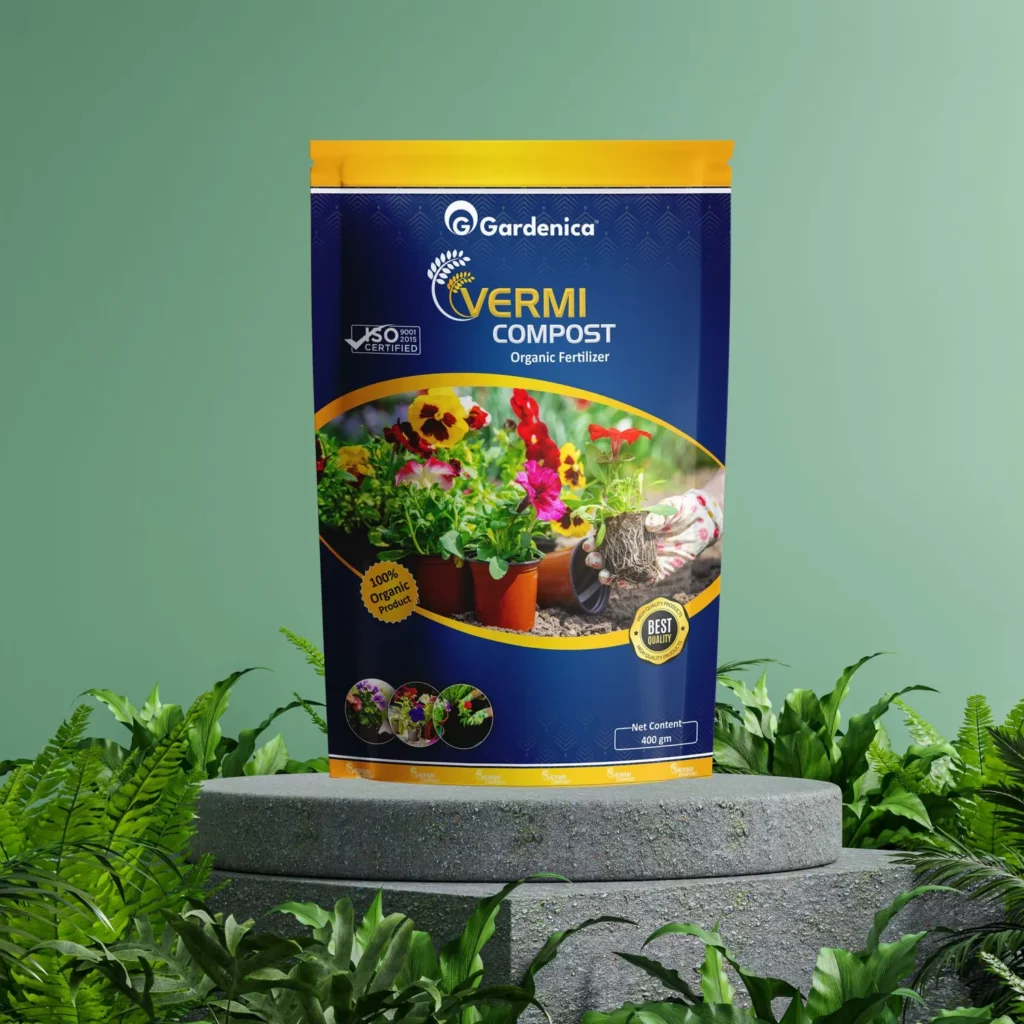
A combination works well: compost or vermicompost to build the soil, plus a rose-specific feed during the flowering season, used as the label directs.
When will my rose flower after pruning?
New shoots usually appear within a couple of weeks, and flowers often follow in about six to eight weeks, depending on the variety and the weather.
Start your rose routine this season
Healthy potted roses are the result of small, steady habits rather than one big fix. Give your plant a sunny spot and a well-drained pot, water by touch, prune after the rains and feed through the flowering season. To support those blooms, explore Gardenica Rose Fertilizer and read the directions before use. Have a question about your plant? Contact Gardenica with a photo and we will help.
Looking for more?
Continue to our main page to explore products and services.