How to Grow Petunia in Pots: A Winter Flower Guide for Indian Homes
How to Grow Petunia in Pots: A Winter Flower Guide for Indian Homes
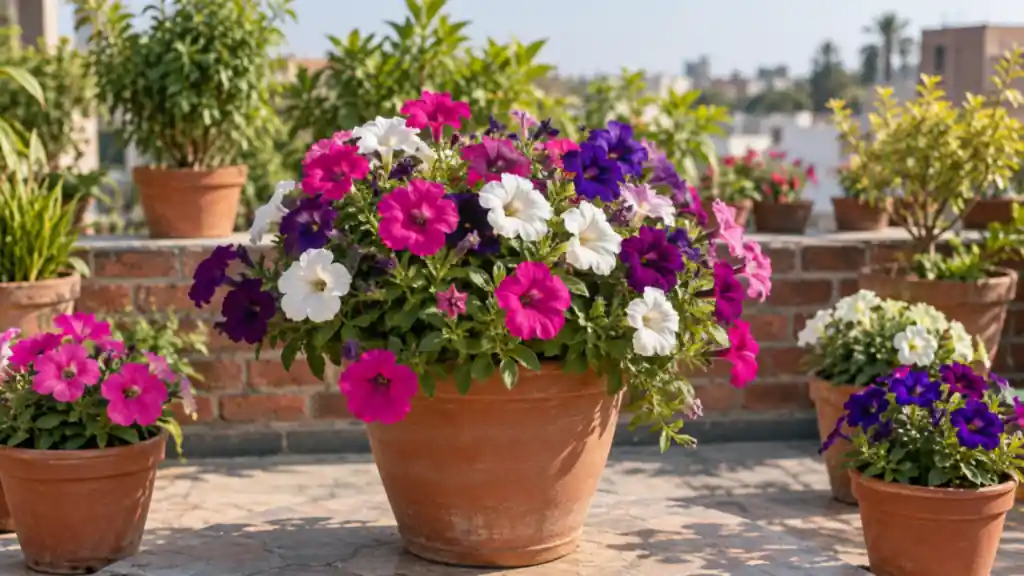
Few winter flowers give a balcony as much colour for as little space as petunias. If you want to grow petunia in pots, November is a good month to start in most of India: the heat has eased, nights are cool, and a pot sown or planted now can flower from December right through to March. This guide covers sowing, potting mix, sunlight, watering, feeding and the pinching and deadheading that keep plants bushy and full of blooms.
Why Petunias Suit Indian Winter Pots
Petunias prefer mild days and cool nights. In the plains of India that means they behave as winter annuals: they grow fast in the cool months and usually fade once summer heat arrives in April. Their compact size, long flowering season and wide colour range make them ideal for terrace railings, window boxes and hanging baskets.
Read more: Explore Gardenica Garden Booster
Types of petunia to choose
- Grandiflora: large single or double flowers, best for pots on a sheltered balcony because heavy blooms bruise in rain or wind.
- Multiflora: smaller but more numerous flowers; tougher and good for beginners.
- Trailing or cascade types: spreading stems that spill over the edge, ideal for hanging baskets and railing planters.
When to sow petunia seeds in India
In north, central and west India, sow from late September to November. In milder southern and coastal regions, you can sow from October to December. In hill areas, petunias are usually sown in spring instead. If you are late, buy nursery seedlings in November and December and plant them straight into pots.
How to Sow Petunia Seeds Step by Step
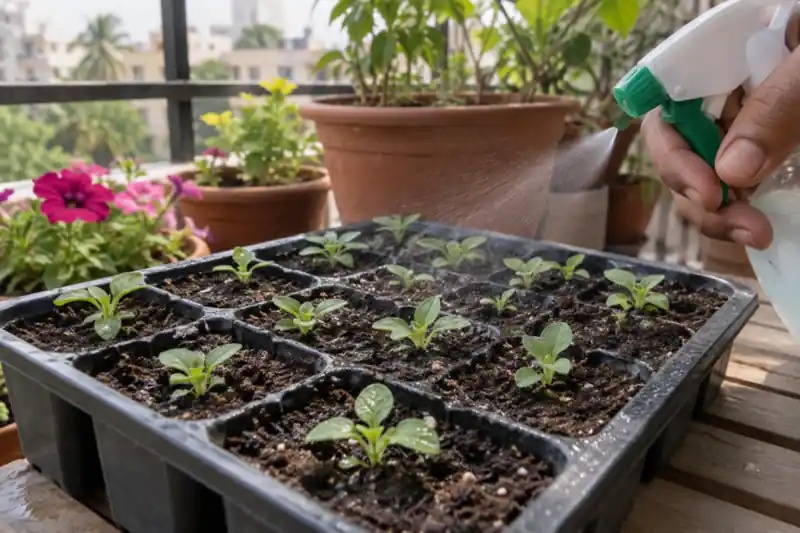
Petunia seeds are as fine as dust, so they need a gentle start. Most failures happen at this stage, not later.
- Fill a shallow seed tray with a fine, light mix such as cocopeat with a little sieved compost.
- Moisten the mix before sowing, so you do not wash seeds away later.
- Mix the seeds with a pinch of dry sand and scatter them thinly on the surface.
- Do not cover them with soil. Petunia seeds need light to germinate; just press them lightly.
- Mist with a spray bottle and keep the tray in bright, indirect light. Germination usually takes about one to two weeks.
- Water from below or with a mister until seedlings have two to four true leaves.
Seedlings are prone to collapse when the mix stays soggy. Read our guide on damping off in seedlings to protect your tray.
Best Pot and Potting Mix for Petunias
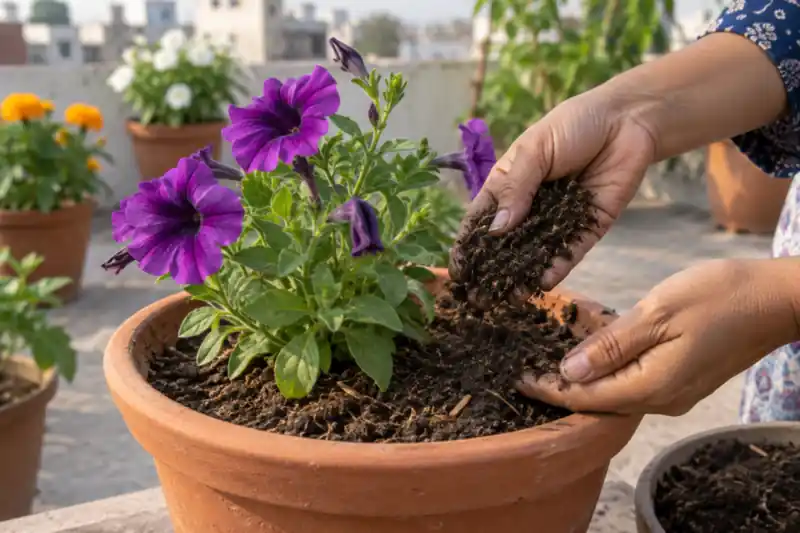
Once seedlings are three to four weeks old and have a few true leaves, move them into their final pots.
Pot size
- One plant: an 8 to 10 inch pot.
- Three plants: a 12 to 14 inch pot or a long window box.
- Hanging basket: 10 to 12 inches for one or two trailing plants.
Terracotta pots breathe well, but every container must have drainage holes.
Potting mix
Petunias need a loose, well-draining mix that still holds some moisture. A simple blend is garden soil, cocopeat and well-rotted compost or vermicompost in roughly equal parts, with a handful of sand or perlite if your soil is heavy. Our article on potting mix for kitchen gardens explains how to adjust the ratio for your soil.
Sunlight and Watering for Petunia Plant Care
Good petunia plant care comes down to two daily habits: enough sun and careful watering.
Sunlight
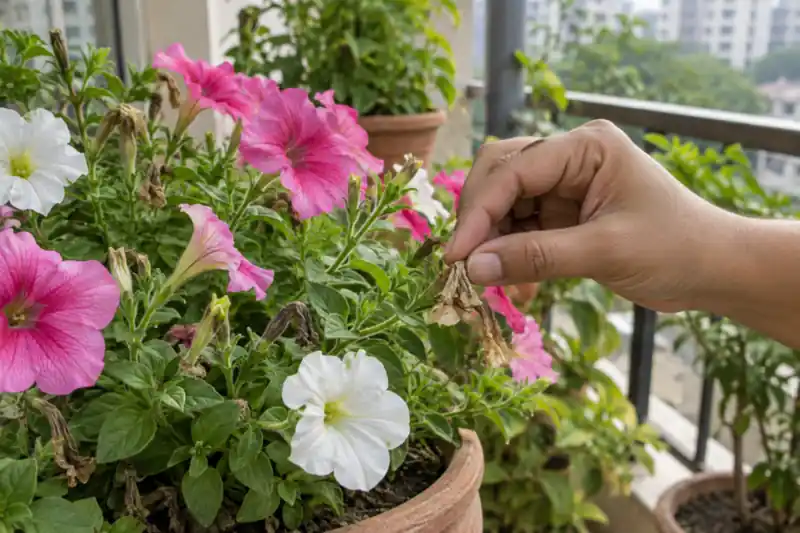
Give petunias at least five to six hours of direct sun. A south- or east-facing terrace is ideal in winter. In shade, plants stretch, stems become weak and flowering drops sharply.
Watering
- Water when the top inch of soil feels dry, usually every two to three days in winter.
- Water at the base in the morning and avoid wetting flowers and leaves.
- Empty saucers so roots never sit in water.
- Hanging baskets dry faster, so check them daily.
Feeding Petunias for More Flowers
Petunias flower for months, so they use up nutrients in a pot quickly. A steady, gentle feeding routine works better than one heavy dose.
A simple feeding plan
- Mix compost or vermicompost into the potting mix at planting time.
- About two to three weeks after transplanting, start a balanced plant nutrient and continue at the interval given on the label.
- Top-dress with a thin layer of vermicompost once a month, keeping it away from the stem.
- Once buds form, a source of phosphorus such as rock phosphate mixed into the top soil can support roots and flowering.
Always follow the dose on the product label, and water the pot before feeding so roots are not stressed. Too much nitrogen gives lush leaves but fewer flowers.
Pinching and Deadheading: How to Make Petunias Bushy
If you want a pot that looks full rather than leggy, pinching and deadheading are the two tasks that matter most.
Have a question about this topic?
Chat on WhatsAppPinching young plants
When a transplanted seedling reaches about 10 to 15 cm, pinch off the growing tip just above a pair of leaves. The plant responds by sending out side shoots, which means more stems and more flowers. Repeat once more on the strongest new shoots if needed.
Deadheading old flowers
Remove faded flowers every few days, pinching off the whole flower along with the small green seed pod behind it. Removing only the petals leaves the pod, and the plant then puts energy into seed instead of new blooms.
Cutting back leggy plants
By mid-winter some plants sprawl with flowers only at the tips. Trim the longest stems back by a third, feed lightly, and new growth will follow within a couple of weeks.
Common Pests and Diseases on Petunias
Petunias are fairly easy to grow, but a few problems turn up regularly in pots.
- Aphids: small green or black insects on new shoots and buds, causing curled leaves. See our guide to aphids on plants for control options.
- Whiteflies: tiny white insects that fly up when leaves are disturbed; check leaf undersides.
- Grey mould: fuzzy grey patches on flowers in damp, crowded conditions. Remove affected parts and improve air flow.
- Root rot: wilting despite moist soil, usually from overwatering or poor drainage.
Inspect plants once a week, isolate any badly affected pot, and act early with a suitable plant protection spray used as the label directs.
Common Mistakes When Growing Petunias in Pots
- Covering seeds with soil, which stops them from germinating.
- Keeping pots in a shady corner and expecting heavy flowering.
- Watering every day regardless of soil moisture.
- Skipping pinching, which gives tall, thin plants.
- Removing petals but leaving seed pods behind.
- Overfeeding with nitrogen-rich fertiliser.
- Crowding too many plants into one small pot.
Many of these points apply to other winter flowers too. Our chrysanthemum plant care guide is a good companion read if you are planning a full winter flower display.
Frequently Asked Questions
How long do petunias take to flower from seed?
Petunias usually start flowering about 10 to 12 weeks after sowing, depending on variety and temperature. Nursery seedlings bloom much sooner.
Can I grow petunias in summer in India?
In most plains areas, petunias struggle in hot summer weather. They do best from November to March. Hill gardeners can grow them in spring and summer.
Why are my petunias leggy with few flowers?
The usual causes are too little sun, no pinching and too much nitrogen. Move the pot to a sunnier spot, trim back long stems and feed with a balanced nutrient.
How often should I water petunias in pots?
In winter, most pots need water every two to three days. Always check the top inch of soil first and water only when it feels dry.
Do petunias come back every year?
Petunias can live longer in ideal conditions, but in most of India they are grown as seasonal annuals and replaced each winter.
Can I save seeds from my petunias?
Yes, you can leave a few pods to dry at the end of the season. Seeds from hybrid varieties may not produce plants identical to the parent.
With sun, a well-draining mix, careful watering and regular deadheading, a few petunia pots can keep your balcony bright all winter. For steady feeding through the flowering season, explore Gardenica Garden Booster, and if you have questions about your plants, contact the Gardenica team.
Looking for more?
Continue to our main page to explore products and services.