How to Grow Tuberose in Pots: A Rajanigandha Guide for Winter Fragrance
How to Grow Tuberose in Pots: A Rajanigandha Guide for Winter Fragrance
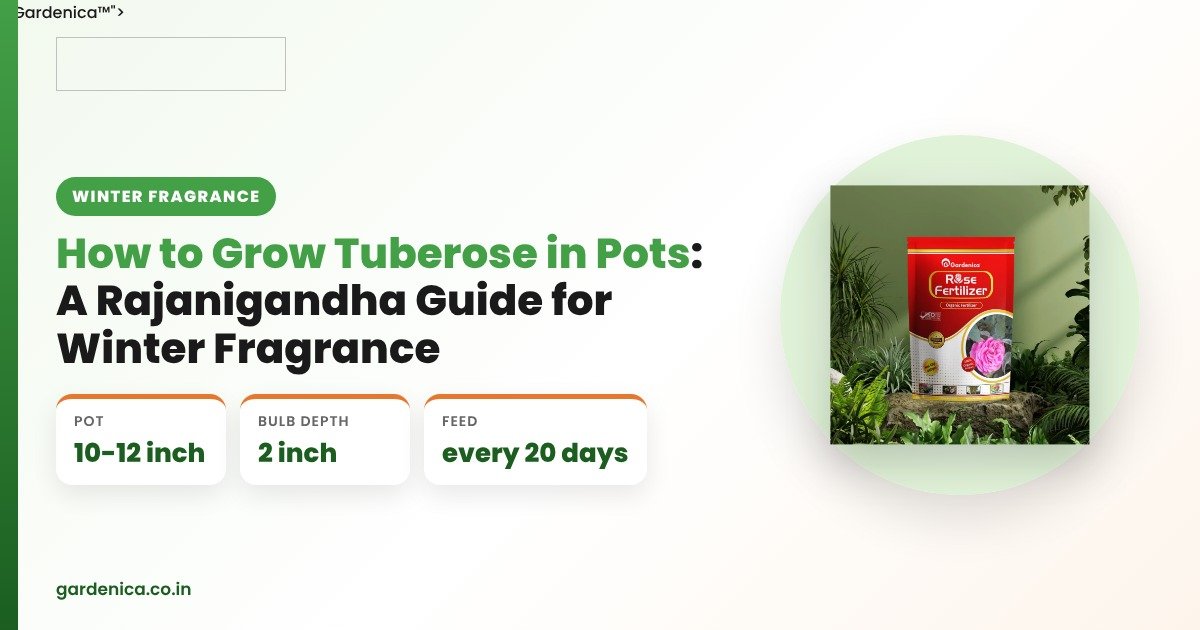
You come in at dusk and the whole room smells of it. Tuberose, or rajanigandha, is the one winter flower that pays you back for a season of patience, because a single spike can scent a balcony and the two rooms behind it. Getting How to grow tuberose in pots right comes down to the bulb, the pot, and how you handle the cool months.
This covers the whole cycle on an Indian terrace: pot and soil, bulb planting, a feeding calendar, winter watering, the trick to more spikes, and the problems that show up in cold, damp weather.
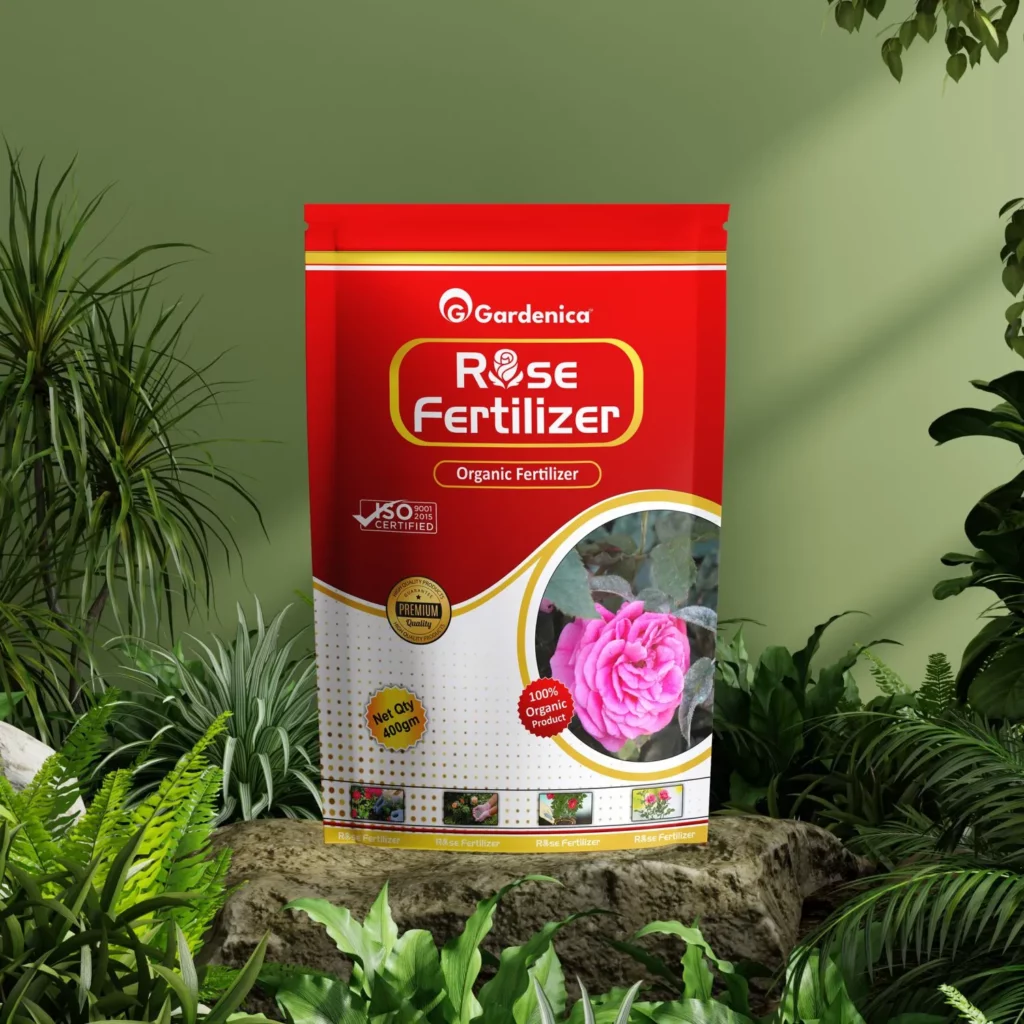
Read more: Explore Gardenica Rose Fertilizer
Why Tuberose Suits Winter Pots
Tuberose grows from a bulb and sends up one straight spike at a time, each carrying 12 to 25 flowers that open in the evening. In most of India the flowering stretch runs October to February, exactly when other pots have stopped performing.
It wants two things Indian winters give freely: full sun and a dry root zone. Tuberose dislikes wet feet far more than cold, so a free-draining terrace pot beats a bed in heavy soil. Single-flowered types (sold as Sada or Vaigai) put energy into fragrance and are the ones grown for puja; double types look fuller in a vase but throw fewer spikes.
Pot and Mix
Roots go down rather than sideways, so depth matters more than width.
- Pot size per bulb (inch) (What to use: 10-12)
- Mix by volume (%) (What to use: 40-50)
- Bulb planting depth (inch) (What to use: 2)
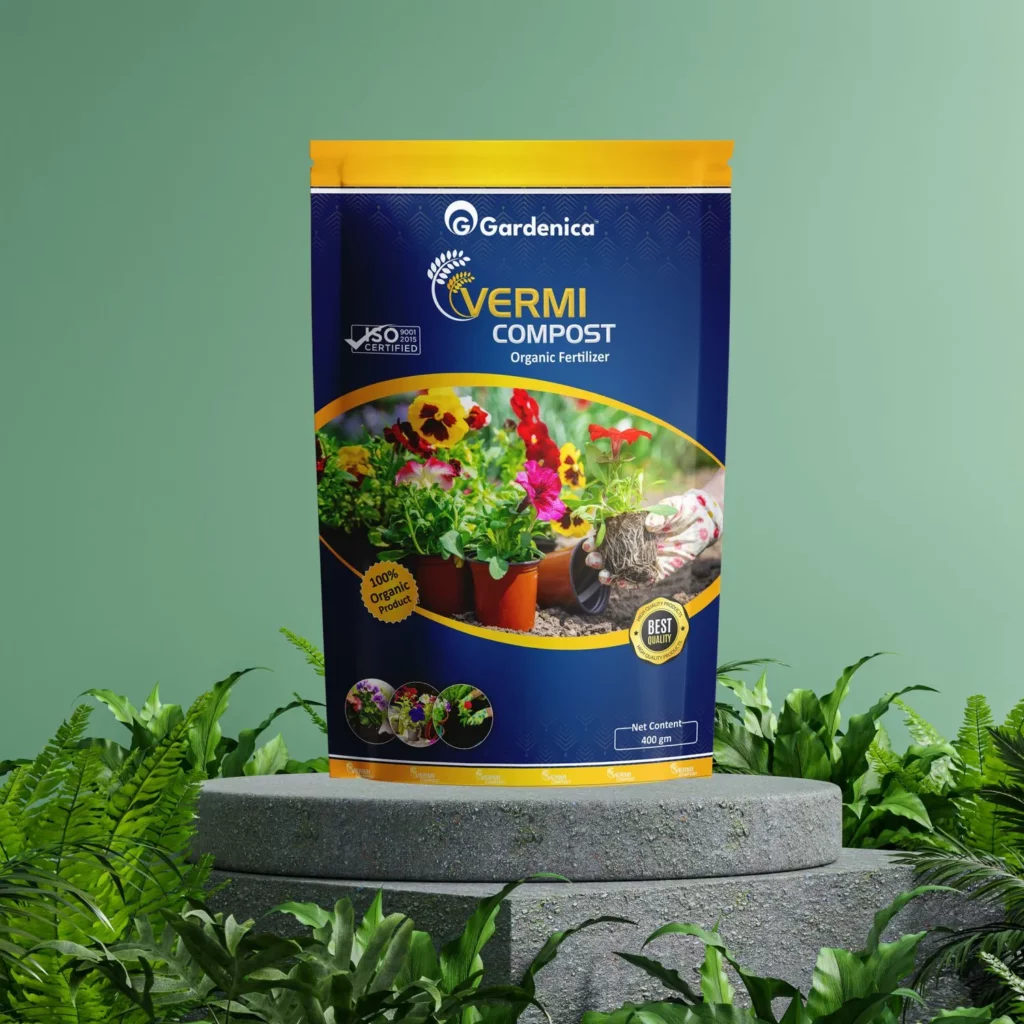
That mix line is the soil percentage: 40 to 50 parts good soil, 30 parts Vermicompost, and 20 to 30 parts coarse sand. Tuberose wants a richer, firmer mix than most annuals, since the bulb stays put for two or three years. A standard Potting mix for kitchen gardens works with a fifth more sand added.
Planting the Bulbs
Plant in October or November in north and central India, December to January on the coasts, so roots establish before spikes rise.
- Check the bulb. Pick a firm one, 2 to 3 inch across, with dry roots at the base and no soft patches. Under 1.5 inch it usually pushes leaves only.
- Prepare the pot. Fill two-thirds with mix and blend in a handful of Neem cake powder.
- Set the bulb. Point up, 2 inch deep, mix pressed around it with no air pockets.
- Water once, then hold. One slow watering to settle the mix, then wait for the first green tip.
- Keep the pot warm. A south-facing wall speeds the shoot. Nothing shows for two to four weeks, which is normal.
Watering in a Cold Season
Water is where most potted tuberose loses a winter. It drinks well in strong sun, nearly stops in December and January, and a wet pot at 8 degrees at night rots a bulb.
- Check before you water. Push a finger 2 inch into the mix; water only when dry.
- Water at the base. A mug, not a hose, and keep forming buds dry.
- Water in the morning. That gives the mix a sunny day to drain before nights cool.
- Cut back in deep winter. In a cold north Indian December, weekly is often plenty for a 12 inch pot.
- Empty the saucer. Standing water chills roots and invites Root rot in potted plants.
Feeding for More Spikes
A spike is expensive. It carries up to 25 flowers on a stalk that must hold them all night, so light regular feeding beats one heavy dose.
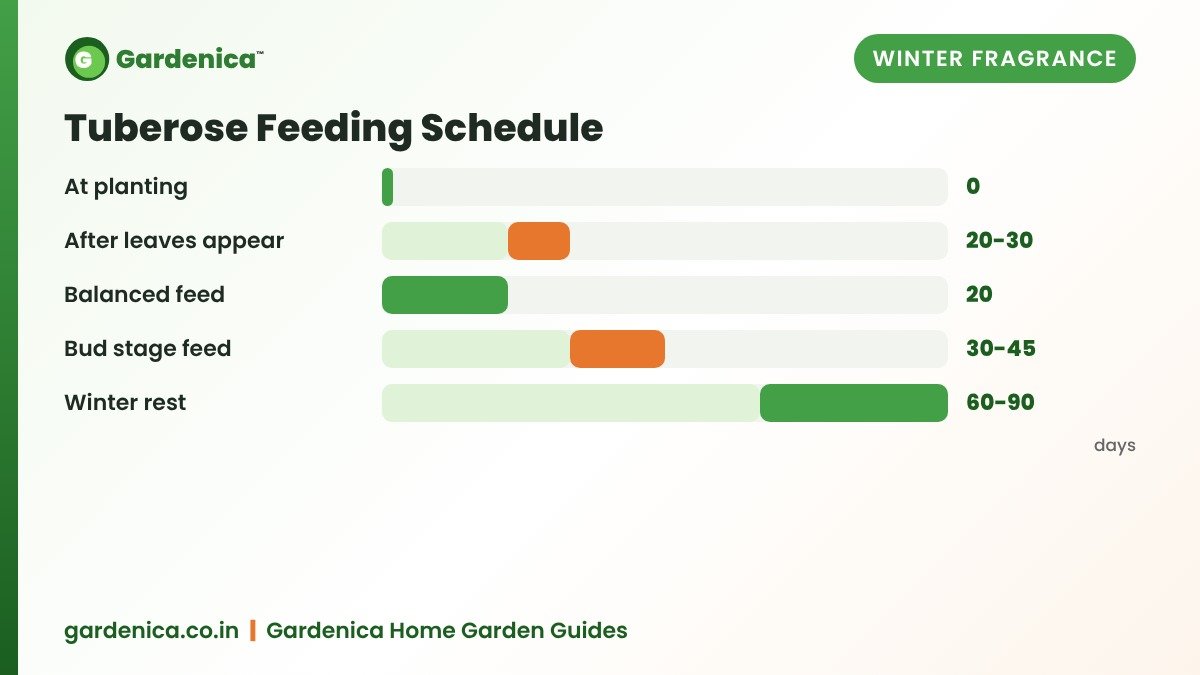
- At planting, in the mix (Dose (g per 12 inch pot): 40-50; Timing (days): 0)
- First feed after leaves (Dose (g per 12 inch pot): 20-25; Timing (days): 20-30)
- Ongoing balanced feed (Dose (g per 12 inch pot): 15-20; Timing (days): Every 20)
- Bud stage phosphorus feed (Dose (g per 12 inch pot): 20-30; Timing (days): 30-45)
- Winter rest (Dose (g per 12 inch pot): 0; Timing (days): 60-90)
Pot Size and Bulbs Per Pot
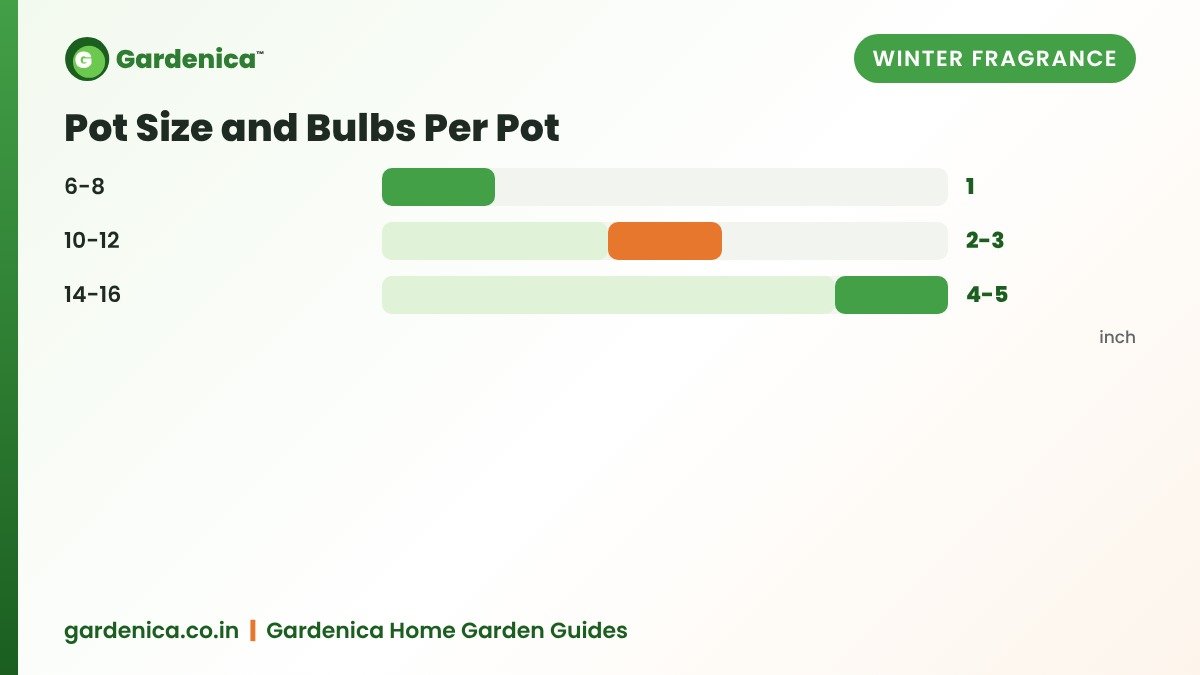
- 6-8 (Bulbs per pot: 1)
- 10-12 (Bulbs per pot: 2-3)
- 14-16 (Bulbs per pot: 4-5)
One bulb in a 10 to 12 inch pot gives the cleanest spikes. Two or three in a 14 to 16 inch pot make a fuller clump with thinner spikes. Keep bulbs 3 to 4 inch apart and off the pot wall.
Have a question about this topic?
Chat on WhatsAppPruning and More Blooms
- Snap off spent spikes. Break the stalk at the base once its flowers finish.
- Leave the leaves. They refill the bulb for next season; cut only what browns on its own.
- Divide every 2 to 3 years. Split the clump in February or March, replanting bulbs 2 inch or larger.
- Use the sunniest spot. Six hours of direct winter sun is the working minimum; shade gives leaves and no spikes.
- Do not repot mid-season. Disturbed roots drop a forming spike.
- Let the winter rest happen. A cool, drier stretch of 45 to 60 days after a flush resets flowering.
Safe Use at Home
Tuberose is safe to handle, but the work is in what you add to the pot. Wear gloves when mixing soil, neem cake or granular feed, and wash your hands after. Keep products in labelled packs, stored away from food and out of reach of children and pets. Follow the label rate and waiting period on any protection product, and do not spray spikes meant for puja.
Fixing Common Problems
- No spike, lush leaves (Likely cause: Too much nitrogen, low sun; What to do: Move to full sun, stop nitrogen feeds)
- Yellow new leaves, green veins (Likely cause: Iron chlorosis, hard water; What to do: Feed chelated iron, flush the pot)
- Spikes fall before opening (Likely cause: Dry pot at bud stage; What to do: Water deeply at bud stage)
- Soft brown bulb base (Likely cause: Wet soil in cold weather; What to do: Unpot, trim soft part, repot dry)
- Few, small flowers (Likely cause: Bulbs crowded; What to do: Lift and divide in February)
Yellowing on newest leaves with green veins is the classic Iron chlorosis in potted plants pattern from hard water. For aphids or thrips on buds, the approach in our Neem oil for plants guide applies.
Frequently Asked Questions
When should I plant tuberose bulbs in India?
October to November in north and central India, December to January on the west and south coasts. The bulb needs four to six weeks of root growth before a spike rises.
How deep do I plant a tuberose bulb?
About 2 inch deep, measured from the bulb base to the surface, pointed end up. Shallower and it dries out; deeper and it may rot before shooting.
Why is my tuberose not flowering?
Usually under six hours of direct sun, too much nitrogen, a crowded pot, or a bulb under 2 inch across. Fix light and feeding first.
Which pot size works for tuberose in containers?
A 10 to 12 inch pot per bulb, or a 14 to 16 inch pot with two to three bulbs spaced 3 to 4 inch apart. Depth matters more than width.
How often should I water potted tuberose in winter?
Only when the top 2 inch feels dry, which in a cold December can be once a week. Water in the morning at the base and empty the saucer.
Do tuberose plants need a rest period?
Yes. After the last spike, taper water and stop feeding for 45 to 60 days of cool, drier weather. The leaves refill the bulb, so do not cut them.
Can I grow single and double tuberose in the same pot?
You can, but keep them apart if fragrance matters. Single-flowered rajanigandha carries the stronger scent and throws more spikes.
Conclusion
Growing tuberose in pots comes down to a firm bulb 2 inch deep in a 10 to 12 inch pot, full winter sun, morning water only when the top inch is dry, and a light feed every 20 days with a phosphorus push at bud stage. Do those and one bulb gives spikes through most of the winter. For mix that drains fast, start with Vermi Compost and a flowering feed like Rose Fertilizer, and Contact the Gardenica team on WhatsApp at +91 95120 17162 to size a plan for your balcony.
Disclaimer: This article is general gardening information. Results vary with plant, pot, soil, weather and care. Always read and follow the product label.
Looking for more?
Continue to our main page to explore products and services.