How to Grow Radish in Pots: A Mooli Guide for Indian Homes
How to Grow Radish in Pots: A Mooli Guide for Indian Homes
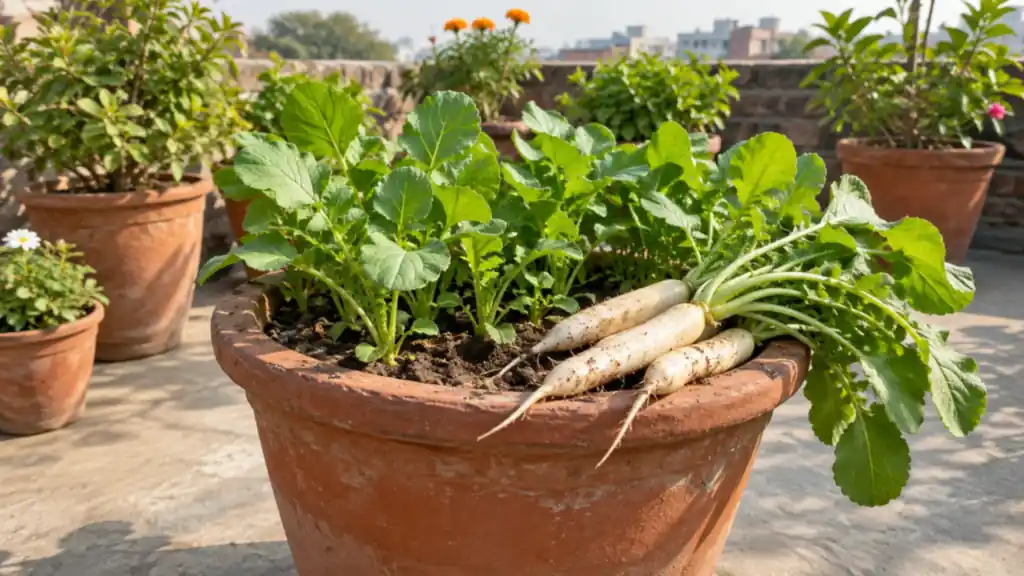
Fresh mooli parathas, crunchy salad slices and a pot of tender radish greens for sabzi: few vegetables give a home gardener so much, so fast. If you have been wondering how to grow radish in pots, late October is a very good time to start in most of India. Radish is a cool-season root crop, it is ready in four to eight weeks, and it fits comfortably on a balcony or terrace. This guide covers season, pot depth, soil, sowing, care and harvest, plus the mistakes that lead to woody or forked roots.
Radish Growing Season in India
The radish growing season in India depends on where you live. In the northern and central plains, including Gujarat, Rajasthan, Delhi and Madhya Pradesh, sowing from October to January gives the best roots. In milder southern and coastal climates, radish can be sown for much of the cooler part of the year, though roots are usually better once the heat eases.
Read more: Explore Gardenica Vermi Compost
Warm weather makes radish roots pungent and pithy and pushes plants to flower early (bolting). If your days are still hot, wait a week or two, or keep pots where they get morning sun and some afternoon shade.
Choosing the Right Variety and Container Size
Radish container size should match the root you want to grow. This is the single most important choice for pot gardeners.
Long Desi Mooli
Long white Asiatic types are the familiar mooli of Indian markets. They need a deep container, at least 30 to 45 cm (12 to 18 inches) of soil, so that the root can grow straight. Grow bags, deep plastic tubs and tall cement or terracotta pots all work.
Round and Short Radish
Round red, pink and short white types only need 15 to 20 cm (6 to 8 inches) of soil. They suit shallow troughs, window boxes and smaller balconies, and they mature faster.
Whatever you choose, the pot must have drainage holes, because standing water rots roots.
Preparing the Best Soil Mix for Mooli
To grow mooli at home, aim for a mix that is loose, crumbly and free of stones. Hard or lumpy soil makes roots fork and twist. A simple, practical mix is:
- About half garden soil or red soil, sieved to remove stones and clods
- About a quarter well-rotted compost or vermicompost
- About a quarter coco peat or coarse sand for lightness
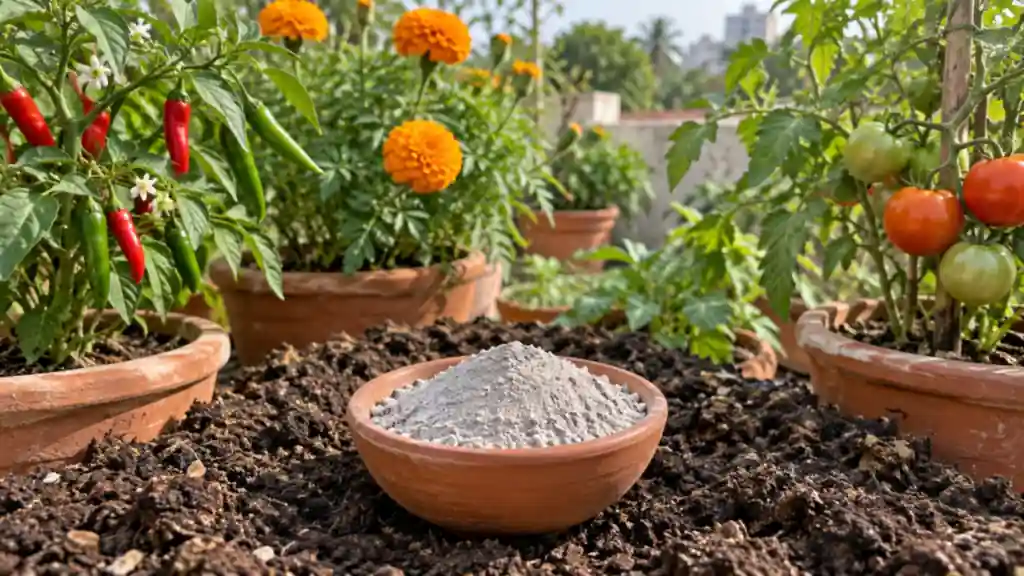
A small handful of neem cake powder mixed into the soil before sowing is a common organic practice in Indian kitchen gardens. Avoid fresh, uncomposted cow dung, which can cause forked and hairy roots. Our guide to potting mix for kitchen gardens explains each ingredient in more detail.
How to Sow Radish Seeds in Pots, Step by Step
Radish is always sown directly where it will grow. It does not like being transplanted, because any damage to the young taproot shows up as a misshapen radish.
- Fill the pot to about 2 to 3 cm below the rim and water it well the day before sowing.
- Make shallow furrows or holes about 1 to 1.5 cm deep.
- Drop two or three seeds every 5 cm for round types, or every 8 to 10 cm for long mooli.
- Cover lightly with soil and press gently with your palm.
- Water with a fine rose or sprinkle by hand so the seeds are not washed away.
- Keep the surface just moist. Seeds usually sprout within three to seven days in cool weather.
For a steady harvest, sow one small pot every 10 to 15 days instead of filling every container at once.
Radish Care Tips: Thinning, Sunlight, Watering and Feeding
Thin Early
Once seedlings have their first true leaves, keep the strongest one at each spot and snip the others at soil level with scissors. Final spacing of about 5 cm for round radish and 10 to 15 cm for long mooli gives each root room to swell. Crowded radishes make leaves but little or no root.
Have a question about this topic?
Chat on WhatsAppGive Plenty of Sun
Place pots where they get at least five to six hours of direct sun. In shade, radish grows tall, leggy leaves and thin roots.
Water Evenly
Steady moisture is the secret to crisp, mild radish. Water when the top 2 to 3 cm of soil feels dry, and never let the pot dry out completely and then flood it, as this cracks roots and makes them sharp in taste. Our guide to watering kitchen garden plants has a simple routine you can follow.
Feed Lightly
Radish needs less feeding than leafy greens. Too much nitrogen gives lush leaves and small roots. A good compost-rich mix at sowing is often enough for a short crop. For long mooli, a light top dressing of compost or an organic plant nutrient about three weeks after sowing can help. Always follow the dose on the product label.
Common Pests and Problems
Radish belongs to the mustard family, so it shares pests with cabbage and sarson. Check the undersides of leaves every few days.
- Aphids: small green or grey insects in clusters on young leaves. Wash them off with water or use a neem-based spray. See our guide on aphids on plants.
- Caterpillars and sawfly larvae: holes in leaves and chewed edges. Pick them off by hand early.
- Flea beetles: tiny shot holes in seedling leaves.
- Root rot and damping off: usually caused by waterlogged soil. Improve drainage and water less often.
For a gentle organic option, a diluted neem oil spray in the evening can help keep soft-bodied pests in check. Avoid spraying radish leaves you plan to eat within the waiting period stated on the label.
Common Mistakes When Growing Radish in Containers
- Using a shallow pot for long mooli: the root hits the bottom and bends or stays short.
- Skipping thinning: this is the most common reason for all leaves and no radish.
- Stony or compacted soil: causes forked, twisted roots.
- Fresh manure or too much nitrogen: leads to hairy roots and leafy plants.
- Irregular watering: results in cracked, bitter or very pungent roots.
- Sowing in hot weather: plants bolt quickly and roots turn pithy.
- Harvesting late: overgrown radishes become woody and hollow.
When to Harvest Radish
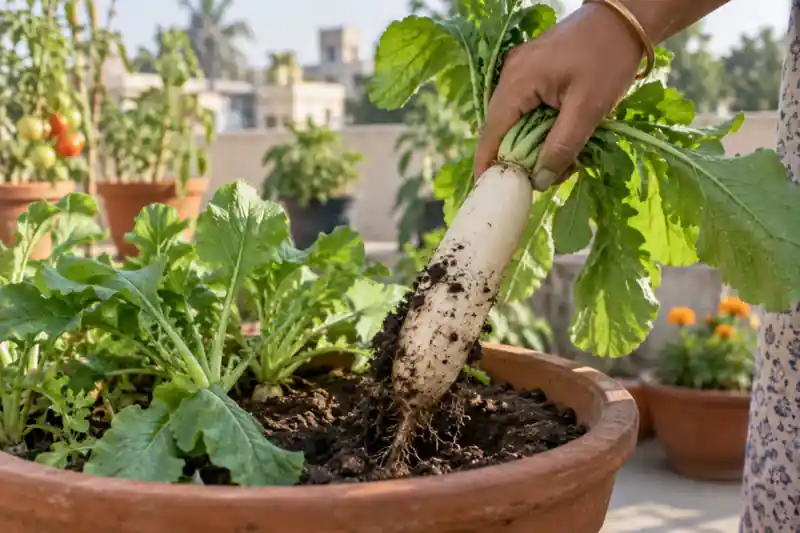
Knowing when to harvest radish is as important as growing it well. Round types are usually ready about 25 to 30 days after sowing, when the shoulder visible at the soil surface is roughly 2 to 3 cm across. Long mooli is usually ready in 40 to 60 days, depending on the variety and weather. Gently scrape the soil away from the top of one root to check its thickness, then pull it out by holding the leaves near the base. Harvest a little early rather than late, because radish quality drops quickly once it is mature.
Trim the leaves off before storing roots in the fridge so they stay firm longer.
Frequently Asked Questions
Can I grow mooli in a grow bag?
Yes. A grow bag at least 30 to 45 cm deep works well for long mooli, and wide, shorter bags suit round radish. They dry out faster, so check moisture daily.
How many radishes can I grow in one pot?
A pot about 30 cm (12 inches) wide can hold roughly 6 to 10 round radishes or 3 to 5 long mooli after thinning. Crowding reduces root size.
Why are my radishes all leaves and no root?
The usual causes are overcrowding, too little sun, too much nitrogen or warm weather. Thin early, move pots to a sunnier spot and cut back on nitrogen-rich feeds.
Why does my radish taste very sharp or bitter?
Heat and uneven watering increase pungency. Grow radish in cool months, water evenly and harvest on time.
Can I eat radish leaves?
Yes. Young radish leaves are widely cooked as a sabzi or added to parathas in Indian homes. Wash them well before use.
With a deep pot, loose soil, timely thinning and even watering, crisp homegrown mooli is well within reach this winter. Begin your mix with nutrient-rich Gardenica Vermi Compost for soft, crumbly soil, and if you need help choosing inputs for your terrace garden, contact the Gardenica team.
Looking for more?
Continue to our main page to explore products and services.