How to Grow Methi in Pots: A Fenugreek Guide for Indian Homes
How to Grow Methi in Pots: A Fenugreek Guide for Indian Homes
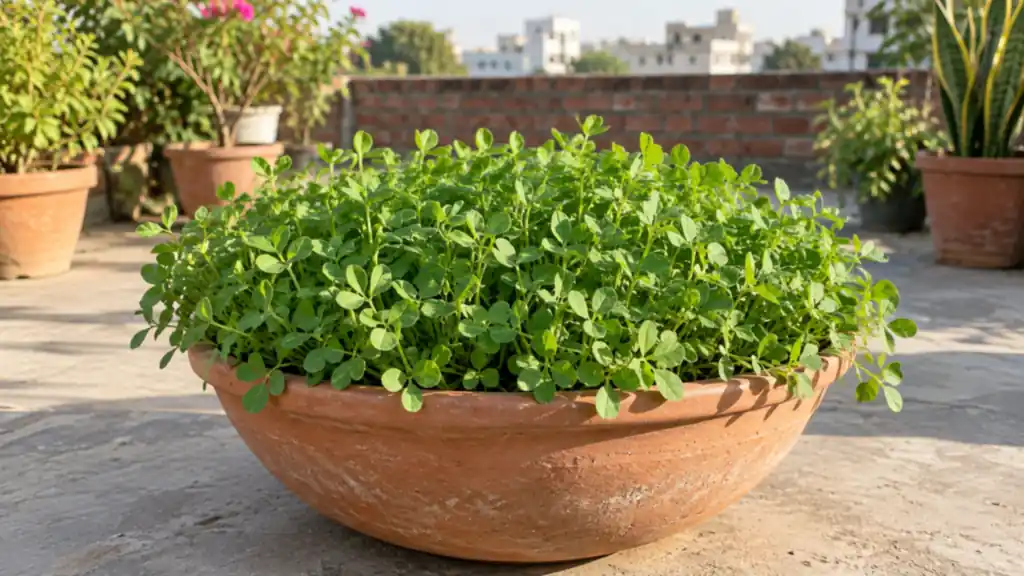
Fresh methi from your own balcony tastes far better than the tired bunches at the market, and it is one of the easiest greens to start with. If you want to grow methi in pots, late October and November are a very good time in most of India. The weather is cooling, the sun is gentler, and methi seeds sprout quickly. This guide walks you through the pot, soil, sowing, watering, feeding and harvesting, so you can pick your first leaves in about a month.
Why Methi Suits Pots and Small Spaces
Methi (fenugreek) is a short, fast crop. It does not need a deep root zone, it does not climb, and you harvest the leaves long before the plant flowers. That makes it a natural fit for terraces, balconies and sunny window ledges.
Read more: Explore Gardenica Vermi Compost
- Fast: seeds usually sprout within a few days, and leaves are ready in roughly three to four weeks.
- Compact: a shallow, wide pot gives a dense patch of leaves.
- Low feeding: methi is a legume, so it needs only light, gentle nutrition.
- Repeatable: sow a new pot every two weeks for a steady supply all winter.
Best Time to Sow Methi in India
Methi grows best in cool, dry weather. In north, central and western India, including Gujarat, sow from October to February. In milder southern climates you can grow it for much of the year, but it does best outside the hottest months. Very hot weather makes methi bolt (flower early) and turns the leaves bitter, while heavy rain encourages rot.
Sowing in a succession
Rather than filling every pot on one day, sow a small pot every 10 to 15 days. When the first pot is finished, the next is ready to cut. This is the simplest way to keep fresh methi in the kitchen from November to February.
Choosing the Right Pot and Potting Mix
Methi roots stay fairly shallow, so width matters more than depth.
Pot size
- A pot or tray about 6 to 8 inches (15 to 20 cm) deep is enough.
- Wide, shallow terracotta pots, plastic troughs or even old crates lined with cloth work well.
- Make sure there are drainage holes. Methi does not tolerate standing water.
Potting mix
Use a light, crumbly mix that drains freely. A simple home blend is garden soil, compost and cocopeat or sand in roughly equal parts. Adding well-rotted vermicompost improves texture and gives the seedlings a gentle start. Our guide to vermicompost for plants explains how much to mix into pots. Avoid heavy clay soil, which stays wet and suffocates roots.
How to Sow Methi Seeds Step by Step
You can use seeds sold for sowing or the methi dana from your kitchen, though kitchen seeds may sprout less evenly. Kasuri methi is a separate, slower variety grown mainly for dried leaves.
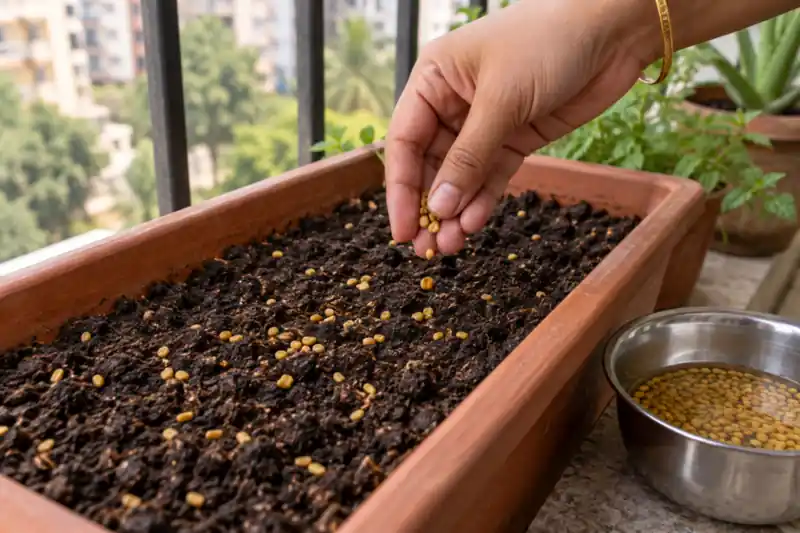
- Soak (optional): soak the seeds in plain water for 6 to 8 hours or overnight. This can speed up sprouting.
- Prepare the pot: fill it with moist potting mix to about an inch below the rim and level the surface.
- Scatter evenly: sprinkle the seeds over the surface so they are close but not piled on each other.
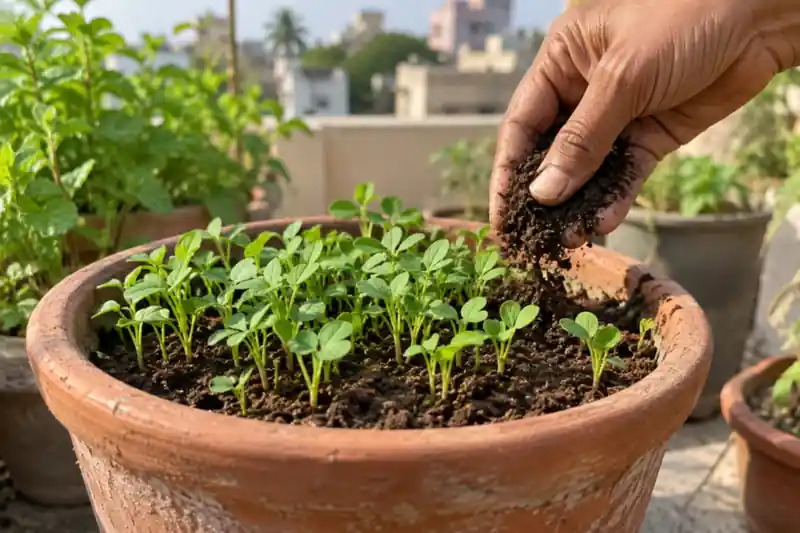
- Cover lightly: add a thin layer of mix, about a quarter inch, and press gently with your palm.
- Water gently: use a fine spray or a can with a rose head so the seeds are not washed to one side.
- Keep in light shade for a few days: once seedlings appear, move the pot into full morning sun.
Young seedlings can collapse if the mix stays soggy in cool weather. If you have seen this before, read our post on damping off in seedlings before you sow.
Sunlight, Watering and Daily Methi Plant Care
Once the seedlings are up, methi plant care is mostly about light and moisture.
Sunlight
Give the pot at least four to six hours of direct sun, ideally morning sun. Plants grown in deep shade become thin, pale and leggy.
Watering
- Keep the mix evenly moist but never waterlogged.
- Check with your finger; water when the top half inch feels dry.
- In cool winter weather this may be every two or three days rather than daily.
- Water at the base in the morning so the leaves dry before evening.
Thinning
If the seedlings are very crowded, pull out a few of the weakest ones after about a week. Do not throw them away; tiny methi shoots are lovely in a salad or dal.
Have a question about this topic?
Chat on WhatsAppFeeding methi plants in pots
Methi does not need heavy fertilising, and too much nitrogen can make the leaves soft and more attractive to pests. A good potting mix with compost is often enough for one crop.
- Mix vermicompost into the soil before sowing.
- If growth looks slow after two to three weeks, top-dress a thin layer of compost around the plants and water it in.
- Neem cake powder mixed into the potting mix can support soil health; see our guide on neem cake powder for plants.
- For any packaged fertiliser, follow the dose on the product label.
When you reuse the same soil for the next sowing, mix in fresh compost first so the new crop has something to draw on.
How and When to Harvest Methi Leaves
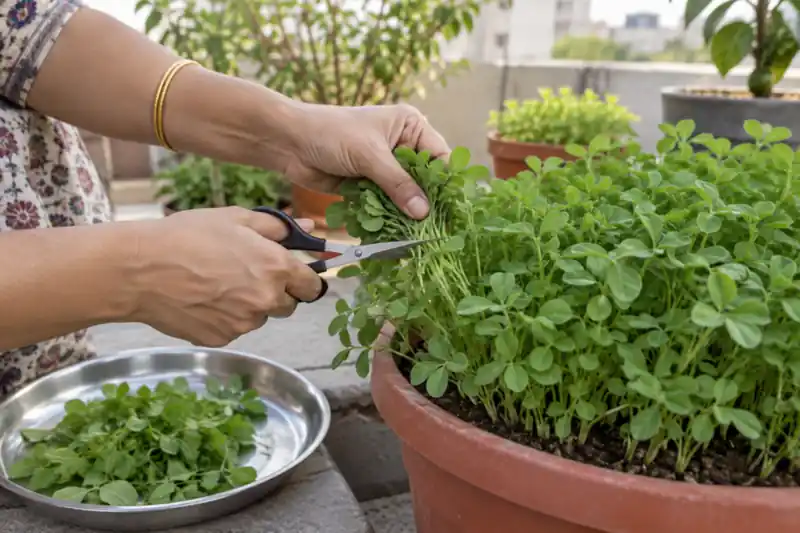
Most home gardeners harvest methi leaves when the plants are about 4 to 6 inches tall, usually three to four weeks after sowing.
Two ways to harvest
- Cut and come again: snip the stems about an inch above the soil with clean scissors. Many plants will regrow for a second, smaller cut.
- Pull the whole plant: uproot the plants, roots and all, as is done at the market. Then resow the pot.
Harvest before the plants start to flower. After flowering the leaves turn tougher and more bitter. If you want seeds for next season, leave a few plants to flower and form pods, and collect them once they dry on the plant.
Common Mistakes When Growing Methi at Home
- Sowing too thickly: seeds piled on each other compete and rot. Scatter them evenly.
- Burying seeds deep: a light cover is enough; deep sowing delays or stops sprouting.
- Overwatering: soggy soil in cool weather is the main cause of seedling collapse and root rot.
- Too little sun: shaded methi grows thin and pale.
- Sowing in peak summer: heat causes early flowering and bitter leaves.
- Ignoring pests: check the undersides of leaves for aphids. Our post on aphids on plants covers safe control.
Frequently Asked Questions
How many days does methi take to grow in a pot?
Seeds usually sprout in about three to five days in mild weather. Leaves are typically ready to harvest in three to four weeks, depending on temperature and sunlight.
Can I grow methi from kitchen seeds?
Yes, methi dana from the kitchen often sprouts well. Germination can be less even than with seeds sold for sowing, so sow a little more thickly or test a few first.
How deep should a pot be to grow methi?
About 6 to 8 inches deep is enough. A wide, shallow pot gives you more plants than a narrow, deep one.
Can methi grow indoors?
Methi needs several hours of direct sun. A very bright, sunny window can work, but most plants grow sturdier on a balcony or terrace.
Why are my methi leaves turning yellow?
The most common causes are overwatering, poor drainage, too little sunlight or plants that are past their best. Check the soil moisture first and move the pot into more sun.
Will methi grow back after cutting?
If you cut the stems above the soil, many plants put out a second, smaller flush. Pulled plants do not regrow, so resow the pot.
Start Your Winter Methi Pot Today
A shallow pot, a light mix, a sunny spot and a handful of seeds are all you need. Sow a new pot every couple of weeks and you will have fresh methi all season. Enrich your potting mix with Gardenica Vermi Compost for a healthy start, and if you have questions about your kitchen garden, contact the Gardenica team.
Looking for more?
Continue to our main page to explore products and services.