How to Grow Tomatoes in Pots: A Terrace and Balcony Guide
How to Grow Tomatoes in Pots: A Terrace and Balcony Guide
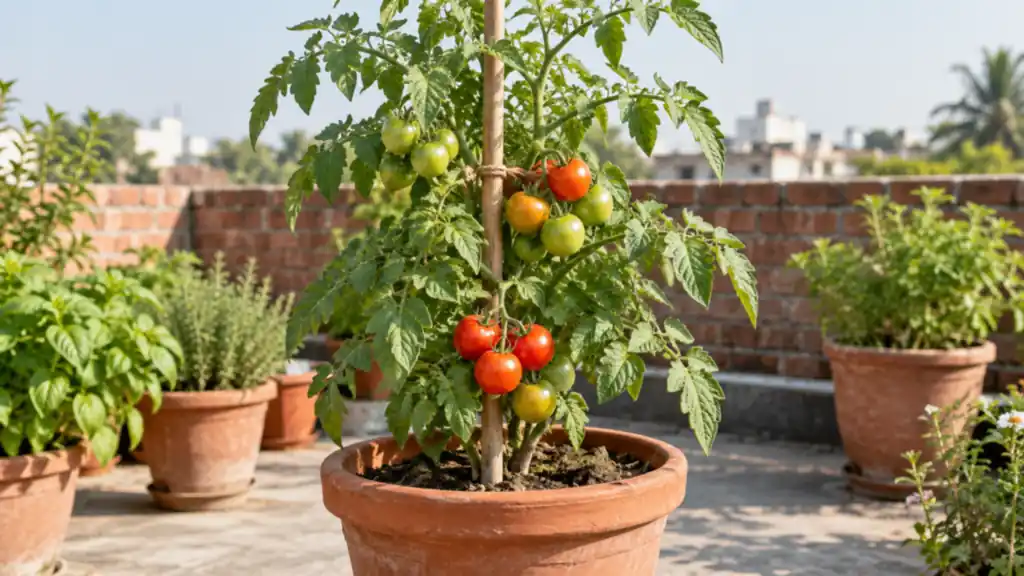
A home-grown tomato, picked warm from the vine, tastes nothing like the pale ones from the market. The good news is that you do not need a farm to get them. If you want to grow tomatoes in pots on a terrace or balcony, October and November are some of the best months to start in most of India. The heat has eased, the rains have stopped, and the cooler months that follow suit tomato plants well. This guide walks you through every stage, from choosing seeds to picking your first ripe fruit.
Tomatoes like warm days and mild nights. In the plains of North, Central and West India, seeds sown from September to November usually fruit from December to March. South Indian and coastal gardeners can grow them for much of the year, while hill gardens follow a spring-summer season.
Read more: Explore Gardenica Rich Fertilizer
Choosing the Right Tomato Variety for Pots
Not every tomato plant behaves the same way in a container. Picking the right type saves a lot of trouble later.
Determinate (bush) varieties
These grow to a fixed height, often around 3 to 4 feet, and fruit over a shorter window. They are the easiest choice for balconies and smaller pots.
Indeterminate (vine) varieties
These keep growing and fruiting for months but can reach 6 feet or more. They need a large pot, a strong stake or trellis and regular tying.
Cherry tomatoes
Cherry types are forgiving, fruit heavily and suit beginners. Many are vining, so give them support even if the plant looks small at first.
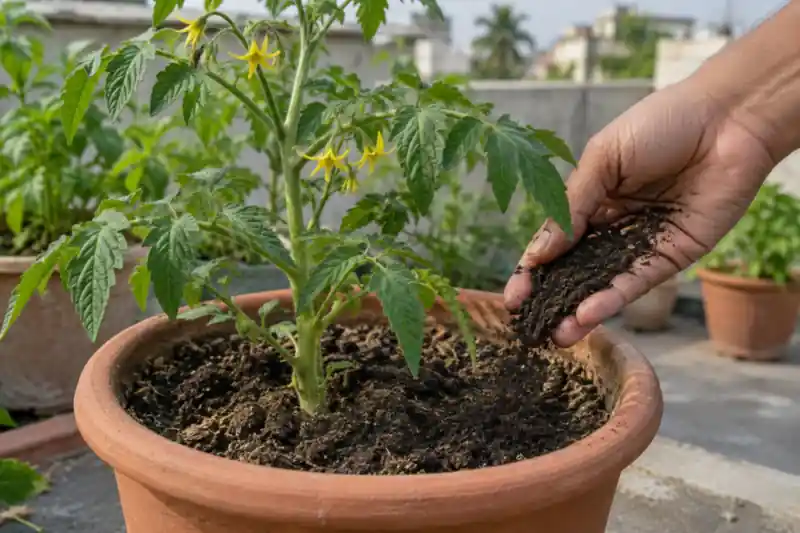
Pot Size and Potting Mix for Tomatoes
Tomatoes have deep, hungry roots. A pot that is too small dries out fast and limits the harvest.
- Tomato pot size: at least 12 inches wide and deep for a bush variety, and 14 to 18 inches (or a 15-20 litre grow bag) for vining types.
- Drainage: make sure there are holes at the bottom. Standing water rots roots quickly.
- Material: terracotta breathes well but dries faster in sun; plastic and grow bags hold moisture longer.
Use a loose, well-draining mix. A simple blend is garden soil, well-rotted compost or vermicompost, and cocopeat in roughly equal parts. Our guide on potting mix for kitchen gardens explains each ingredient. Many gardeners also mix a small amount of a phosphorus source, such as rock phosphate, into the soil at planting, since phosphorus supports root and flower development. Follow the product label for the quantity.
How to Grow Tomatoes in Pots from Seeds
Starting from seed is cheap and gives you more variety choice. Tomato seeds usually sprout within 5 to 10 days in warm weather.
- Fill a seedling tray or small cups with a light mix of cocopeat and compost, and moisten it.
- Sow seeds about a quarter inch deep, two per cell, and cover lightly.
- Keep the tray in bright shade and mist the surface so it stays damp but not soggy.
- Once seedlings sprout, move them to morning sun so they do not grow thin and leggy.
- Keep the stronger seedling in each cell and snip the weaker one at soil level.
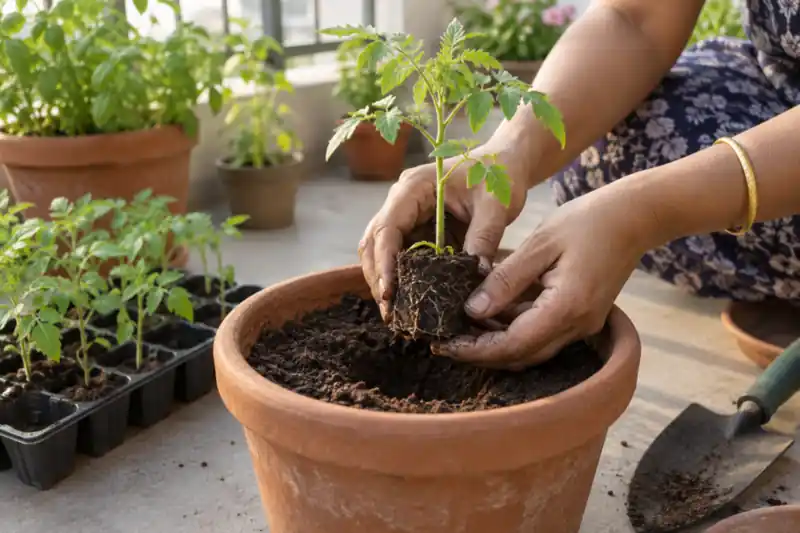
- Transplant when seedlings are 4 to 6 inches tall with 4 to 6 true leaves, usually 3 to 5 weeks after sowing.
Transplanting tomato seedlings
Tomatoes can be planted deeper than most plants. Bury the stem up to the first set of leaves; the buried stem grows extra roots and makes the plant sturdier. Transplant in the evening, water well and keep the pot in light shade for two or three days before moving it into full sun.
Sunlight, Watering and Support
Good tomato plant care in pots comes down to three daily basics: light, water and support.
Sunlight
Aim for at least 6 to 8 hours of direct sun. A south- or west-facing terrace is ideal. Plants in shade grow tall and flower poorly.
Watering
Water when the top inch of soil feels dry, and water deeply until it drains from the bottom. In winter that may mean every two or three days; on warm days it may be daily. Uneven watering, where the pot swings between bone dry and soaked, is linked to fruit cracking and blossom end rot. Water at the base rather than over the leaves. For more detail, see our post on watering kitchen garden plants.
Have a question about this topic?
Chat on WhatsAppStaking and pruning
Push a bamboo stake into the pot at transplant time so you do not damage roots later. Tie the stem loosely with soft cloth strips as it grows. On vining varieties, pinch off the small side shoots (suckers) that form between the main stem and leaf branches to keep the plant manageable. Remove yellowing lower leaves that touch the soil.
Feeding Tomato Plants in Pots
Potted tomatoes use up nutrients faster than plants in the ground because watering washes nutrients out. A steady, moderate feeding plan works better than occasional heavy doses.
- At planting: mix compost or vermicompost into the potting soil. Our guide to vermicompost for plants covers how much to use in pots.
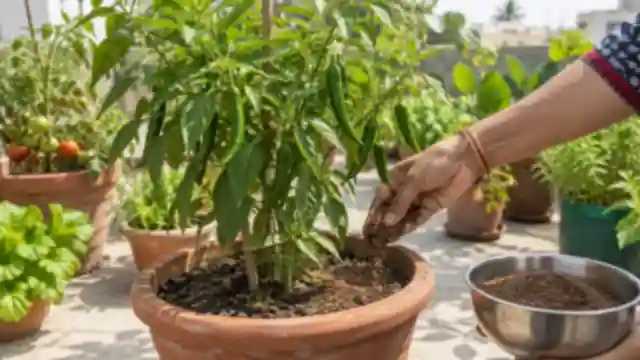
- Growth stage: add a thin layer of compost on top of the soil every 3 to 4 weeks.
- Flowering and fruiting: use a balanced organic fertilizer suited to vegetables, applied as the label directs.
Avoid giving too much nitrogen-rich feed once flowering starts. It produces lush leaves but fewer fruits.
Common Tomato Plant Problems
Most issues can be handled early if you check the plants every few days, especially under the leaves.
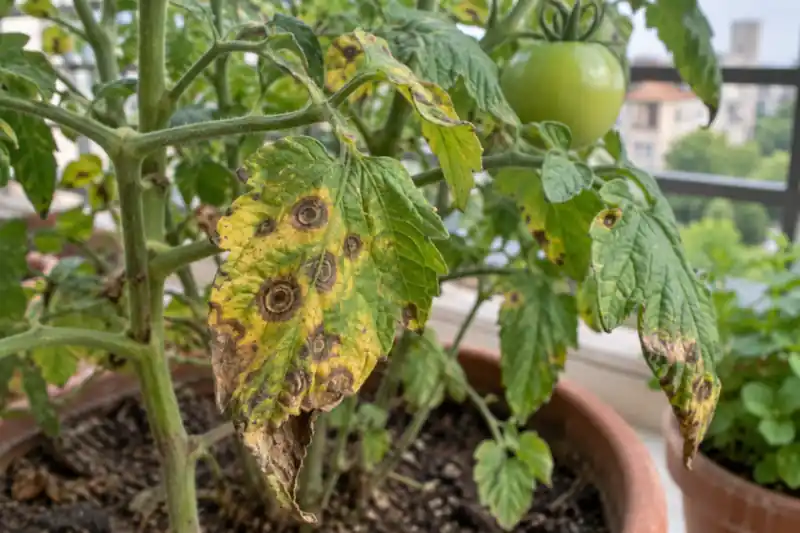
Fungal leaf spots and blight
Early blight shows as brown spots with ring patterns on older, lower leaves, often with yellowing around them. Remove affected leaves, keep leaves dry, improve airflow between pots and treat with a fungicide meant for home gardens if it spreads, following the label.
Pests
Aphids, whiteflies and mealybugs collect on new growth and the undersides of leaves. Spray them off with water or use a neem-based spray. Our post on neem oil for plants explains how to mix and spray it safely. Look out for fruit borer holes in green tomatoes and remove damaged fruit.
Blossom end rot
A dark, sunken patch at the bottom of the fruit is usually tied to calcium not reaching the fruit, which is most often caused by irregular watering. Keep moisture even and mulch the soil surface.
Common Mistakes to Avoid
- Using a pot that is too small or has no drainage holes.
- Keeping plants in a spot with less than 6 hours of sun.
- Watering a little every day instead of deeply when needed.
- Adding stakes after the roots have spread, which damages them.
- Overfeeding with nitrogen during flowering.
- Letting fallen, diseased leaves stay on the soil surface.
Frequently Asked Questions
How long do tomatoes take to grow in pots?
Most varieties start giving ripe fruit about 60 to 85 days after transplanting, depending on the variety and weather. Cherry tomatoes are often a little quicker.
How many tomato plants can I grow in one pot?
Grow one plant per pot of 12 to 18 inches. Crowding plants leads to weak growth, poor airflow and more disease.
Why are my tomato flowers falling off?
Flower drop is common in very hot or very cold spells, with irregular watering or with too much nitrogen. Gently tapping flowering stems in the morning can help pollination on a still balcony.
Can tomatoes grow on a balcony with half-day sun?
They can grow, but harvests will be smaller. Choose a cherry variety and place the pot where it gets the most direct sun available.
When should I harvest tomatoes?
Pick when the fruit has fully coloured and gives slightly to a gentle squeeze. You can also pick at the first blush of colour and let them ripen indoors, which helps if birds or monkeys visit your terrace.
Do tomato plants need pruning?
Vining varieties benefit from removing suckers and lower leaves. Bush varieties need very little pruning beyond removing yellow or diseased leaves.
Start Your Tomato Pots This Season
With a large pot, a sunny spot, steady watering and regular feeding, a single tomato plant can keep your kitchen supplied for weeks. If you want help feeding your vegetable pots, explore Gardenica Rich Fertilizer, or contact the Gardenica team with your questions about growing tomatoes at home.
Looking for more?
Continue to our main page to explore products and services.