How to Grow Dahlia in Pots: A Winter Flower Guide for Indian Homes
How to Grow Dahlia in Pots: A Winter Flower Guide for Indian Homes
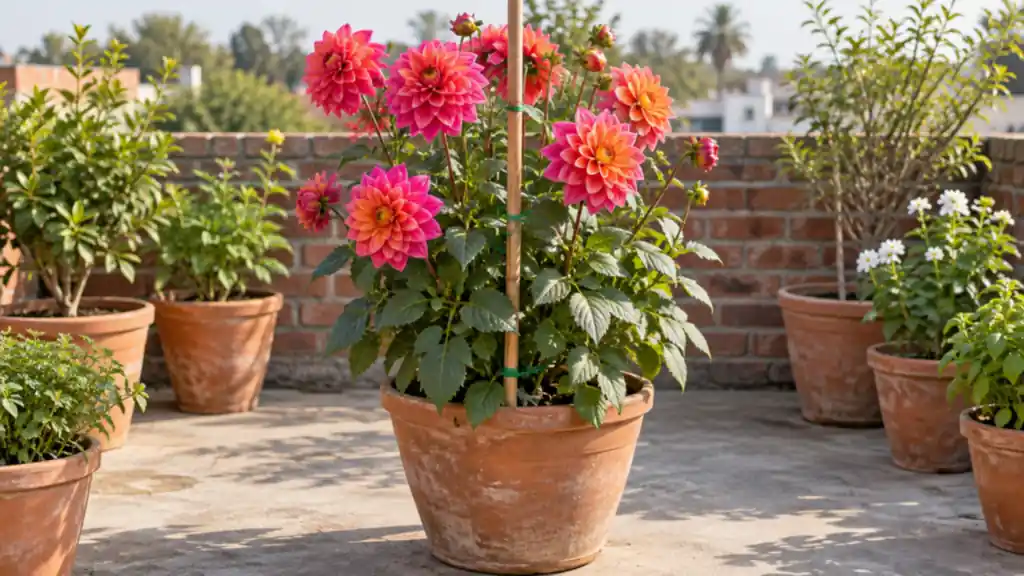
Few flowers make a terrace look as cheerful in January as a pot of dahlias in full bloom. The good news is that you do not need a big garden for them. If you have a sunny balcony or rooftop, this guide shows you how to grow dahlia in pots step by step, from choosing tubers or cuttings to feeding, staking and keeping pests away, so your plants flower well through the Indian winter.
Dahlias are tuberous plants that love cool nights, bright sun and soil that drains freely. In most of the Indian plains they are planted between September and November and flower from about December to March. In the hills, the season shifts to spring and summer.
Read more: Explore Gardenica Rich Fertilizer
Why Dahlias Suit Indian Winter Pots
Dahlias come in many forms, from dwarf bedding types about a foot tall to large dinner-plate varieties that can reach four feet or more. That range makes them easy to fit into almost any terrace layout.
Dahlia flowering season in India
In north, west and central India, plants started in October or November usually begin to bloom two to three months later and keep going until the heat returns. In mild southern cities, dahlias can grow for longer but still prefer the cooler months. Hot, humid summers are hard on them.
What a dahlia needs
- At least six hours of direct sun a day
- A light, airy potting mix that never stays soggy
- Regular but moderate watering
- Support for tall varieties
Choosing Planting Material, Pot and Soil
Tubers
Pick firm tubers with a visible eye (a small bud) near the old stem. A tuber without an eye will not sprout, however healthy it looks.
Rooted cuttings
Many Indian nurseries sell rooted dahlia cuttings in October and November. They are quick to settle and usually come true to the parent variety, which makes them a convenient choice for beginners.
Seeds
Seeds are cheap and fun but slower, and the flowers may not match the picture on the packet.
Pot size
- Dwarf varieties: 8 to 10 inch pots
- Medium and large varieties: 12 to 14 inch pots, or a 15 x 15 inch grow bag
- Always use pots with several drainage holes
Best soil for dahlia
A simple, loose mix works well: roughly equal parts garden soil, well-rotted compost or vermicompost, and cocopeat or coarse sand. Mix in a small amount of a phosphorus source such as rock phosphate at planting time to support roots and flowering, following the pack label. Our guide on potting mix for kitchen gardens explains the basics, and the same principles apply to flowers.
How to Plant Dahlia Tubers in Pots
Plant on a mild day and place the pot where it will stay for the season, because tall plants are awkward to move later.
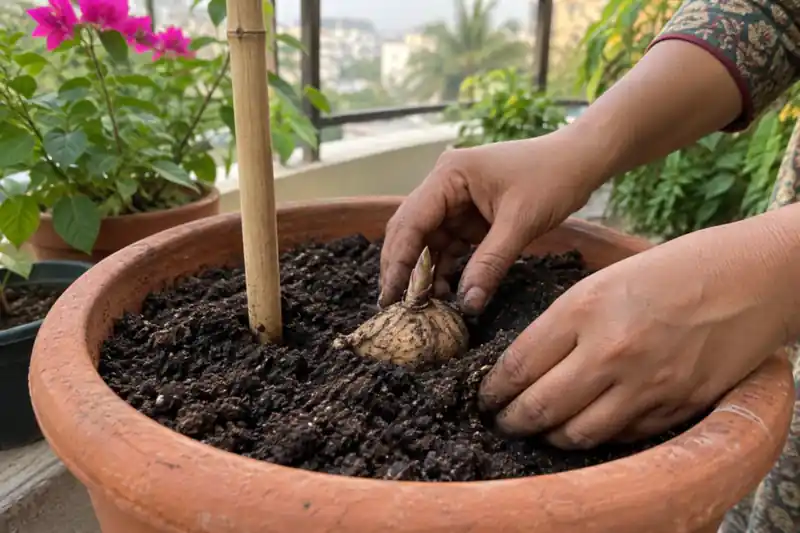
- Fill the pot with moist (not wet) potting mix, leaving about two inches at the top.
- For tall varieties, push a bamboo stake into the mix first. Adding it later can spear the tuber.
- Lay the tuber on its side, about 3 to 4 inches deep, with the eye facing up and close to the stake.
- Cover with mix and press lightly.
- Water once and then wait. Do not water again until you see shoots or the top inch of soil is dry.
Sprouts usually appear in two to four weeks. For rooted cuttings, plant at the same depth they grew in the nursery bag and water them in gently.
Watering, Feeding and Sunlight
Once dahlias are growing, they respond well to a steady routine.
Watering
Water when the top inch of soil feels dry, then let the extra drain away. In cool weather this may be every two to four days; on warm, windy days it may be daily. Avoid wetting the leaves late in the day. For more on reading soil moisture, see our guide to watering kitchen garden plants.
Feeding
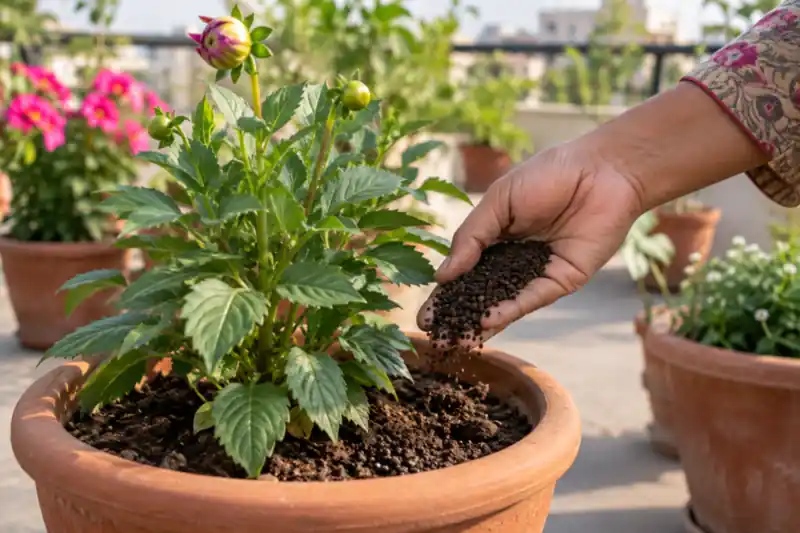
Dahlias are fairly hungry plants. A handful of vermicompost mixed into the topsoil every three to four weeks keeps growth steady. Once buds start to form, a balanced organic feed helps the plant carry more flowers. Use any fertiliser at the dose given on its label, and avoid heavy nitrogen feeding, which gives lush leaves but fewer blooms.
Sunlight
Give the sunniest spot you have. In shade, stems stretch, flop over and flower poorly. Turning the pot a quarter every week keeps growth even.
Have a question about this topic?
Chat on WhatsAppDahlia Plant Care: Pinching, Staking and Storing
Pinching
When the young plant has three or four pairs of leaves, pinch out the top growing tip. This encourages side shoots, giving a bushier plant with more flower stems.
Staking
Tie the main stem loosely to its stake every 15 to 20 cm as it grows, using soft string or cloth strips. Medium and large varieties often snap in wind without support.
Disbudding and deadheading
For bigger blooms, remove the two small side buds next to each main bud. Cut faded flowers back to a leaf joint. Regular deadheading keeps new buds coming.
After flowering: storing tubers
When summer heat arrives, the plant slows and the leaves yellow. Reduce watering, cut the dried stems down, and lift the tubers. Let them dry in shade for a few days and store them in dry cocopeat or newspaper in a cool, airy place until next season. Discard any soft or mouldy pieces.
Common Pests and Diseases
Check the undersides of leaves and the tips of buds twice a week. Catching problems early keeps treatment simple.
Pests
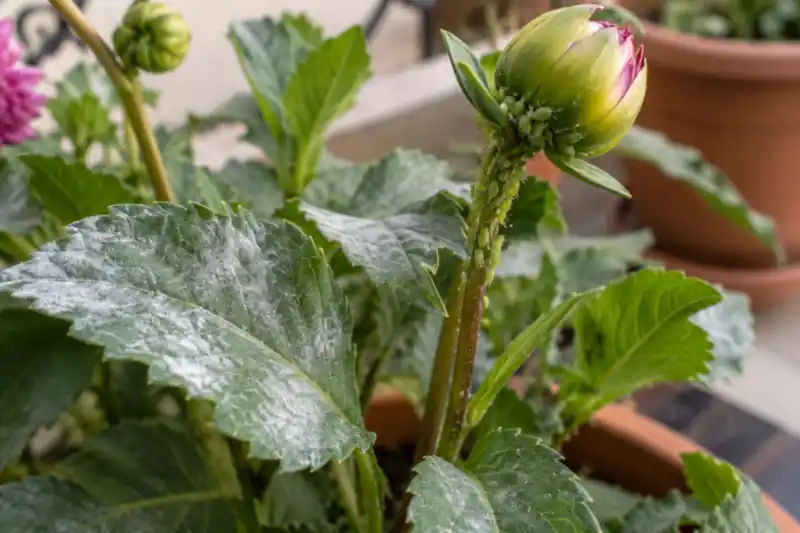
- Aphids cluster on soft tips and buds. Read our guide on aphids on plants for control steps.
- Thrips and mites cause silvery or speckled leaves and distorted petals.
- Caterpillars chew leaves and flower petals; pick them off by hand.
A diluted neem oil spray in the evening is a common first step for soft-bodied pests. Mix and spray as directed on the label.
Diseases
Powdery mildew shows up as white dust on leaves, especially when days are warm and nights are cool. Good spacing, morning watering and removing affected leaves help. Our powdery mildew guide covers this in detail. Tuber and stem rot usually come from waterlogged soil, so drainage is your best defence.
Common Mistakes to Avoid
- Watering a freshly planted tuber again and again before it sprouts, which often rots it
- Choosing a pot that is too small for a tall variety
- Pushing in a stake after planting and damaging the tuber
- Keeping the pot in partial shade
- Feeding mostly nitrogen-rich fertiliser and getting leaves instead of flowers
- Skipping deadheading, which slows new blooms
Frequently Asked Questions
When should I plant dahlias in pots in India?
In most of the plains, September to November is a good window. In hill areas, planting is usually done in early spring once frost risk passes.
How long does a dahlia take to flower?
Plants from rooted cuttings or tubers usually flower in about eight to twelve weeks, depending on the variety and weather.
Can I grow dahlias on a balcony?
Yes, if the balcony gets at least six hours of direct sun. Dwarf varieties are the easiest choice for small spaces.
Why are my dahlia leaves turning yellow?
Overwatering, poor drainage and lack of nutrients are the usual causes. Let the topsoil dry between waterings and feed with compost regularly.
Why is my dahlia not flowering?
Too little sun, too much nitrogen or a very small pot are common reasons. Move the pot to full sun and switch to a balanced feed.
Do dahlias come back every year?
Yes, the tubers can be stored after the season and replanted. In warm, humid places they may rot if left in wet soil, so lifting them is safer.
Grow a Bright Dahlia Pot This Winter
With a sunny spot, a loose mix, careful watering and a little pinching and staking, dahlias reward you with weeks of big, colourful blooms. To keep your pots well fed through the season, explore Gardenica Rich Fertilizer. Have a question about your plants? Contact the Gardenica team.
Looking for more?
Continue to our main page to explore products and services.