Chilli Leaf Curl: Causes, Treatment and Prevention in Pots
Chilli Leaf Curl: Causes, Treatment and Prevention in Pots
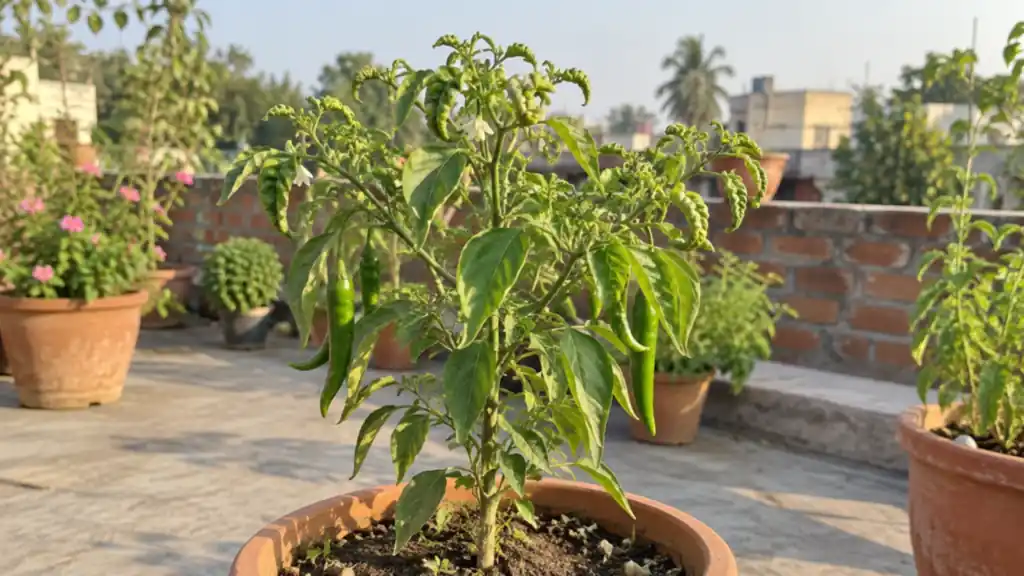
Your chilli plant was growing well, and then the new leaves started to twist, crinkle and point upwards like small boats. This is chilli leaf curl, one of the most common problems on Indian terraces and balconies. The good news is that most cases can be traced to a few clear causes, and with early checks and a steady routine you can usually save the plant and keep it fruiting.
This guide explains how to tell the causes apart, what to do for each one, and how to stop leaf curl coming back in your pots.
Read more: Explore Gardenica Pest-O-Care
What Is Chilli Leaf Curl?
Leaf curl is not one disease. It is a symptom, and in chilli it usually comes from tiny sap-sucking pests, a virus spread by whiteflies, or plain stress from heat and watering. Farmers in India often call the pest-driven form "murda" or "kokda". The shape of the curl and where it appears give strong clues about the cause.
Why chilli is so prone to it
Chilli (mirchi) and capsicum keep producing soft new shoots for months. That tender growth is exactly what thrips, mites and whiteflies like to feed on. Warm, dry spells, which are common in October to March on Indian terraces, help these pests multiply quickly.
Main Causes of Chilli Leaf Curl
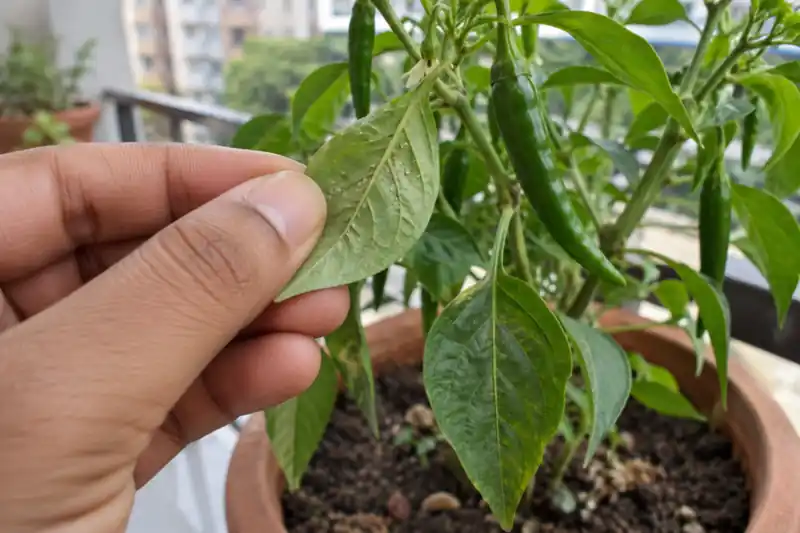
Before you spray anything, turn over a few curled leaves and look closely, ideally with a phone camera zoomed in. Match what you see to the list below.
Thrips: leaves curl upwards
- Leaf edges roll up and the leaf looks like a boat
- Silvery or brownish streaks on the underside
- Tiny, thin, fast-moving yellow or brown insects, about 1 mm long
- Flowers may drop and fruits can show scarring
Mites: leaves curl downwards
- Leaf edges turn down and the leaf looks like an upside-down cup
- New leaves become narrow, thick, shiny and bronze on the underside
- Mites are almost invisible to the eye; you may only see the damage
- Growth tips stop growing and look bunched
Whiteflies and chilli leaf curl virus
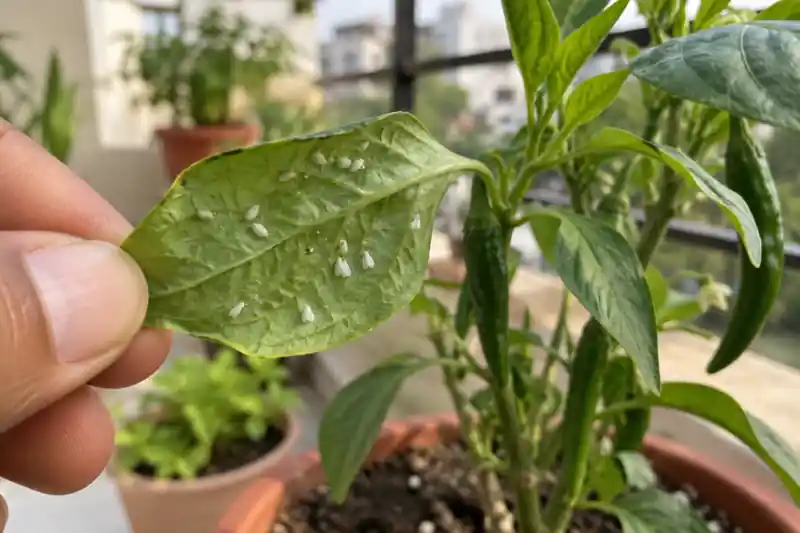
Whiteflies are small white insects that fly up in a cloud when you shake the plant. They suck sap, but the bigger risk is that they can spread chilli leaf curl virus. Virus-affected plants show puckered, curled, smaller leaves, shortened gaps between leaves, yellow patches and a stunted, bushy look. There is no cure for a plant that is already infected.
Aphids
Groups of small green or black insects on shoot tips can also twist new leaves and leave sticky honeydew. Our guide on aphids on plants covers them in detail.
Non-pest causes
Strong afternoon heat, a pot that dries out completely and then gets flooded, or too much fertiliser at once can make leaves cup and roll. In these cases you will not find insects, and new growth recovers once conditions improve.
How to Check Your Plant Step by Step
A quick five-minute check tells you which treatment to choose.
- Look at the shape. Upward curl points to thrips; downward curl points to mites.
- Check the underside. Look for streaks, bronzing, tiny insects or white flies.
- Shake the plant gently. A cloud of white flying insects means whiteflies.
- Tap a shoot over white paper. Moving specks on the paper suggest mites or thrips.
- Check the soil. Bone-dry or soggy soil hints at watering stress.
- Note the whole plant. Severe stunting with puckered yellow leaves suggests the virus.
Chilli Leaf Curl Treatment That Works in Pots
Once you know the cause, treat steadily for at least three to four weeks, because eggs keep hatching after the first spray.
Have a question about this topic?
Chat on WhatsAppFor thrips, mites, whiteflies and aphids
- Remove the worst shoots. Pinch off badly curled tips and put them in a sealed bag, not in your compost.
- Wash the plant. A gentle jet of water on the leaf undersides knocks off many mites and young insects.
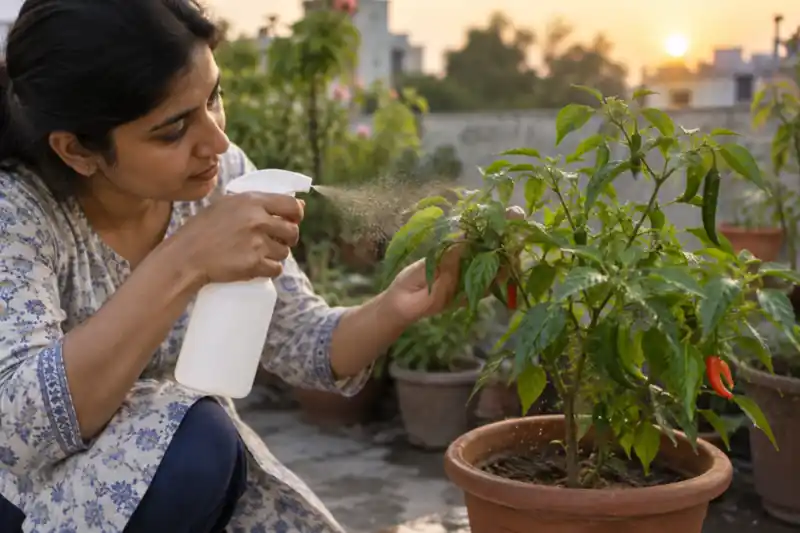
- Spray neem oil. Mix neem oil with a little mild liquid soap so it blends with water, and cover both sides of every leaf. Our guide on neem oil for plants explains mixing and safe spraying.
- Use a plant-protection spray if pests persist. Choose a product meant for sucking pests and follow the label for dose, interval and harvest gap.
- Repeat every 5 to 7 days until fresh leaves come out flat and clean for two weeks.
- Add yellow sticky traps near the pots to catch flying whiteflies and thrips.
For virus-infected plants
If a plant is clearly stunted with puckered, yellow, crinkled leaves, it is safer to pull it out and dispose of it away from your garden. Keeping it gives whiteflies a source to carry the virus to other chilli, tomato and capsicum plants. Then control whiteflies on the remaining plants as above.
For heat and water stress
- Water deeply when the top 2 to 3 cm of soil is dry, rather than little and often
- Mulch the pot surface with dry leaves or straw to keep roots cool
- Give some afternoon shade during very hot spells
- Do not add extra fertiliser to a stressed plant until it recovers
Feeding and Soil Care for Stronger Chilli Plants
Healthy plants cope better with pests and recover faster after treatment. A loose, well-drained mix with organic matter is a good base; our guide to potting mix for kitchen gardens has a simple recipe.
- Mix compost or vermicompost into the top layer every few weeks during the growing season
- Many gardeners add neem cake powder to the soil as part of routine care; see our post on neem cake powder for plants
- Feed in balanced amounts as per the product label; too much nitrogen gives soft growth that pests love
- Use pots at least 30 cm (12 inches) wide so roots do not dry out too fast
How to Prevent Chilli Leaf Curl
Prevention is mostly about early checks and good habits.
- Inspect weekly, turning over leaves at the shoot tips.
- Start clean. Raise seedlings from healthy seed and check nursery plants before bringing them home.
- Quarantine new plants for two weeks away from your chilli pots.
- Space your pots so air moves freely between them.
- Remove weeds around pots, as they can host whiteflies and mites.
- Protect natural enemies. Ladybird beetles, lacewings and predatory mites feed on these pests, so avoid unnecessary sprays.
Common Mistakes to Avoid
- Spraying only the top of leaves, when most pests sit underneath
- Stopping after one spray; new pests hatch from eggs within days
- Spraying in harsh midday sun, which can scorch leaves
- Using strong homemade mixes such as kerosene or concentrated detergent
- Keeping a virus-infected plant next to healthy ones
- Overwatering a curled plant in the belief that it is thirsty
Frequently Asked Questions
Can a chilli plant recover from leaf curl?
Yes, if the cause is thrips, mites, aphids or stress. Curled leaves may not flatten again, but new growth comes out normal once the problem is controlled. Plants infected with the virus usually do not recover.
Why do my chilli leaves curl upwards?
Upward, boat-shaped curling with silvery streaks underneath is a common sign of thrips feeding on the leaves.
Why do my chilli leaves curl downwards?
Downward curling with narrow, shiny, bronzed new leaves usually points to mites, which are too small to see easily.
Is neem oil good for chilli leaf curl?
Neem oil helps control the soft-bodied pests behind leaf curl when sprayed thoroughly on both sides of the leaves and repeated weekly. It cannot cure the virus.
Can I eat chillies from a plant with leaf curl?
Yes, after washing them well. If you used any spray, follow the waiting period on the product label before harvesting.
Should I cut off curled leaves?
Remove badly curled shoot tips and heavily infested leaves, but do not strip the plant bare. It needs healthy leaves to recover.
Keep Your Chilli Plants Healthy
Chilli leaf curl looks alarming, but a close look at the leaves, the right treatment for the cause and a few weeks of patience usually bring plants back into good shape. For a ready-to-use option against sucking pests, explore Gardenica Pest-O-Care and follow the label directions. Have a question about your plants? Contact the Gardenica team and we will be happy to help.
Looking for more?
Continue to our main page to explore products and services.