Tomato Flowers Falling Off: Why It Happens and How to Fix It in Pots
Tomato Flowers Falling Off: Why It Happens and How to Fix It in Pots
You water on time, the plant looks thick and green, and still the yellow tomato flowers fall off in a day or two without ever swelling into fruit. If that sounds like your terrace right now, you are not doing anything wrong by accident. Tomato flowers falling off is one of the commonest complaints from Indian pot gardeners in December and January, and almost always it is a simple mismatch between what the flower needs and what the pot gives it.
A tomato makes far more flowers than it can carry as fruit, so some drop is normal. The problem starts when whole trusses drop and nothing sets. This guide explains why that happens in pots and what to change this week.
Read more: Explore Gardenica Rock Phosphate
Why Tomato Plants Drop Flowers
Flower drop is the plant's way of cutting its losses. Ripening fruit costs water and energy, so when a tomato senses stress, or pollination fails, it lets the flower go. In pots, three things drive that decision: temperature, water and nutrition. A tomato in the ground has a big root buffer; a tomato in a 15 litre grow bag has none, which is why one cold night that barely bothers a garden plant can empty a terrace pot of flowers.
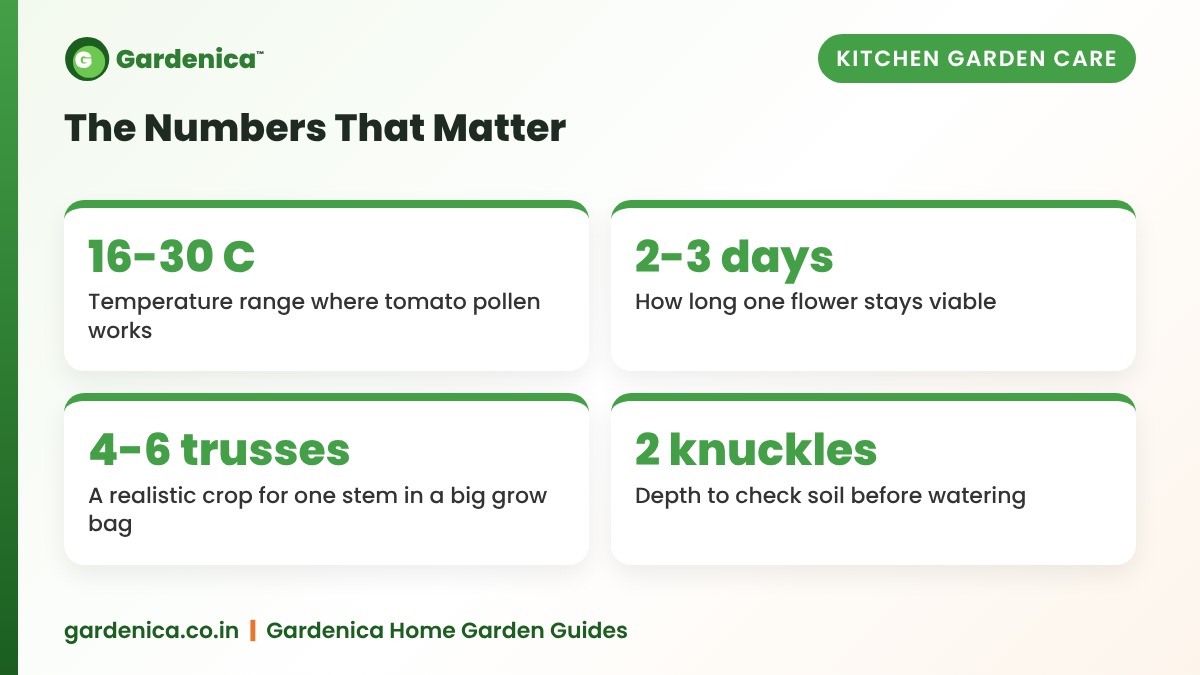
Each flower is viable for only two to three days. If pollination misses that window, the flower turns yellow and drops, however healthy the plant looks.
Temperature and Pollination Problems
Tomato pollen works best between about 16 and 30 degrees Celsius. Outside that range it stops germinating and the flower falls. In the Indian plains this shows up twice: cold winter nights below 10 to 12 degrees on North Indian terraces from December to January, and hot dry spells above 35 degrees from March. A Delhi rooftop in January and a Nashik balcony in April give the same symptom for opposite reasons.
Humidity matters just as much. On a coastal Mumbai or Kochi winter, pollen turns heavy and will not shake loose, so nothing gets pollinated even though nights are mild. Two habits help: give the plant gentle movement in the morning, and keep flowers dry by watering at the base.
Gentle Pollination Help
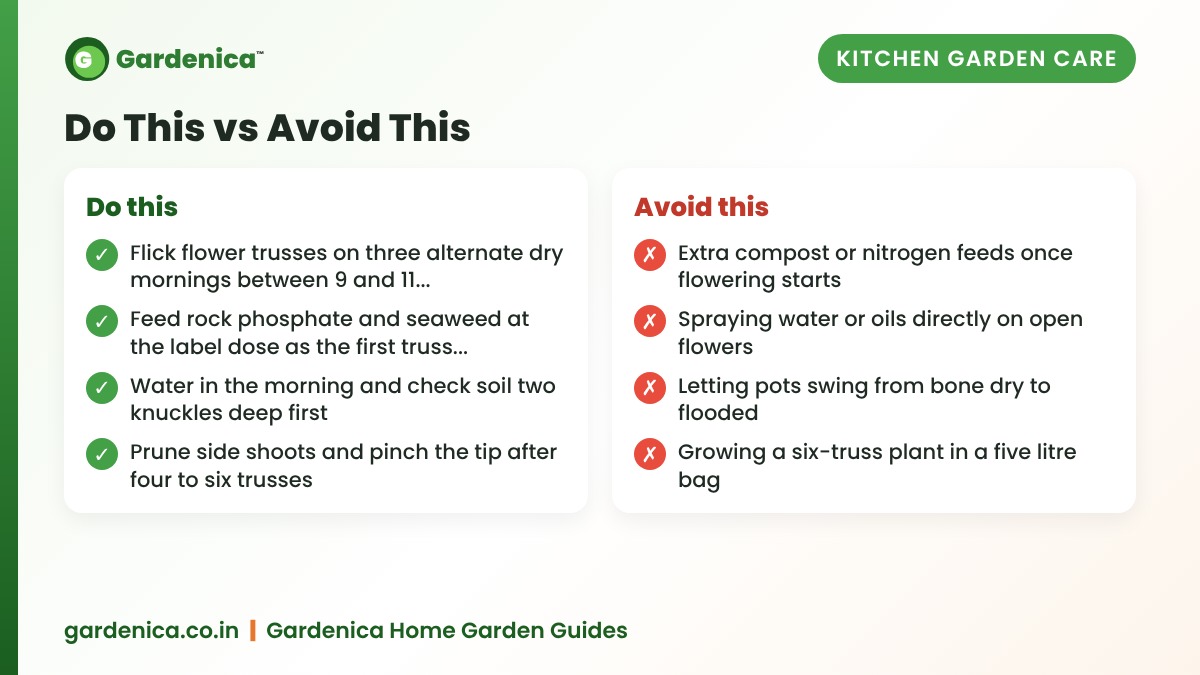
- Tap or flick each flower truss lightly between 9 and 11 am, once the morning sun has dried the blooms.
- Do it on three alternate mornings so every open flower is touched at least once.
- Never shake a plant when flowers are wet, and never spray water on open blooms.
Watering Mistakes That Drop Flowers
A pot holds only a few litres of soil, so moisture swings hard between a dry afternoon and a soaked morning. Tomatoes set fruit best with steady moisture. Let the pot dry out and the plant aborts flowers to save water; keep it soggy and the roots cannot breathe, which shows up as flower drop days later. A bone-dry pot flooded after a sunny Sunday is a classic cause of dropped flowers and later cracking fruit.
Winter needs its own rhythm. On a cloudy Ahmedabad week a pot may need water only on alternate days, while a Chennai balcony can dry out daily. Check with a finger pushed two knuckles deep instead of by the calendar, and water in the morning. Our guide on watering kitchen garden plants covers this pot by pot.
Feeding and Calcium: The Fruit-Set Fuel
Nitrogen grows leaves, but flowering runs on phosphorus, potassium and calcium. A pot started in rich compost and never fed again runs out by flowering, and the plant drops flowers to survive. Too much nitrogen does the same in another way: lush dark leaves, endless shoots, and no interest in flowers.
Have a question about this topic?
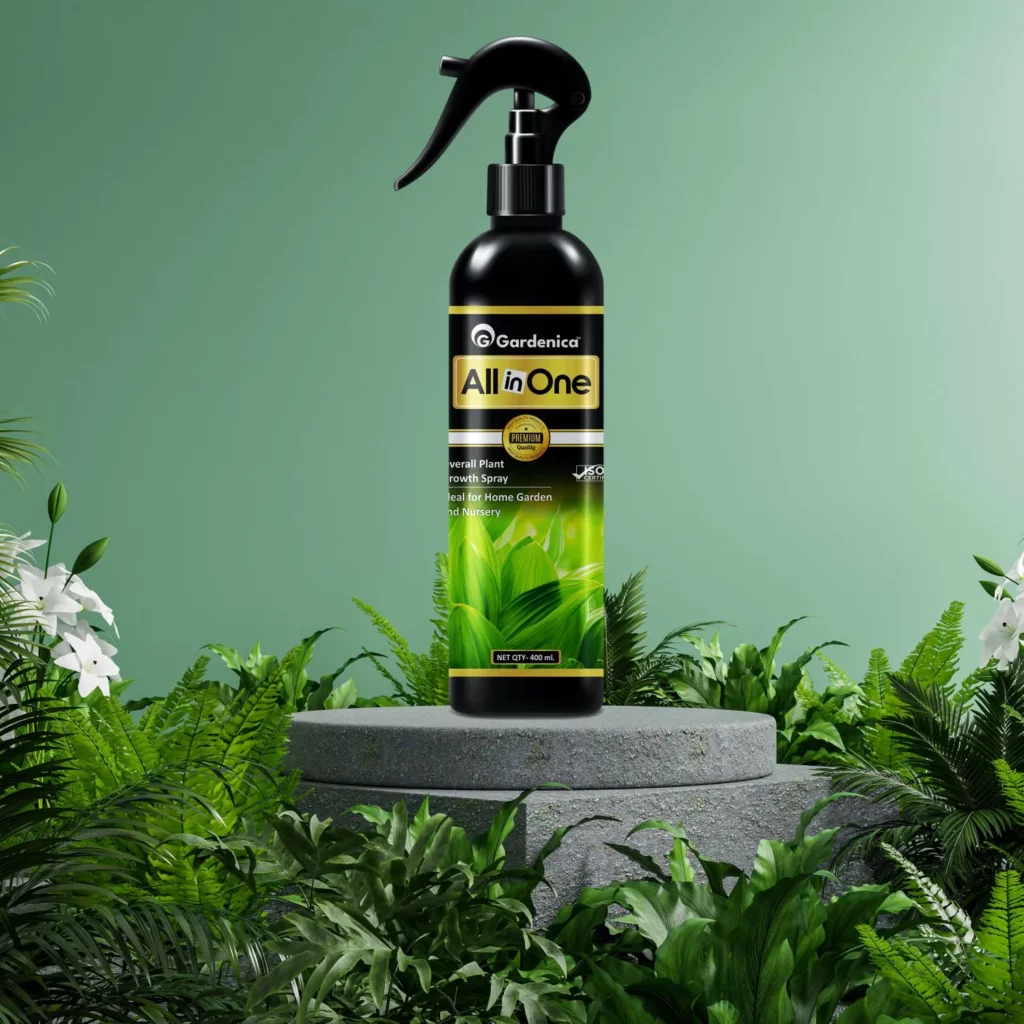
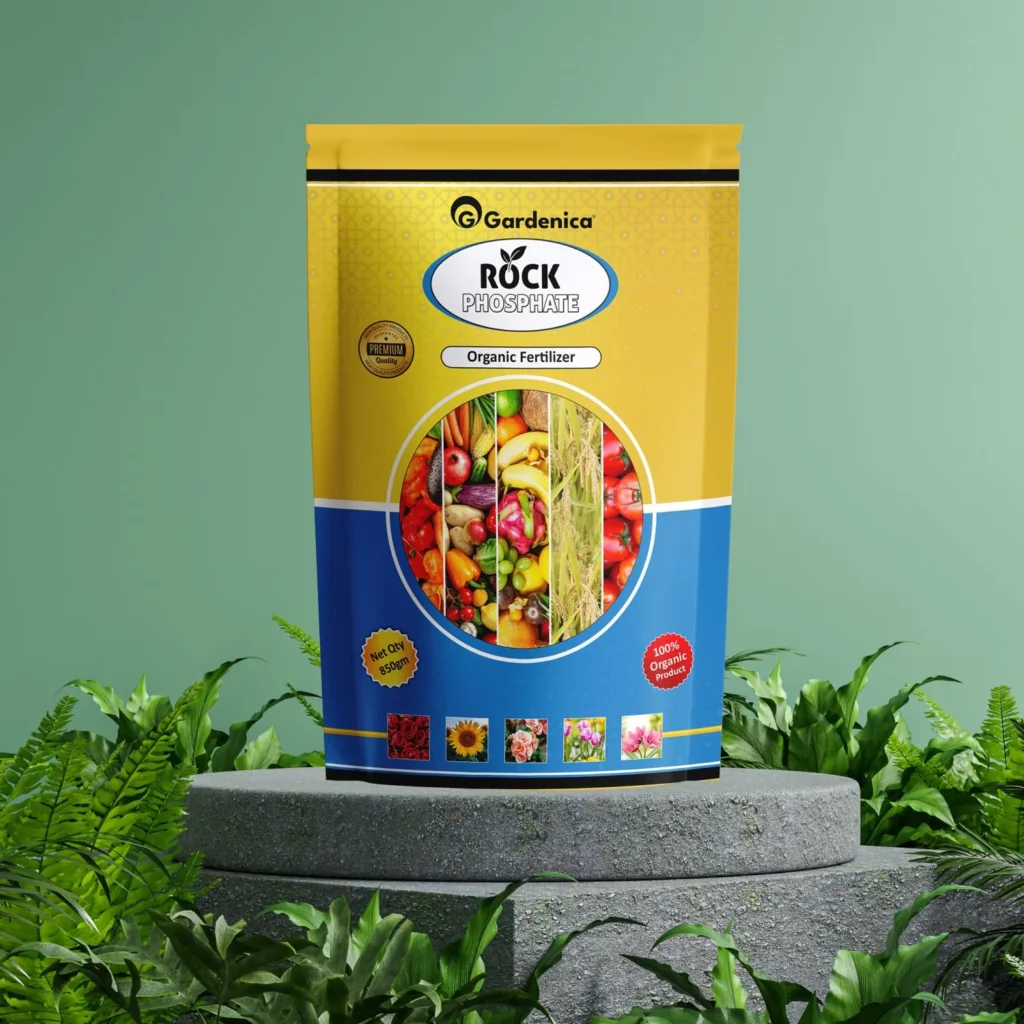
Chat on WhatsAppWork rock phosphate into the soil at the base at the dose on the label for slow phosphorus. A seaweed feed such as All In One, watered at the root at the label dose, supplies potassium and helps the plant handle cold and heat stress. Keep nitrogen moderate once the first truss opens, and skip plain vermicompost top-dressing then. A humic and micronutrient feed like Garden Booster helps roots take up what is already in the soil, which matters in hard tap water.
A tomato that drops flowers is rarely sick; it is deciding the pot cannot pay for fruit, so make the pot worth the cost.
Too Many Flowers, Too Small a Pot
A plant carrying six or seven trusses at once cannot ripen them all, so it sheds the weakest. Pruning keeps that in balance: remove side shoots in the leaf armpits, keep one or two stems, and pinch the tip after four to six trusses. A five litre bag supports one stem and about four trusses; a 40 to 60 litre bag can take two stems. For full sizing and soil detail, see how to grow tomatoes in pots.
When It Is Not Flower Drop but Fruit Rot
Check where the damage is. A flower that falls with no swelling behind it is flower drop. A green fruit turning brown and leathery at the bottom is blossom end rot, a calcium and watering problem fixed by steady moisture, not by shaking flowers. Pests also empty trusses: thrips and whiteflies settle inside blooms and distort them, so look for curled, silvered or sticky flowers. Our pages on whiteflies on plants and chilli leaf curl explain what to look for.
Step-by-Step Fix for a Plant That Drops Flowers
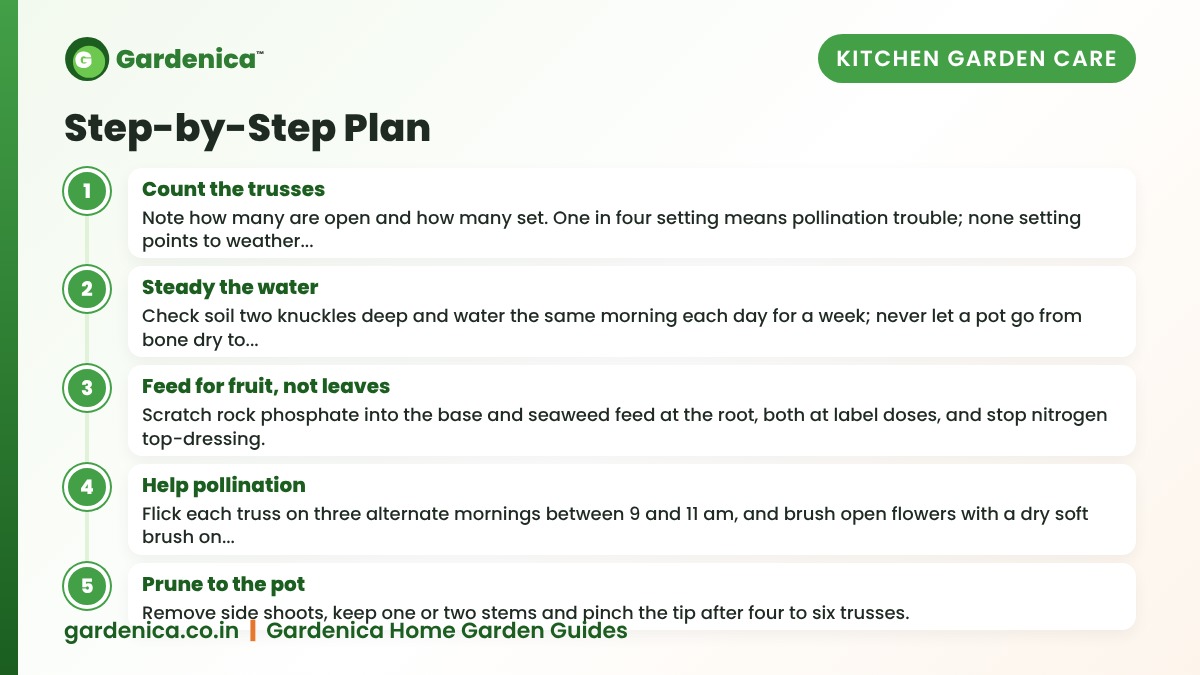
- Count the trusses. Note how many are open and how many set. One in four setting means pollination trouble; none setting points to weather, water or food.
- Steady the water. Check soil two knuckles deep and water the same morning each day for a week; never let a pot go from bone dry to flooded.
- Feed for fruit, not leaves. Scratch rock phosphate into the base and seaweed feed at the root, both at label doses, and stop nitrogen top-dressing.
- Help pollination. Flick each truss on three alternate mornings between 9 and 11 am, and brush open flowers with a dry soft brush on still, humid days.
- Prune to the pot. Remove side shoots, keep one or two stems and pinch the tip after four to six trusses.
- Shield the plant. Move pots out of cold night winds, wrap the pot in gunny in a frost week, and shade trusses from harsh summer sun.
Common Mistakes to Avoid
- Watering on a fixed schedule instead of checking the soil, so the pot swings between dry and soggy.
- Adding extra compost or nitrogen feed the moment flowers appear, which grows leaves and drops fruit.
- Spraying water or neem oil directly on open flowers, which washes away pollen.
- Letting a small pot carry a plant with six or seven trusses at once.
- Keeping a pot in a windless, shaded corner where pollen never shakes loose.
- Confusing blossom end rot on green fruit with flower drop and treating the wrong problem.
Frequently Asked Questions
Why are my tomato flowers falling off but not fruiting?
Most often it is temperature at flowering, cold nights or hot days, combined with a pot not fed for fruit. Steady the watering, feed phosphorus and potassium rather than nitrogen, and flick the trusses.
Should I spray anything on tomato flowers to stop them dropping?
Skip flower sprays. A seaweed extract watered at the root at the label dose supports the plant through heat and cold stress far more safely than anything sprayed on open blooms, which washes off pollen.
Do tomato plants in pots need hand pollination?
Tomatoes are self-pollinating, so they only need a little movement to shed pollen. A light flick of each truss on a dry morning is enough, with a dry brush on still, humid coastal days.
How often should I water tomatoes in winter pots?
Usually once every one to two days in most of India, less on cloudy weeks. Check soil two knuckles deep and water only when that layer feels dry, in the morning.
Which fertiliser helps tomato flowers set fruit?
Phosphorus, potassium and calcium matter at flowering, so rock phosphate in the soil and a seaweed feed at the root at the label dose suit this stage. Avoid high-nitrogen feeds until fruit is swelling.
Keep Your Tomato Pot Fruiting All Winter
Flower drop is information, not failure. Steady the moisture, feed for fruit instead of leaves, give the flowers a dry morning shake and prune the plant to the size of its pot, and most trusses will turn into fruit. For a feeding plan for the whole winter crop, browse the Gardenica product range or Contact the Gardenica team for advice for your city and balcony.
Looking for more?
Continue to our main page to explore products and services.