Leaf Miner on Plants: How to Spot, Treat and Prevent It in Pots
Leaf Miner on Plants: How to Spot, Treat and Prevent It in Pots
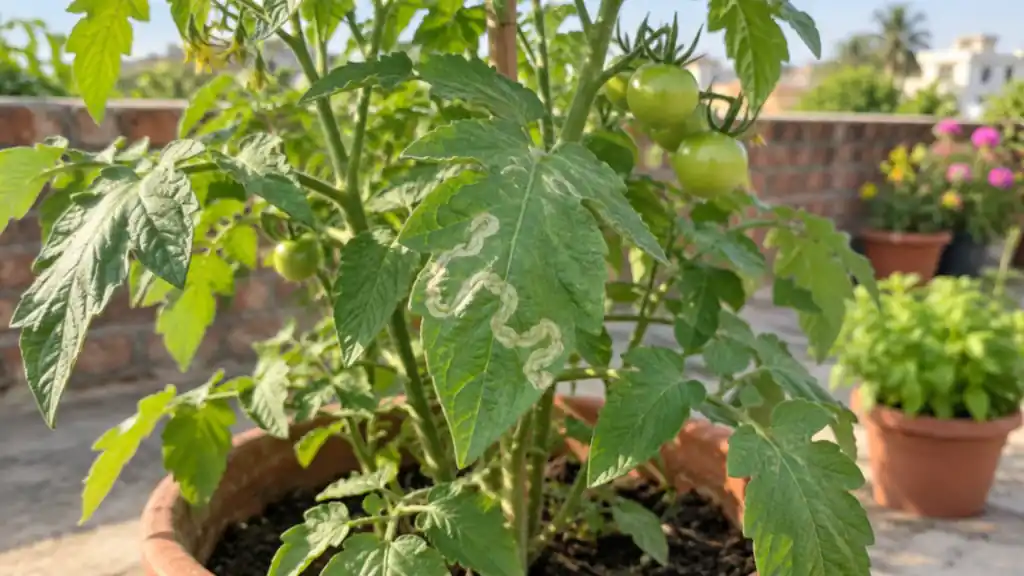
You water your tomato in the morning and notice thin, pale, wiggly lines running across a few leaves, as if someone had doodled on them with a white pen. That is the signature of leaf miner on plants. These lines are tunnels, eaten from the inside by tiny larvae that live between the upper and lower surface of the leaf. The good news is that a few mined leaves rarely kill a plant, and in pots you can usually stop the problem with simple, steady habits.
Here is how to recognise, treat and prevent them on a balcony or terrace.
Read more: Explore Gardenica Neem Oil
What Is a Leaf Miner?
"Leaf miner" is a common name for insects whose young stage feeds inside leaf tissue. In Indian kitchen gardens the most familiar one is the serpentine leaf miner, a very small fly (often a species of Liriomyza). The adult is only about 2 mm long, black with yellow markings, and easy to miss.
How the life cycle works
- The female fly pricks the leaf surface and lays eggs just under the skin of the leaf.
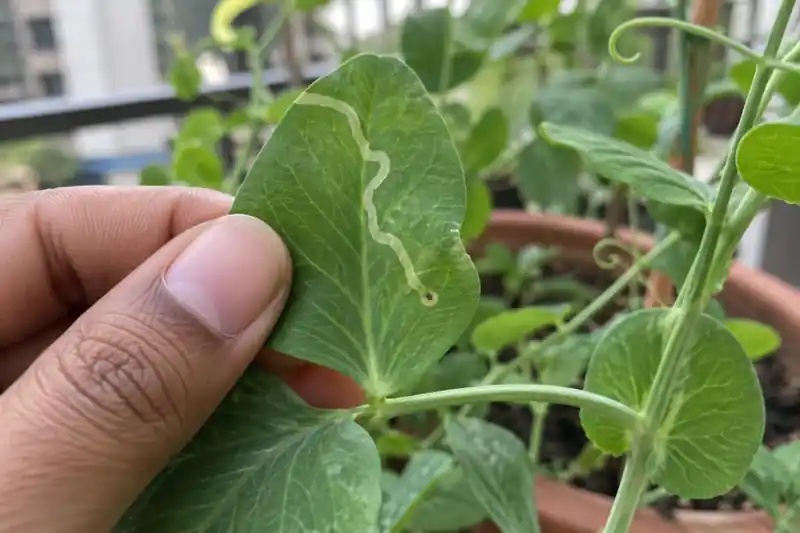
- The larva hatches and eats its way through the soft green layer, leaving a winding trail that grows wider as it grows.
- When fully fed, the larva cuts its way out and drops to the soil or stays on the leaf to pupate.
- A new adult emerges and the cycle repeats. In mild weather one generation can finish in roughly three to four weeks, so numbers can build quickly.
Plants it commonly attacks
The serpentine leaf miner feeds on many crops. On Indian terraces you will most often see it on tomato, peas, beans, cucumber and other gourds, brinjal, spinach, and flowering plants such as chrysanthemum and marigold. Citrus has its own leaf miner, a tiny moth, which makes silvery trails on young citrus leaves.
How to Identify Leaf Miner Damage
Leaf miner damage looks different from most other pest problems, which makes it easy to confirm once you know what to look for.
Signs on the leaves
- Serpentine trails: thin, white or pale-green wavy lines that start narrow and widen at one end.
- Blotch mines: on some plants the tunnel spreads into a pale, papery patch instead of a line.
- Dark specks inside the trail: hold the leaf up to the light and you may see the larva or a thin line of droppings.
- Tiny white dots: small pinprick spots on the leaf surface where adult flies have fed or laid eggs.
When it becomes serious
A handful of mined leaves is mostly cosmetic. It becomes a concern when many leaves on a young plant are mined at once, because the plant loses the green tissue it needs to make food. Heavily mined leaves turn yellow, dry out and drop, and seedlings can be set back badly.

Why Leaf Miners Appear in the Winter Garden
In much of India, the October to February season is when kitchen gardens are fullest with tomato, peas, beans and leafy greens, and it is also when the serpentine leaf miner is often active. Mild days give the flies a comfortable climate, and lots of tender new leaves give them plenty of places to lay eggs. If you are growing peas in pots or a winter tomato crop, check the lower and middle leaves every few days.
How to Treat Leaf Miner on Plants
Because the larvae are protected inside the leaf, contact sprays reach them poorly. The most reliable approach for home gardeners combines physical removal, trapping and regular gentle sprays, repeated over a few weeks to break the life cycle.
Step 1: Remove mined leaves
Pick off leaves with fresh trails, or pinch the trail at the dark end to crush the larva if only a small part of the leaf is affected. Put removed leaves in a closed bag and throw them out. Do not leave them in the pot or on the compost heap, where larvae can finish developing.

Step 2: Hang yellow sticky traps
Adult leaf miner flies are attracted to bright yellow. A few yellow sticky cards placed at plant height help you catch adults and, just as usefully, show you whether numbers are rising or falling. Replace them when they are covered.
Have a question about this topic?
Chat on WhatsAppStep 3: Spray a neem-based solution
Neem products are widely used by home gardeners against leaf miners because they can discourage egg-laying and feeding and can disrupt young larvae. Spray both sides of the leaves in the evening, every 7 to 10 days, for at least three rounds. Our guide on how to mix and spray neem oil safely covers the basics. Always follow the dilution and frequency on the product label, and test on a few leaves first.
Step 4: Treat the soil surface
Many larvae drop into the soil to pupate. Loosening the top layer of potting mix and mixing in a little neem cake can make the pot a less friendly place for the pest while also feeding the soil. Read more in our neem cake powder guide.
Preventing Leaf Miners in Pots
Prevention is mostly about healthy plants and early checking, which matter more than any single product.
- Inspect weekly: look at older and middle leaves, where trails usually start.
- Feed in balance: use compost such as vermicompost and avoid pushing soft growth with too much nitrogen.
- Give space: crowded pots stay humid and make inspection harder.
- Protect seedlings: a light net or mesh cover over young plants can keep adult flies away in the first weeks.
- Welcome natural enemies: tiny parasitic wasps attack leaf miner larvae. Avoid strong, broad-spectrum chemical sprays that kill these helpers too.
- Clean up: remove fallen leaves and nearby weeds that can host the pest.
Common Mistakes to Avoid
- Spraying only once. New larvae keep hatching, so one spray rarely solves the problem. Plan for several rounds.
- Spraying in strong sun. Oil-based sprays in midday heat can scorch leaves. Spray in the evening.
- Stripping too many leaves. Removing every leaf with a mark weakens the plant. Remove the worst and pinch small trails.
- Using harsh chemicals first. These often kill the beneficial wasps that keep leaf miners in check, and the pest can come back stronger.
- Ignoring the soil. Skipping the soil surface lets pupae hatch into a fresh wave of flies.
Leaf Miners on Tomatoes and Vegetables You Eat
For food plants, gentle methods make the most sense. Picking off leaves, sticky traps and neem-based sprays are commonly used options in home vegetable growing. If you use any spray on edible crops, check the label for the waiting period before harvest and wash produce well. Strong, healthy plants handle a few mines without much loss, so good basics from our tomato growing guide also help here.
Frequently Asked Questions
Are leaf miner trails harmful to people?
No. The trails are damage to the leaf, not a risk to people. Mined leaves of edible greens can be removed and discarded, and the rest of the plant can be eaten after normal washing.
Will damaged leaves recover?
No, the tunnels stay on the leaf. What matters is that new leaves come out clean. Once fresh growth is free of trails, your treatment is working.
How long does it take to control leaf miners?
In most home gardens, two to four weeks of regular removal, traps and sprays brings numbers down, because that covers about one full life cycle.
Does neem oil kill leaf miner larvae inside the leaf?
Neem works best against young larvae and by discouraging adults from laying eggs. It is a preventive and repeat treatment rather than an instant fix, which is why regular spraying matters.
Why do my peas get leaf miners every winter?
Peas grow in the season when the pest is active and have tender leaves it likes. Start checking from the first true leaves and begin neem sprays early.
Keep Your Winter Garden Trail-Free
Leaf miners look alarming, but with regular checks, quick removal of mined leaves, yellow traps and steady neem sprays, most balcony and terrace gardens stay productive through the season. For a neem-based option, explore Gardenica Neem Oil and follow the label for dilution. Need help choosing the right input for your plants? Contact the Gardenica team.
Looking for more?
Continue to our main page to explore products and services.