Share your details and our team will call you shortly.
✓
Thank you!
Our team will call you back shortly.
Home/Blogs/Iron Chlorosis in Potted Plants: Why New Leaves Turn Yellow in Winter
Iron Chlorosis in Potted Plants: Why New Leaves Turn Yellow in Winter
Iron Chlorosis in Potted Plants: Why New Leaves Turn Yellow in Winter
21 Nov 2026 · Kitchen Garden Care
You water on time, you fed the pot last month, and still the newest leaves at the top come out pale yellow while the older leaves below stay dark green. That is not a watering mistake and it is not a pest. It is the classic look of Iron chlorosis in pots, where the plant cannot pull iron out of the mix you gave it, so the youngest growth starves first.
Winter makes it worse on Indian terraces. Roots slow down in cold soil, watering is less frequent, and the mix stays wet and cool for days. This guide covers how to tell iron chlorosis apart from nitrogen shortage, what to change in the mix, and how to feed iron the organic way.
Iron moves slowly inside a plant, so the plant sends whatever little it has to the oldest leaves. That is why the damage shows at the top first. Work from the top downward and note which leaves are affected.
Newest leaves first. The top two or three leaf pairs go pale while the leaves below stay normal green.
Green veins on yellow. The vein network stays green and the flesh between the veins yellows, giving a netted look.
Cream in bad cases. Severe shortage turns the newest leaf almost white, and edges may brown.
Iron Chlorosis or Nitrogen, Which One Is It
Most gardeners reach for a nitrogen feed first, because yellow leaves read as "needs food". Feeding nitrogen on top of an iron problem just pushes more leaves the plant cannot colour properly.
New leaves yellow, veins green (Most likely cause: Iron locked up in the mix; Where it starts: Top of the plant)
Old leaves yellow all over (Most likely cause: Nitrogen shortage; Where it starts: Bottom of the plant)
Patchy yellow between veins, older leaves (Most likely cause: Magnesium shortage; Where it starts: Middle leaves)
Why Winter Pots Lock Up Iron
Iron is rarely missing from a potting mix. It is there in a form the root cannot absorb.
High pH. Indian tap water is hard and slightly alkaline. Repeated watering pushes a coco mix from pH 6 toward 7.5, and iron turns insoluble there.
Cold, wet mix. Iron uptake needs warm, airy roots. A pot that sits wet and cold for days in December stops taking it up.
Too much phosphorus. A heavy dose of bone meal or rock phosphate at once ties up iron in the root zone.
Confirm With Two Simple Checks
Test the mix pH. Stir a spoonful of pot mix in distilled water and dip a pH strip. Above 7.2, iron is likely locked whatever you feed.
Check drainage. Water the pot and watch the saucer. Water standing after 30 minutes means cold wet roots, which blocks uptake on its own.
Look at the water source. Borewell water leaves a white crust on the mix surface and pot rim, a sign of salt and pH drift.
Yellow new leaves with green veins is the plant saying the iron is in the pot but out of reach.
Fix the Mix Before You Feed
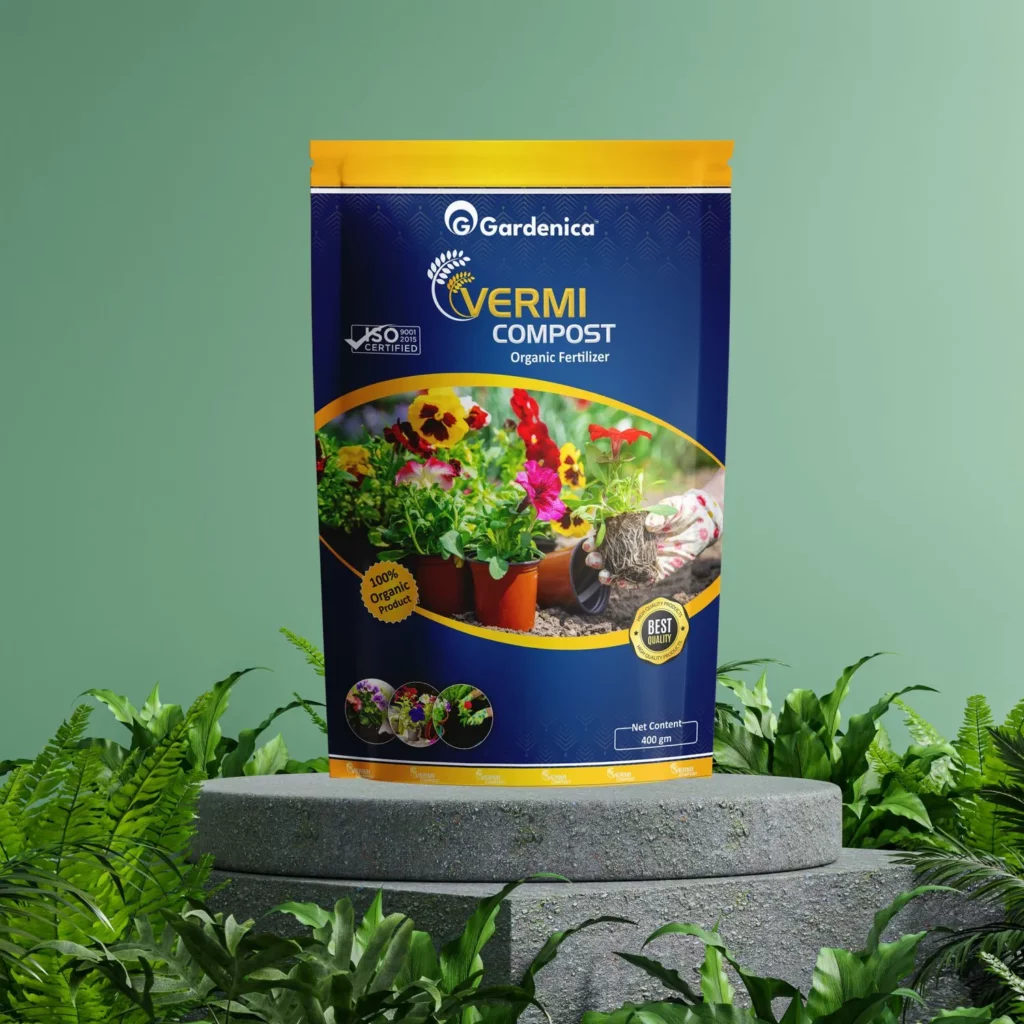
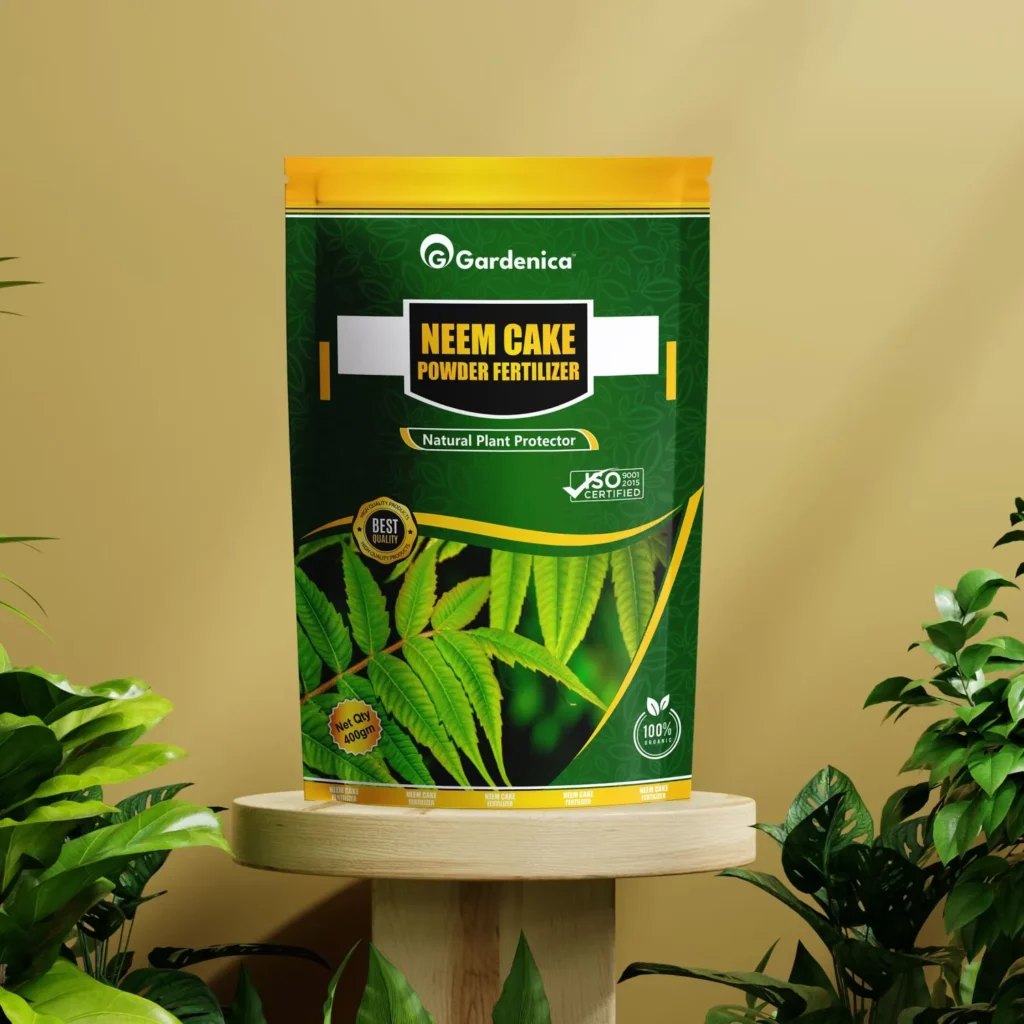
Feeding iron into a locked, waterlogged mix wastes the product. Top-dress with 15-20 g of Neem cake powder per 12-inch pot, scratched into the top two centimetres. Neem cake releases slowly and keeps the root zone mildly acidic, which helps iron stay available. Work a handful of Vermicompost into the same layer. If the pot is over two years old, replace the top third of the mix instead of feeding it. For pots that stay wet, work in a spoonful of Bentonite granules at the next repot, as covered in Potting mix for kitchen gardens, and review your habits in Watering kitchen garden plants.
Neem cake powder (Amount per 12-inch pot: 15-20 g; How often: Every 30 days)
Vermicompost (Amount per 12-inch pot: 100-150 g; How often: Every 30 days)
Chelated iron in 5 litres of water (Amount per 12-inch pot: 1-2 g; How often: Every 15 days, twice only)
Day 1, drain and aerate. Tip the pot so excess water runs out, loosen the top 2 cm of mix, and stop watering on a fixed schedule.
Day 3, feed organic. Apply the neem cake and vermicompost dressing, then water lightly with rainwater or boiled and cooled water.
Day 7, drench with chelated iron. Apply at label dose on moist soil, never on bone dry mix.
Feed for Steady Green Growth
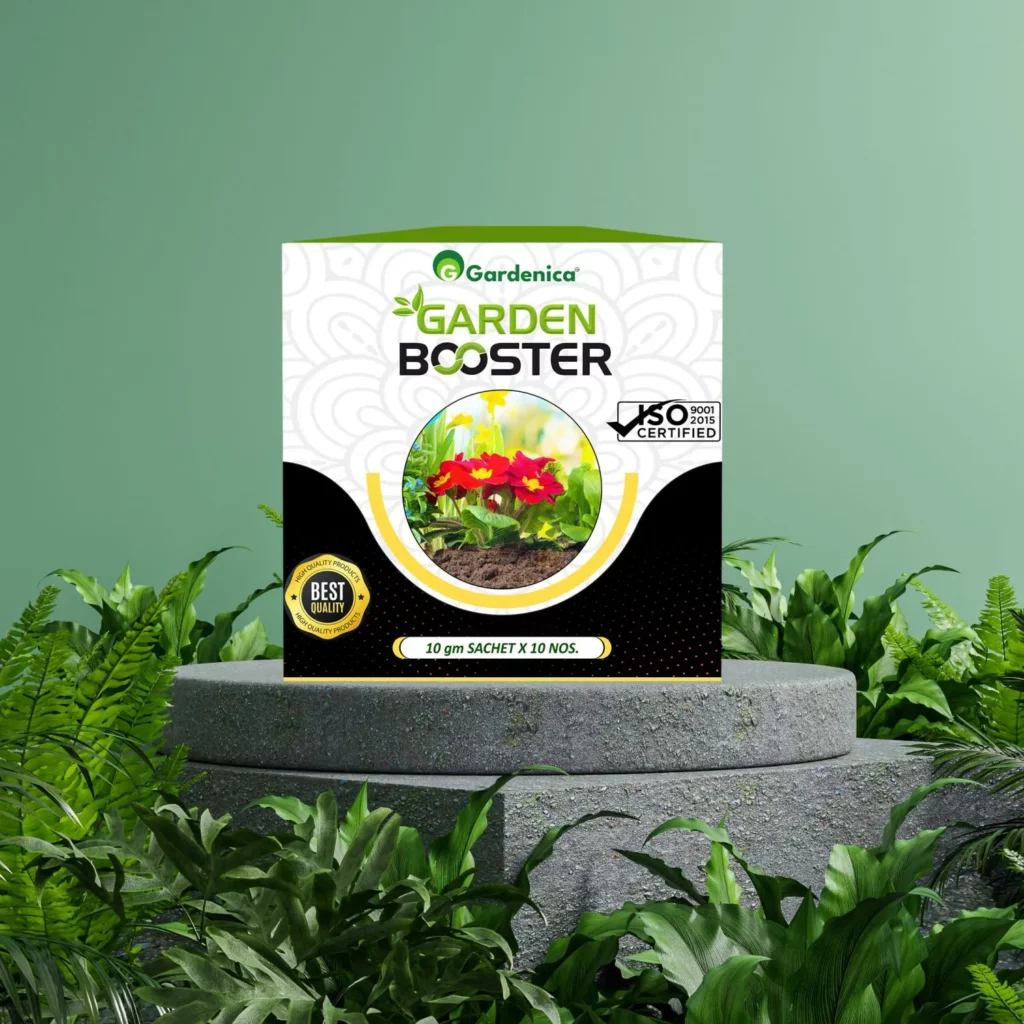
Once the flush comes out green, keep it that way with light regular feeding rather than heavy one-off doses. Garden Booster supplies humic acid and micronutrients that support nutrient uptake and root growth, and humic acid helps roots hold onto iron in alkaline mix. Pair it with Rich Fertilizer as the base feed at label dose every 30 days. Keep phosphorus inputs modest and a week apart from any iron application, and see Rock phosphate for plants for how much is enough.
Safe Use at Home
Wear gloves when handling iron salts, compost and any drench, and keep packs away from the kitchen counter.
Keep children and pets away from freshly drenched pots until the surface is dry.
Never exceed the label dose. Iron is a micronutrient, and too much damages roots and blocks zinc and manganese.
Do not spray in full sun. Foliar sprays burn hot leaves, so spray early morning.
What to Check Before You Buy
Read the iron form. Chelated Fe-EDTA or Fe-DTPA works far better in pots than plain ferrous sulphate, which oxidises quickly in alkaline mix.
Check the chelate percentage. A 6 to 10 percent Fe-EDTA product is the usual garden strength.
Match pack size to pot count. Six to eight pots need a 200 to 500 g pack at most, since only grams go into each application.
Look at use per pot. Any product that forces kilogram dosing for containers is meant for farms, not balconies.
Frequently Asked Questions
How do I know if my plant has iron chlorosis or just needs fertilizer?
Check which leaves are yellow. Iron chlorosis starts on the newest leaves at the top, with green veins on yellow flesh. Nitrogen shortage yellows the oldest lower leaves evenly. If only new growth is pale and the plant is otherwise growing well, treat it as an iron availability problem.
Will yellow leaves turn green again after I fix it?
Usually not. Once a leaf loses its colour it rarely recovers fully. Judge the fix by the next new leaf, which should come out green within 10 to 20 days.
Can I use ferrous sulphate instead of chelated iron?
You can, but it is weak in pots watered with hard tap water because it oxidises quickly in alkaline mix. Chelated iron, labelled Fe-EDTA or Fe-DTPA, stays available longer. Always follow the dose on the pack.
Is iron chlorosis the same as yellow leaves from overwatering?
No, though wet roots contribute to both. Overwatering yellows leaves across the plant, often with soft droopy growth and a musty mix smell. Iron chlorosis is specific to new leaves with green veins.
Which plants show iron chlorosis most in containers?
Tomato, capsicum, brinjal, palak and other spinach greens, plus citrus, gardenia, hibiscus and roses. Palak shows it fastest because it grows quickly and needs a lot of iron for leaf colour.
How often should I apply chelated iron to potted plants?
Two applications 15 days apart are enough for one flare-up. After that, keep the mix conditioned with vermicompost and neem cake monthly rather than repeating iron, since extra iron blocks zinc and manganese.
Conclusion
Iron chlorosis in pots is a root and mix problem wearing a leaf costume. Look at where the yellow sits, check pH and drainage before you feed anything, then use a light organic dressing plus a short, correct chelated iron course. Fix the mix and the next flush tells you it worked. For the right product and dose for your pots, Contact the Gardenica team on WhatsApp at +91 95120 17162.
Disclaimer: This article is general gardening information. Results vary with plant, pot, soil, weather and care. Always read and follow the product label.
Looking for more?
Continue to our main page to explore products and services.