Why Pumpkin Flowers Fall Off and How to Get Fruit in Pots
Why Pumpkin Flowers Fall Off and How to Get Fruit in Pots
You water on time, the vine looks thick and green, and still every yellow flower that opens is on the floor by evening. On a terrace pot this is the most common pumpkin complaint, and it is usually one of three things: no pollinator, too much nitrogen, or a dry spell at the wrong week.
Pumpkin (kaddu) flowers falling off is normal in one narrow case and a warning in every other. This guide sorts the two, then gives the pinching, watering and feeding fixes that turn flowers into fruit on a balcony or terrace pot.
Read more: Explore Gardenica Rock Phosphate
Male and Female Flowers Are Not the Same Thing
Pumpkin plants make male flowers first and in far greater numbers, and those never become fruit. A male flower sits on a thin straight stalk and only holds pollen. A female flower has a small swollen bulge at its base, the future fruit, and it opens for a few hours in the morning.
- Male flower. Thin straight stalk, no bulge at the base, opens 3 to 5 days before the first female.
- Female flower. Small round bulge below the petals, one per node, open for a single morning.
- Bisexual or deformed flower. Rare, usually from heat stress, and it rarely sets a clean fruit.
Why the Fruit Never Swells
Once you can tell the two flowers apart, the causes sort themselves out. Most flower drop on a pot-grown vine comes down to pollination, heat, water or feed.
- No pollination (What you see: Female flower swells, then shrivels in 2-3 days; First fix: Hand-pollinate by 9 am)
- Heat above 35 C (What you see: Petals curl, flowers drop all day; First fix: Shade cloth after 1 pm)
- Dry pot at flowering (What you see: Wilting by noon, small flowers; First fix: Water to 20-25 L per pot)
Hand-Pollination Is the Fix That Works
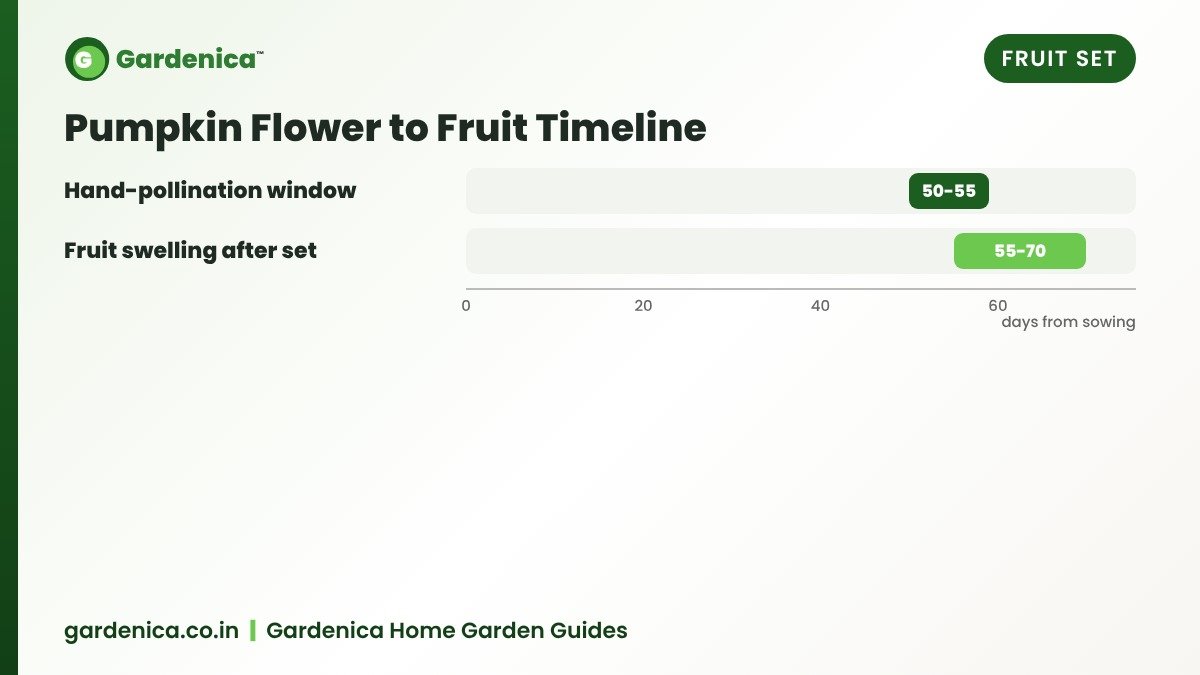
In a pot on a third-floor balcony, bees often find the vine late or never. Bees are also unreliable on cool or overcast mornings, when they barely fly. Hand-pollination takes ten seconds per flower and it is the single highest-return task on this list.
- Pick a fresh male. Choose a fully open male flower mid-morning, before 9 am, and strip its petals back to reveal the pollen-covered stamen.
- Find an open female. Look for a flower with a fuzzy bulge at the base that is wide open the same morning.
- Dust the centre. Rub the male stamen gently over the three-lobed female stigma in the middle of the flower until it looks powdered.
Pinching and Training Decide the Fruit Count
Left alone, a pumpkin vine in a pot runs out all its energy on one long runner and a few leaves at the far end. Pinching changes that.
- Pinch the main tip. Cut above the fourth or fifth leaf when the vine has 6 true leaves to push side shoots.
- Keep 2 to 3 vines. Let two or three strong laterals grow and remove the rest weekly.
- Train, do not let it dangle. Tie the laterals to a trellis or along the terrace wall so leaves get light.
Water at Flowering, Not Before or After
Water stress in the week a flower opens is the reason many gardeners never get past the first fruit. Pumpkin roots in a pot run shallow and wide, and a 20-inch pot in full winter sun can empty in a day.
Feed for Fruit, Not for Leaves
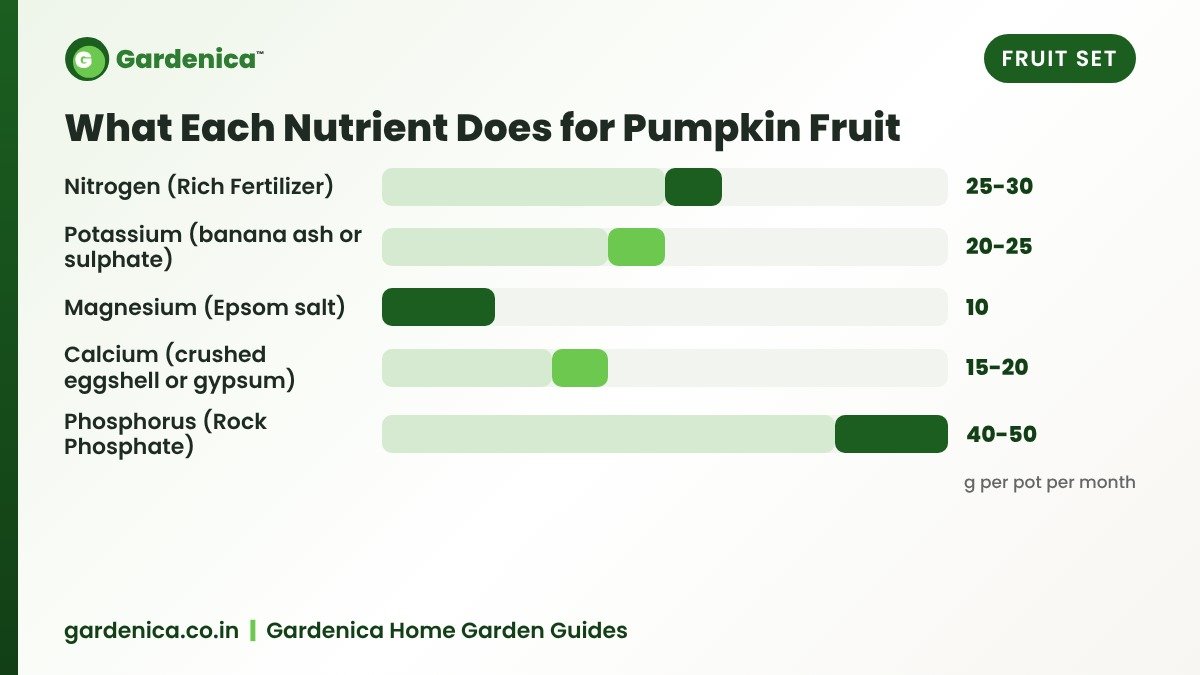
A vine that is growing hard but making no females is nearly always over-fed on nitrogen. Compost tea, fresh cow dung and high-nitrogen feeds push leaves at the cost of flowers. Back off nitrogen for 10 to 14 days once the first flowers appear, and lean on phosphorus and potassium instead.
- Nitrogen (Role at flowering: Leaf and runner growth, stop at flowering; Dose (g per pot per month): 25-30)
- Phosphorus (Role at flowering: Root and flower initiation; Dose (g per pot per month): 40-50)
- Potassium (Role at flowering: Fruit set and fruit size; Dose (g per pot per month): 20-25)
Feeding and Water Calendar by Stage
The same feed that makes a beautiful vine in week five can block fruit set in week eight. This is the schedule that keeps the vine balanced.
- Establishment (Days from sowing: 0-20; Water and feed action: Keep mix moist, no strong feed)
- Vine growth (Days from sowing: 20-40; Water and feed action: Nitrogen feed, pinch the tip)
- Flowering (Days from sowing: 40-55; Water and feed action: Stop nitrogen, pollinate by 9 am)
- Fruit set (Days from sowing: 55-70; Water and feed action: Potassium and calcium, steady water)
Other Reasons Flowers Drop
- Too few plants. One pot means few males at once; grow two pots if your balcony rarely gets bees.
- Shade. Pumpkin needs 6 to 8 hours of direct sun; below that, flowers abort.
- Old mix. Reused soil low in organic matter holds less water; mix in Vermicompost for healthier roots and better water holding.
A pot that has been used for cucurbits two seasons running may also carry root problems. If the vine wilts by noon even in a wet pot, read Root rot in potted plants: how to save the plant before you feed it again.
Have a question about this topic?
Chat on WhatsAppSafe Use at Home
Wear gloves when pinching vines, since pumpkin leaves and stems are rough and can scratch. Keep feeds and any plant protection products in a closed box away from children and pets, and never prepare a solution in a kitchen vessel. Apply everything at the dose on the label, in the cool morning or evening, and wash your hands afterwards. Rinse harvested fruit well before cutting, since sprays and soil sit on the rind.
Frequently Asked Questions
Should I remove male pumpkin flowers?
No. Male flowers are the pollen source, and the plant usually makes them for several days before the first female opens. Remove only spent flowers that fall and sit on wet soil.
How long is a pumpkin flower open?
A single flower opens at dawn and closes by late morning, often within four to six hours. On a cool or overcast day it may stay open longer but the pollen is less viable, so pollinate as early as you can.
Why does my pumpkin have only male flowers?
The first flowers on a vine are almost always male, and cool nights or heavy nitrogen can delay the females. Wait one to two weeks, drop the nitrogen feed, and the female flowers normally follow.
How many pumpkins can one pot carry?
Two or three fruit per 20 to 24 inch pot is realistic. More than that gives small, misshapen fruit and a tired vine, so pinch out extra fruit once the first ones are the size of a tennis ball.
Do pumpkin pots need hand-pollination on a balcony?
Above the second floor, and on any terrace that gets few bees, yes. Hand-pollination takes seconds and it removes the most common reason for fruit that shrivels after setting.
What does Epsom salt do for flowering pumpkin?
It supplies magnesium, which the vine needs for chlorophyll and healthy pollen. About 10 g per pot per month worked into the top inch is enough, and more than that upsets calcium uptake.
Why are my pumpkin fruits yellowing and shrinking after they set?
That is usually fruit abortion from irregular water or a potassium shortage, sometimes from the vine carrying too many fruit. Thin the crop, water deeply at the same hour daily, and feed potassium at the label dose.
Conclusion
Pumpkin flowers falling off comes down to a short list: males that were never going to bear fruit, a female that no bee visited, heat or drought in the flowering week, or a feed that pushes leaves instead of fruit. Fix the pollination timing, keep the water steady, and trade nitrogen for phosphorus and potassium once flowers appear, and most pots will carry two or three good fruit.
If your vines flower every week and set nothing, start with morning hand-pollination and a phosphorus top-dress this week. For the right feed for your pots, see All Gardenica products or Contact the Gardenica team on WhatsApp at +91 95120 17162.
Disclaimer: This article is general gardening information. Results vary with plant, pot, soil, weather and care. Always read and follow the product label.
Looking for more?
Continue to our main page to explore products and services.