How to Grow Broccoli in Pots: A Winter Guide for Indian Homes
How to Grow Broccoli in Pots: A Winter Guide for Indian Homes
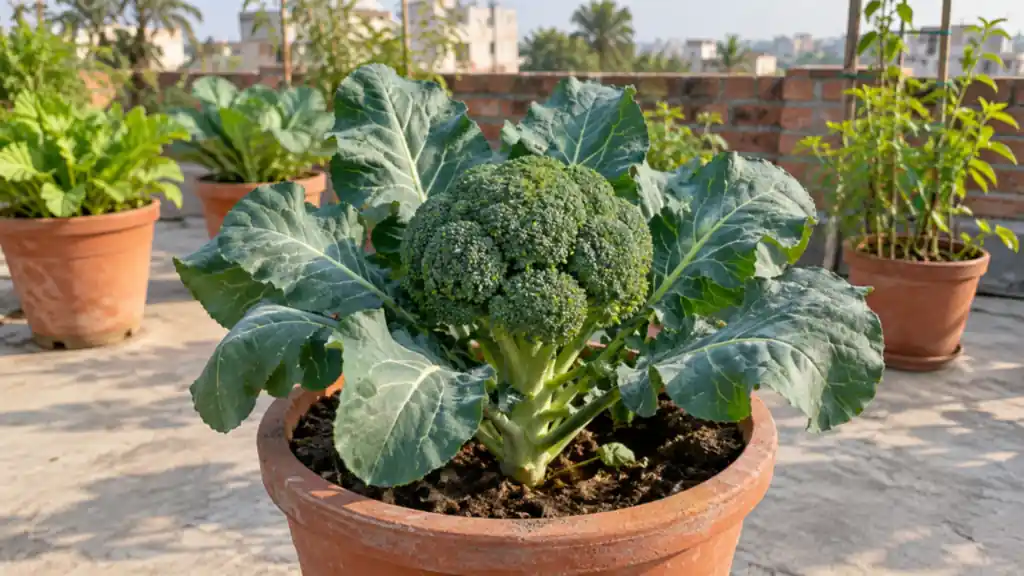
Broccoli looks like a vegetable you can only buy at a supermarket, but it grows happily on an Indian terrace once the weather cools. If you want to grow broccoli in pots, November is a good month to start in most of the plains, because the plant needs a run of cool days to form a firm green head. This guide walks you through the right season, pot size, soil, feeding, pest checks and harvest, so your first broccoli crop ends up on your plate rather than bolting into yellow flowers.
Why broccoli suits winter pots and when to sow it
Broccoli belongs to the same family as cabbage and cauliflower. It is a cool-season plant, and in much of India the window from October to February gives it the mild days and cool nights it prefers.
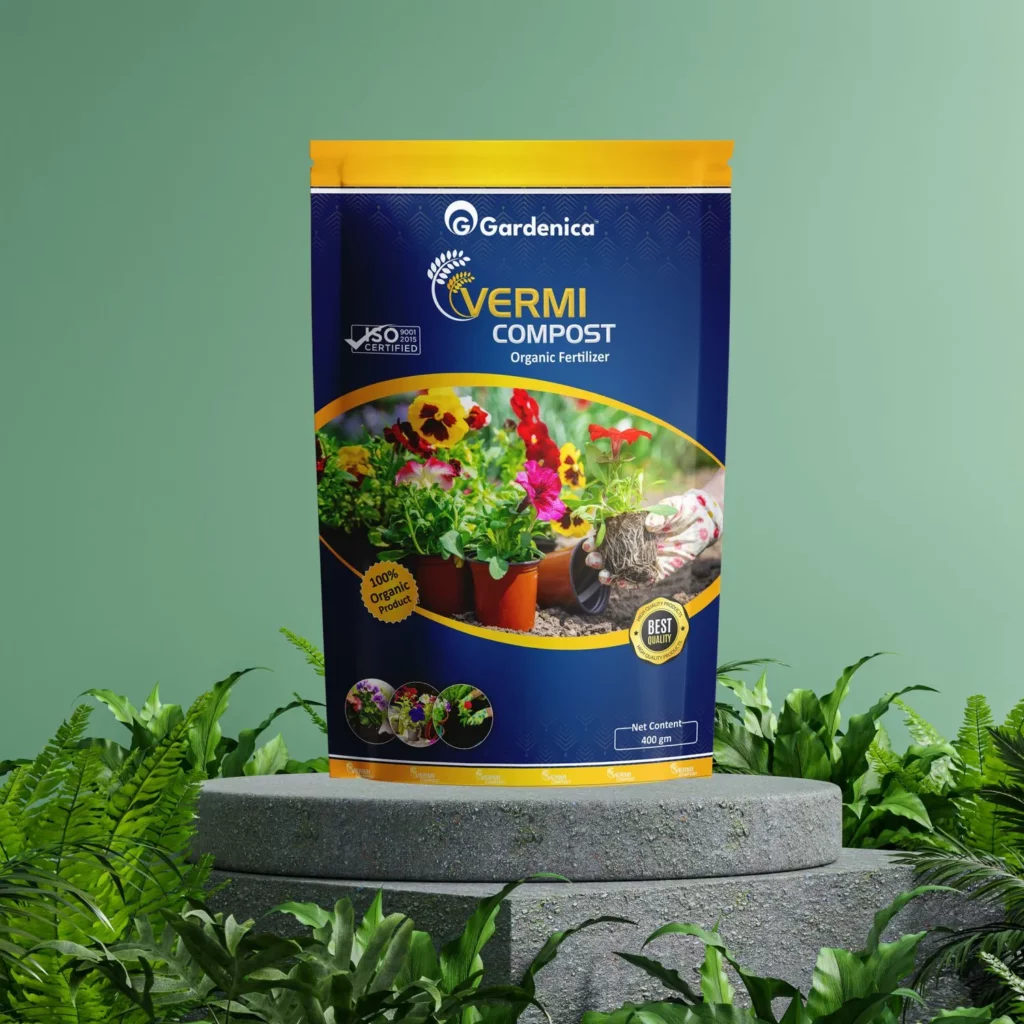
Read more: Explore Gardenica Vermi Compost
- One plant, one pot: each plant needs its own container, which makes it simple to manage on a balcony.
- More than one harvest: after the main head is cut, many varieties produce smaller side shoots for a few more weeks.
- Fresh taste: home-grown heads are picked at their best, not after days in transport.
If you already grow phool gobhi, the routine will feel familiar. Our guide on how to grow cauliflower in pots covers a very similar crop.
Broccoli growing season in India
Timing matters more than anything else with broccoli. Heads form best in cool weather, roughly in the mid-teens to low twenties Celsius. When days turn hot, the plant tends to rush into flowering and the head becomes loose and bitter.
Plains of North, West and Central India
Sow seeds from late September to mid-November and transplant seedlings about four to five weeks later. In Gujarat, Maharashtra and similar regions, aim to have plants in their final pots by early December so heads form before the heat of March.
South India and hills
In milder southern cities, sow from October to early December. In hill areas, broccoli is usually grown in spring and late summer, so follow local seasons there. Our list of vegetables to grow in November shows what pairs well with broccoli this month.
Choosing the right pot and potting mix
Broccoli has a fairly large root system and wide leaves, so a small pot leads to a small head.
Pot size
- Use a pot at least 12 inches deep and 12 to 14 inches wide for one plant.
- Grow bags of about 15 to 20 litres work well and are light on terraces.
- Make sure there are drainage holes. Broccoli likes steady moisture, not waterlogged roots.
Potting mix
Mix roughly equal parts garden soil, well-rotted compost or vermicompost, and cocopeat or coarse sand for drainage. A handful of neem cake powder mixed in at this stage is a common practice among home gardeners. For more detail, read our potting mix for kitchen gardens guide.
How to grow broccoli from seed, step by step
Most gardeners start broccoli in a seed tray and move the seedlings to big pots later. This saves space and gives you stronger plants.
- Sow: fill a tray with fine, moist seed-starting mix and sow seeds about half a centimetre deep.
- Keep moist: mist gently and keep the tray in bright shade. Seeds usually sprout within a week in cool weather.
- Give light: once sprouted, move the tray to morning sun so seedlings do not grow tall and weak.
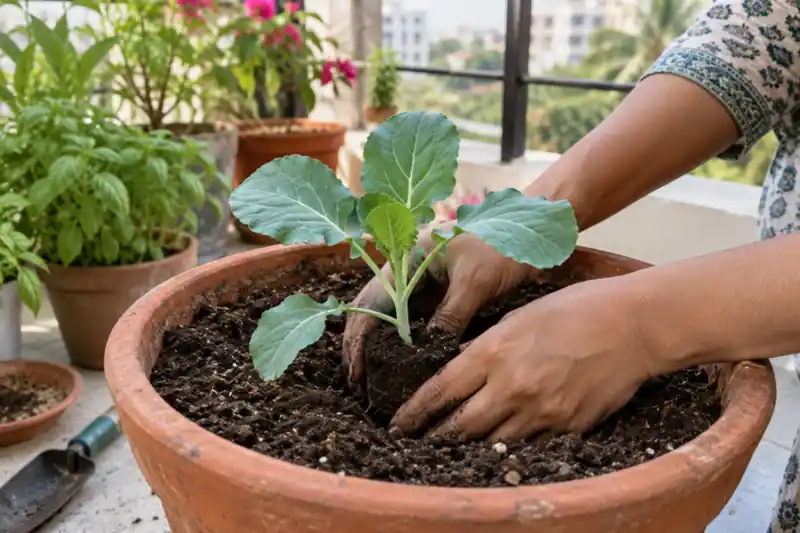
- Transplant: after four to five weeks, when seedlings have four to five true leaves, move one seedling into each large pot. Do this in the evening and water well.
- Do not wait too long: seedlings kept in small cells for too long can become stressed and may later form tiny "button" heads.
Broccoli plant care: sun, water and feeding
Once your plant is settled in its pot, daily care is simple. The goal is steady, unstressed growth from transplant to harvest.
Sunlight
Place pots where they get at least six hours of direct sun. On north-facing balconies, choose the brightest corner you have. Too little sun gives leggy plants and weak heads.
Watering
Water when the top inch of soil feels dry. In winter this may be every two or three days, depending on pot size and wind. Uneven watering, with the pot drying out completely and then being soaked, is a common reason for poor heads.
Have a question about this topic?
Chat on WhatsAppFeeding
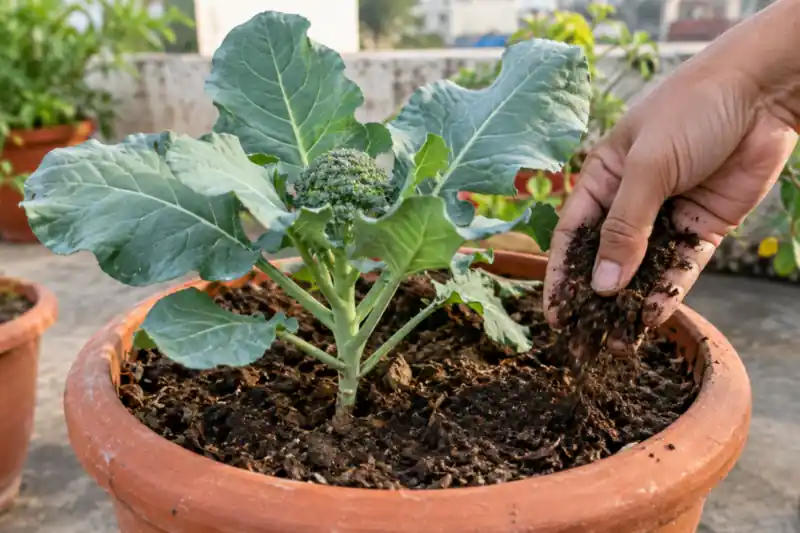
Broccoli is a leafy, hungry crop. Two to three weeks after transplanting, add a layer of vermicompost around the base and mix it lightly into the topsoil. Repeat every three to four weeks. You can also use a balanced organic plant feed during the leafy growth stage. Always follow the product label for quantity and frequency, and avoid overfeeding, which can give lots of leaves but a small head.
Common pests and problems
Broccoli shares its pests with cabbage and cauliflower, so check under the leaves every few days.
- Caterpillars: small green caterpillars chew holes in leaves and can hide inside the head. Pick them off by hand.
- Aphids: clusters of tiny soft insects on new leaves and buds. Wash them off with water first. Our article on aphids on plants explains more control options.
- Yellow lower leaves: older leaves naturally yellow over time, but widespread yellowing may point to hunger or poor drainage.
- Loose or flowering heads: usually caused by warm weather or harvesting too late.
A diluted neem oil spray in the evening, used as directed on the label, is a popular preventive step for soft-bodied pests.
When and how to harvest broccoli
Most varieties are ready about 60 to 90 days after transplanting, but the head itself tells you more than the calendar.
Signs the head is ready
- The head is firm, dark green and the tiny buds are tightly closed.
- It has stopped growing larger for a few days.
- You see no yellow petals. Once yellow shows, harvest at once.
How to cut
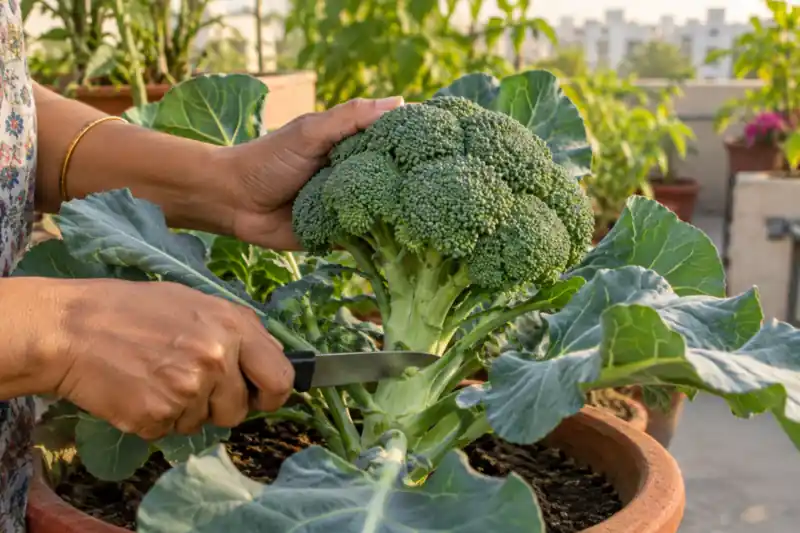
Use a clean, sharp knife and cut the main stem at a slant, about 4 to 5 inches below the head. Leave the plant in the pot. Keep watering and feeding lightly, and small side shoots will form over the next few weeks.
Common mistakes when growing broccoli in pots
- Sowing too late: plants that form heads in hot weather tend to bolt.
- Using a small pot: crowded roots give small, early heads.
- Planting two seedlings in one pot: they compete for food and neither does well.
- Letting the pot dry out: water stress can trigger buttoning.
- Too much nitrogen late in the season: leaves grow, the head stays small.
- Waiting for a supermarket-sized head: home heads are often smaller. Pick them when buds are tight.
Frequently asked questions
Can broccoli grow in pots on a balcony?
Yes. Use a pot at least 12 inches deep, keep it in six or more hours of sun, and grow one plant per pot.
Which month is best to grow broccoli in India?
In most of the plains, sowing from late September to mid-November works well, with heads forming in the cool months of December to February.
How long does broccoli take to grow?
Seedlings take about a month to be ready for transplanting, and heads usually form 60 to 90 days after that, depending on variety and weather.
Why is my broccoli flowering before forming a head?
Warm temperatures, water stress or old, root-bound seedlings can push the plant to flower early. Sow on time and keep the soil evenly moist.
Does broccoli grow back after cutting?
The main head does not regrow, but many varieties produce smaller side shoots that you can harvest for several weeks.
What fertilizer is good for broccoli in pots?
Well-rotted compost or vermicompost mixed into the soil, with light top-ups every few weeks, suits most home gardens. Follow the label of any product you use.
Start your winter broccoli this season
With a deep pot, cool weather, steady water and regular organic feeding, broccoli is well within reach for any terrace gardener. Begin with rich soil using Gardenica Vermi Compost, and if you have questions about your plants, contact the Gardenica team.
Looking for more?
Continue to our main page to explore products and services.