Curry Leaf Plant Care in Pots: A Kadi Patta Guide for Indian Homes
Curry Leaf Plant Care in Pots: A Kadi Patta Guide for Indian Homes
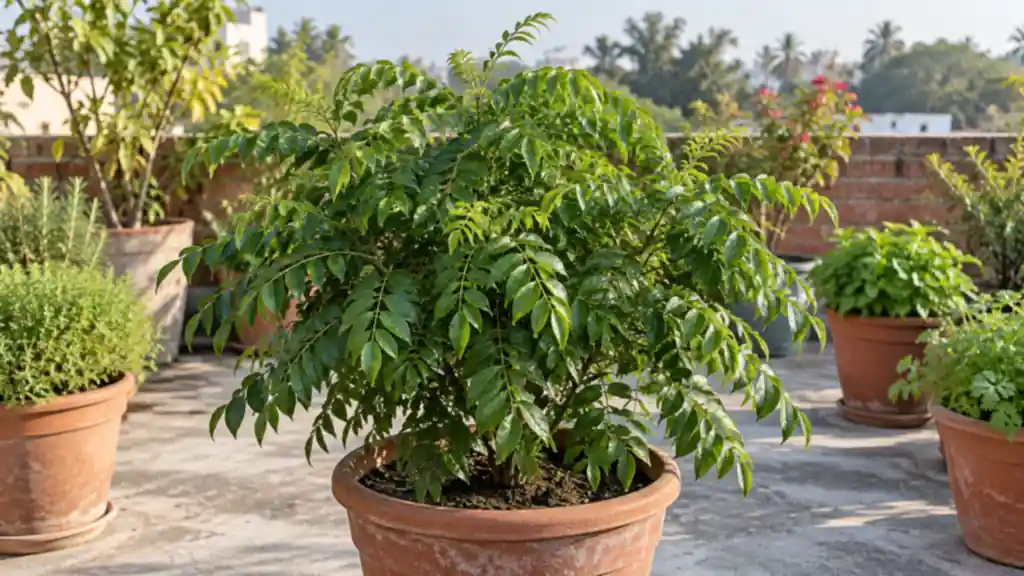
A pot of fresh kadi patta near the kitchen saves you a trip to the vegetable vendor every time you make tadka, poha or sambar. Yet many home gardeners find their plant thin, yellow or half bare by December. Good curry leaf plant care is mostly about four things: a deep pot that drains well, plenty of sun, steady organic feeding in the growing months and a lighter hand in winter. This guide walks you through each one for balcony and terrace gardens across India.
Choosing the Right Pot and Soil
The curry leaf plant (Murraya koenigii) is a woody shrub that can live for many years. It builds a deep root system, so the container you choose decides how well it grows for the next few seasons.
Read more: Explore Gardenica All In One
Pot size and material
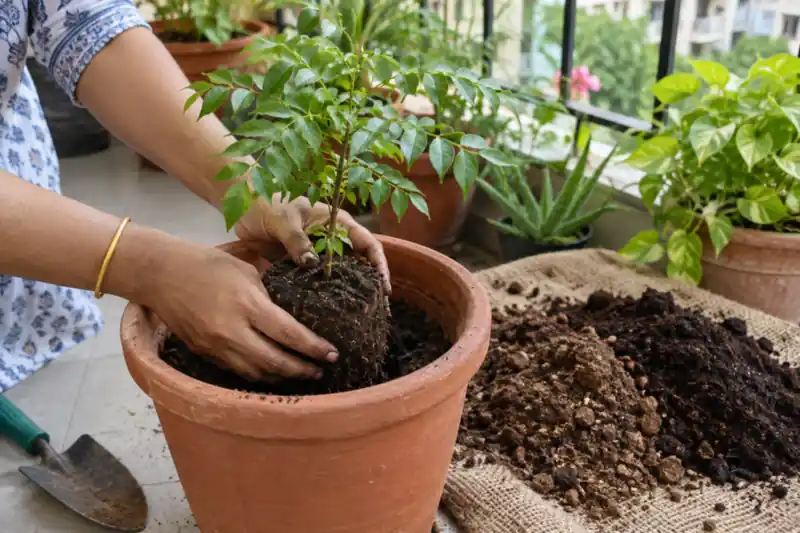
Start a young sapling in a 10 to 12 inch pot and move it up as it grows. A mature plant on a terrace is happiest in a pot of 16 to 18 inches or a large grow bag. Whatever you use, the pot must have at least one wide drainage hole.
Potting mix that drains well
Curry leaf roots dislike sitting in wet soil. A simple mix that works well is:
- About half garden soil or red soil
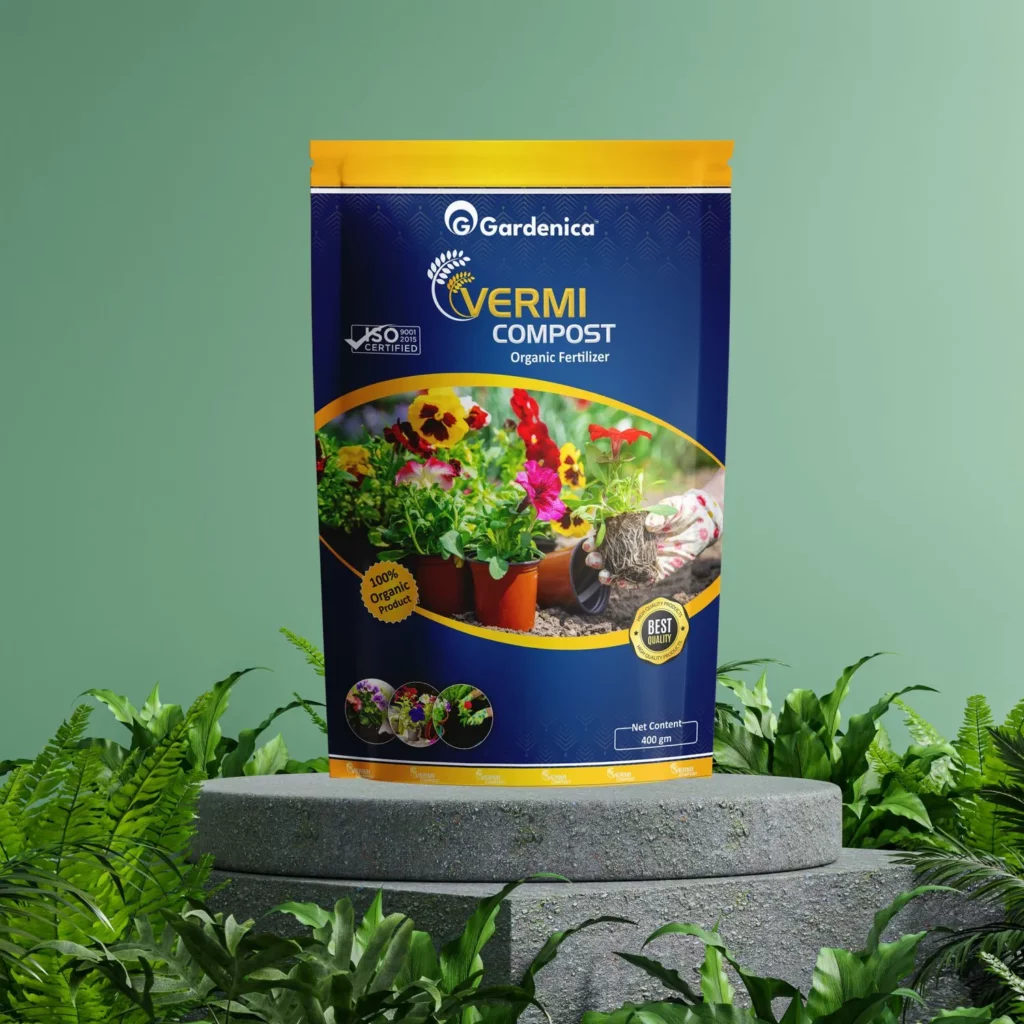
- About a quarter well-rotted vermicompost or cow dung manure
- About a quarter coarse sand, cocopeat or brick pieces for drainage
Our guide to potting mix for kitchen gardens explains each ingredient in more detail.
When to repot
Repot when roots circle the bottom or poke out of the drainage hole, usually every two years. The best time is late February to April, when the plant is waking up and pushing new leaves. Avoid repotting in peak winter, when growth is slow and roots recover poorly.
Sunlight and Watering for a Healthy Curry Leaf Plant in Pots
How much sun it needs
A curry leaf plant in pots grows best with at least five to six hours of direct sun a day. An east or south-facing terrace or balcony is ideal. In shade the stems stretch, leaves turn pale and the aroma weakens.
Watering through the seasons
Water when the top one to two inches of soil feel dry to your finger. In practice this means:
- Summer: often daily or every second day, depending on pot size
- Monsoon: only when the soil is dry; empty saucers after heavy rain
- Winter: every three to five days, sometimes less in cold regions
Overwatering is the most common reason potted curry leaf plants die. For a season-by-season approach, read our guide on watering kitchen garden plants.
Fertilizer for Curry Leaf Plant: What and When to Feed
Because you keep harvesting leaves, the plant needs a steady supply of nutrients to replace them. Organic inputs work well and are easy to use in pots.
Build a rich base
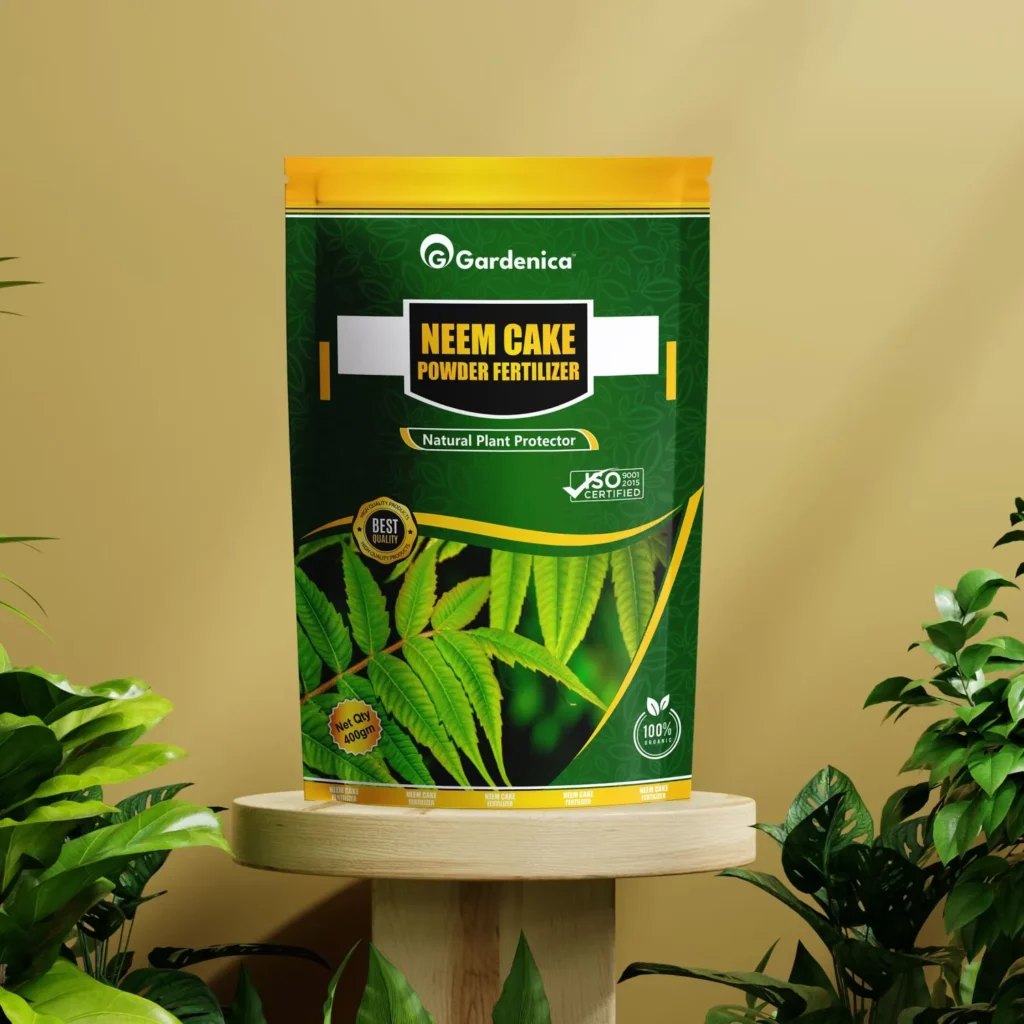
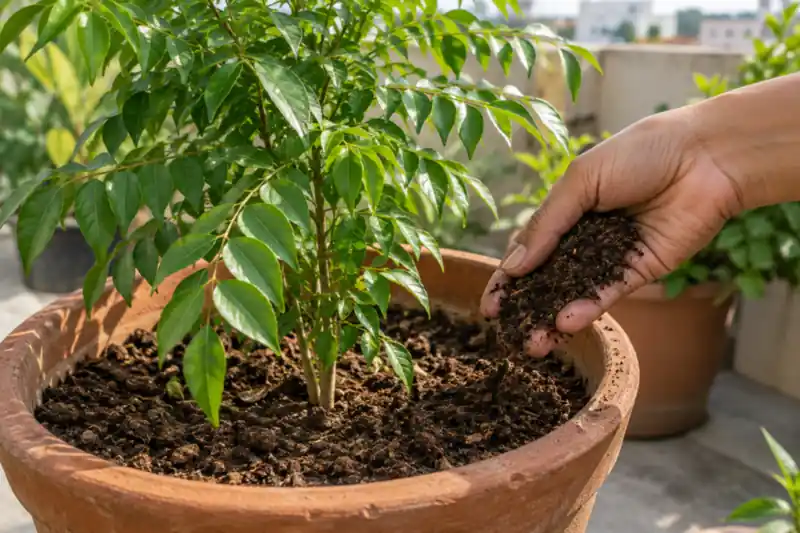
Mix a handful or two of vermicompost into the top layer of soil every four to six weeks during the growing season. It improves soil texture and feeds the plant slowly. Neem cake powder mixed lightly into the topsoil once in a while also adds organic matter and is widely used by gardeners to keep the soil healthier.
Feed during active growth
From March to October, when the plant is putting out new shoots, a balanced plant food helps it produce dense, dark green leaves. An all-purpose organic fertilizer can be added every three to four weeks. Always follow the dose on the product label and water the pot after feeding.
Have a question about this topic?
Chat on WhatsAppGo light in winter
In December and January the plant slows down. Stop heavy feeding and give only a small top-up of compost.
Curry Leaf Plant in Winter: Why Leaves Drop and What to Do
Many gardeners panic when their kadi patta drops leaves in winter. In most parts of north and central India, this is the plant's natural response to cold nights. It is a tropical shrub and growth slows sharply as temperatures fall.
Signs of normal winter rest
- Older leaves turn yellow and fall slowly
- Stems stay firm and green when lightly scratched
How to protect the plant
- Move the pot to the sunniest, most sheltered spot you have, close to a wall that holds warmth.
- Reduce watering and let the topsoil dry between waterings.
- On nights with frost or severe cold, cover the plant loosely with a cloth or shade net.
- Avoid hard pruning and repotting until the weather warms up.
Once days warm up in February or March, new reddish-green shoots usually appear and the plant fills out again.
Pruning and Harvesting for a Bushy Plant
Left alone, a curry leaf plant tends to grow as a single tall stem. Regular pinching turns it into a bushy plant with far more leaves.
- When the sapling is about one foot tall, pinch off the growing tip to encourage side branches.
- In spring, cut each main branch back by a third, just above a leaf joint.
- Harvest whole sprigs from the top and outer branches instead of plucking single leaflets.
- Never strip more than a third of the foliage at one time.
- Remove the small white flower clusters if you want the plant to put its energy into leaves.
Curry Leaf Plant Yellow Leaves and Common Pests
Why leaves turn yellow
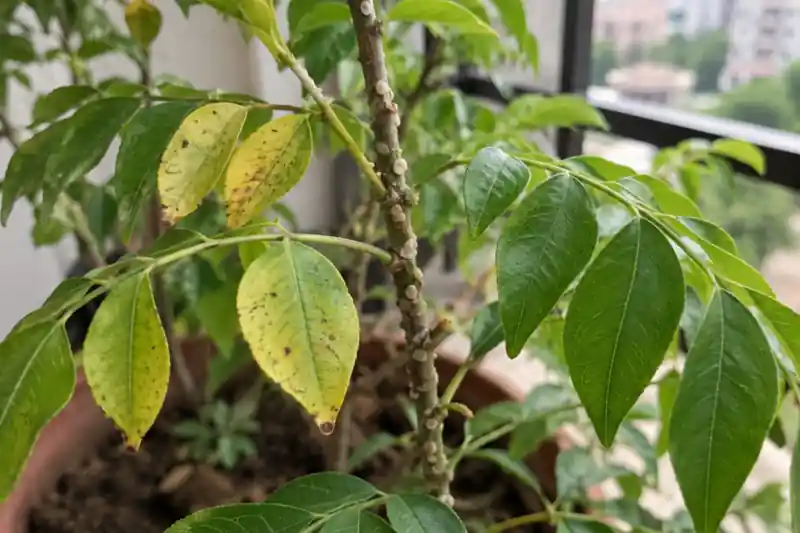
Curry leaf plant yellow leaves usually point to one of a few causes:
- Too much water: soggy soil and a sour smell suggest root trouble. See our guide on root rot in potted plants.
- Cold weather: normal leaf drop in winter, as described above.
- Nutrient shortage: pale new leaves with green veins can indicate a lack of iron or other micronutrients, especially in alkaline soil or old potting mix.
- Too little sun: weak, pale growth on a shaded balcony.
Pests to watch for
Curry leaf belongs to the citrus family, so it attracts similar pests: scale insects on stems, aphids and psyllids on tender shoots, mealybugs in leaf joints and whiteflies under leaves. Check the undersides of leaves every week. Wipe off small colonies with a damp cloth, prune badly affected tips and use a diluted neem oil spray in the evening, following the label. Repeat every seven days until the pests are gone.
Common Mistakes to Avoid
- Planting in a small, shallow pot without drainage holes
- Watering on a fixed daily schedule even in winter
- Keeping the plant in a dim corner of the balcony
- Plucking single leaflets until the stems are bare
- Adding large amounts of fertilizer to a plant that is resting in winter
- Ignoring the first few scale insects or aphids until the infestation spreads
Frequently Asked Questions
How often should I water a curry leaf plant in a pot?
Water when the top one to two inches of soil are dry. That may be daily in peak summer and every few days in winter. Always check the soil first rather than following a fixed routine.
Why is my curry leaf plant losing leaves in winter?
In cooler regions, leaf drop in winter is mostly a natural slowdown. Keep the pot in full sun, water less and wait for spring. If stems turn brown and brittle, check the roots for rot.
Can I grow a curry leaf plant from seeds?
Yes, but only fresh, ripe seeds germinate well. Remove the pulp, sow them half an inch deep and keep the soil lightly moist. A nursery sapling gives you a harvest much sooner.
When can I start harvesting curry leaves?
Begin light harvesting once the plant is about one and a half to two feet tall with several branches. Take sprigs from the top so the plant branches out further.
What is the best fertilizer for a curry leaf plant?
Well-rotted vermicompost as a base, plus a balanced organic plant food during the growing months, suits most potted curry leaf plants. Follow the label dose and feed less in winter.
Grow Fresh Kadi Patta at Home
With a deep pot, full sun, careful watering and regular feeding, one curry leaf plant can supply your kitchen for years. To keep it green and leafy through the growing season, try Gardenica All In One alongside good compost. Have a question about your plant? Contact the Gardenica team and we will be happy to help.
Looking for more?
Continue to our main page to explore products and services.