Rose Buds Turning Brown and Falling Off: How to Fix Blind Buds in Pots
Rose Buds Turning Brown and Falling Off: How to Fix Blind Buds in Pots
You wait weeks for the first rose bud of the winter to colour up, and one morning it has turned brown, dried to a papery husk and dropped on the saucer. If that sounds familiar, you are not doing anything wrong on purpose. Rose buds turning brown and falling off before they open is the most common complaint from Indian terrace and balcony gardeners, and it almost always traces back to a few fixable causes.
This guide covers why rose buds abort in pots, how to read what your plant is telling you, and the watering, feeding, pruning and pest steps that bring the winter flush back. It is written for roses in containers, in the November to February season when most Indian roses flower hardest.
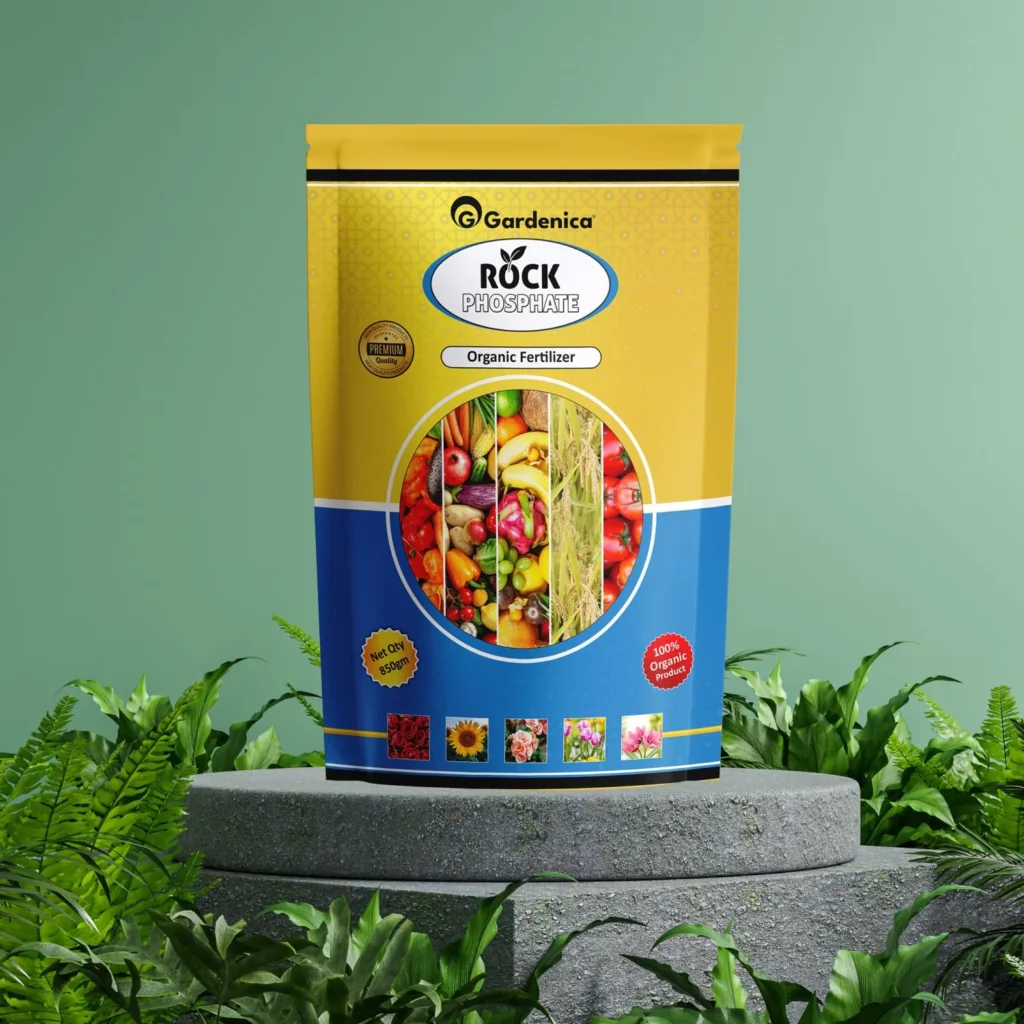
Read more: Explore Gardenica Rock Phosphate
Why Rose Buds Abort Before Opening
A rose spends a lot of energy on each bud, and when conditions slip it cuts its losses by dropping it. Gardeners call this bud blast. In pots the slip happens faster than in the ground, because a container's small soil volume gives the plant less buffer against drought, heat and feeding mistakes.
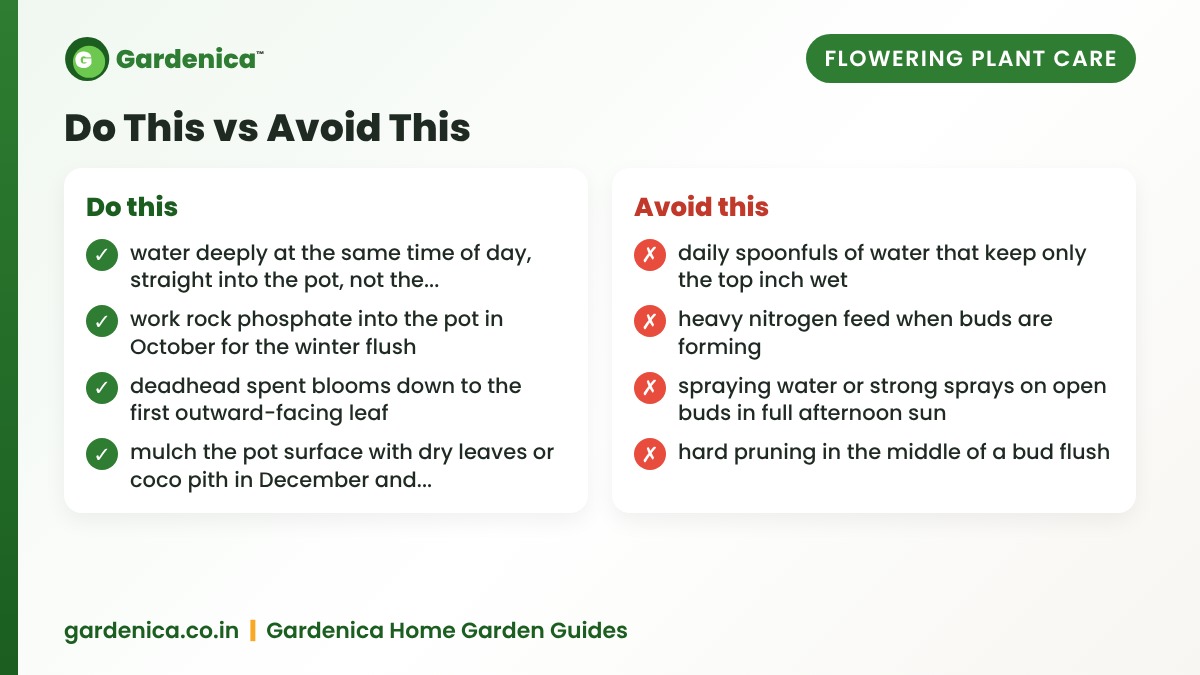
The usual triggers are irregular watering, a phosphorus and potassium gap during bud formation, heat or cold stress at the bud stage, thrips feeding inside the bud, and a plant so busy pushing leafy growth that it never finishes a flower.
Read the Bud: What Each Symptom Means
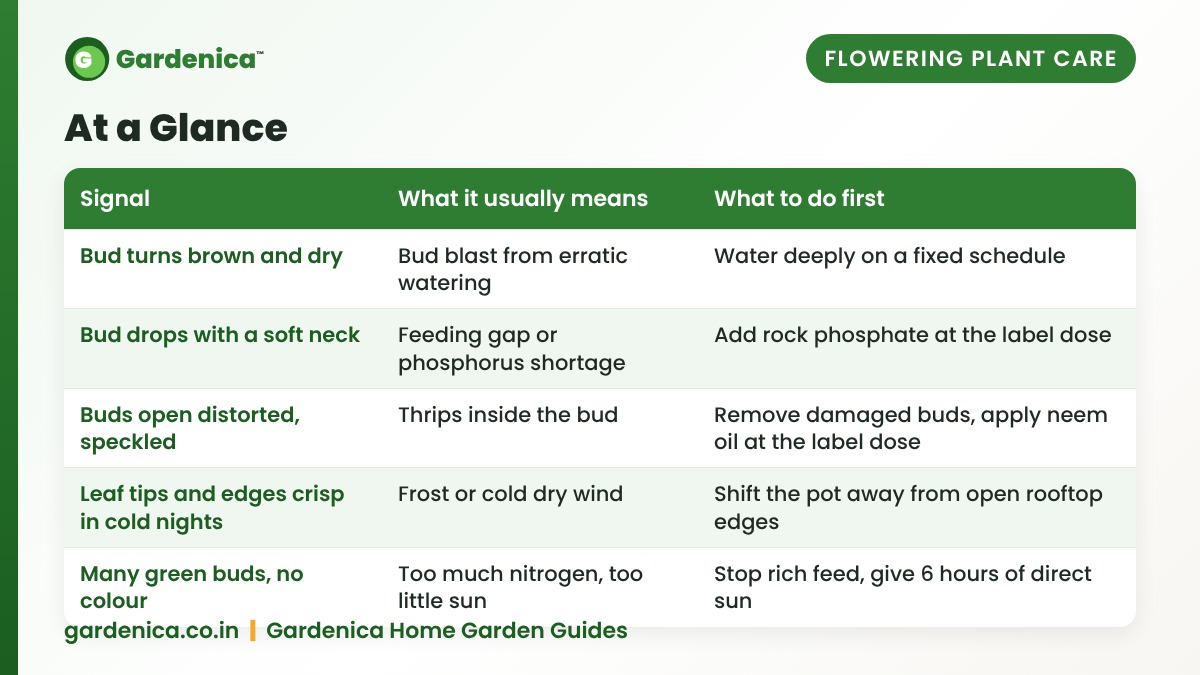
- Brown and dry from the tip down. Classic bud blast from erratic watering, or a pot that dried out while the bud was swelling.
- Bud drops with a soft, bent neck. Usually a nutrition gap, especially phosphorus and potassium.
- Bud opens small, distorted, with silvery streaks. Thrips working inside the bud.
- Buds colour, then bleach or scorch in the afternoon. Heat stress on a small pot, common on west-facing balconies in March.
- Green buds that never colour and just fall. Too much nitrogen, too little sun, or a young plant still establishing.
One brown bud now and then is normal. Losing most of a flush is a signal worth acting on.
Watering: The Most Common Fix
Roses want evenly moist soil, not a cycle of bone dry then flooded. When a pot dries hard while a bud is forming, the plant shuts down water supply to its newest, most expensive growth, which is the bud.
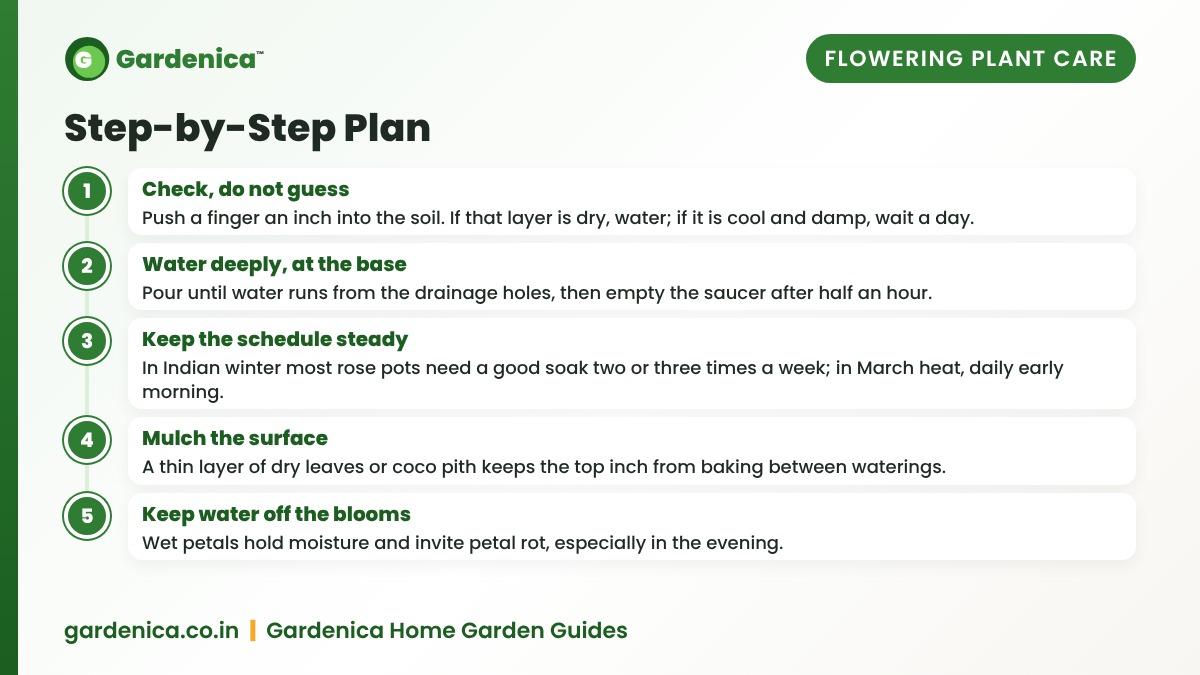
- Check, do not guess. Push a finger an inch into the soil. If that layer is dry, water; if it is cool and damp, wait a day.
- Water deeply, at the base. Pour until water runs from the drainage holes, then empty the saucer after half an hour.
- Keep the schedule steady. In Indian winter most rose pots need a good soak two or three times a week; in March heat, daily early morning.
- Mulch the surface. A thin layer of dry leaves or coco pith keeps the top inch from baking between waterings.
- Keep water off the blooms. Wet petals hold moisture and invite petal rot, especially in the evening.
A rose pot that goes bone dry for a day while a bud is swelling will drop that bud, no matter how well you fed it.
Feeding for Bud Retention, Not Just Growth
Nitrogen makes leaves and canes. Phosphorus and potassium hold a bud open and give colour and stem strength. A rose on nothing but nitrogen feed will look glorious and bloom badly.
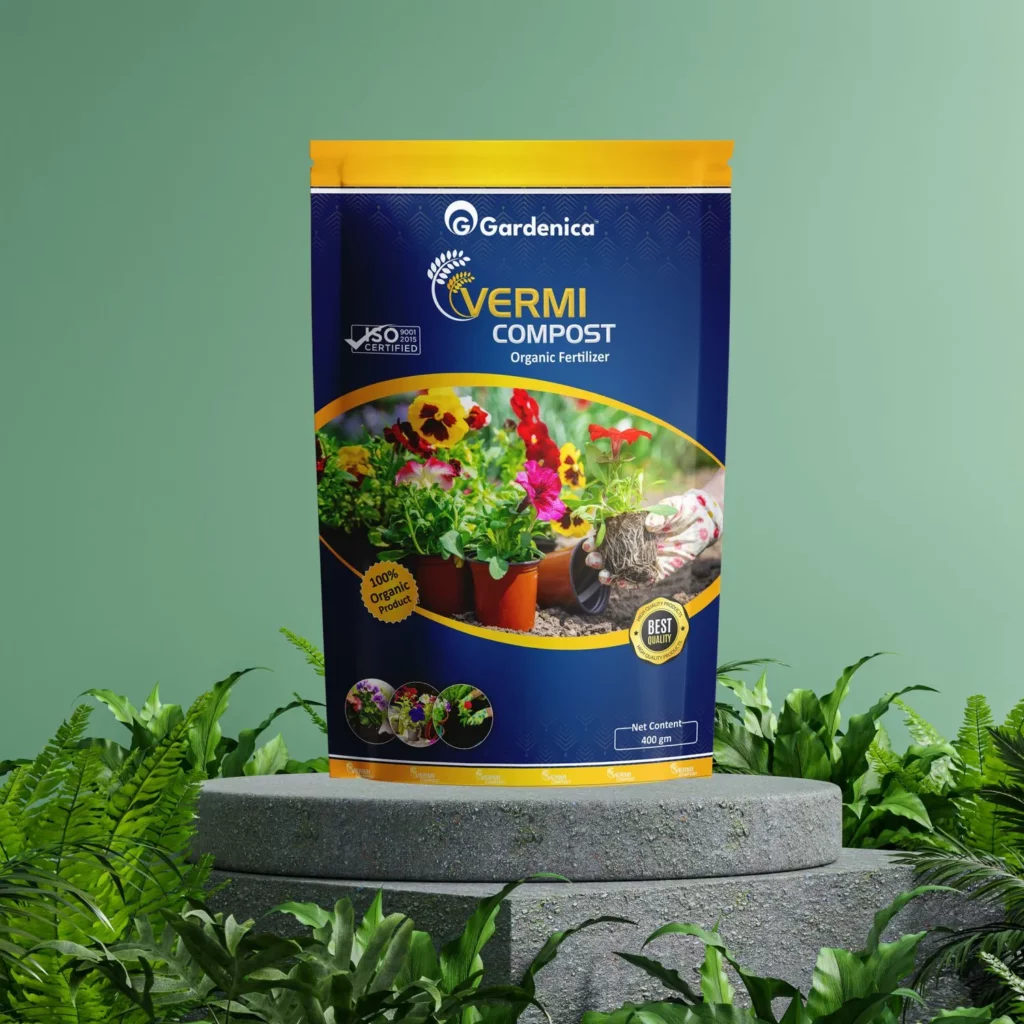
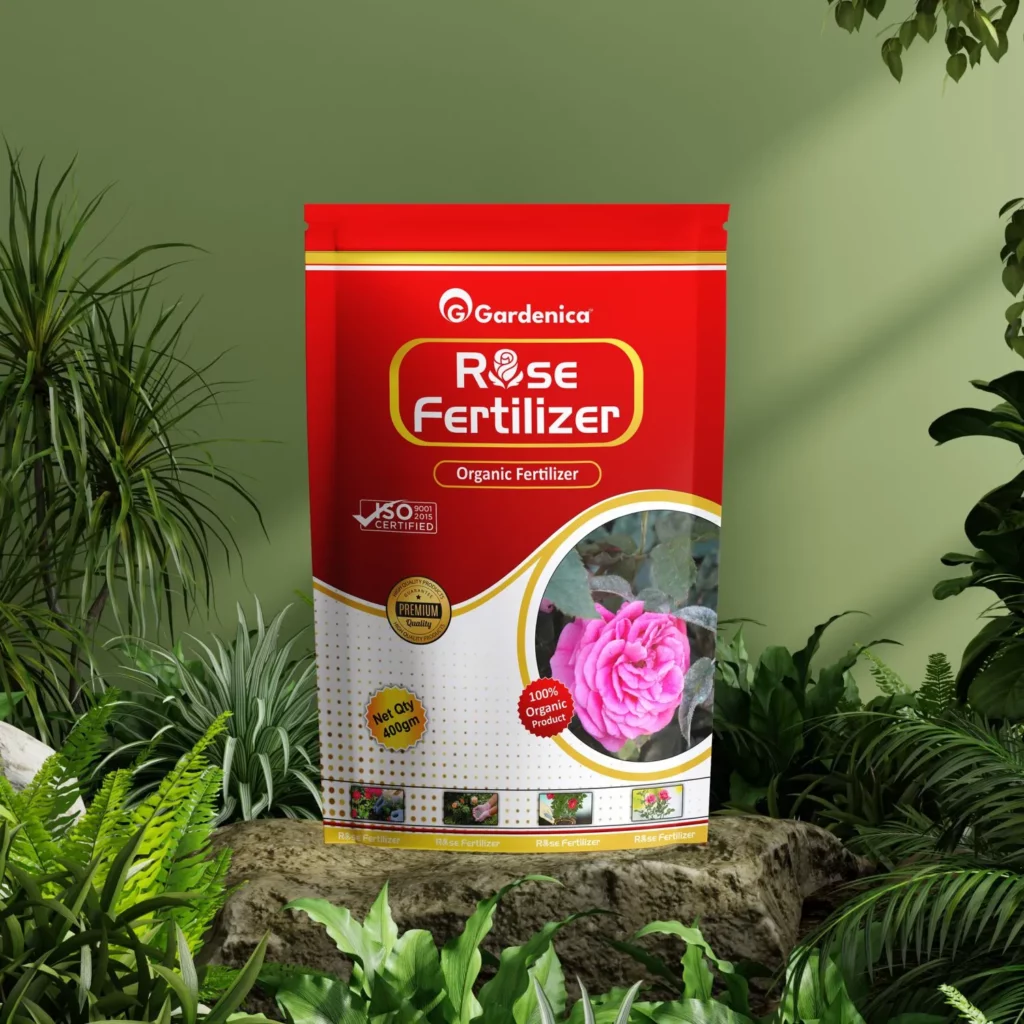
Work Gardenica Rock Phosphate into the potting mix in October, at the dose on the label, so phosphorus is available through the whole winter flush. Between flushes, top-dress with Gardenica Vermi Compost to hold moisture and feed roots, and use an all-purpose feed like Rich Fertilizer lightly, with a seven to ten day gap rather than strong doses. For a rose-specific routine, Gardenica Rose Fertilizer supports branching and flowering. Ease off heavy nitrogen once a bud has fully coloured.
If your rose sits in the same pot for years, the mix may be compacted and exhausted. Refreshing the top few inches each October does more for bud retention than any single fertiliser.
Sun, Heat and Cold Stress
Roses need six hours of direct sun to ripen a bud properly. Shaded balconies produce soft, pale buds that abort easily. Move the pot to the sunniest spot you have and rotate it a quarter turn every few days.
The opposite problem is real too. On an exposed rooftop, December nights can scorch bud edges, and a hot dry wind dehydrates a bud faster than roots can replace water. Shifting pots a metre from an open parapet, or screening them on windy days, often ends the losses.
Have a question about this topic?
Chat on WhatsAppThrips and Other Bud Pests
Thrips are the main pest behind brown, distorted buds. They live inside the bud and scrape the developing petals, leaving silvery streaks and brown scars, and the damage rarely shows on the leaves. Check a fallen bud by opening it gently.
Remove and bin damaged buds, since they shelter the pest. A neem-based spray at the label dose, applied in the evening on bud clusters, helps manage soft-bodied pests; see our guide to using neem oil in the home garden for mixing and timing. Keep the area under the pot clear of fallen petals.
Pruning and Deadheading for the Next Flush
A leggy, unpruned plant spreads energy across too many buds and finishes none of them well. Deadhead spent flowers down to the first leaflet that faces outward, which pushes the next shoot into an open shape, and remove aborted buds as soon as you spot them.
In the Indian plains, hard pruning happens in November or December depending on your city, cutting back to an outward bud with a clean angled cut. Between hard prunings, do only light shaping. For full timing and cuts, read rose plant care in pots.
Common Mistakes to Avoid
- Watering a small cup daily instead of one deep soak, so roots in the lower pot stay dry.
- Pushing nitrogen-rich feed the moment buds appear, which trades flowers for leaves.
- Spraying water or strong solutions on open blooms in full sun, scorching petals.
- Leaving dead and aborted buds on the plant all season.
- Growing a big-flowering hybrid in a pot smaller than 12 inches, where it cannot hold moisture.
- Ignoring silvery streaks on petals and blaming the weather for weeks.
Frequently Asked Questions
Why do my rose buds turn brown and fall off before opening?
In pots it is most often erratic watering during bud swell, followed by a phosphorus and potassium gap or thrips inside the bud. Fix the watering rhythm first, then review feeding and open one fallen bud to check for pests.
Should I remove brown rose buds?
Yes. Cut them off with clean snips above the first healthy leaf, and do not leave them on the soil surface, so the plant stops diverting sap to a bud that will never open.
Which fertiliser stops buds from dropping?
Nothing works alone, but phosphorus matters most at bud stage. Work rock phosphate into the mix at the label dose in autumn, feed a light all-purpose or rose ration between flushes, and back off nitrogen once buds colour.
Do rose buds need full sun?
Buds ripen best with at least six hours of direct light. In very hot, exposed places, some afternoon relief in March protects colour.
How often should I water a flowering rose in winter?
Most Indian rose pots want a deep soak two or three times a week in December and January, more in bright March weather. Judge by the top inch of soil rather than the calendar.
What are tiny insects inside my rose buds?
Most likely thrips, slender and quick-moving, causing silvery scars and twisted petals. Remove damaged buds and apply a neem-based spray at the label dose in the evening.
Keep Every Bud You Grow
Brown buds are almost never bad luck. Steady deep watering, phosphorus in the pot from October, six honest hours of sun, prompt deadheading and a look inside the first damaged bud will sort out nearly every case. Start the feeding side with Gardenica Rock Phosphate and a rose ration from the Gardenica range, both at label doses. If your roses keep aborting buds, Contact the Gardenica team and we will help you work it out.
Looking for more?
Continue to our main page to explore products and services.