Seaweed Fertilizer for Pots: How to Use It the Right Way
Seaweed Fertilizer for Pots: How to Use It the Right Way

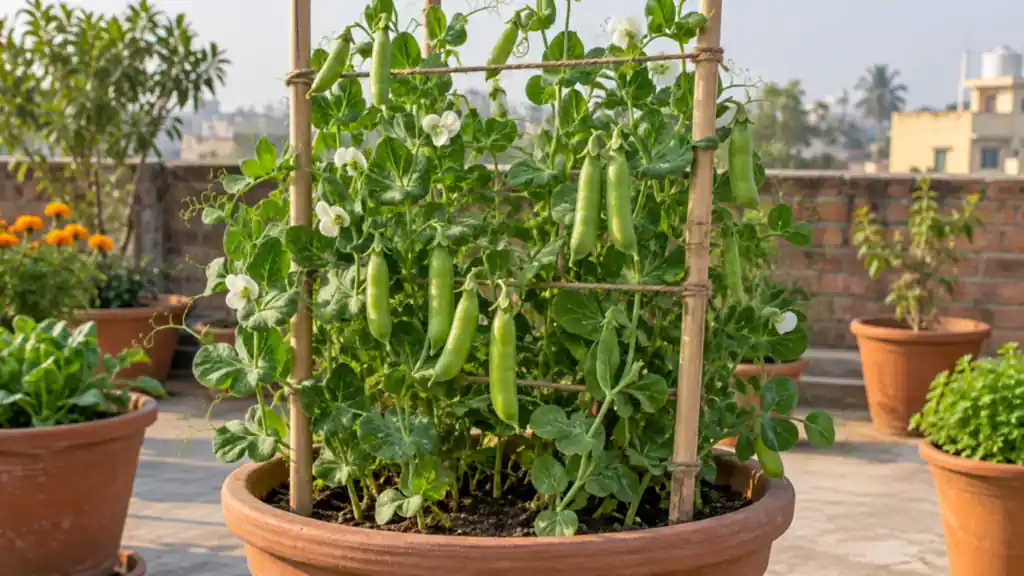
Winter mornings on an Indian terrace are deceptive. The sun looks mild, the soil surface looks dry, and the plants look fine, until you notice that new leaves on your tomato have stopped sizing up and the palak sits pale instead of deep green. Nothing is dying. Everything is just slow, because cold roots do not take up food at the usual rate.
That is where seaweed fertilizer for pots earns its place. It is not a substitute for your main feed; it is a gentle, fast-acting support for roots and leaves in pots, especially in December and January. This guide covers what it does, how much per pot, how often, drench or spray, and the mixing mistakes that waste a bottle.
Read more: Explore Gardenica All In One
What Seaweed Feed Does in a Pot
A pot holds a fixed amount of soil, so whatever roots can do with it, they must do quickly. Seaweed extract is a liquid made from marine algae, carrying potassium, trace minerals and amino acids that a potted plant picks up fast, through roots or leaves.

You can see the effect in three places. Root growth starts earlier after transplanting. Leaves stay firmer and greener between main feeds. And plants handle stress better, the cold snap, the hot afternoon, the two days you forgot to water.
Why Pots Need It More Than Beds
In a bed, roots wander metres looking for moisture and minerals. In a 12 inch pot, the whole root system lives in about 15 litres of mix that you wet and dry on your schedule.
- Limited soil volume. Every watering pushes nutrients out of the drainage holes, so a small pot runs out of food sooner.
- Hard water salts. City tap water leaves a white crust on the mix, and seaweed minerals help plants cope with that load.
- Temperature swings. A black grow bag on a December terrace moves from 12 degrees at dawn to 35 degrees by noon.
The Two Ways to Apply It
The same bottle works two ways, and picking the right one matters more than the exact dose.

Soil Drench
Water the pot first so the mix is damp, then pour the diluted solution near the base, not against the stem. This feeds the root zone and is gentler on seedlings and plants in full sun. Expect a response in new growth within 4 to 7 days.
Foliar Spray
Strain the mix well, use a clean sprayer, and mist leaves until just wet, early morning, covering the underside. Foliar feeding is the faster route for a pale, tired plant. Never spray in strong sun, wind, or on a bone-dry plant.
Doses and How Often to Feed
Two numbers matter: concentrate per litre of water, and solution per pot. Read your bottle first, since concentrates vary, and treat the table as the usual range.
- 6-8 (Concentrate (ml per litre): 2-3; Solution per Pot (ml): 100-150; Note: Seedlings and herbs)
- 10-12 (Concentrate (ml per litre): 3-4; Solution per Pot (ml): 200-250; Note: Chilli, tomato, palak)
- 14-16 (Concentrate (ml per litre): 4-5; Solution per Pot (ml): 300-400; Note: Brinjal, large rose)
- Grow bag (Concentrate (ml per litre): 5; Solution per Pot (ml): 1000-1500; Note: Drench across the surface)
- Leafy greens (Interval (days): 10-15; Best Time: Morning drench)
- Tomato and brinjal (Interval (days): 15; Best Time: After fruit sets)
A Simple Winter Feeding Plan
Say you have six pots on a north-facing Delhi balcony: two tomato, two chilli, one palak tray and one rose. This takes ten minutes a week.
- Check the weather. Skip feeding if a cold wave is due within 48 hours; roots cannot use feed in that cold.
- Water the mix. Damp soil carries nutrients to roots. Never pour feed into dry mix.
- Mix weak, then weaker. Dissolve the concentrate in a mug of water, stir, then tip it into your watering can.
- Drench tomatoes and chillies. Every 15 days, 200-250 ml per 12 inch pot, to the root zone.
- Spray the rose and palak. Fortnightly, early morning, on healthy well-watered leaves.
What Not to Do
Most seaweed failures are mixing failures, not product failures.
Have a question about this topic?
Chat on WhatsApp- Never feed dry soil. Concentrated liquid pulls water out of fine roots instead of feeding them.
- Never double the dose to fix yellow leaves faster; a strong drench burns root tips and sets plants back weeks.
- Never tank-mix with an alkaline wash or a copper spray. Use them on different days, five days apart.
- Never store diluted solution. Mixed liquid goes flat in sunlight; use it the same day.
- Never treat seaweed as the whole programme. Work Vermicompost into the mix at potting for slow, steady feeding.
Seaweed, Humic Acid and Neem
Three bottles, three jobs. Confusing them is why a feeding plan feels like it did nothing.
- Seaweed extract (Main Job: Root and leaf support, stress tolerance; Best Use: Every 15 days in growth)
- Humic acid (Main Job: Helps roots take up nutrients in the mix; Best Use: Monthly with a main feed)
- Neem oil (Main Job: Botanical protection on leaves; Best Use: Separate day, label dose)
Seaweed gives the plant something to use. Humic acid makes food already sitting in your Potting mix available. Neem handles insects. Rotate them, seaweed one week, neem the next.
Safe Use at Home
- Wear gloves with the concentrate, and keep the bottle sealed, upright and away from children and pets.
- Spray on a calm morning so leaves dry before night, never towards laundry or open windows.
- Follow the dilution and interval on your product label. The label beats any blog, including this one.
- Rinse the sprayer after use so residue does not clog the nozzle.
What to Check Before You Buy
- Form. Liquid suits pots; dry powder needs full dissolving and straining before a sprayer.
- Clarity and smell. A good liquid is dark brown and uniform, and smells marine, not chemical.
- Per-pot rate. If only acre rates are printed, work out your pot figure first.
- Pack size. A 500 ml bottle lasts months on 6 to 10 pots, so start small.
- Storage. Cool, dark shelf, cap tight. Heat and sun degrade it.
Frequently Asked Questions
How often should I use seaweed fertilizer on potted plants?
Every 15 days in active growth for most vegetables, every 10 to 15 days for fast leafy greens, and every 20 to 30 days for herbs like tulsi. Slow winter growth means fewer feeds, not stronger ones.
Can I use seaweed fertilizer every day?
No. Daily feeding salts up a small pot and burns root tips. It works best on a regular interval of 10 to 20 days at a weak dilution.
How much seaweed fertilizer per litre of water for pots?
Usually 3 to 5 ml of liquid concentrate per litre, then 200 to 300 ml of that solution for a 12 inch pot. Confirm against your bottle label.
Is seaweed better as a drench or a spray?
A drench is safer for seedlings and hot weather. A foliar spray acts faster on a pale or stressed plant, but only on well-watered plants in cool morning hours.
Can seaweed replace my regular fertilizer?
No. It is low in nitrogen, so it supports roots and leaves but cannot feed a fruiting crop alone. Keep using a complete feed and compost alongside it.
Should I feed seaweed during a cold wave?
Skip it. Roots barely work in that cold, so feed two days before a cold wave or wait until the weather eases.
Does seaweed help flowering plants?
Yes. Roses, gerbera and petunia take it on a 15 to 20 day cycle, usually as a fortnightly spray, supporting steady bloom rather than forcing a flush.
Conclusion
Seaweed fertilizer for pots is the quiet part of a winter feeding routine: dilute it weakly, apply it to damp soil or healthy leaves every 10 to 20 days, and let it support roots and leaves while your main feed and compost do the heavy lifting. Start at the low end of the dose, keep the schedule regular, and judge results on new growth four to seven days later.
Try it on two pots for a month and compare them with the rest. For help choosing a feed, browse the Gardenica range or Contact the Gardenica team on WhatsApp at +91 95120 17162.
Disclaimer: This article is general gardening information. Results vary with plant, pot, soil, weather and care. Always read and follow the product label.
Looking for more?
Continue to our main page to explore products and services.