How to Grow Bitter Gourd in Pots: A Karela Guide for Terraces
How to Grow Bitter Gourd in Pots: A Karela Guide for Terraces

A karela vine is one of the most reliable things you can put on an Indian terrace in winter, yet most people give up by the second month. The vine looks enormous, throws a hundred yellow flowers, sets two fruits and then stops. That stop is almost never bad luck. It is a pot that is too small, a vine with no side shoots, or a flower nobody helped pollinate.
Learning to grow bitter gourd (karela) in pots comes down to four decisions made in the first 30 days: which seed, which pot, which trellis and when to pinch. This covers all four, plus feeding and harvesting, for a terrace sown between late October and mid December.
Read more: Explore Gardenica Vermi Compost
Why Karela Works on a Terrace in Winter
Bitter gourd keeps fruiting through the cool months as long as the roots stay warm and the plant gets six hours of sun. One vine in a 12 to 14 inch pot can keep a family in karela for three months, and because it climbs, it uses wall space rather than floor space.

Seed Preparation and Sowing
Choose an Indian long-fruited type that fruits on side branches. Karela seed has a hard shell, so patchy germination is normal unless you help it. Ten minutes here buys you two weeks.
- Soak first. Keep the seeds in plain water for 12 to 16 hours in a warm corner, not in sun.
- Crack the tip only. Snip the pointed end with a nail cutter until you see a speck of white. Do not squeeze the seed.
- Wrap and wait. Lay the seeds on a damp cotton cloth in a closed box at room temperature.
Pot Size, Mix and Site
Root volume decides how long a vine keeps fruiting. A vine in an 8 inch pot stalls after three or four fruits; one in a 14 inch pot or a 20 litre grow bag runs for months. Use one plant per container.
- Sun. Six to seven hours direct; deep north balconies give leaves only.
- Drainage. Three clear holes with grit in each; karela roots hate a wet base.
- Support. A wall or railing the trellis can lean against, pot 30 cm clear of it.
Transplanting and the Trellis
- Transplant at the true-leaf stage, when the vine is 10 to 15 cm tall, usually 12 to 15 days from sowing. Move it in the evening with the root ball intact and shade it three days.
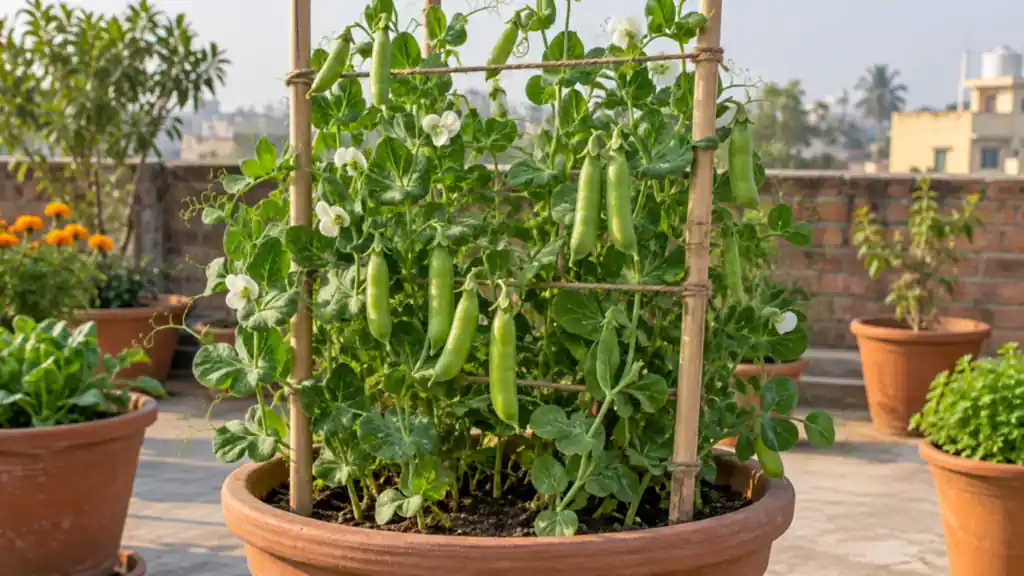
- Sink the trellis in the same day. Four bamboo poles driven 20 to 30 cm into the pot, with net at 6 to 7 ft. Never add a trellis to a vine already scrambling.
- Tie the stem loosely in figure-of-eight cotton loops; a bruised stem stops fruiting below the damage.
Train each side shoot flat along a wire. A vine spread against a panel sets far more than one left to fall over the parapet.

Flowers, Fruit Set and Hand Pollination
This decides whether you harvest or just admire the flowers. Karela bears male and female flowers on the same plant, often in the same leaf axil. The male sits on a thin stalk; the female has a tiny warty fruit behind it. On the main stem and first few nodes, almost every flower is male, which is why a huge vine can produce nothing.
- Pinch early. Removing the tip shifts flowering onto side branches, where females dominate.
- Pluck the first 4 to 5 flowers on each side shoot so the vine builds roots before carrying fruit.
- Pollinate before 10 am. Flowers close by late morning, so timing matters more than technique.
Watering and Feeding
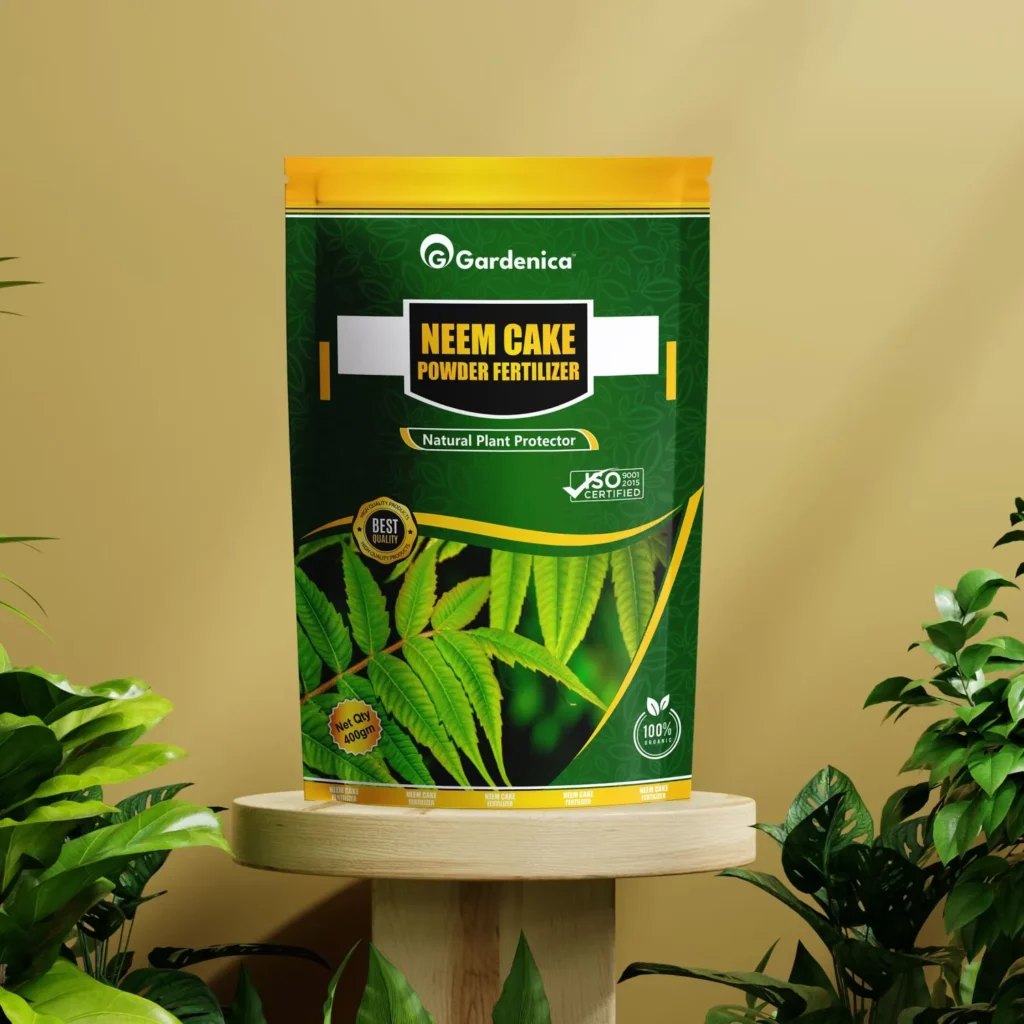
Karela is thirsty in fruit and easily drowned before it. Water deeply each winter morning, twice on hot windy days after February, and let the top 2 to 3 cm dry between waterings. A base of 3 to 4 kg of vermicompost plus 100 g of neem cake per pot carries the young plant; after that, feed by phase rather than by calendar.
- Neem cake plus vermicompost base (Days after last feeding: 0; Note: Mixed in before sowing)
- Vermicompost top dressing (Days after last feeding: 20-25; Note: 250-300 g per pot)
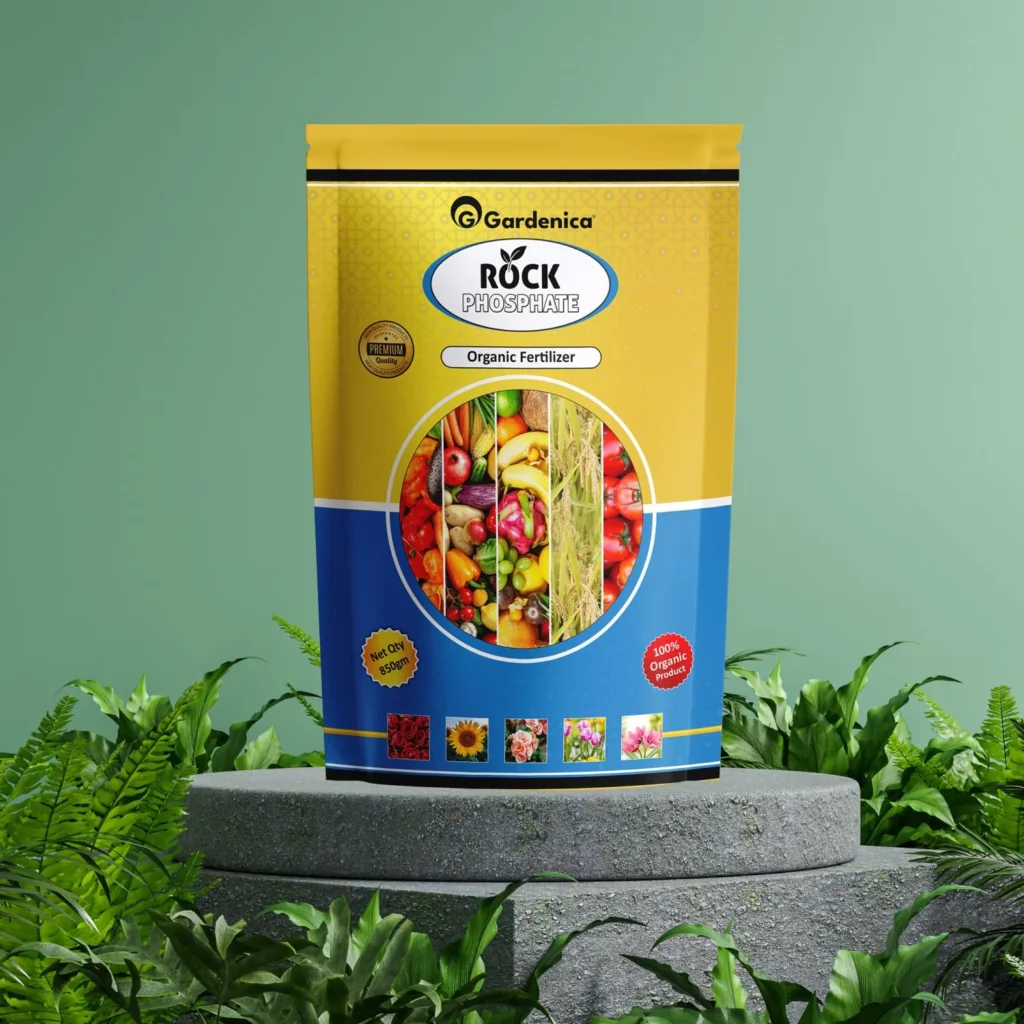
- Rock phosphate at flowering (Days after last feeding: 35; Note: 15 g per pot)
Flowers Dropping or Fruit Turning Yellow
Match the symptom before you change anything.
- Flowers fall half open. Water or heat stress; the pot is drying out. Water deeply and mulch.
- Flowers but no fruit. All-male flowering from an unpinned stem, or no pollinators. Pinch and hand pollinate.
- Small fruit yellows and drops. Poor pollination or too much nitrogen. Add phosphorus and thin the load.
- Curled leaves with sticky black mould. Sucking pests on new growth. The Neem oil for plants guide gives evening timing, and Pest-O-Care helps manage soft-bodied larvae at the label dose.
Harvesting and Keeping It Producing
Pick at 6 to 8 cm, firm, glossy and evenly coloured, before the tip yellows. A fruit left to ripen splits and tells the vine to stop setting.
Have a question about this topic?
Chat on WhatsApp- Pick every two to three days, since missed fruit silences a productive vine.
- Cut with a secateur, leaving a short piece of stalk; twisting tears the stem.
- Remove yellowed basal leaves to keep air moving.
- Prune hard in late February, cutting the oldest shoots back by a third for a second flush.
Safe Use at Home
Wear gloves and long sleeves. Young karela stems and fruit carry stiff bristly hairs that irritate skin, and the sap stains hands. Keep children clear of the lower trellis while fruit hangs, and store any spray in its original labelled pack, high up and away from food. Always read and follow the product label.
Frequently Asked Questions
What size pot is best for bitter gourd?
A 12 to 14 inch deep pot or a 20 litre grow bag, with one plant per container. Anything smaller than 10 inches usually stops fruiting after three or four harvests because the roots run out of room.
Do I need to scratch bitter gourd seeds before sowing?
It helps a lot. Karela seed has a hard shell, so soaking for 12 to 16 hours and nicking the pointed end brings germination down to 5 to 8 days instead of 12 to 15, and more seeds come up evenly.
Why is my bitter gourd plant flowering but not fruiting?
Usually one of three things: the main stem was never pinched, so the vine is only making male flowers; there are no bees on the terrace; or the pot is drying out between waterings. Pinch the tips, hand pollinate before 10 am, and water deeply each morning.
How do I tell a male flower from a female flower on karela?
The female has a tiny warty fruit at its base and a thicker stalk. The male sits on a thin plain stalk with nothing behind it. Only the female can become a fruit.
Which month should I sow bitter gourd in India?
Late October to mid December suits most plains, and February to March suits north India and the hills. Sowing in the cool part of winter gives a vine established before harsh summer sun arrives.
How long does it take to harvest bitter gourd in pots?
About 45 to 55 days from sowing to the first fruit on a well-run vine, then pick every two to three days. A healthy plant keeps producing for two to three months before it needs a hard prune.
Is hand pollination necessary on a balcony?
On a high balcony, yes, at least for the first batch of female flowers. Bees visit terraces inconsistently, and a hand-pollinated flower sets far more reliably than one left to chance.
Conclusion
Growing bitter gourd in pots comes down to a scarified seed, one plant in a 12 to 14 inch pot, a trellis sunk in on transplanting day, an early pinch for side shoots, and hand pollination before 10 am. Do those and one terrace vine carries fruit from about day 45 for most of the season.
Start with two pots so one is always productive, and feed on schedule rather than when the plant looks thin. For the right pack size and dose for your pots, Contact the Gardenica team on WhatsApp at +91 95120 17162, or browse All products.
Disclaimer: This article is general gardening information. Results vary with plant, pot, soil, weather and care. Always read and follow the product label.
Looking for more?
Continue to our main page to explore products and services.