How to Use Epsom Salt for Potted Plants: Magnesium Fixes
How to Use Epsom Salt for Potted Plants: Magnesium Fixes

You water on time, the leaves are green near the middle, but the older leaves at the bottom have gone pale in patches while the veins stay dark. On a terrace in November this is one of the most common sights, and most people reach for a nitrogen feed. That usually makes it worse. What you are looking at is often a magnesium shortage, and the quickest test a home gardener can run is a weak Epsom salt solution.
This guide covers how to use Epsom salt for potted plants without doing harm: how to confirm the sign, the amount per pot size, how often to apply it, and when it is the wrong tool.
Read more: Explore Gardenica Rich Fertilizer
What Epsom Salt Actually Is
Epsom salt is magnesium sulphate, a mineral salt that dissolves completely in water. It carries two nutrients plants use in their sap: magnesium, at the centre of the chlorophyll molecule, and sulphur, which goes into proteins. Neither is made by the plant, so both must come from the soil solution.

It is not a fertiliser in the usual sense. It has no nitrogen, no phosphorus and no potassium, so it cannot feed a plant alone. A balanced organic feed such as Rich Fertilizer still does the main feeding work.
The Yellow-Leaves Sign
Confirm the sign before you dose anything. Magnesium shortage has a particular look, and three other problems copy it badly.
- Interveinal yellowing. The leaf blade turns pale yellow while the veins stay green, giving a netted pattern.
- Old leaves first. The lowest leaves show it first because magnesium moves upward to new growth.
- Bronze edges later. In strong sun the yellow patches can turn rusty brown and the edge may curl.
- Firm new growth. Young leaves at the tip stay green and normally sized, which rules out starvation.
Before You Dose, Rule These Out
A drench will not help if the roots are the problem, so spend two minutes on this check.
- Overwatering. Squash the mix in your hand. A wet clump or sour smell means roots cannot take up magnesium. Fix drainage first with the steps in Winter Plant Care in India.
- Natural leaf ageing. A few yellow leaves at the base of a healthy plant are old leaves being retired.
- Potassium shortage. That yellowing starts at the leaf margin and moves inward, usually on fruiting plants with weak stems.
The Right Dose for Pots
Dissolve the salt in warm water first, then top up with cold water. Undissolved crystals on the surface can burn roots. One gram is roughly a quarter of a flat teaspoon, so a small kitchen scale removes the guesswork.
- 6-8 inch (Dose (g per litre of water): 0.5-1; Note: Weak drench)
- 10-12 inch (Dose (g per litre of water): 1; Note: Standard drench)
- 14-16 inch (Dose (g per litre of water): 1-1.5; Note: Strong growth stage)
- Grow bag (Dose (g per litre of water): 1-1.5; Note: Drench at the edge)
Where It Fits in a Feeding Plan
Epsom salt corrects one shortage. A feeding plan has to cover the rest.
- Base the pot on compost. A pot refreshed with Vermi Compost at 20-25% holds magnesium better than a mix watered hard all season.
- Feed with a complete ration. Use a balanced feed at the dose on its label through the growth phase.
- Use it as a correction. Apply when the sign appears, then repeat once after 20-30 days if new leaves have not cleared.
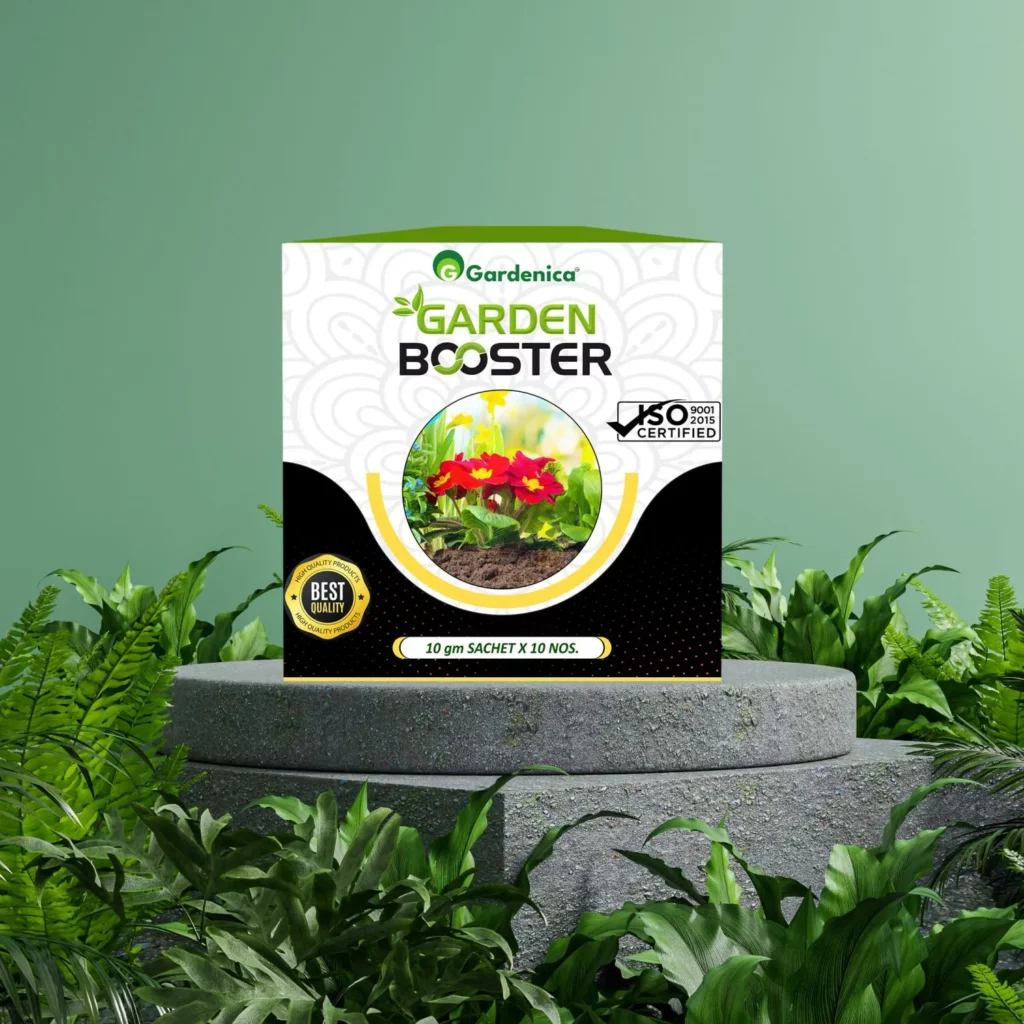
- Add humic acid for uptake. A humic product such as Garden Booster supports root growth.
Why Winter Pots Run Short
Three things stack up in the Indian winter, which explains why the sign appears in December rather than August. Low light and cool roots slow the plant down, so it takes up less of everything. Heavy winter waterings in a pot with poor drainage push magnesium out through the drainage holes. And across much of north and west India the tap water carries carbonates that raise soil pH over time, tying up magnesium so roots cannot reach it.
When It Is the Wrong Tool
- Blossom end rot. The sunken dark patch at the flower end of a tomato or chilli fruit is a calcium problem. Magnesium competes with calcium for uptake, so a heavy dose usually makes the next fruit worse.
- A plant that needs feeding. Pale, uniformly small leaves on a plant not fed in six to eight weeks is starvation. Give it a complete feed.
Excess is the other risk. Repeated heavy doses push calcium and potassium down, leaf edges scorch and the soil surface grows a whitish crust. If you have drenched more than once a fortnight, stop, flush the pot with plain water and let the mix dry.
A Simple Correction Routine
- Confirm the sign. Check that yellowing sits between the veins on older leaves, with healthy new growth.
- Check the soil. If the mix is wet and sour, fix drainage and watering before you dose.
- Mix the solution. Dissolve 1 g per litre in warm water, then cool it. Weigh it rather than eyeballing the spoon.
Fix the reason magnesium went missing, and you will not need the Epsom salt jar again next season.
Have a question about this topic?
Chat on WhatsApp
Safe Use at Home
- Store it sealed. Epsom salt draws moisture from the air, so keep it in a lidded jar away from the kitchen salt tin.
- Keep it out of reach. Children and pets are attracted to the crystals, so store the jar high.
- Wash up after mixing. Avoid splashing it into your eyes, and never spray leaves in full sun.
- Follow labels. For any Gardenica product used alongside it, apply at the dose printed on its label.
Buy plain magnesium sulphate with nothing added, since bath-salt blends carry additives you do not want on edible plants. A 500 g pack lasts a terrace garden a long time because one pot uses about 1 g per application.
Frequently Asked Questions
How much Epsom salt should I use for a tomato plant in a pot?
Dissolve 1 g per litre of water for a 10-12 inch pot and pour 200-300 ml around the root zone of moist soil. Use 1-1.5 g per litre for a 14-16 inch pot or a grow bag.
How often can I apply Epsom salt to potted plants?
Apply it only when the shortage sign appears, and repeat once after 20-30 days if the new leaves have not cleared. More than once a fortnight risks pushing calcium and potassium down.
Will Epsom salt help my tomatoes flower more?
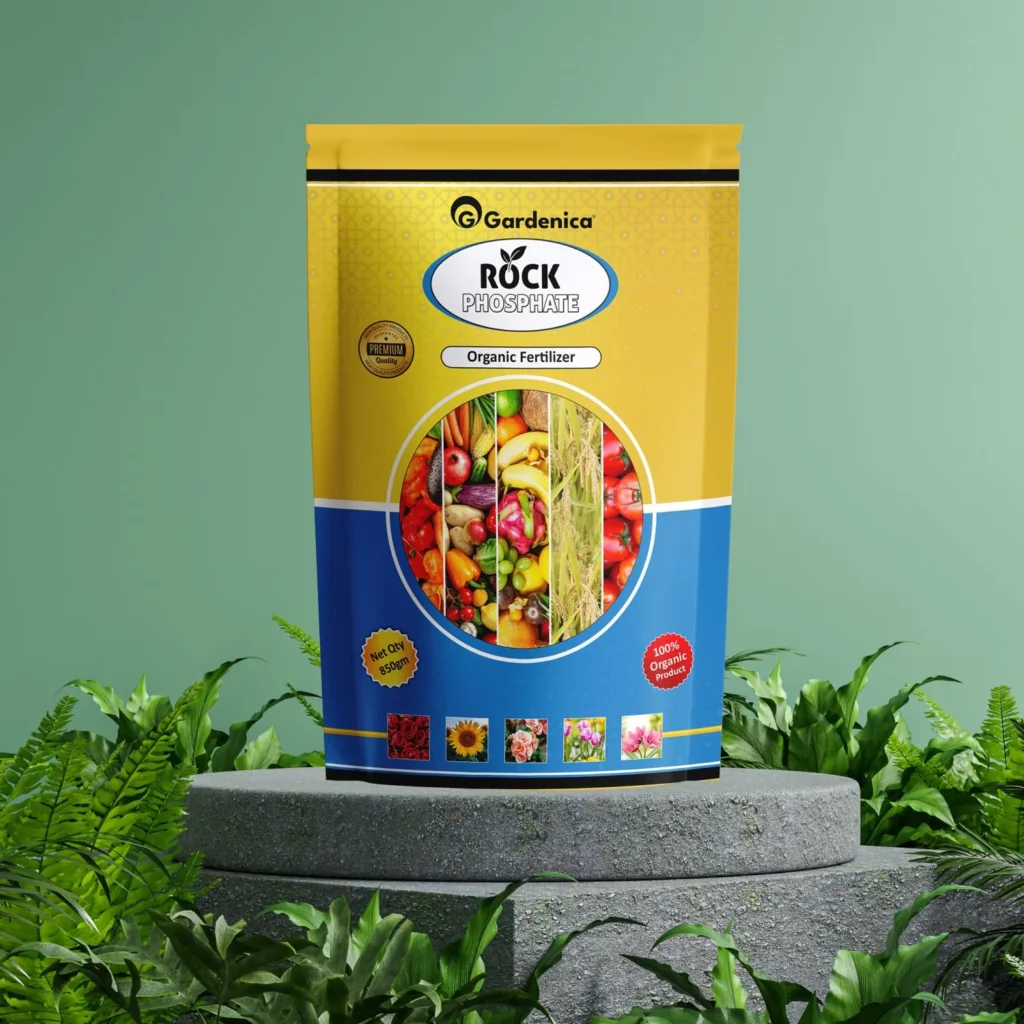
Not directly. It has no phosphorus or potassium, which are the nutrients behind flowering and fruiting. A balanced feed and rock phosphate support flowering; Epsom salt only corrects a shortage.
Can I spray Epsom salt on leaves?
You can, but on home pots a soil drench is simpler and safer, since spray strength and leaf burn are easy to get wrong. A seaweed extract foliar feed is a gentler option.
Why are the lower leaves of my plant yellow but the veins green?
That netted pattern on older leaves is the classic magnesium shortage sign. Check soil moisture first, because waterlogged roots cannot take up magnesium, then drench at 1 g per litre if the mix is only moist.
Is Epsom salt safe for edible vegetables?
Magnesium sulphate is a mineral salt used in vegetable growing at low doses. Stick to the dose given here, keep it off leaves in full sun and wash the harvest as usual.
Can I use Epsom salt along with vermicompost?
Yes, and they suit each other. Compost holds the nutrient in the mix and improves root conditions, while the drench corrects a visible shortage quickly.
Conclusion
A weak Epsom salt drench answers a genuine magnesium shortage quickly, and knowing how to use Epsom salt for potted plants keeps it from becoming another problem. Confirm the netted yellowing on older leaves, check the soil is not waterlogged, dose at about 1 g per litre, and leave 20-30 days between applications. Then close the real gap with fresh compost and a balanced feed.
For help choosing the right feed and soil inputs for your pots, Contact the Gardenica team or message us on WhatsApp at +91 95120 17162.
Disclaimer: This article is general gardening information. Results vary with plant, pot, soil, weather and care. Always read and follow the product label.
Looking for more?
Continue to our main page to explore products and services.