How to Grow Bougainvillea in Pots: A Winter Blooms Guide
How to Grow Bougainvillea in Pots: A Winter Blooms Guide

A bougainvillea smothering a terrace wall in magenta by January is what most Indian gardeners want. Most get leggy green growth with two or three sad flowers at the tips. Learning to grow bougainvillea in pots is mostly about giving it less of three things: less water, less shade and less nitrogen.
This guide covers the winter cycle on a balcony: the pot and mix, sun and water numbers, the pruning cuts that trigger colour, and a feeding plan built around phosphorus.
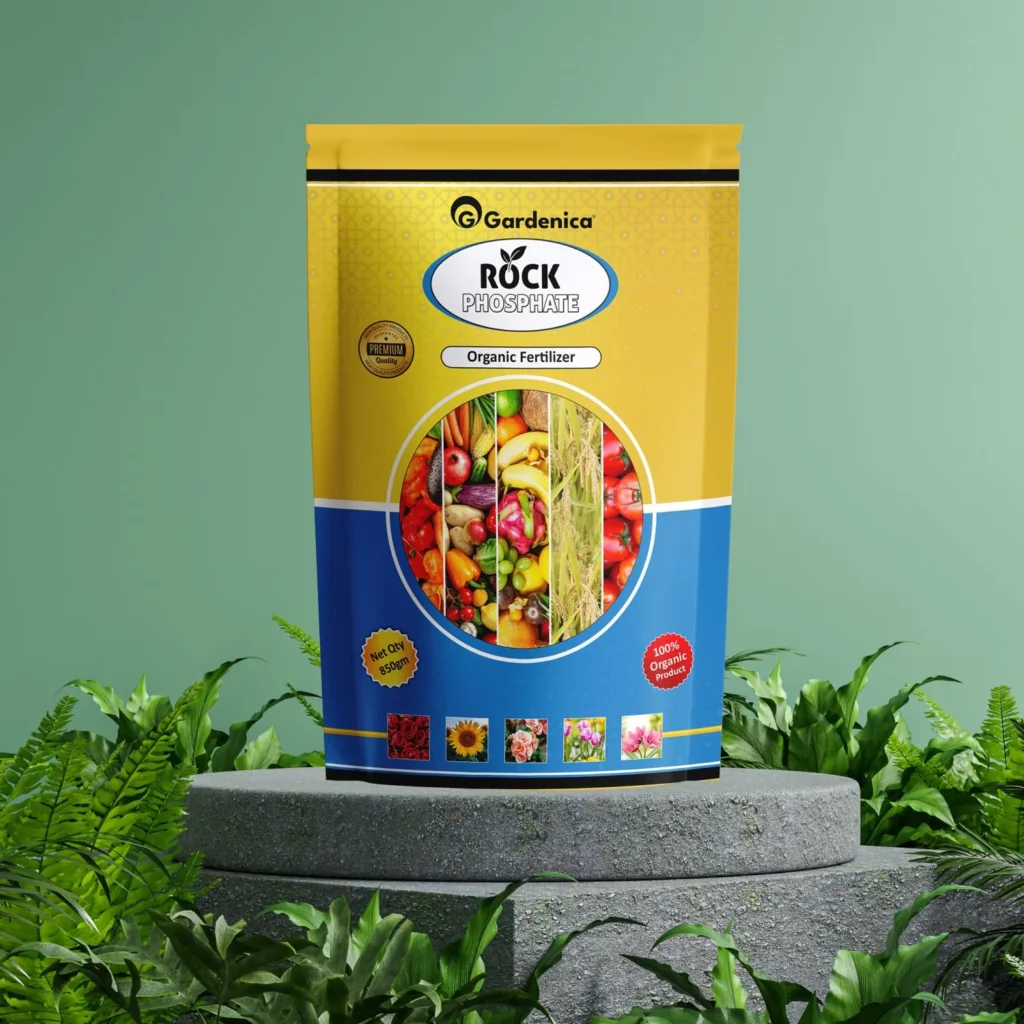
Read more: Explore Gardenica Rock Phosphate
Why Winter Suits Bougainvillea
Bougainvillea flowers on new growth, and the cool dry weeks from November to February push exactly that growth out. Short days and strong sun deepen the bracts, the papery coloured parts people call petals. The real flower is the small white tube in the middle.

Humidity is the enemy. A plant that went soft and green through the monsoon colours up within four to six weeks of dry winter air. Say you have three pots on a Pune terrace that looked like spinach all August. By December, having changed only the watering and added one phosphorus feed, those pots carry colour on every new tip.
Pick the Pot and the Mix
Bougainvillea likes a snug pot. A container that is too big sends energy into leaves and roots rather than flowers, and it holds wet soil around the roots too long. Terracotta suits a balcony because the walls breathe and dry faster.
- Choose the size. Start a young plant in an 8-10 inch pot and go up one size only when roots circle the drainage holes, ending at 12-16 inch.
- Check the drainage. Two holes minimum in the base, cleared before planting, with coarse grit over them.
- Mix the media. Combine 40 percent garden soil, 30 percent Vermicompost, 20 percent coarse sand and 10 percent cocopeat.
- Plant shallow. Set the root ball level, firm the mix, water once and shade the pot for a week.
Sun Is the Main Bloom Trigger
No feeding plan fixes a pot that gets four hours of light. Bougainvillea needs six to eight hours of direct sun to set colour, and a balcony with morning light only gives you a healthy green plant that never blooms.

- Full sun spot. Keep the pot where it gets sun from 10 am to 4 pm, which most open terraces manage in winter.
- Rotate weekly. Turn the pot a quarter turn every week so all sides get light, or one side grows long and bare.
- Clear the overhead. A shade net or a glass pane cuts light enough to lose colour, so remove anything above the plant.
- Move it slowly. Shifting a plant from shade to full sun over ten days prevents bleached, dropping leaves.
Water on the Dry Side
This is the biggest reason a bougainvillea stays green. Constant moisture tells the plant to keep making leaves, so letting the pot go slightly dry between winter waterings pushes it into bloom.
- New planting (Watering interval (days): 2-3; Note: Keep the mix barely moist for two weeks)
- Active winter growth (Watering interval (days): 4-6; Note: Water only when the top 1 inch is dry)
- Bloom period (Watering interval (days): 5-7; Note: Let the pot go drier, slight droop is safe)
- Summer months (Watering interval (days): 1-2; Note: Morning watering, evening top-up if leaves wilt)
Pruning for More Branches and Blooms
Flowers appear on growth made after a cut, so an unpruned plant blooms only at the ends of long whips. A winter prune in late November is the most useful hour you spend on this plant all year.
- Cut back long shoots. Trim about one third of last season's growth, cutting just above an outward-facing node.
- Remove weak wood. Take out thin, crossing and inward-growing branches at the base so light reaches the centre.
- Clear dead growth. Cut grey or rubbing branches back to live wood and bin them.
- Top-dress the pot. Scratch 40-50 g of Rock phosphate into the top inch and water it in.
- Stop pinching. Once red-tinged shoots appear, leave them alone, since pinching delays buds.
Feeding for Colour, Not Leaves
Too much nitrogen is the second reason for no flowers. A plant fed on leafy-vegetable doses of compost grows fast, green and nearly bloom-free. Phosphorus matters far more from December.
- Rock phosphate (Dose (g per 12 inch pot): 40-50; Frequency: Once, at winter pruning)
- Rich Fertilizer (Dose (g per 12 inch pot): 20-25; Frequency: Every 30 days, only if growth looks weak)
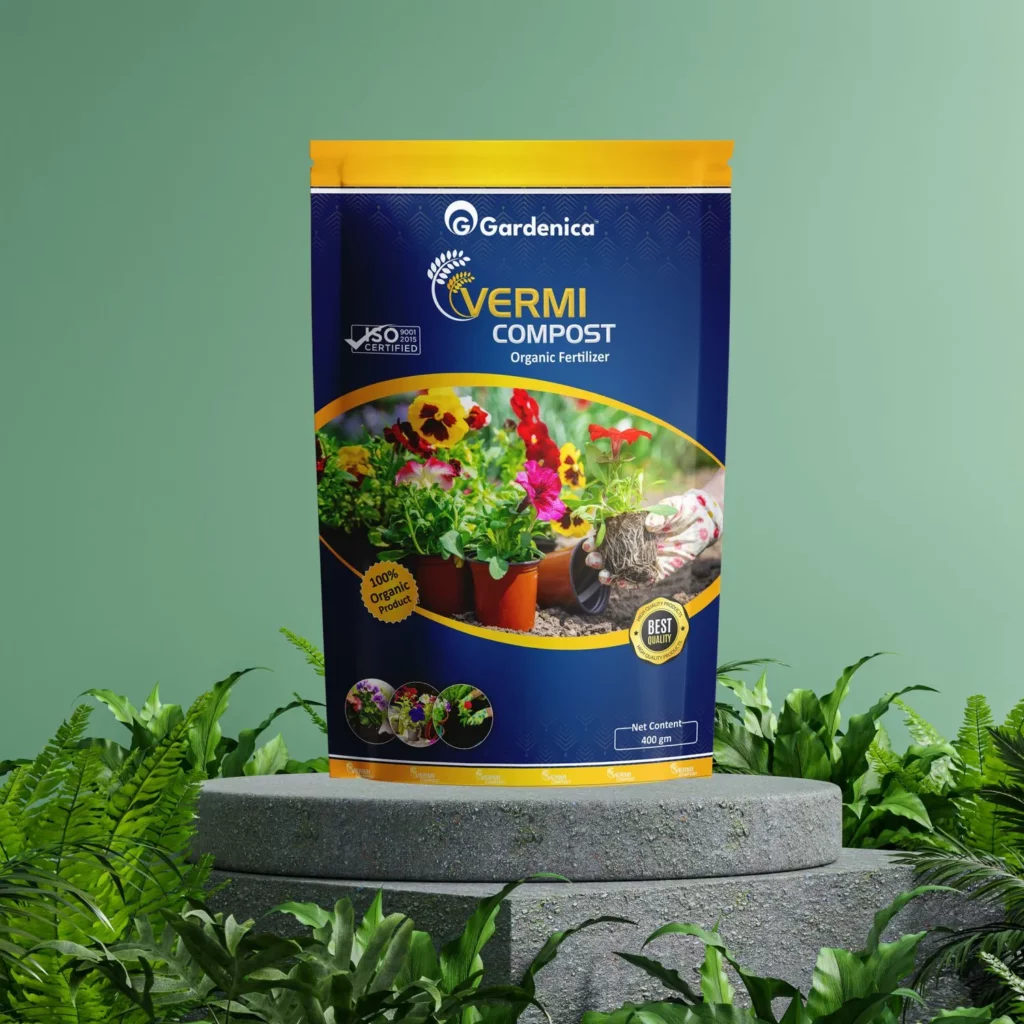
- Vermicompost (Dose (g per 12 inch pot): 150-200; Frequency: Once a month, scratched into the top)
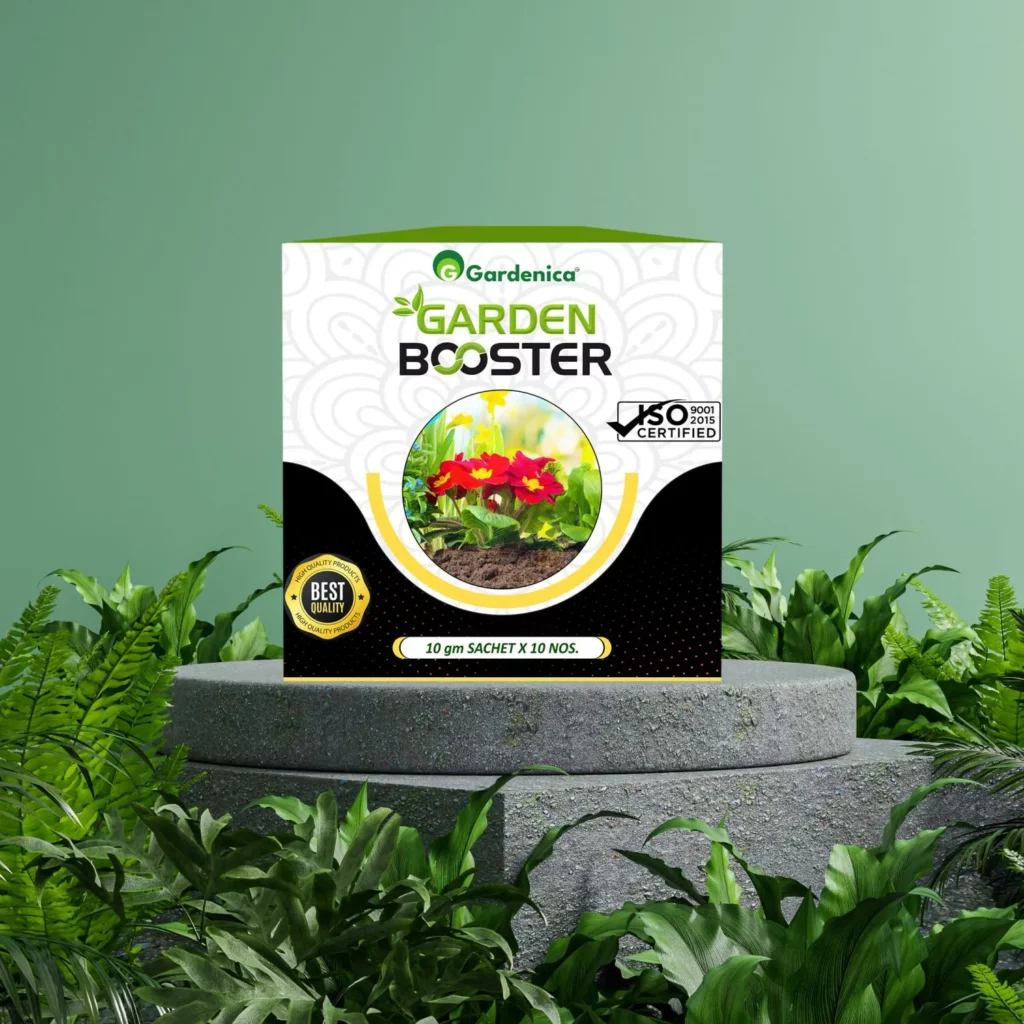
- Garden Booster (Dose (g per 12 inch pot): 5-8; Frequency: Every 15 days as a drench)
Fixing the Common Problems
When a bougainvillea misbehaves, the cause is nearly always water, light or nitrogen. Work through the signs in order.
Have a question about this topic?
Chat on WhatsApp- Green leaves, no colour (Likely cause: Too much nitrogen or shade; Fix: Move to full sun, stop nitrogen, feed rock phosphate)
- Yellow leaves, soft stems (Likely cause: Overwatering; Fix: Let the pot dry, check drainage, see Root rot in potted plants)
- Buds dropping (Likely cause: Temperature swing or a moved pot; Fix: Keep the pot in one spot, water at the same hour daily)
- Sticky leaves, black soot (Likely cause: Sap-sucking insects; Fix: Spray water, then Neem oil at the label dose)
Safe Use at Home
Bougainvillea carries sharp thorns, so prune with thick gloves and long sleeves, and keep pots away from walkways and children's play corners. Wear gloves when scratching rock phosphate or compost into the soil and wash your hands afterwards. Spray neem oil in the cool evening, keep children and pets clear until it dries, and always read and follow the product label.
What to Check Before You Buy
- Pot size. Buy an 8-10 inch pot for a sapling and plan for 12-16 inch later, not a large pot straight away.
- Mix ingredients. Look for coarse sand and compost rather than pure cocopeat, which stays wet.
- Feed contents. Pick a phosphorus source for flowering and keep a balanced feed for weak growth only.
- Use per pot. Match the label dose to your pot size before buying a large pack.
Frequently Asked Questions
How big a pot does bougainvillea need?
Start in an 8-10 inch pot and move up to 12-16 inch as it fills. It blooms better slightly root-bound, so a big pot gives leaves instead of flowers.
How much sun does a potted bougainvillea need?
Six to eight hours of direct sun. A balcony with only morning light keeps the plant green but rarely colours up, so move it to the sunniest spot.
Why is my bougainvillea not flowering?
Too much nitrogen, too much water, too little sun or a pot that is too large. Move it into full sun, let the top inch dry between waterings and feed rock phosphate.
When should bougainvillea be pruned in India?
A hard prune in late November works best for winter blooms, cutting back one third of last season's growth. Trim lightly after each flush.
What fertilizer helps bougainvillea flower?
Phosphorus matters most. Scratch 40-50 g of rock phosphate into the top inch at pruning, then feed a balanced organic fertiliser at the label dose only if growth looks weak.
Can bougainvillea grow on a balcony?
On an open, unshaded south-facing balcony yes, because it gets direct sun most of the day. Indoors it struggles, since glass filters the light it needs.
How often should I water bougainvillea in winter?
Every four to six days in most Indian winters, only when the top inch is dry. Slightly dry conditions push the plant into bloom, while wet soil keeps it leafy.
Conclusion
To grow bougainvillea in pots well, give it a snug pot with gritty mix, six to eight hours of sun, water only when the top inch is dry, a hard cut in late November and phosphorus instead of nitrogen from December. Those five things hold colour on a terrace from January through March.
Start with one pot this week: prune it, scratch rock phosphate into the top inch and move it into the sunniest corner you have. For the right feed for your pot size, Talk to the Gardenica team on WhatsApp at +91 95120 17162.
Disclaimer: This article is general gardening information. Results vary with plant, pot, soil, weather and care. Always read and follow the product label.
Looking for more?
Continue to our main page to explore products and services.